“The plastic trim beside my window cracked” sounds like a small siding repair. Sometimes it is. But the same call can involve a loose siding edge, a failed corner overlap, damaged flashing, stained backing, or a second-story opening above a porch roof.
A useful siding J-channel repair call intake starts by identifying the trim and its location. Then the office records what happened around it: nearby panel movement, moisture signs, building height, safe access, photos, material, age, and previous work. The field inspector decides whether the job stays local.
Identify the trim before naming the repair
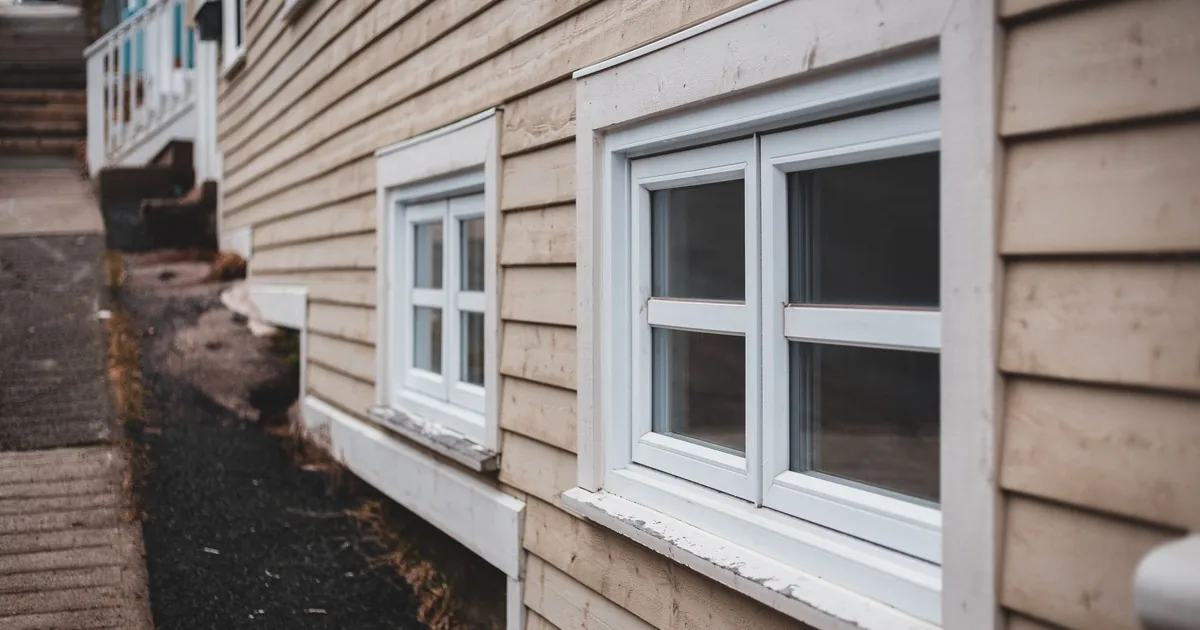
Homeowners use “trim” for several exterior parts. They may mean J-channel around a window, a corner post, utility trim below a sill, metal window wrap, a starter strip, or the edge of a siding panel that has popped loose. Ask where the piece sits and what shape the caller sees.
J-channel has a receiving pocket that holds the cut edge of siding around windows, doors, roof lines, and other terminations. The Polymeric Exterior Products Association installation guide treats it as one accessory within a larger wall assembly. Flashing is installed around the opening, then trim receives the siding edges. That distinction matters on the phone. A cracked visible channel does not reveal the condition of concealed flashing.
Start with plain location questions. Is the damage at the top, side, or bottom of a window? Is it around a door, under a soffit, along a roof-to-wall intersection, or beside a utility penetration? Which floor is it on? A photo of the whole wall often answers the identification question faster than a caller trying to describe a profile from memory.
If the caller reports a loose panel after strong wind, route the conversation through the broader wind-damaged siding intake. That page owns panel loss and wind exposure. This intake stays focused on a trim piece and the siding immediately around it.
Separate visible damage from the inspection scope
The crack is the symptom the caller can see. The inspection scope comes from the conditions around it.
Ask whether the trim is split, warped, missing, pulled away from the wall, or still attached but no longer holding the panel edge. Then ask about the siding course beside it. Is the panel loose, buckled, chipped, brittle, or pushed tightly into the channel? Has the corner opened? Does the area move when wind hits the wall?
Vinyl siding is installed so panels and accessories can move as temperatures change. PEPA's horizontal siding guidance says panels should move freely, fasteners should not pin the nail hem tight, and space is left at channels and openings. A bowed channel beside a wavy panel may need a wider look than a clean impact crack in otherwise stable trim.
Water changes the call again. Ask about staining below the opening, swollen wood trim, soft material, peeling interior paint, damp drywall, musty odor, or water that appears during wind-driven rain. Do not tell the caller that the J-channel caused a leak. Its tabs and overlaps help direct runoff, but the concealed flashing and water-resistive layers also matter. A broad moisture complaint belongs with the siding leak and moisture intake.
The office should also record the trigger. A ladder may have struck the trim. A window was replaced. A cable installer opened the siding. Heat from a nearby grill distorted vinyl. Wind lifted a panel. Or the caller noticed the damage with no known event. The sequence helps the estimator prepare without turning it into a diagnosis.
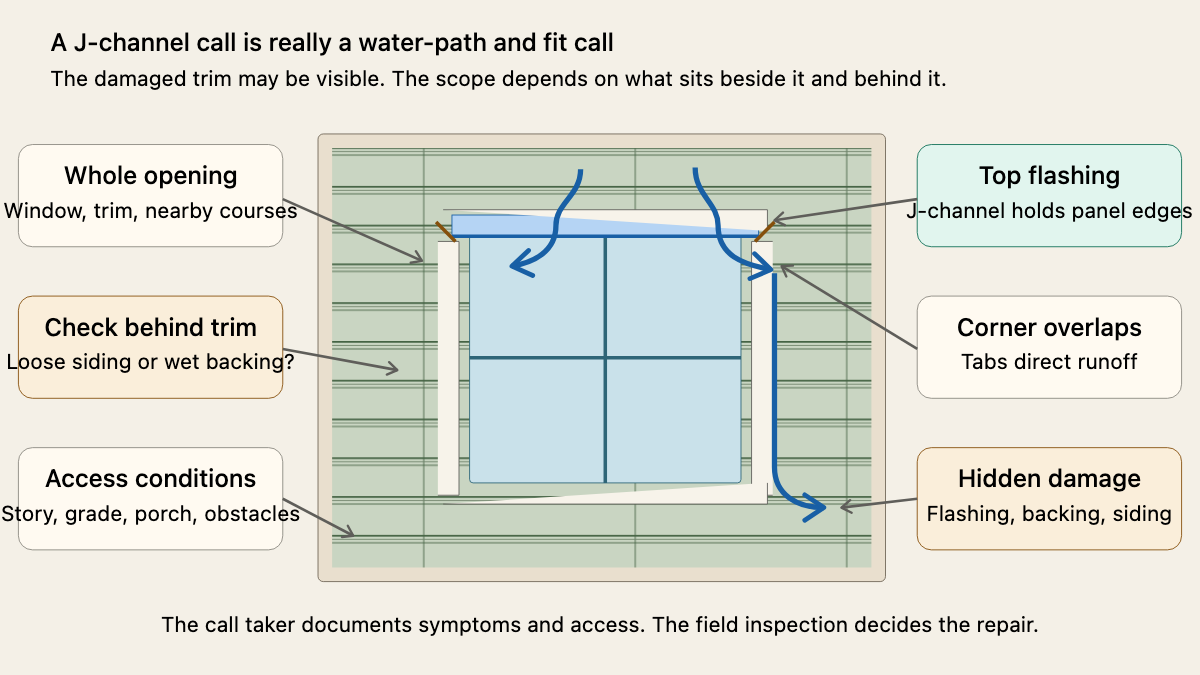
Ask for photos that show the opening and the defect
One close-up of cracked white vinyl rarely provides enough context. It hides the story, roof line, window corners, siding courses, and access below. Ask for a small photo set with a wide view first.
A useful set includes:
- the full wall elevation, including the ground or roof area below the damage;
- the complete window, door, or penetration with all four sides visible where possible;
- one close view of the failed trim and its connection to the siding edge;
- each nearby corner or joint, especially the top corners of a window;
- staining, gaps, loose panels, or visible backing beside the trim;
- a product label, spare siding piece, invoice, or leftover carton if the owner has one;
- obstacles such as a porch roof, deck, condenser, fence, shrubs, overhead line, or narrow side yard.
Tell the caller not to pull siding away, climb for a better angle, or remove trim to expose what is behind it. Ground-level photos and existing safe viewpoints are enough for intake. The crew can inspect concealed conditions with suitable access and tools.
Color and profile deserve their own note. Ask whether the owner has leftover material and whether the wall has faded differently from a sheltered sample. Do not promise an exact color match from a phone photo. Light, age, batch, and weather exposure can change how a replacement piece looks beside the original.
Record access before offering an appointment window
A first-floor window above level ground is a different field setup from trim beside a dormer, above a conservatory roof, or along a steep roof-to-wall line. Access belongs in the first call because it affects crew planning and the type of inspection the company can safely perform.
Record the floor, approximate position on the wall, grade below, gate width, locked areas, pets, landscaping, and whether a deck or porch sits under the opening. Note roof access without advising the caller to walk on it. If the repair borders a utility meter, service cable, exhaust vent, or other equipment, capture that too.
Roof-line J-channel needs especially careful routing. PEPA directs installers to place step flashing before J-channel, preserve clearance from roofing, lap upper channel pieces over lower ones, and maintain a runoff path. Those details are hidden or difficult to judge from the ground. A roof-line complaint should be scheduled as an inspection, not quoted as a simple strip replacement during the call.
The same caution applies when recent window work may have changed the opening. Use the siding and window replacement coordination guide when the owner is planning both projects or when the trim problem followed window replacement.
Route the call with a clear field note
Most calls can enter a normal inspection queue when the trim is damaged, the surrounding siding appears stable, there is no active interior water, and access looks routine. The record should still avoid promising that only one piece will be replaced.
Prioritize the handoff when the caller reports an open wall area, siding hanging where it could fall, active water entering the building, rapidly spreading damage, or material moving near an entrance. Follow the company's own emergency policy. Reception should document the condition and notify the designated person, not prescribe a temporary repair.
A clean field note can read: “Second-floor rear bedroom window. Right-side white vinyl J-channel split near the upper corner after a branch strike. Adjacent panel edge is loose. No interior staining reported. Photos show a deck below the opening and a narrow gate on the left side. Homeowner has one leftover siding carton but no trim.” That note gives the estimator a location, trigger, surrounding condition, access constraint, and material clue.
If every call taker captures those details in the same order, the contractor can review the job before dispatch and arrive ready to inspect the whole opening. The final scope may still change once the trim comes off. That is exactly why the first call should document the wall instead of promising a strip of plastic.