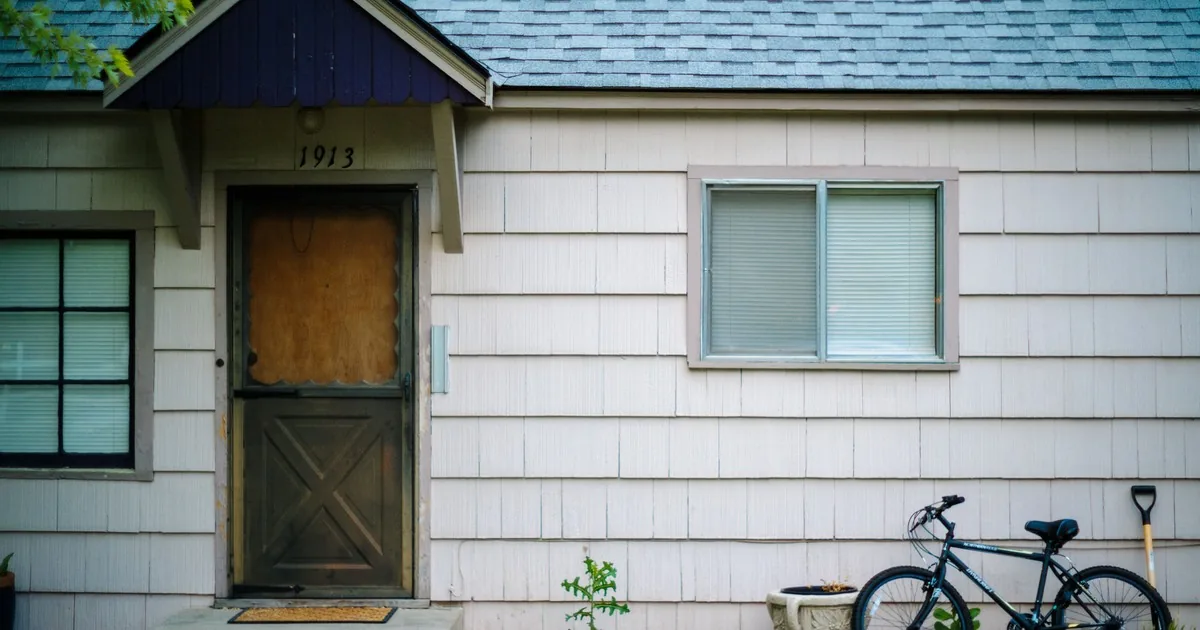
A homeowner calls about replacing the square shingles on a 1940s house. A neighbor said they “look like asbestos.” Two corners are chipped, an addition is planned, and the caller wants a siding price before Friday. That is enough information to flag the inquiry. It is not enough to identify the material or send a regular crew to open the wall.
For a safe asbestos-cement siding intake, record whether the material is suspected or professionally confirmed, who produced any report, where the siding is located, its visible condition, what the project may disturb, the property type and jurisdiction, the caller's authority, and the intended siding scope. If professional confirmation is missing, or the proposed work may cut, drill, sand, break, remove, or otherwise disturb suspect material, route the job for qualified asbestos assessment before treating it as an ordinary siding estimate.
The receptionist's job is routing. Material identification, compliance decisions, and work methods belong to trained professionals.
Record the material status in the caller's own words
Start with one direct question: “Has an accredited inspector or laboratory confirmed that the siding contains asbestos, or is it suspected because of its appearance or age?”
Do not turn a visual description into a diagnosis. The EPA's homeowner guidance says a person generally cannot tell whether a material contains asbestos simply by looking at it unless it is labeled. A scalloped edge, embossed surface, or old installation date may explain the caller's concern. None confirms the contents of the shingle.
Use a clear status in the call record:
- Suspected, with no professional report
- Sample collected by an identified professional, result pending
- Confirmed by a named laboratory or inspection report
- Reported as non-asbestos material in a professional document
- Unknown because the owner has no records and the material is covered
Ask for the report itself, not a verbal summary such as “the previous owner had it checked.” Record the inspector or laboratory name, report date, sample location, material description, and any limitations stated in the document. One sample from a garage does not automatically describe every wall on the house.
Never coach a homeowner to break off a corner or mail a piece to a laboratory. EPA recommends professional sampling because poor sampling can release fibers and may create more risk than leaving the material alone.
Describe condition without creating new damage
Ask the caller to observe the siding from a safe location. Useful details include the affected elevation, approximate extent, missing or cracked shingles, loose fragments, powder or debris near the wall, prior drilling, and whether recent construction or storm damage changed the condition. Request wide photos that show the entire wall, grade, openings, corners, roof intersections, and nearby work area. Close photos can document visible damage if the caller can take them without touching the siding.
The record should distinguish an intact wall from active debris. EPA says asbestos-containing material in good condition that will not be disturbed is generally left alone. It also says damaged material or material likely to be disturbed by remodeling needs professional attention. The CPSC home asbestos guide specifically includes asbestos-cement roofing, shingles, and siding, and notes that these products are unlikely to release fibers unless they are sawed, drilled, or cut.
That distinction matters, but the office should avoid deciding whether damage is minor, repairable, or safe. Record what the caller sees. A qualified person assesses what it means.
If fragments or dust are present, do not tell the caller to sweep, vacuum, bag, pressure-wash, or scrape the area. EPA advises against dusting, sweeping, or vacuuming debris that may contain asbestos. The office can tell the caller to avoid disturbing the area while the appropriate professional is contacted.
Map the work that could disturb the wall
A caller may say, “We are leaving the old siding in place,” while describing new windows, an electrical service change, a deck ledger, exterior insulation, or furring attached through the existing shingles. The siding itself may stay on the wall, yet the project could still drill, fasten, cut, or break it.
Ask what prompted the call and what must change on each elevation. Capture proposed tear-off, repairs, overlay, window or door replacement, additions, penetrations, trim removal, utility work, insulation, painting preparation, and demolition. Ask whether another contractor has already opened the wall or removed pieces. Record future work too, since a “simple cover-up quote” may be one part of a larger renovation.
OSHA's asbestos construction resource points contractors to the federal construction standard and to work-practice guidance for installed asbestos-cement products. It specifically identifies drilling and cutting roofing, siding, and similar products as tasks that can create exposure if they are not handled carefully. The intake question should therefore focus on disturbance, not on the customer's preferred construction method.
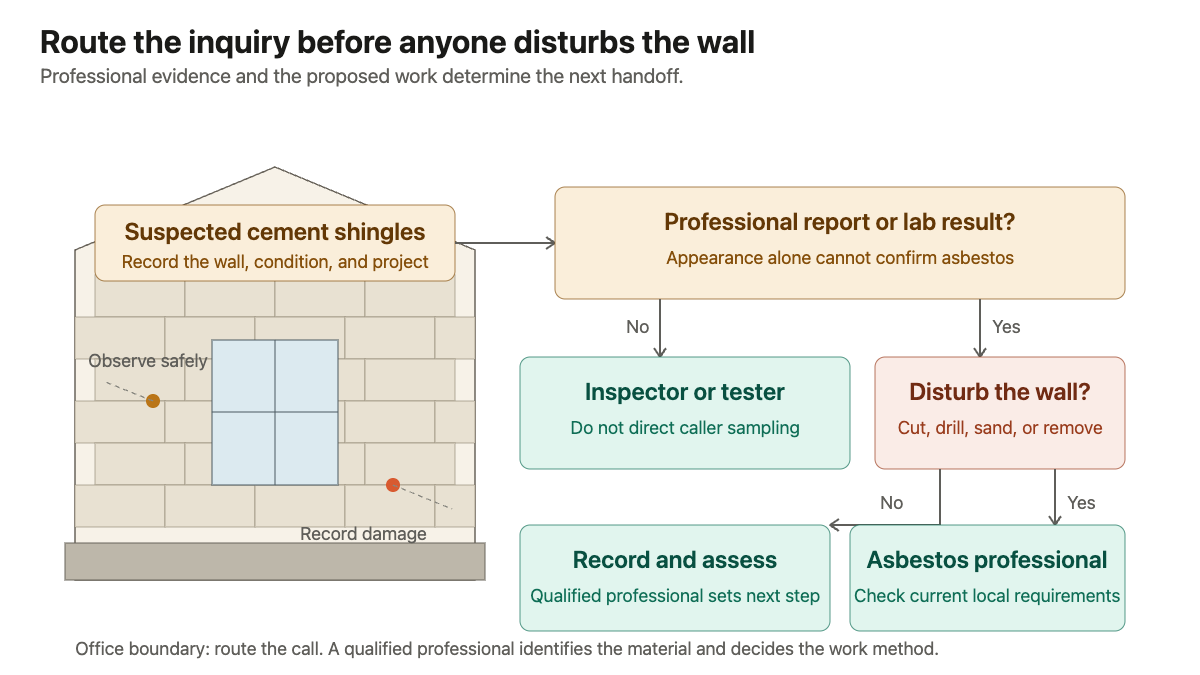
Do not promise that covering the existing siding is acceptable. Fasteners, preparation, damaged sections, wall condition, product instructions, and local rules all affect that decision. The same boundary applies to a small repair. A single cracked shingle can still require a qualified review before a technician handles it.
Route inspection, asbestos work, and siding work separately
EPA describes two different professional roles. An asbestos inspector can inspect the building, assess condition, collect samples, and advise on corrective action. An asbestos contractor performs repair or removal. EPA also recommends avoiding conflicts of interest by separating assessment from the company that performs corrective work when practical.
Your routing policy should name the professionals your business can schedule, the work it declines, and the evidence required before an ordinary siding crew arrives. If your company does not inspect or handle asbestos-containing material, say so plainly. Give the caller the correct next step, then keep the siding opportunity open for coordination after the material question is resolved.
State and local requirements vary. EPA directs property owners to state asbestos contacts for current lists and rules. Capture the property address early so the office can use the right jurisdiction. Also ask whether the building is a detached home, rental, multifamily property, commercial building, school, or planned demolition. Property type can change which requirements apply.
Do not quote licensing rules, notification periods, disposal procedures, or clearance requirements from memory. Record the jurisdiction and route the question to the person responsible for compliance.
Build the siding estimate around the professional handoff
Once the material status and responsible professional are clear, collect the normal project details without blending scopes. Identify every elevation, addition, garage, dormer, and detached structure involved. Record stories, sloped grade, fences, decks, shrubs, overhead lines, narrow side yards, and neighboring buildings. Note windows, doors, vents, meters, lights, condensers, hose bibs, and other wall penetrations.
For broad replacement intake, the whole-house siding quote guide provides a complete elevation and access checklist. If the caller is comparing modern products for a later installation, use the vinyl and fiber-cement consultation guide. Keep that product conversation separate from the status of the older material. Similar names do not mean the materials or handling rules are interchangeable.
Ask who owns the property, who can authorize inspection, and whether an insurer, property manager, buyer, seller, or general contractor must receive the documents. Then establish dependencies. Does the siding estimate wait for a report? Will an asbestos professional remove material before the siding crew mobilizes? Who will document completion, and which contractor owns temporary weather protection between scopes?
A useful handoff note might read: “Owner requests replacement on the front and east elevations of a detached home. Square cement shingles are suspected but unconfirmed. Two broken pieces are visible below the east window; owner has been asked not to disturb the area. Project also includes three replacement windows, so drilling and removal may occur. No report is available. Route to an accredited inspector before siding estimating. Address and owner authorization are verified. Wide photos of both elevations and close photos taken from ground level are attached.”
An AI receptionist can collect the approved fields after hours and route the record according to company policy. It should never identify the material, recommend a removal method, or tell a caller that a regular crew can proceed.
Read the final note back before ending the call. The estimator should receive a property, a documented material status, a disturbance question, and a named next professional. That keeps the siding project moving without asking the first person who answered the phone to make a safety decision.