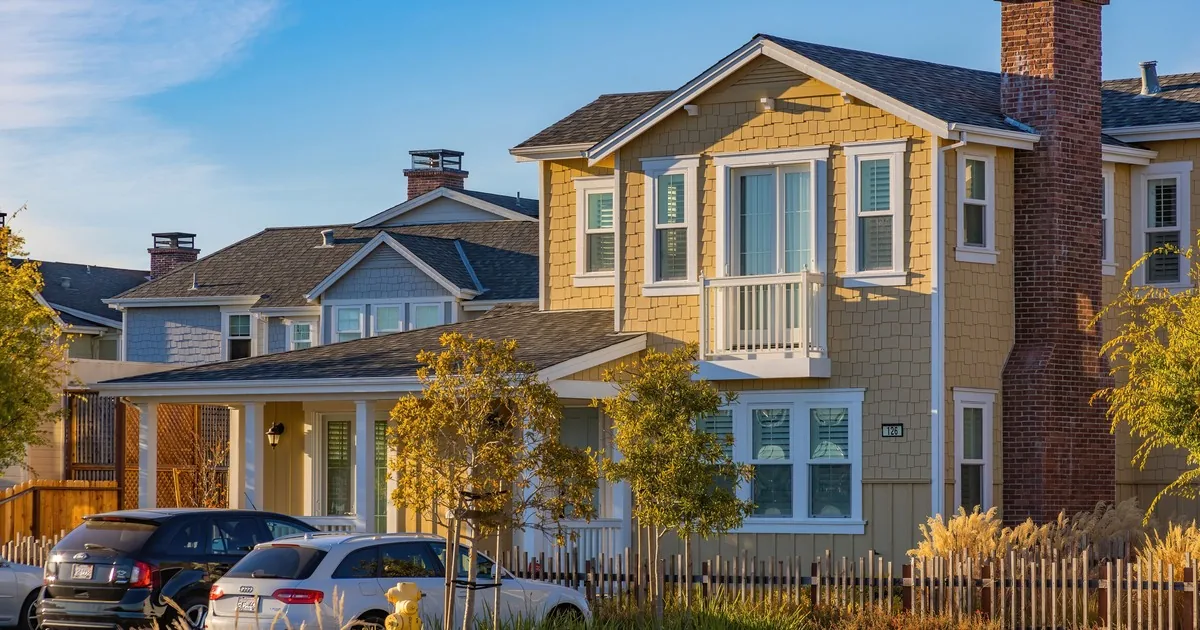
A homeowner calls from the patio and says the siding behind the grill has curled into a shiny wave. Another caller reports a narrow patch halfway up a side wall that seems to appear during bright afternoons. Both want a repair price. The office needs a safer and more useful first step: find out whether heat is still active, locate the damage, document the suspected heat path, and book an inspection without promising a cause or a panel match.
For a melted vinyl siding repair call, record the wall, story, nearest window or corner, number of affected courses, width of the patch, first-noticed date, nearby heat sources, changes by time of day, current fire or smoke, visible wall layers, product clues, safe photos, and access. If flame, smoke, or a hot appliance is still involved, stop the estimate script and follow emergency policy.
Separate the repair request from an active fire event
Ask one plain question early: “Is there any flame, smoke, unusual heat, or hot equipment at the wall right now?” A caller who just moved a grill after seeing smoke has a different need from someone who found an old distorted patch while cleaning the yard.
Do not ask the customer to touch the siding, move a hot grill, inspect behind a panel, or walk through smoke for a photo. If fire may still be active, direct the caller according to company emergency policy and local emergency guidance. Keep the normal estimate in the background until the immediate hazard is handled.
The U.S. Fire Administration says grills should be used outside and kept at least three feet from siding, deck rails, and eaves. It also tells users to stay with a grill, fire pit, or patio torch while it is lit. That guidance gives the office a firm safety boundary. It does not authorize a receptionist to decide that a wall is safe after the appliance is shut off.
Once there is no active event, ask what was operating near the wall: gas grill, charcoal grill, smoker, fire pit, patio heater, generator exhaust, dryer vent, or another heat source. Record the caller's words. “Gas grill was running beside the wall for about an hour” belongs in the work order. “Grill caused it” is a diagnosis the site visit has not earned.
Map the heat path before discussing new panels
Heat damage often has useful geometry. Ask the caller to describe where the patch begins and ends relative to a corner, window, door, deck rail, hose bib, vent, or light fixture. Then ask about height. A low patch directly behind an appliance presents a different field question from a narrow patch several feet above the ground with no appliance nearby.
The Polymeric Exterior Products Association explains that concentrated sunlight reflected from certain windows can distort polymeric siding. The effect depends on the window, wall, sun angle, and surrounding conditions, so it may show up only during part of the day or a particular season. There is no useful universal “safe distance” for a reflected beam.
Ask whether a window on the same house or a neighboring building faces the patch. Record the window's rough position, which wall receives the light, and when the distortion or bright reflection is most noticeable. A sentence such as “Narrow patch on the east side, strongest around 2 p.m.; second-floor window next door faces the area” gives the inspector something testable. It still leaves room for another explanation.
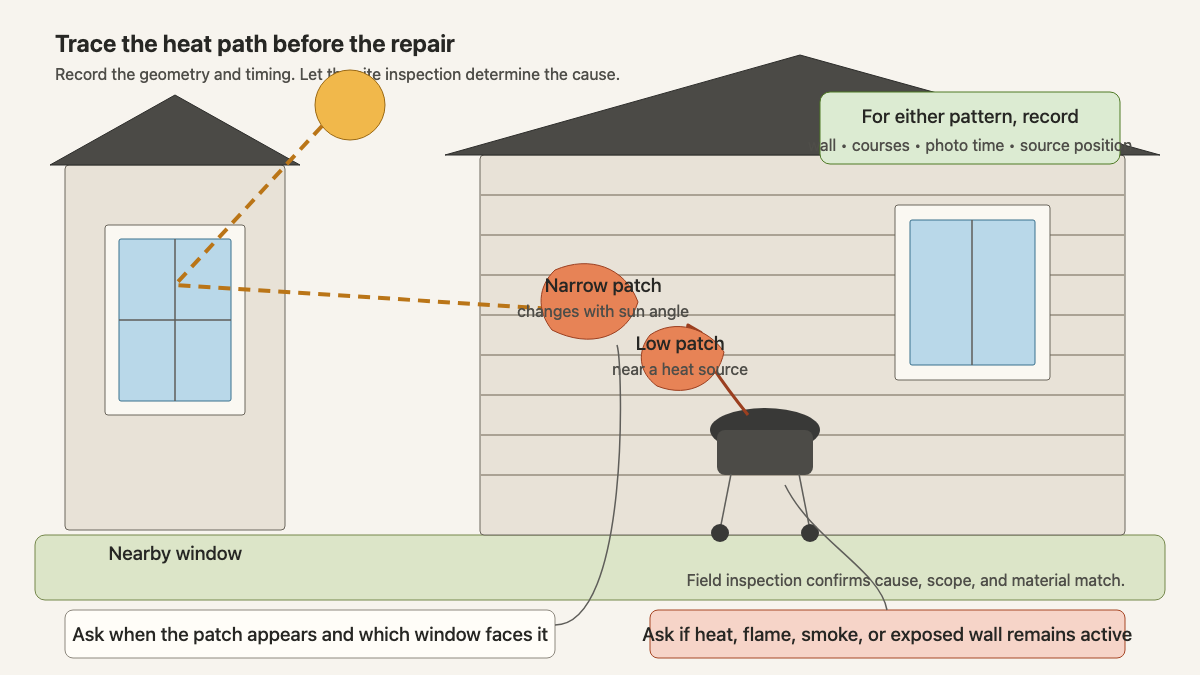
If the caller is unsure whether the wall is melted, warped, buckled, or simply wavy, use the broader vinyl siding distortion inspection workflow. This intake is for calls where heat exposure or a melted appearance is already central.
Count courses and preserve material clues
A useful repair note describes the affected material without implying that a spot repair will work. Ask how many horizontal courses look changed. Record the approximate width using a fixed object for context, such as one window width or the distance between a corner and a downspout. Avoid asking the customer to climb with a tape measure.
Ask whether the patch includes a corner post, J-channel, window trim, mounting block, soffit, or other accessory. Note any open seam, loose edge, crack, hole, exposed housewrap, or darkened material behind the siding. Water entering through an opening or a loose piece over a walkway can change routing even when the original damage came from heat.
Matching may be harder than removing a damaged panel. Request photos of leftover siding cartons, invoices, warranty paperwork, or labels only if the customer already has them in a safe place. Ask whether spare panels are stored in the garage, basement, or shed. The office can also record profile, texture, exposure, and color as the caller sees them, but those observations remain provisional.
The PEPA Vinyl Siding Installation Manual describes how an installer can unlock the course above a damaged panel, remove the fasteners, install the replacement, and relock the wall. That mechanical possibility does not settle the actual scope. Surrounding panels may be brittle, the profile may be discontinued, the color may have weathered, or damage may extend into trim and concealed wall layers.
For older material, link the estimator to the separate siding color-match call guide. A good booking note prepares the match discussion. It never guarantees that a new panel will disappear into the existing elevation.
Build a photo set that keeps the heat source in frame
Close-ups show the curl or ripple. Wide views explain why it may be there. Request photos only from the ground or another safe occupied surface, and tell the caller to stay away from hot equipment, smoke, unstable decking, electrical service, and loose material.
A useful set includes:
- One full elevation showing corners, roof edge, windows, doors, grade, deck, and the complete damaged area
- One medium view connecting the patch to the nearest grill, vent, window, reflective surface, or other suspected source
- One close view with panel seams visible so the estimator can count courses and accessories
- One side-angle view that shows depth, curling, or a changed surface profile
- A photo of any safe, accessible product label, spare panel, invoice, or carton
- A second wide view at the time the caller says reflected light appears, only when it can be taken safely
Ask when each image was taken. For a possible reflection, the date and time can matter more than another close-up. Keep original files when the estimating platform strips metadata or compresses detail.
Record access at the same time. Include wall story, slope, fence gate width, deck or patio, pool, shrubs, pets, overhead wires, air-conditioning equipment, and whether neighboring property might be needed to inspect a suspected reflection. A low patch beside an open driveway may fit a normal estimate slot. A second-story patch above a glass sunroom may require different access planning.
Stop the heat source before setting repair expectations
A replacement should not be presented as complete while the suspected recurring source remains unexamined. For a grill or portable heater, the site visit can document placement and discuss safe use. For reflected sunlight, the contractor may need observations at a specific time and coordination with a window professional, manufacturer, neighbor, or property manager.
PEPA advises intercepting or diffusing concentrated reflected light and notes that warranty terms differ by manufacturer. The office should collect documents and describe the reported condition. It should not tell the homeowner that a window is defective, promise warranty coverage, recommend a film for unknown glass, or guarantee that landscaping will solve the problem.
This Old House also recommends identifying the heat source before replacing the distorted material. Its melted siding repair guide shows why source identification and panel replacement belong in the same project conversation. The contractor still needs to inspect the actual wall and follow the applicable product instructions.
Give the estimator a neutral read-back
Before booking, confirm the address, contact, affected elevation, story, landmark, reported material, affected courses and width, first-noticed date, current heat or fire status, nearby appliances, possible reflected-light source, time-of-day pattern, open or loose material, water clues, documents, photos, access, and requested outcome.
A strong work order might read: “Repair inspection for heat-distorted white horizontal vinyl siding on the rear elevation, first story, between the patio door and right corner. Caller reports three courses with a shiny curled patch about one grill-width across. A gas grill had been operating nearby but is now off and cool; no flame, smoke, exposed wall layer, loose panel, or interior water reported. Wide elevation, source-to-wall, close, and side-angle photos attached. Customer has two spare panels in the garage and wants the heat source checked before repair options are priced.”
An AI receptionist can collect the same facts after hours under a siding company's emergency and scheduling rules. Diagnosis, fire clearance, product identification, warranty interpretation, access, and repair scope remain with qualified people.
The best subject line is physical and specific: “Rear wall, three curled vinyl courses behind patio grill; appliance off, no active smoke, photos and spare-panel note attached.”