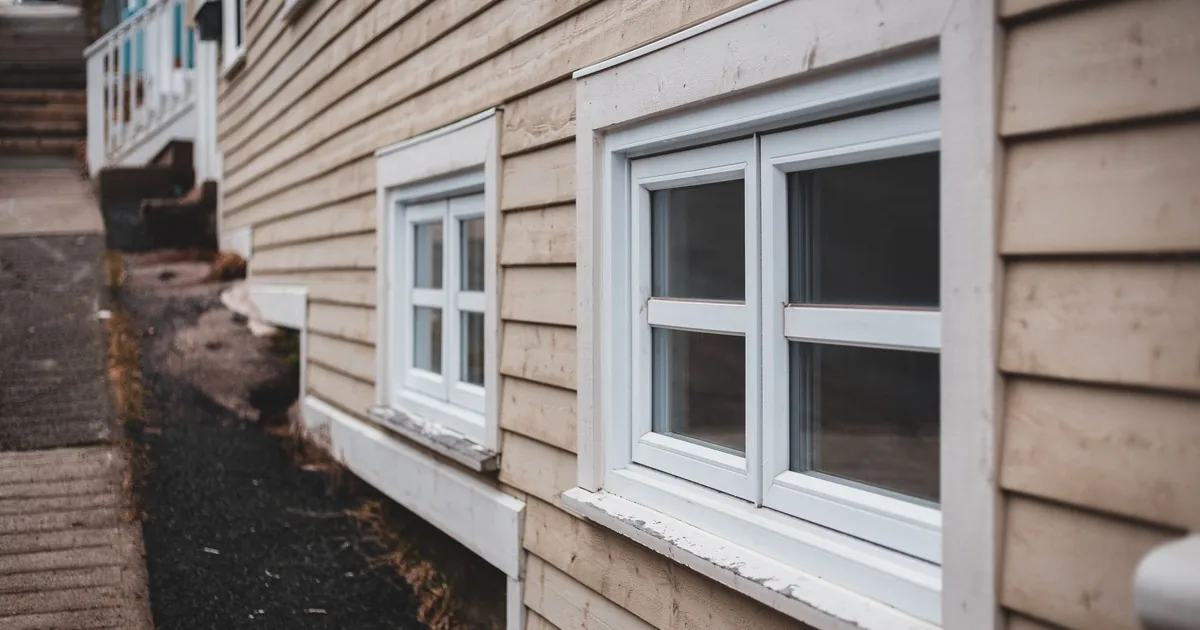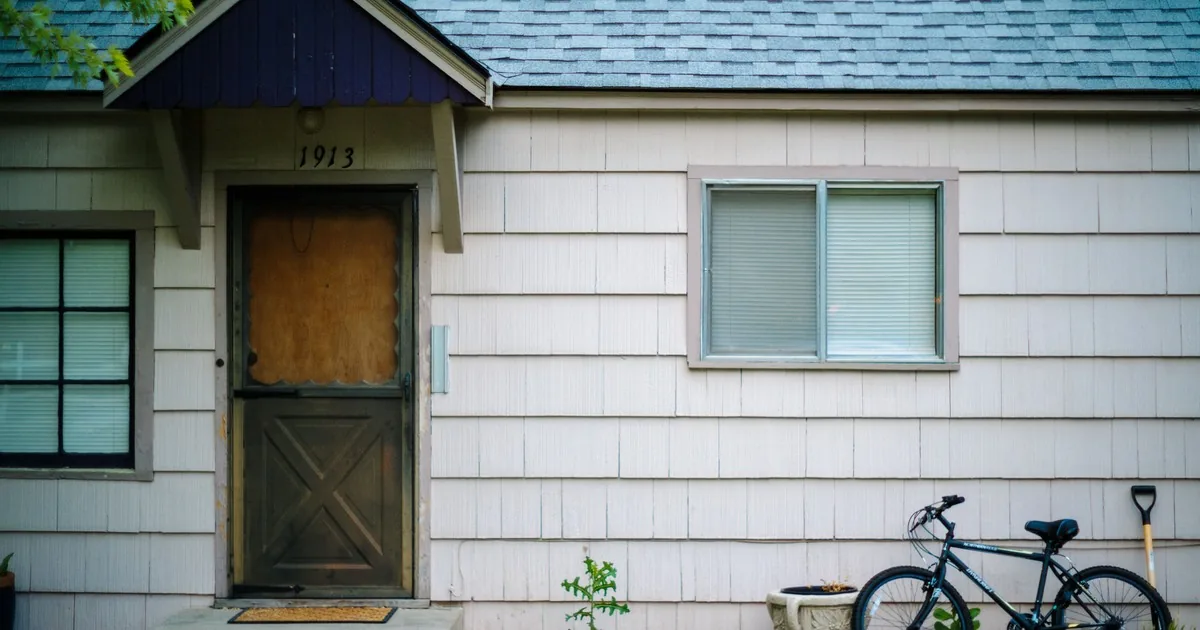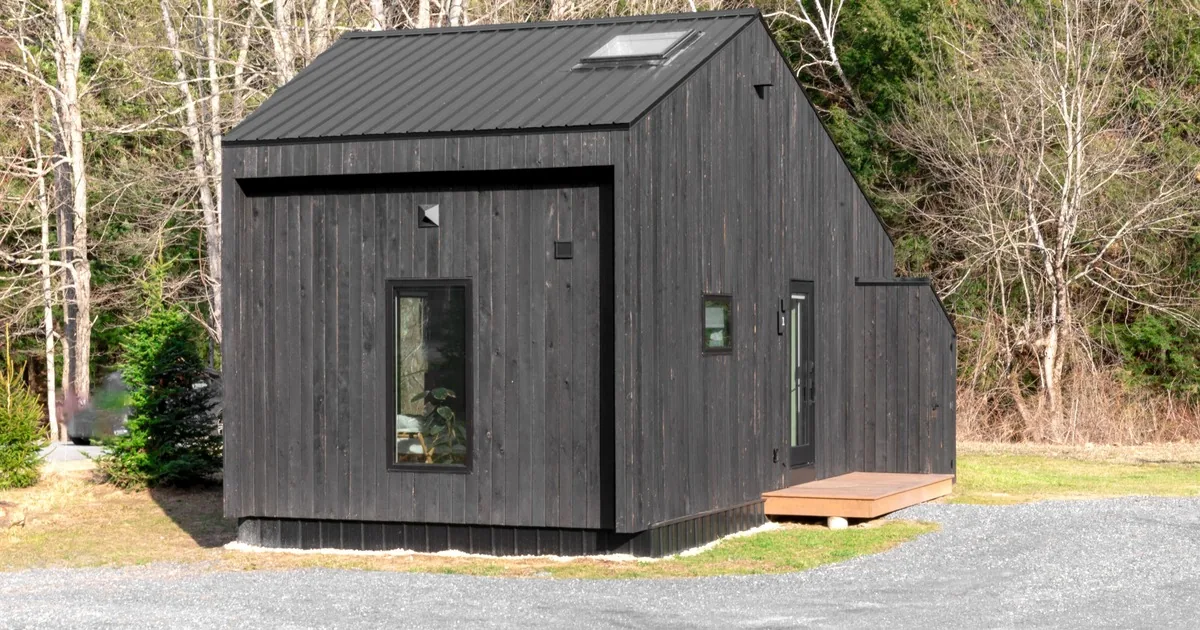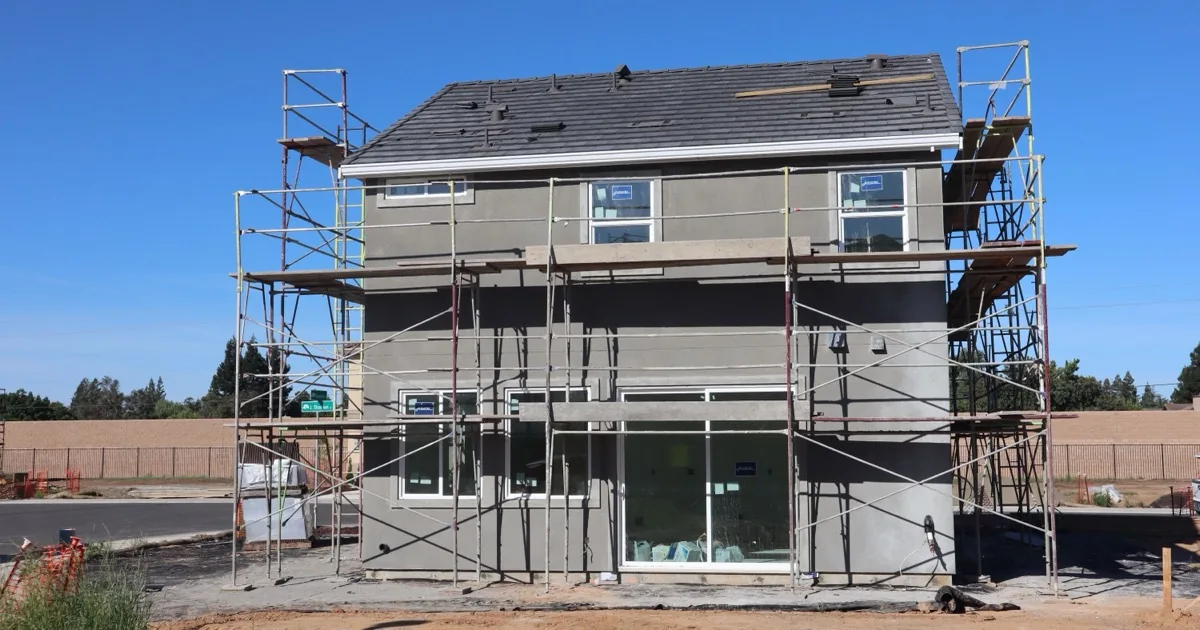
A homeowner calls about one soft clapboard below a dining-room window. The paint has bubbled, the lower edge crumbles when touched, and a dark stain returns after rain. They want a price for “replacing that board.” The visible board may be the whole repair. It may also be the first removable layer over wet sheathing, damaged trim, or a failed water detail.
The office should schedule an inspection and collect the facts that define its starting scope: siding type, exact location, visible area, softness or crumbling, nearby windows and rooflines, when the wall gets wet, interior signs, prior repairs, safe photos, access, and the caller’s requested outcome. Do not price a one-board repair or promise that the damage stops at the paint line. A field assessment must find the moisture source and determine how far the affected material extends.
Locate the damage on the building
Start with the address, then name the elevation as front, rear, left, or right while facing the front door. Add the story and a fixed landmark. “Rear wall, first floor, below the left dining-room window” can be found by an estimator. “Some rot out back” cannot.
Ask what kind of wood siding the caller sees. It may be horizontal clapboard or bevel siding, shingles, board-and-batten, vertical panels, or an unknown material. Record the answer as an observation. Painted engineered wood and solid wood can be hard to distinguish in a phone photo, so uncertainty belongs in the work order.
Next, capture the visible boundary. Ask how many boards or shingles appear affected, whether the areas touch, and the approximate width and height of the full patch. Use nearby corners, windows, doors, hose bibs, lights, decks, roof intersections, and grade changes as reference points. A three-foot section below one window is a different inspection setup from scattered soft spots along an entire shaded wall.
The caller may use “dry rot” for any decayed wood. Keep their phrase in quotation marks if it matters, then describe what they actually see: soft fibers, crumbling edges, peeling paint, open joints, dark staining, a hollow area, or missing material. The office does not need a fungal diagnosis to book the right visit.
Ask where the water may be coming from
Wood decay needs moisture, so the most useful estimate call follows water before it discusses replacement material. Oregon State University Extension gives a direct repair principle: correct the moisture source before replacing damaged wood. The intake record should help the estimator inspect that source without claiming to have found it.
Ask when the area looks wet. Does the stain appear during wind-driven rain, after the gutter overflows, when an irrigation zone runs, or long after the weather clears? Does the caller see a steady plumbing leak, condensation indoors, or water at the window? Record timing in the caller’s words.
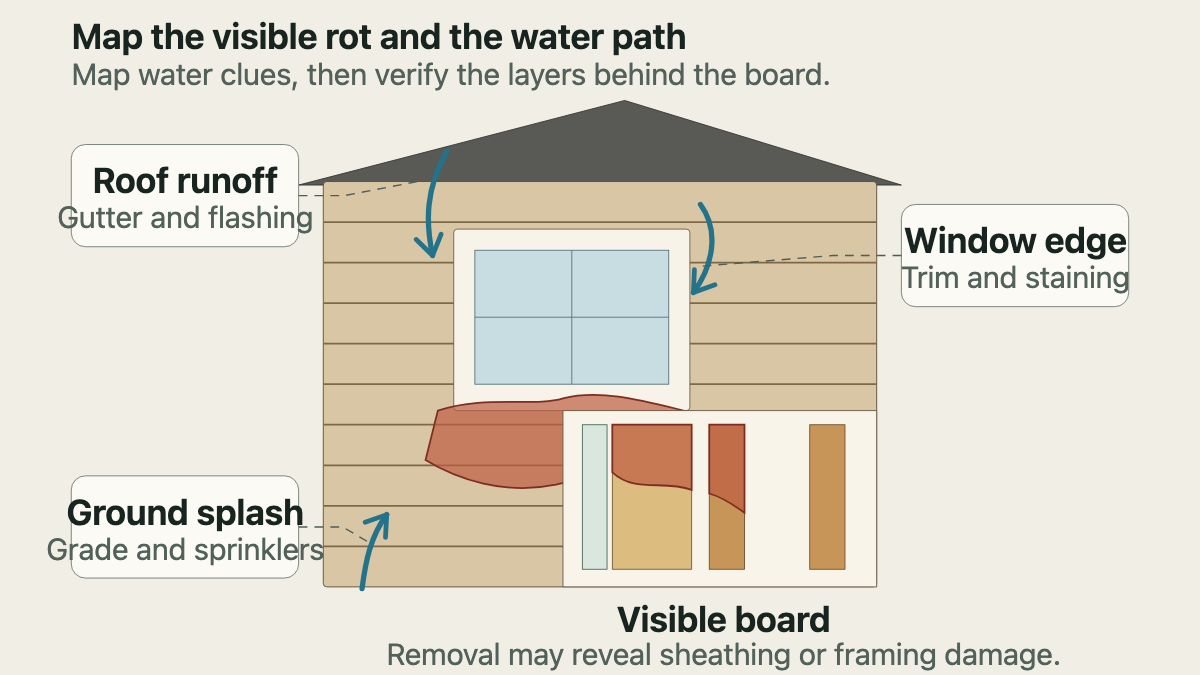
Then map nearby water-handling details. The U.S. Department of Energy’s Building America guidance on siding identifies windows, doors, roof-to-wall transitions, penetrations, and exterior lights as vulnerable interfaces. Its flashing inspection guide also points to gutters, downspouts, sprinklers, ground contact, grade, and planter boxes as useful places to investigate when siding is soft or discolored.
Ask about those features plainly. Is the damaged wood below a window or roof edge? Does a downspout discharge nearby? Does a deck ledger meet the wall? Is soil, mulch, a patio, or a lower roof close to the first siding course? Does a sprinkler hit the wall? These answers establish inspection targets. They do not prove which detail failed.
Separate the visible board from the repair scope
A customer may reasonably ask, “Can you replace only the rotten pieces?” The safest office answer is that localized repair may be possible, but the estimator must inspect the surrounding material and what is exposed during removal.
Siding sheds bulk water, but it is one part of a wall assembly. Building America explains that water can pass behind cladding and must be directed back out by flashing, a water-resistive layer, and drainage. Its examples show that mistakes around roof and wall transitions can damage siding, sheathing, framing, insulation, and interior finishes. A receptionist cannot see those layers through painted clapboard.
Ask whether the caller knows of damage behind the siding. Useful records include a home-inspection report, prior contractor photos, an interior stain, soft window trim, damp drywall, pest activity, or an earlier repair in the same place. Attach the original document or photo when available. Do not translate “possible moisture” into “rotted framing.”
The work order should distinguish three boundaries:
- Visible boundary: the boards, trim, or paint that currently look deteriorated
- Investigation boundary: the nearby openings, flashing, gutters, grade, penetrations, and interior surfaces the estimator should inspect
- Unknown removal boundary: concealed material that cannot be assessed until qualified field staff inspect or open the assembly
That structure gives the customer a clear next step without inventing a final quantity. It also prevents a rough phone price from becoming an implied promise after removal reveals a larger condition.
Screen for conditions that need faster routing
Most estimate calls can be scheduled through the normal inspection queue. Change the route when the caller reports an active hazard or continuing water entry.
Ask whether siding or trim is loose above a walkway, entry, driveway, or play area. Ask about active interior dripping, a sagging wall surface, exposed wiring, a damaged electrical fixture, or an opening large enough for weather to enter. Follow the contractor’s urgent-routing policy when material could fall or water is entering now. Keep people away from the affected area when overhead pieces or electricity may be involved.
Pest clues belong in the record too. Damp wood can attract wood-damaging insects, and Oregon State advises professional treatment for significant termite or carpenter-ant colonies. The siding office should record mud tubes, insect activity, small sawdust-like piles, or a pest report without naming the insect or recommending a chemical treatment. Coordinate the appropriate trade after review.
Do not ask the caller to probe wood, remove a board, climb a ladder, open a wall, pull trim, or run a hose test for the sake of intake. A homeowner may volunteer that a ground-level board feels soft. Record it. Further testing belongs to the site team.
Build a useful photo and document set
One close-up of crumbling paint is rarely enough. Request photos only from stable ground or another safely occupied surface.
A useful set includes:
- One full elevation showing the roofline, corners, grade, windows, doors, gutters, and complete affected area
- One medium view that locates the damage against a window, corner, deck, roof, or penetration
- One close view showing the board edges, joints, paint condition, and nearby trim
- One view during or soon after rain when the caller can take it safely from the same location
- Interior photos of staining or finish damage on the opposite side of the wall, if present and safely accessible
- Existing inspection pages, invoices, prior repair photos, and product records
Ask the caller to label each image by wall and distance, such as “rear wall wide,” “below dining window medium,” and “soft lower edge close.” Preserve dates when the system allows it. A sequence taken across several rain events can show where staining starts and how long it remains visible, although photos still cannot establish the concealed scope.
Record access at the same time. Note stories, slopes, decks, shrubs, air-conditioning equipment, locked gates, pets, narrow side yards, soft ground, overhead wires, and neighboring-property access. The office should not select ladders, scaffolds, lifts, or removal methods.
If the caller wants pricing for all elevations, move the project into the whole-house siding replacement estimate workflow. If the issue is detached material after a storm, use the loose or missing siding repair intake. Keep this work order centered on wood deterioration and its moisture path.
Read back a field-ready estimate note
Before scheduling, confirm the building, wall, story, landmark, reported siding type, visible dimensions, observed condition, wet-weather timing, nearby water details, interior signs, loose-material status, pest clues, previous work, documents, safe photos, access, and requested outcome.
A strong handoff might read:
“Repair estimate requested for deteriorated painted wood lap siding on the rear first-floor wall below the left dining-room window. Two adjacent boards show peeling paint and a soft lower edge across an area about four feet wide. The stain darkens after rain. The gutter above has overflowed, and a sprinkler head sits near the wall; cause is unconfirmed. Caller reports a small interior paint stain below the same window, with no active dripping or loose overhead material. Wide, medium, close, gutter, sprinkler, and interior photos are attached. A deck limits direct access below the window. Customer wants the moisture source and repair options assessed.”
An AI receptionist can collect these approved observations after hours and route the call under the contractor’s rules. The estimator still owns testing, diagnosis, access, opening the wall, code review, repair scope, product selection, and price.
The phrase that protects the handoff is simple: “Visible damage measures about four feet; concealed extent is unknown until inspection.”