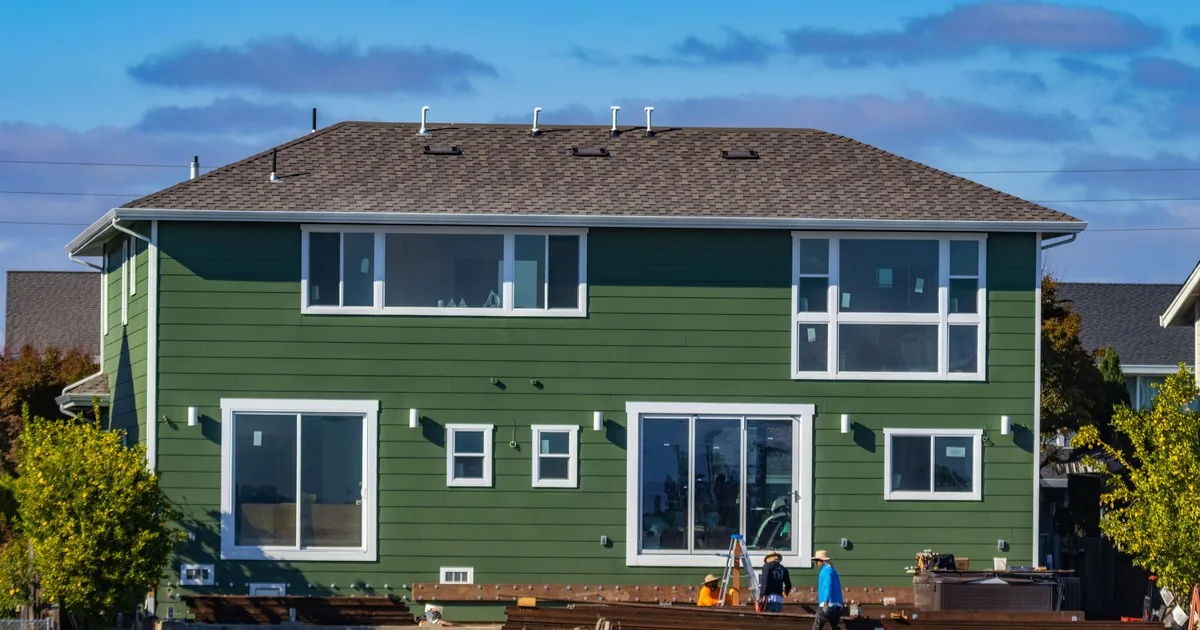
A homeowner calls after a night of hard wind. “Three pieces came off the back wall, and another one keeps slapping under the upstairs window.” The office has enough information to start routing the job, but the work order still needs an exact location, the present exposure, material clues, access details, and a clear request.
The first questions should establish whether anything is loose overhead, whether wall layers are exposed, whether water is entering, and whether damaged material is near electrical equipment. Then locate the affected section by wall, story, and fixed landmark. Do not diagnose a fastening failure or prescribe a repair from the phone.
Route the present condition first
Ask what is happening now. A panel lying in the yard can wait for normal inspection scheduling. A long loose piece moving above a doorway may need prompt review under the contractor's safety policy. Water entering near a window, material touching a service mast, broken glass, or debris over a public walkway changes the handoff again.
Keep callers on the ground and away from hanging material. They should not climb a ladder, lean out a window, pull on a loose panel, or remove another course to see behind it. If a photo can be taken from a stable place without standing below the damaged area, request one wide image and one closer view. Accept “I cannot photograph it safely” as useful intake information.
FEMA's post-Hurricane Michael building-envelope report documents wind damage to siding, soffit, and fascia along with water-infiltration concerns. A receptionist does not need to turn that evidence into technical advice. It supports a simpler rule: loose exterior material and current water entry belong at the top of the call record.
Ask whether anyone has installed temporary protection. Record who did it, when it was installed, which area it covers, and whether it appears to have shifted. Do not tell the customer to nail, tape, or caulk siding back in place. Product type, wall construction, weather, access, and local requirements all affect the field decision.
Pin the damage to one wall
“Back of the house” is a start. Make it field-ready.
Have the caller face the front door and identify front, back, left, or right. If your company uses compass directions or numbered elevations, translate the description and read it back. Add the story and a fixed landmark: “back wall, second story, below the left bedroom window” tells a technician where to begin.
For a long wall, use corners and openings to divide it. The loose section may be between the rear door and downspout, above the air-conditioning unit, beside a chimney, or over the garage roof. Record whether the condition crosses a corner, reaches trim around a window, or continues onto an addition. Those transitions can affect access and the inspection scope.
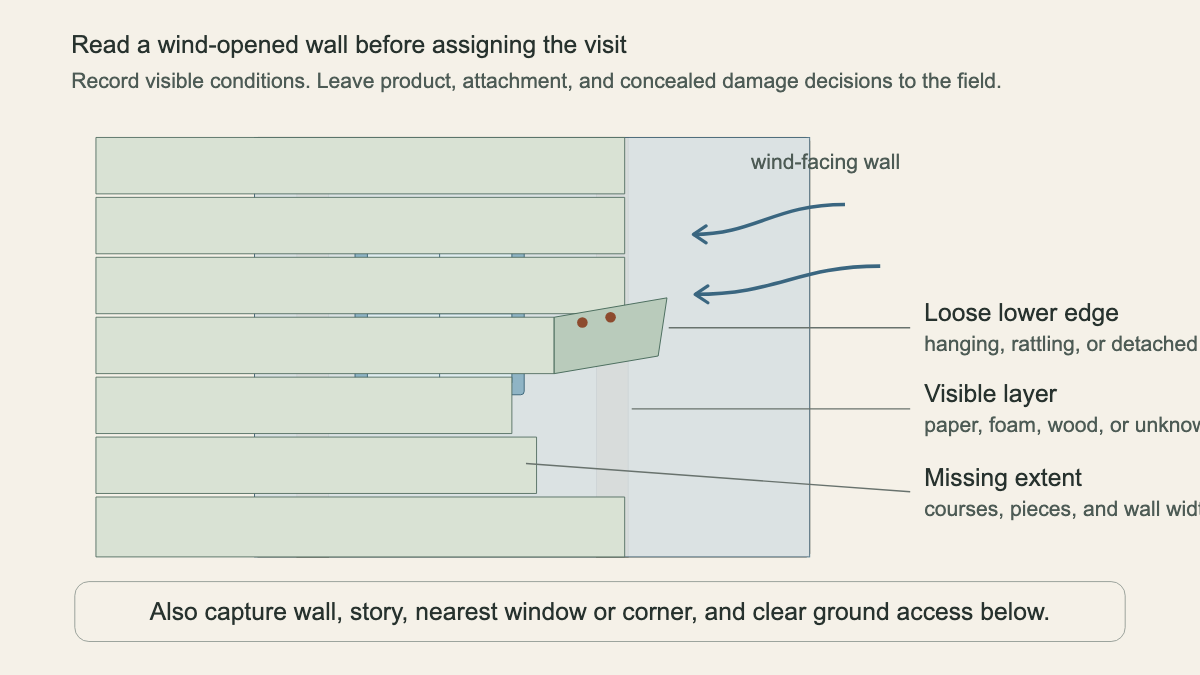
Ask how much appears affected in the caller's own terms. Useful answers include one panel, three full pieces, part of one course, a vertical strip beside a corner, or an area roughly as wide as a window. Avoid converting that description into square footage unless someone has measured it safely.
Wind direction can be recorded as reported context. “The storm came across the field toward the right wall” is useful. It is not proof of why a specific panel released.
Record the material without forcing an answer
Ask whether the siding appears to be vinyl, aluminum or steel, fiber cement, wood, engineered wood, shingle-shaped material, stucco, or another finish. “Unknown” is better than a confident mistake. A caller may know the product from an invoice, a box of leftover pieces, a label, or a prior repair record.
Describe what they can see. Is the siding horizontal or vertical? Are the pieces broad panels, narrow boards, shakes, or sheets? Is the finish painted, factory-colored, smooth, or textured? Did a full piece come away, or is one edge lifted while the rest remains attached? Preserve exact phrases such as “lower edge is open,” “top strip is still attached,” or “a whole corner piece is gone.”
The Insurance Institute for Business & Home Safety describes exterior cladding as part of a multi-layer wall system and notes that post-hurricane investigations have documented siding loss. That is why a missing panel should not be reduced to color and dimensions. The field team may need to assess the cladding, attachment, underlying layers, transitions, and adjacent pieces.
Separate the outer panel from what is visible behind it
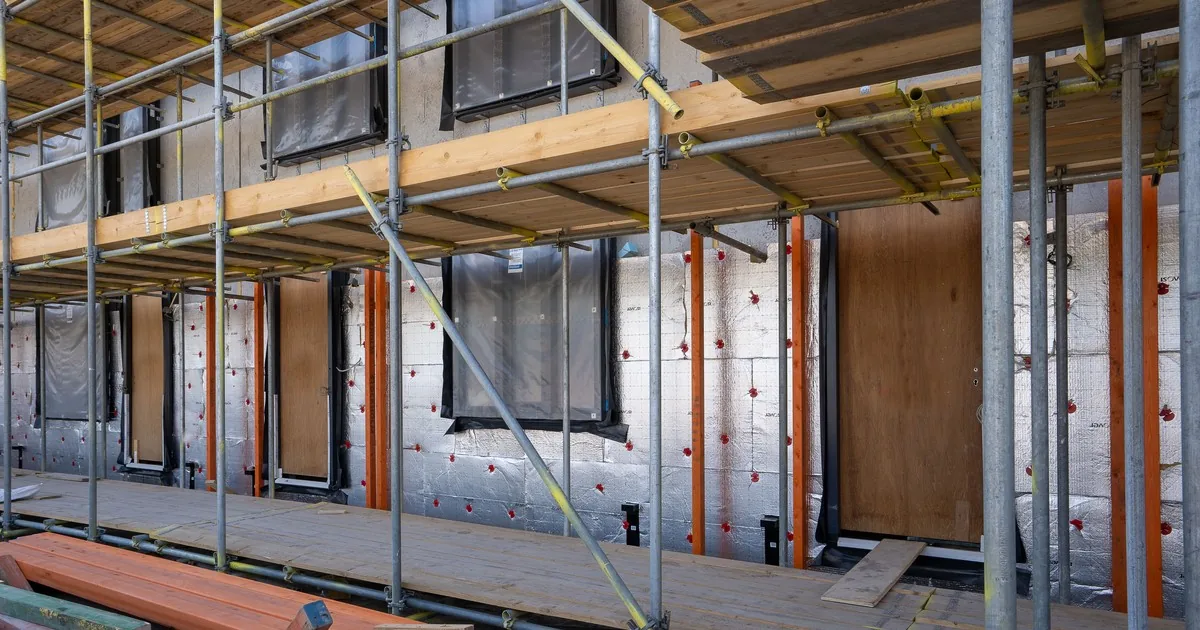
Ask the caller what they can see through the opening from a safe position. They may report printed wrap, smooth foam, brown wood, metal flashing, dark paper, insulation, or an unknown layer. Record the observation without naming the assembly for them.
Building Science Corporation's report on drainage planes and air spaces explains that exterior cladding works with drainage space and a drainage plane behind it. This matters to intake because a missing outer piece may reveal another layer. A phone photo cannot establish whether that layer is intact, whether water reached concealed material, or what repair method fits the wall.
Ask about signs inside the building too. Is water appearing near the affected wall, window, baseboard, or ceiling below? Is there a new stain, damp trim, or dripping during rain? Record when it happens and where. Do not promise that replacing the visible siding will resolve an interior symptom. The source may sit at a window, roof-to-wall transition, opening, flashing detail, or another part of the envelope.
Prepare the access before assigning a slot
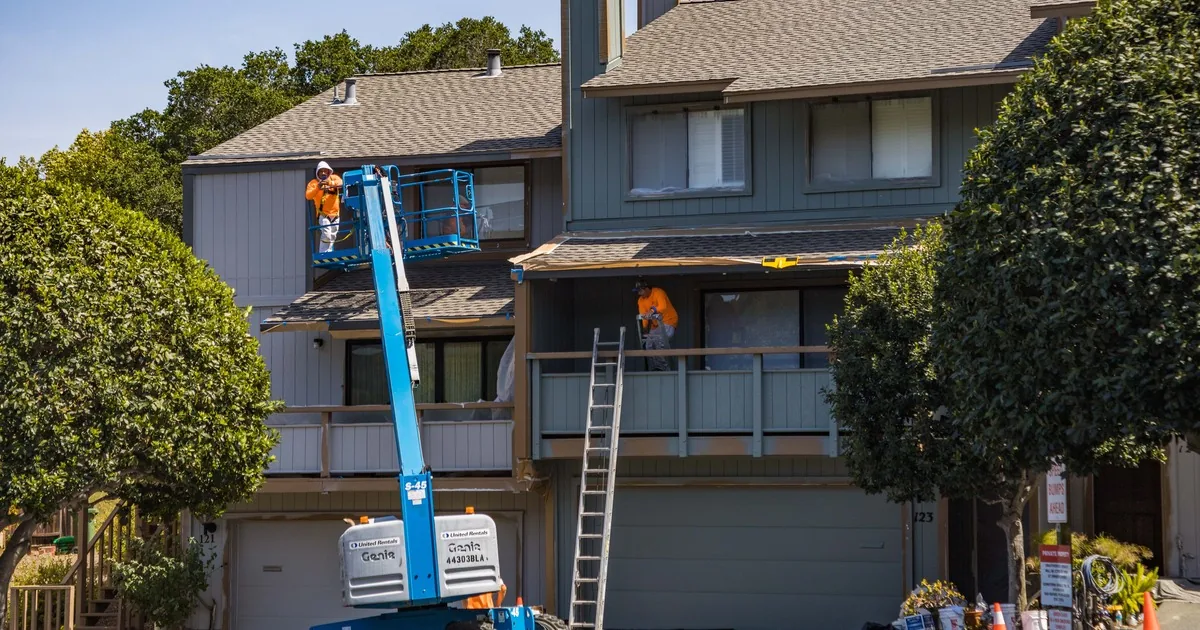
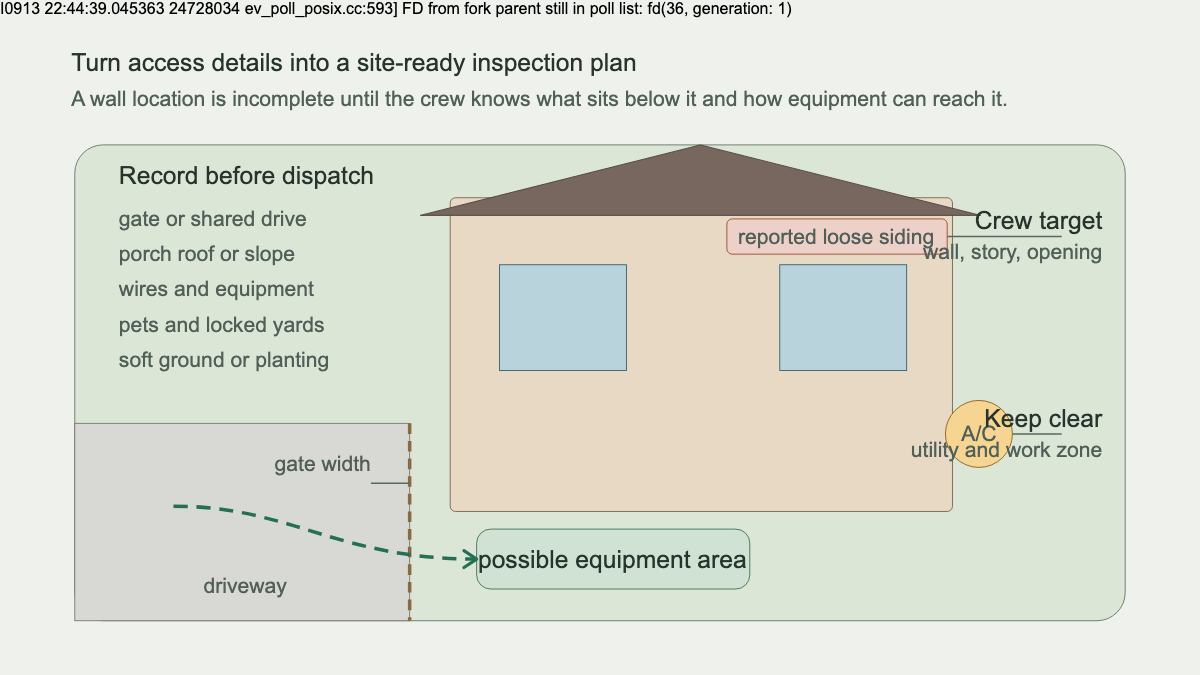
The same missing panel can require very different site planning. A ground-floor course beside a driveway may be easy to reach. A second-story section above a sloped roof, glass sunroom, deck, swimming pool, retaining wall, or narrow side yard may require different equipment and staffing.
Ask about gates, fence width, locked yards, pets, parked vehicles, overhead wires, utility equipment, shrubs, soft ground, and neighboring-property access. Note whether the contractor can place equipment on the property without crossing a garden bed or shared drive. The estimator can then decide what the visit requires.
Also ask whether the customer saved the detached pieces. They may contain product markings or provide a color and profile reference. Tell the caller only where your company wants those pieces kept if you have an approved policy. Do not ask them to retrieve material from a roof, tree, roadway, power line, or other unsafe place.
Weather affects scheduling language. Record active rain, forecast wind, frozen ground, or continuing gusts as conditions reported by the caller. Promise only the appointment window your company can support. A receptionist should never guarantee that temporary work, material matching, or a permanent repair will be completed during the first visit.
Name the service the caller expects
Some callers want a safety check because material is still moving. Others want an inspection, a repair estimate, temporary protection, replacement of missing pieces, material identification, or documentation for an insurer. Put the requested outcome in the work order.
If there is a claim, collect the claim number, adjuster appointment, written scope, and the deadline the customer gives you. The contractor can document observed conditions and its proposed work. Coverage, deductible treatment, matching, depreciation, and settlement decisions belong to the policy and authorized claim process.
Keep this page separate from hail intake. A caller who reports dents, chips, punctures, or impact marks after hail fits the hail-damaged siding inspection workflow. A caller who reports lifted, rattling, detached, or missing siding after wind fits this one. A mixed storm can require both records, but the observations should remain distinct.
Read back a field-ready handoff
Before closing, confirm the address, contact, wall, story, landmark, reported material, number of affected pieces, loose versus missing condition, visible layer, interior water, nearby openings or utilities, safe photo status, access constraints, saved material, temporary work, requested service, claim documents, and customer deadline.
A useful summary sounds like this: “Repair inspection for the back wall of a two-story home. Caller reports two missing horizontal vinyl panels and one loose lower edge beneath the left upstairs window. Printed wrap is visible from the yard. No interior water reported. The section is above a one-story porch roof, and the side gate is 36 inches wide. Wide photos and one saved panel are available. Customer wants an inspection and written estimate before an adjuster visit next Wednesday.”
An AI receptionist can capture the same fields after hours and route the record under the siding company's rules. The contractor still controls safety response, diagnosis, access plan, repair scope, price, and insurance statements.
When the technician opens the job, the first line should point to a real place on the building: “back wall, second story, beneath the left upstairs window.”