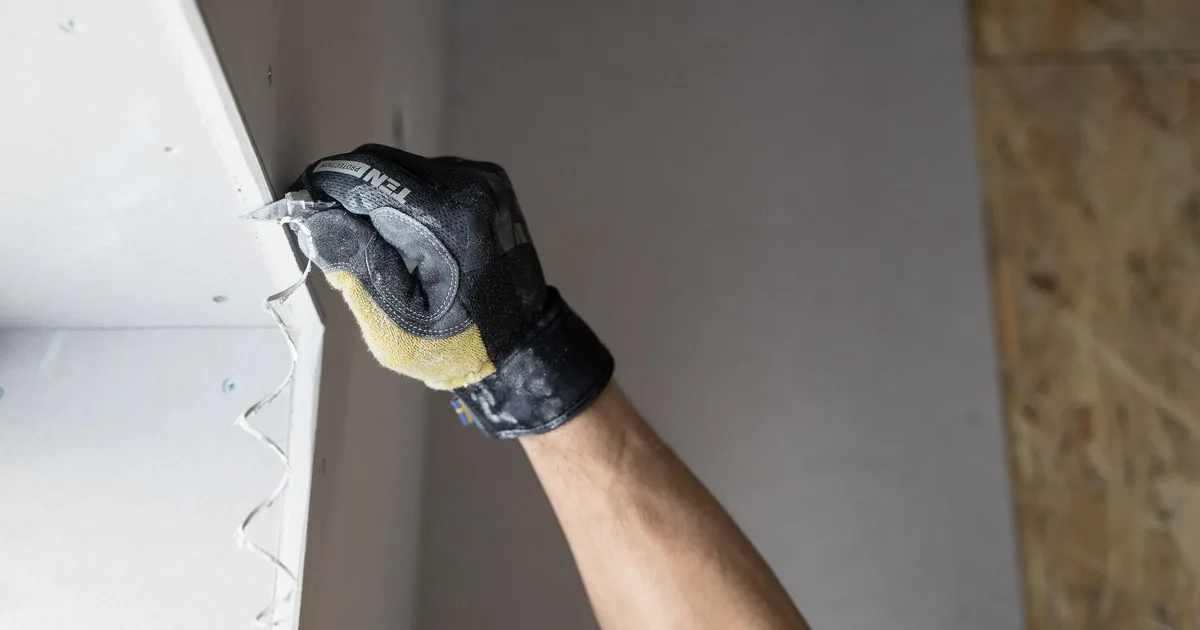
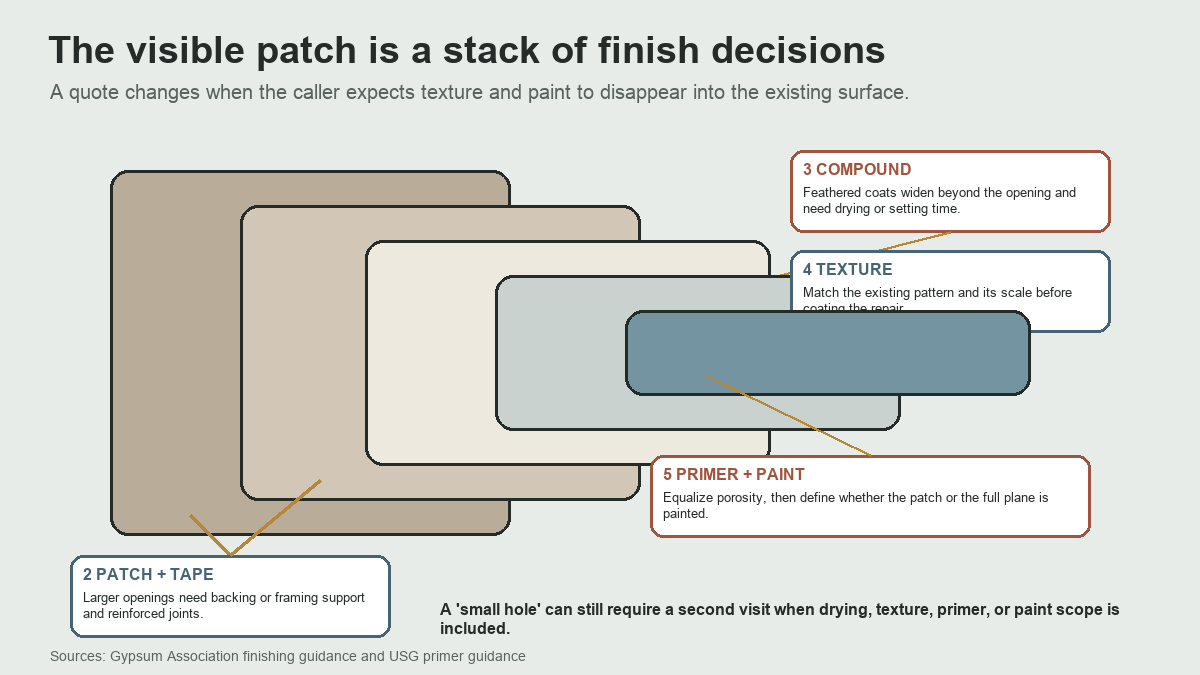
A caller says, “I have a small hole in the wall. What would you charge?” The hole may be smaller than a dinner plate. The finished repair can still involve backing, a patch, joint compound, drying time, texture, primer, and paint. If the wall is damp or the building is older, the route may change before anyone discusses a price.
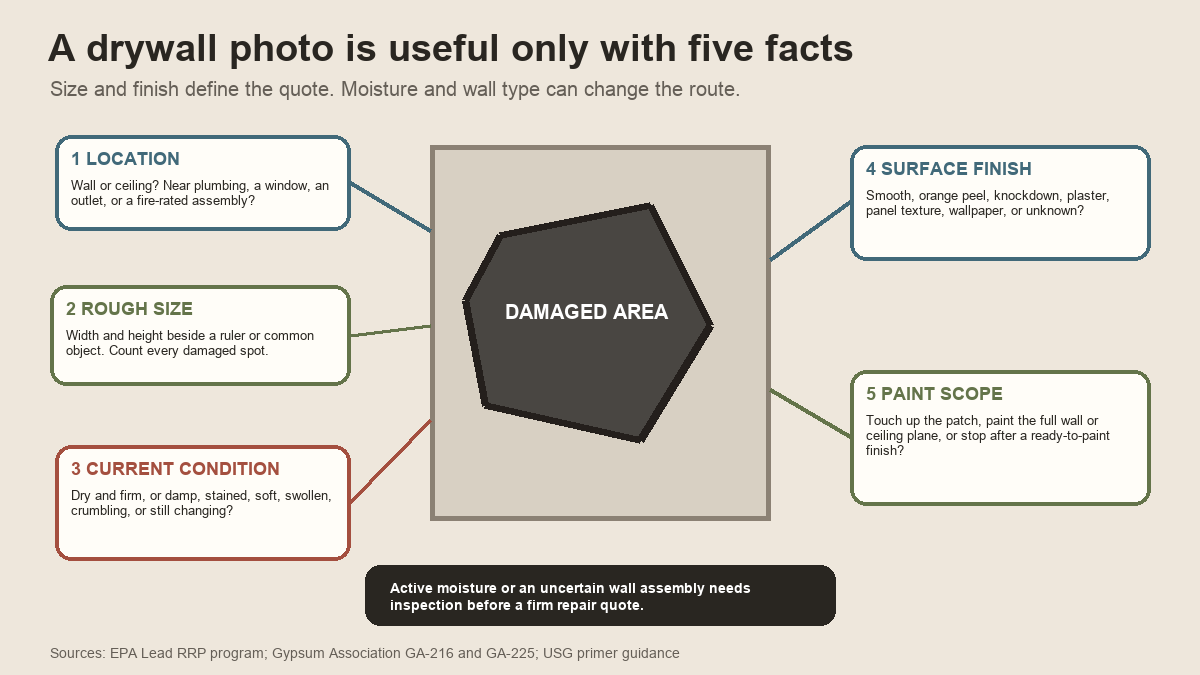
A useful drywall repair quote call captures five things early: where the damage is, its rough size, whether the area is dry and stable, what finish surrounds it, and what the customer expects to be painted. Ask for context and close-up photos. Then choose the next step your company actually supports: a photo estimate, an on-site inspection, or a prerequisite visit for the leak or other cause.
The office should describe what the caller reports. Diagnosis belongs with the person who inspects the wall.
Start with a photo set that an estimator can use
One close-up of a white wall rarely shows enough. It hides scale, location, access, nearby fixtures, and the size of the surface that may need finishing. Ask for a short photo set before anyone tries to estimate remotely.
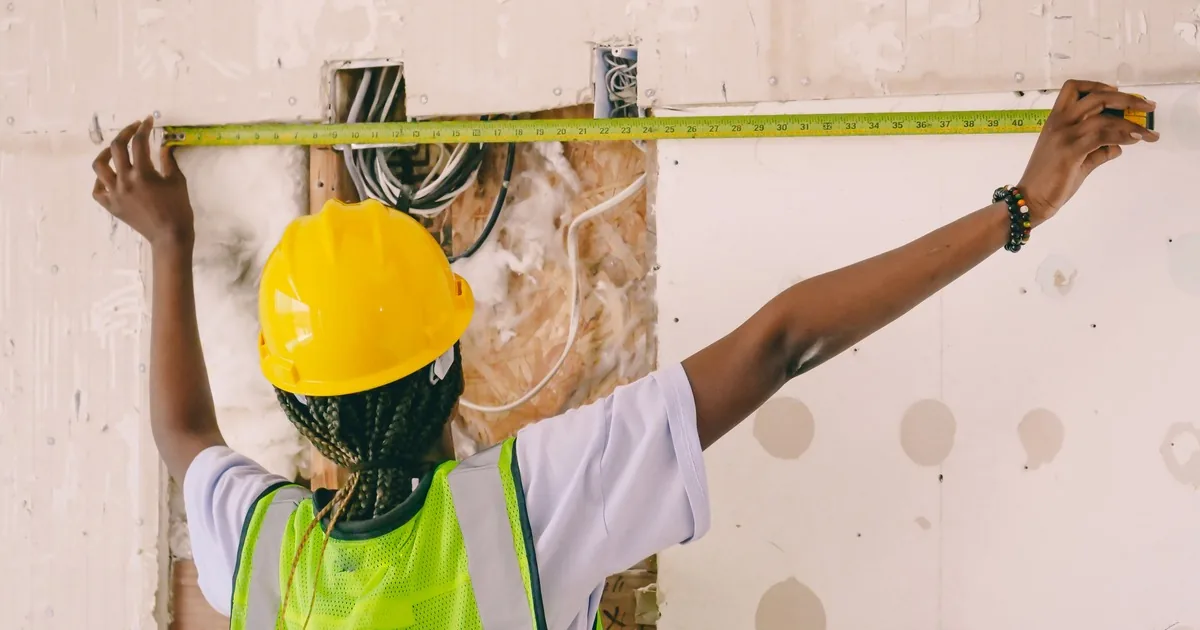
The first image should show the whole wall or ceiling plane. It tells the estimator whether the opening sits beside a window, above a stair, behind a toilet, near an electrical device, or in a tall entry. The second should show the damage straight on with a ruler or tape measure visible. A third close-up can capture torn paper, cracked edges, staining, texture, fasteners, or an old patch. If there are several spots, request one context image and one measured close-up for each.
Have the caller state the rough width and height too. Photos can distort scale, and a tape may be angled. The numbers do not need to be exact enough for fabrication. They need to separate a fastener pop from a cutout left by plumbing work and a larger section that may need support.
Count matters. “One hole” sometimes becomes one plumbing opening, four anchor holes, a cracked seam, and a dent behind the door. Read the count back. If the request belongs inside a longer household work list, use the same discipline described in the multi-task handyman visit guide: list each item before assigning calendar time.
Ask why the drywall failed
A patch should follow the cause, not cover it.
Ask when the damage appeared and what happened immediately before it. A doorknob impact is different from a stain that widened after rain. A plumber may have opened the wall to reach a valve. A ceiling crack may have changed slowly. An anchor may have pulled through under load. The caller's account helps with routing, but it does not prove what is behind the surface.
Use observation words. Is the area dry to the touch? Does it feel soft, swollen, crumbly, or firm? Is the stain growing or unchanged? Is there an active drip, musty odor, bulge, sag, exposed wire, or damaged plumbing? Did the caller remove wet material already? Ask whether the source was repaired and who performed that work.
Do not promise a cosmetic patch while water is entering the assembly. Route an active plumbing leak to the appropriate trade. Roof or exterior leakage may need its own inspection. A large sag, falling material, electrical exposure, or any condition the caller describes as unsafe needs the company's urgent safety process, not a routine patch slot. Keep people away from unstable material and exposed electrical hazards. Do not coach demolition over the phone.
The office also should avoid diagnosing mold from a stain or odor. Record what is visible and what the caller reports. Your company can then apply its policy for suspected microbial growth, wet materials, and referral work.
Define the surface the customer expects to see
“Patch the hole” can describe at least three different finished scopes. One customer wants the opening closed and sanded, ready for someone else to paint. Another expects the patch primed and touched up. A third expects the repaired area to disappear across a smooth, evenly painted wall.
Ask whether the surface is smooth or textured. If textured, request a photo taken with light crossing the wall from the side. Orange peel, knockdown, skip trowel, sand texture, and older hand-applied finishes can look alike in a flat phone image. Plaster, gypsum board, veneer systems, wallpaper, panel products, and previous repairs may need a closer look before the office calls the job standard drywall.
Then ask about paint. Does the customer have the original paint can, color code, sheen, and usable leftover material? How old is the coating? Is the expectation to paint only the patch, the full wall, or the full ceiling plane? Has smoke, sunlight, cooking, or ordinary aging changed the surrounding color?
A saved color name does not guarantee that a fresh touch-up will disappear into an older coating. State the company's finish policy before scheduling. If your normal quote includes a ready-to-paint patch but excludes painting, say that. If full-wall painting is the usual recommendation for a consistent appearance, put that scope in the estimate instead of letting the customer discover it after sanding.
The Gypsum Association's GA-216 resource treats panel application and finishing as a system of materials and steps. USG's primer guidance explains that drywall face paper and joint compound can differ in texture and porosity. Those differences are why primer and paint scope belong in the first conversation.
Flag older paint and special assemblies
Ask the year the building was constructed or whether the customer knows it was built before 1978. Do not use that answer to declare that lead-based paint is present. Use it to trigger the company's compliance check before work disturbs a painted surface.
The EPA's Renovation, Repair and Painting contractor guidance covers paid work that disturbs painted surfaces in many pre-1978 homes and child-occupied facilities. Federal rules include property, work, certification, and lead-safe practice requirements, with exceptions and authorized state or tribal programs affecting the actual job. The office needs enough information to route the request to the right person. A phone photo cannot settle applicability.
Location can also signal a special assembly. Ask whether the damage is in an attached garage wall or ceiling, a corridor, stair enclosure, mechanical room, multifamily separation wall, commercial tenant space, or another location identified as fire-rated on project documents. Do not tell the caller that a wall is rated based on location alone.
The Gypsum Association's GA-225 repair resource exists because repairs to rated systems must preserve the assembly's performance. Flag the possibility, collect any plans or labels the property manager has, and let a qualified person verify the system and repair method.
Build a clean estimate or technician handoff
By the end of the call, the next person should receive a short record that can be read without replaying the conversation. Include:
- Customer name, service address, room, and exact wall or ceiling location
- Number of damaged areas, rough width and height of each, and photo links
- Reported cause, date noticed, whether the condition is changing, and whether the source was repaired
- Observations such as dry, damp, stained, soft, swollen, cracked, sagging, or exposed
- Surface type and texture, plus any uncertainty about plaster or a special assembly
- Desired finish: ready to paint, primed, touch-up painted, or full-plane painting
- Paint information on hand, property age, occupancy, access limits, pets, stairs, ceiling height, and furniture in the work area
- The company's chosen next step and every assumption attached to a photo estimate
A photo estimate should say what can change it. Hidden damage, wet material, a different substrate, a rated assembly, inaccessible work, failed previous repairs, or a larger paint scope may require a revised plan after inspection. Clear assumptions protect the customer as much as the contractor because the estimate describes a real result instead of a vague patch.
If calls arrive while the technician is sanding or coating a wall, an AI receptionist can collect the same photo and intake fields after hours. The handoff still needs company rules. Automation should preserve the estimator's boundaries, especially around moisture, older paint, special assemblies, and finish promises.
The strongest final note sounds plain: “One opening about eight inches wide in the living-room wall, dry after a completed plumbing repair, smooth painted gypsum board according to the caller, home built in 2004, three photos attached, customer wants the full wall painted, and an on-site estimate is scheduled because the old cutout edges and paint condition need inspection.”
That is enough for the next person to begin in the right place.