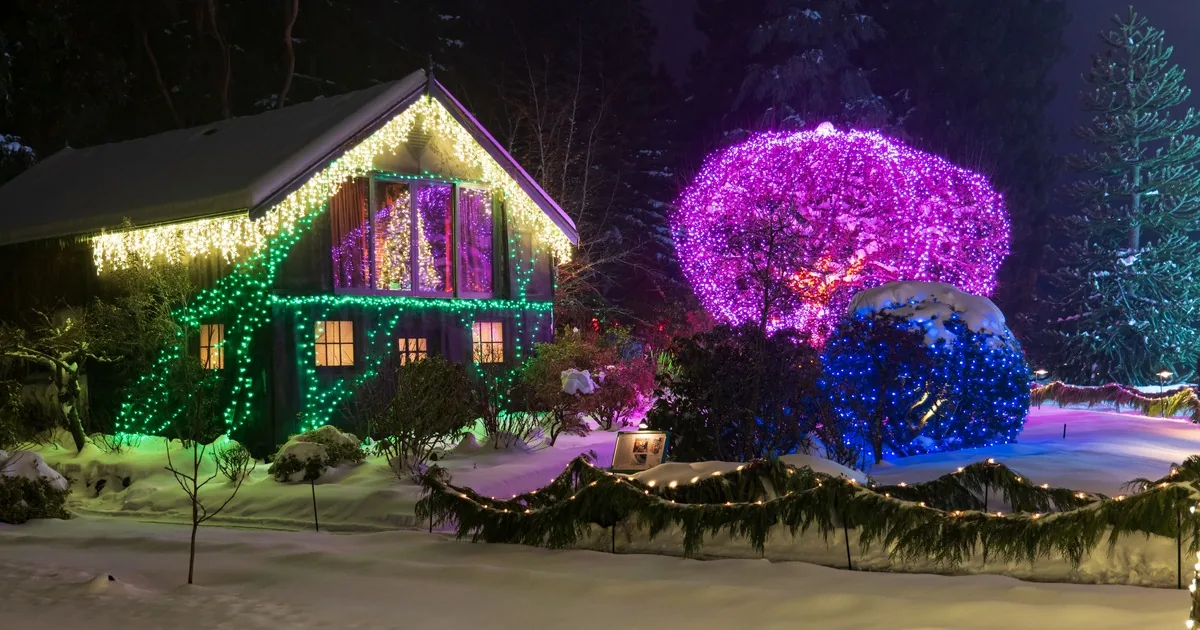
A homeowner calls with a photo taken from the curb. “We want the whole front done like this, plus the big maple.” The roof has two levels, the garage outlet is hidden behind a freezer, the customer owns six tubs of mixed lights, and nobody has discussed January.
Do not turn that into a date and an hourly estimate. First map the requested display by zone. Record the roofline, windows, trees, shrubs, paths, wreaths, access conditions, known power locations, equipment owner, control plan, in-season service expectation, removal window, and storage owner. A qualified installer can then approve the field plan.
The removal appointment belongs in the original work order. If the office leaves it for later, January starts with a second round of calls and half the decisions have vanished.
Draw the display on one front elevation
Ask for a straight-on photo from the curb and another from each side where lights are requested. A video walk-around helps when trees or additions hide parts of the roof. Label the views with the street address before they reach a shared inbox full of similar houses.
Break the display into named zones. “Front roofline” is still vague on a house with a first-floor porch, second-story gable, garage eave, and dormer. Use names that the customer and crew can recognize: upper gable A, garage eave B, left window C, right window D, maple E, walkway F.
Each zone needs its own observed facts. Capture the approximate run, number of corners, roof or trim material, height relative to the ground, nearby trees, sloped ground, fences, gates, overhead conductors, and a place where a ladder could be set. Photos can establish the conversation. They do not approve access.
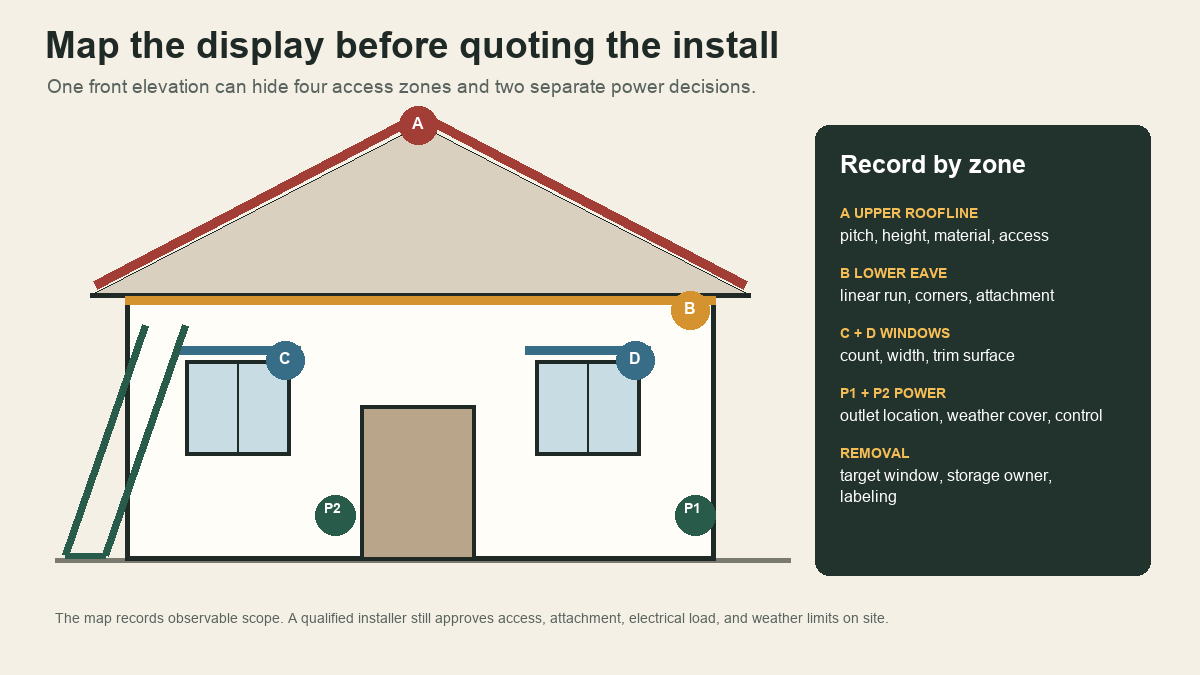
Ask the caller to mark priorities too. If weather or site conditions prevent work on the upper gable, should the crew complete the lower eave and windows, reschedule the whole display, or wait for the office to call? That choice affects dispatch and should not be invented from the driveway.
Separate customer-owned lights from contractor-supplied equipment
A plastic tub labeled “outdoor lights” is not a scope. Ask the customer to lay out the strands, extension cords, timers, clips, wreaths, and adapters before taking photos. Record product labels where readable, plug type, strand color, bulb color, approximate length marked on the package, and whether each item was tested this season.
Then define ownership in the work order. Does the customer expect the handyman to install whatever is in the tubs? Does the contractor provide a matched system and keep ownership of it? Who replaces a failed strand during the season? Who supplies clips for gutters, shingles, masonry, railings, windows, or trees? The answer can differ by zone.
The Consumer Product Safety Commission's holiday decoration guidance advises checking new and old light sets for cracked sockets, frayed or bare wires, and loose connections. It also recommends safety-tested lights and secure outdoor fastening. Put inspection and approval with the installer. A receptionist can record that a strand worked last winter, but cannot call it safe for this job.
Customer-owned materials need a clear exception process. If half the strands fail testing or the supplied clips do not fit the surface, the technician needs a named contact who can approve substitutions, changed scope, or a return visit. Put that person and the approval method on the ticket.
Record power facts without diagnosing the house
Start with observation. Ask where the customer sees exterior receptacles, whether each one has a weather cover, what else is normally plugged in there, and whether a switch, timer, or smart plug controls it. Request clear photos of the receptacle and its surrounding area. Keep panel covers closed and tell the caller not to dismantle electrical equipment for intake photos.
Record symptoms in the customer's words: “The left outdoor outlet stopped working after rain,” “the garage breaker tripped when last year's display was turned on,” or “there is no visible outlet near the tree.” Those notes call for review. They are not permission to reset, modify, or extend a circuit.
CPSC's extension-cord guidance tells consumers to look for cords listed by a nationally recognized testing laboratory. The equipment label and manufacturer instructions also matter. The office should record what the customer has, then let the installer decide whether it suits the location and planned use.
For employee work, OSHA's construction electrical requirements address nearby energized circuits, worn cords, walkway hazards, and fastening extension cords with staples, nails, or wire. That regulation is one boundary, not a complete holiday-light safety program. Company policy, applicable standards, product instructions, and the actual site still control the work.
Never promise a maximum display size from a phone photo. Circuit capacity, connected equipment, product specifications, cord routing, weather exposure, and control devices require field review by someone qualified under company policy.
Make access and weather dispatch decisions
The intake record should tell dispatch what the crew will encounter before the truck turns into the street. Ask about stories, roof pitch as observed by the customer, dormers, deep eaves, balconies, soft landscaping, retaining walls, snow, ice, locked gates, pets, parking, and traffic near the setup area. Record overhead lines or service drops visible near any requested zone and route them for safety review.
Now define the company's weather rule in plain language. The call handler should not improvise it. State who decides whether wind, rain, snow, ice, darkness, or frozen ground pauses the work; how the office contacts the customer; and whether safe lower zones may proceed when an upper zone cannot.
Give dispatch the customer's real deadline and what sits behind it. “Guests arrive Friday” is useful context. It does not become a guarantee. The appointment remains subject to the reviewed scope, equipment readiness, access, and conditions on site.
The same intake discipline applies when holiday lights are one task in a larger visit. Use a separate line item for each lighting zone inside the multi-task handyman scheduling process. The handyman resource hub covers other service calls that need their own questions and routing.
Put service, removal, and storage on the first ticket
Installation creates an operating display that may need attention before removal. Decide what the customer should do when one zone goes dark, a timer loses its schedule, wind moves a strand, or a clip comes loose. Give the office a route for photos, shutdown instructions drawn from company policy, and urgent escalation. Do not ask a homeowner to climb, reach from a window, or handle damaged wiring.
Full-service providers often describe holiday lighting as a sequence that includes design, installation, maintenance, and removal. SavATree's holiday-lighting service is one example. A small handyman business can offer a narrower scope, but the boundary must be written down.
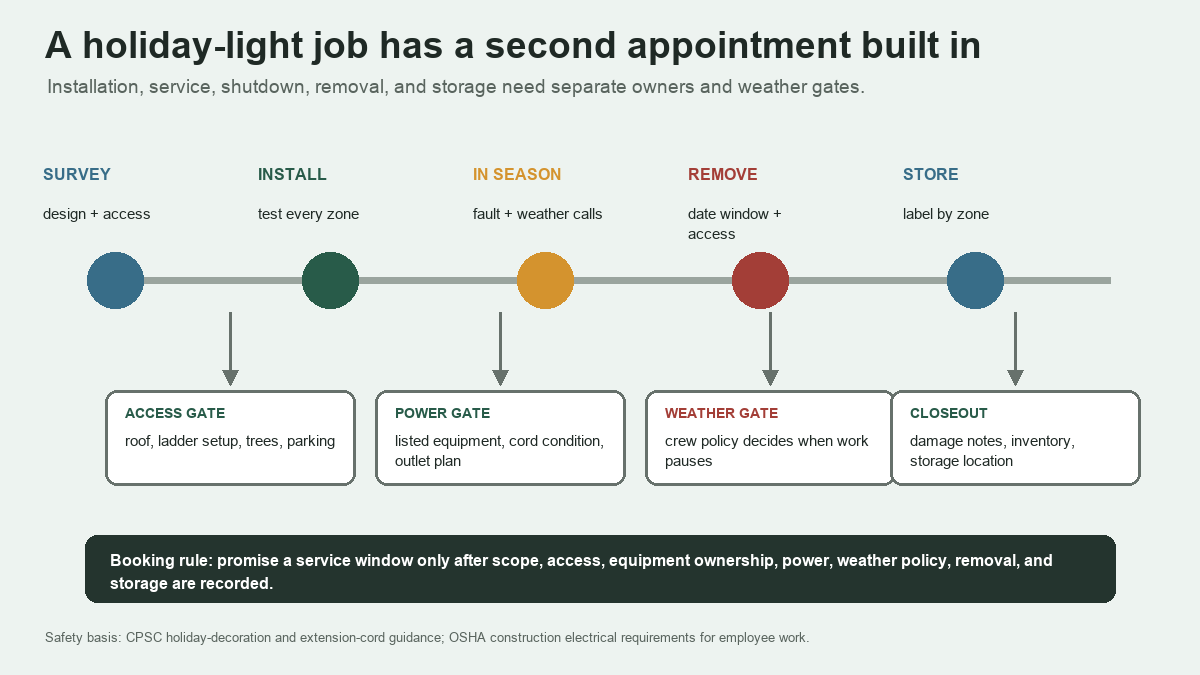
Book a removal window during the original sale. Record any date after which the customer needs the display down, plus the same gate, parking, pet, and building-hour details used for installation. Removal in winter may present different ground and roof conditions, so the crew still controls the field decision.
Storage needs an owner and an inventory method. If the customer keeps the equipment, specify where labeled bins will be left. If the contractor stores it, record the account name, display-zone labels, damaged or replaced components, and who owns each item. Take closeout photos before the bins leave the property.
Read back the work order by zone
A useful readback sounds like this:
“Upper gable A, garage eave B, two front windows, the maple, and the walkway are requested. The customer owns the wreaths and tree lights; the contractor is reviewing roofline lights, clips, cords, and controls. Photos show two exterior receptacles, but suitability and capacity are unapproved. The left side yard is sloped, a service drop is visible near the maple, and the access plan needs crew review. Morgan Lee approves substitutions by text. Weather decisions follow company policy. In-season faults route through the office. Removal is requested after the holiday gathering, with equipment labeled by zone and returned to the garage shelves.”
That record gives the customer an honest boundary and gives the crew a house they can recognize. When January arrives, the bins should already say A, B, C, D, E, and F.