A homeowner calls about “bad grout around the tub.” The photos show four different things: rigid joints between wall tiles, a flexible line where tile meets the tub, dark staining near the faucet, and one tile that looks slightly proud of its neighbors. If the office books “regrout tub” and stops there, the technician arrives with a label instead of a scope.
Start with the joint. Record exactly where it sits, what materials meet there, what has changed, whether the area is wet or moving, and what the photos actually show. Then choose the appointment route. Caulk and grout repair calls are easy to schedule well once the office quits treating every line between hard surfaces as the same material.
Start with the joint, not the product
Callers use grout, caulk, sealant, and silicone as loose synonyms. Do not correct the caller or copy the label into the work order as fact. Ask for the physical location.
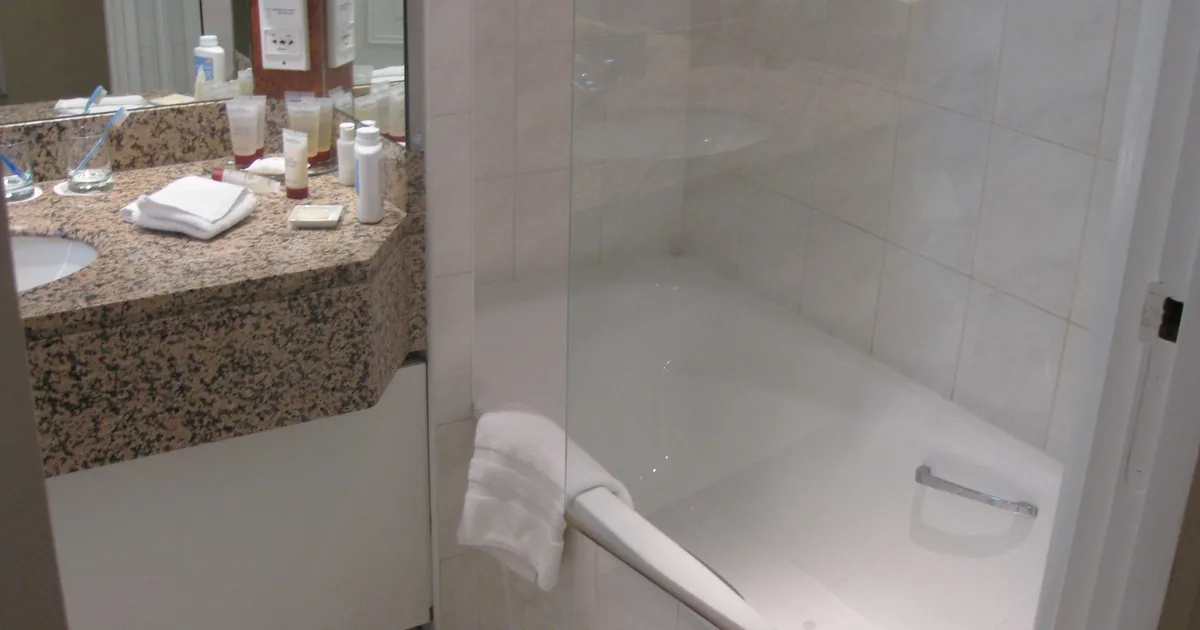
A line between tiles in the middle of a wall or floor is a field joint. A line where two tiled walls meet is a change of plane. So is the joint where a tiled wall meets a tiled floor. Tile against a tub, shower pan, sink, countertop, backsplash, or trim creates a transition between materials. Faucet escutcheons and other penetrations add another condition around an opening.
That location matters because rigid grout and flexible sealant do different jobs. CUSTOM Building Products explains in its technical FAQ that caulk is used in transition joints and changes of plane where settling or structural movement may occur. Its examples include a countertop meeting a backsplash, tile meeting a tub, and a wall meeting a floor. Lowe's grout and caulk comparison makes the basic distinction clear for homeowners: grout hardens, while caulk remains flexible.
The office still should not select a product from that description alone. Wet-area suitability, joint dimensions, tile or stone type, existing materials, color, exposure, and manufacturer instructions all affect the field decision. Your intake should preserve those facts for the person who makes it.
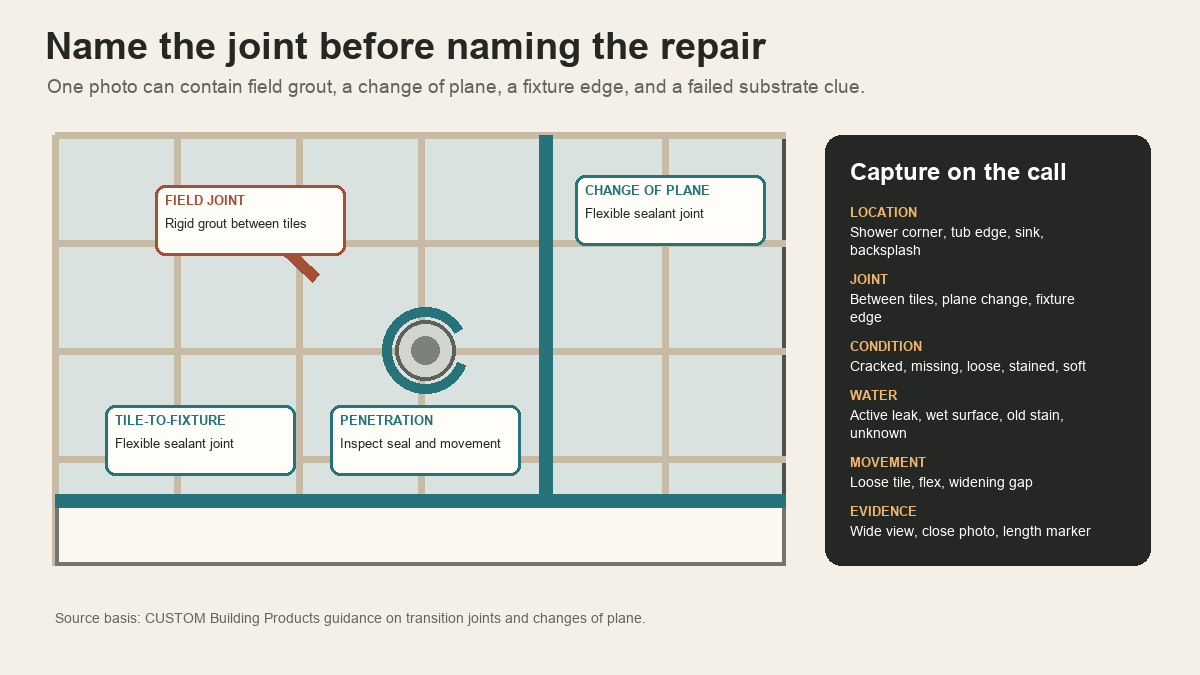
Give each reported failure a location name. “Hall bath, tub long side, tile-to-tub joint” is useful. “Bad grout in bathroom” is not. In a kitchen, write “sink rear edge against laminate countertop” or “backsplash inside corner beside range.” The technician can now match the note to the surface without touring the room by phone.
Ask what failed and what sits behind it
The visible condition is the next field. Ask whether the joint is cracked, missing, separated from one side, soft, loose, powdery, stained, peeling, or covered by an older repair. Keep the wording observational. “Dark specks on the lower shower corner” is safer than “mold in the wall.”
Find out when the caller first noticed it and whether the line changed. A short missing section that appeared after cleaning is a different intake record from a corner that has split repeatedly after several repairs. Repeated failure may point to movement or another condition that deserves assessment before the same material is installed again. CUSTOM's movement-joint technical paper explains why tile assemblies need planned space for movement. A call handler cannot determine that assembly from a close-up, but a history of recurring cracks belongs in the work order.
Water history carries more weight than color. Ask whether the area is wet now, becomes wet during use, shows a stain after use, or has stayed dry. Record any soft drywall, swollen cabinet base, loose baseboard, musty odor, peeling finish, or material that gives under light pressure. Do not ask the caller to pry, scrape, or remove tile for the sake of a photo.
The EPA's guide to mold, moisture, and the home centers moisture control and advises against caulking or painting over moldy surfaces. For a handyman office, the practical boundary is simple: a cosmetic seal should not be promised while the source and condition of active or concealed moisture remain unresolved.
Ask whether the tile, tub, sink, countertop, or trim moves. A loose tile, rocking fixture, widening corner, or flexing surface changes the job. Fresh material across a moving joint may hide the symptom for a while without addressing the cause. The technician needs permission and time to inspect, or the office needs to route the condition to the responsible trade.
Build a photo set the technician can use
One extreme close-up rarely establishes location. Ask for a wide photo that shows the entire tub, shower wall, sink, countertop, or backsplash. Follow it with a medium view that identifies the affected edge, then a close photo sharp enough to show the joint condition. Put a ruler or another familiar object beside the damaged section when length or width is hard to judge. The object should sit near the joint without covering it.
Keep the files attached to named line items. If the caller has one failed backsplash corner and one cracked floor joint, create two records. A photo filename or caption such as “Kitchen K1, sink rear edge” prevents the technician from pairing the wrong close-up with the wrong surface.
Record these details with each item:
- room and exact joint location;
- materials on each side of the joint;
- observed condition and approximate affected length;
- water timing, staining, odor, softness, or movement;
- wide, medium, and close photos;
- previous repairs and any known product packaging;
- access limits, occupancy, and when the surface was last used;
- requested outcome, such as inspection, color match, or limited repair estimate.
Do not promise an exact color match from a phone photo. Lighting, age, cleaning products, batch differences, and the surrounding surface can change how a repair reads. If the homeowner has an old bag, tube, receipt, or labeled container, ask for a legible photo and let the field reviewer confirm whether it remains relevant.
Choose the route before choosing the slot
A useful office has more than one appointment label. The narrowest route is a limited joint-repair review: the failure is localized, the area is dry, nearby tile and fixtures appear stable, the location is clear, and the photos show safe access. Even then, the final method stays subject to field confirmation.
Use an inspection-first route when the joint keeps cracking, the stain or odor is unexplained, the failure crosses several surfaces, an old patch hides the original joint, or the substrate and existing product are uncertain. Give the technician enough time to inspect and explain options. A rushed repair slot invites a rushed promise.
Move the call outside a simple caulk or grout route when there is active water, loose or tented tile, a soft wall or cabinet base, a moving fixture, or a suspected plumbing or electrical fault. The company's trade, licensing, and safety policy should name who receives each condition. Local rules and the actual work scope control whether a handyman can proceed.
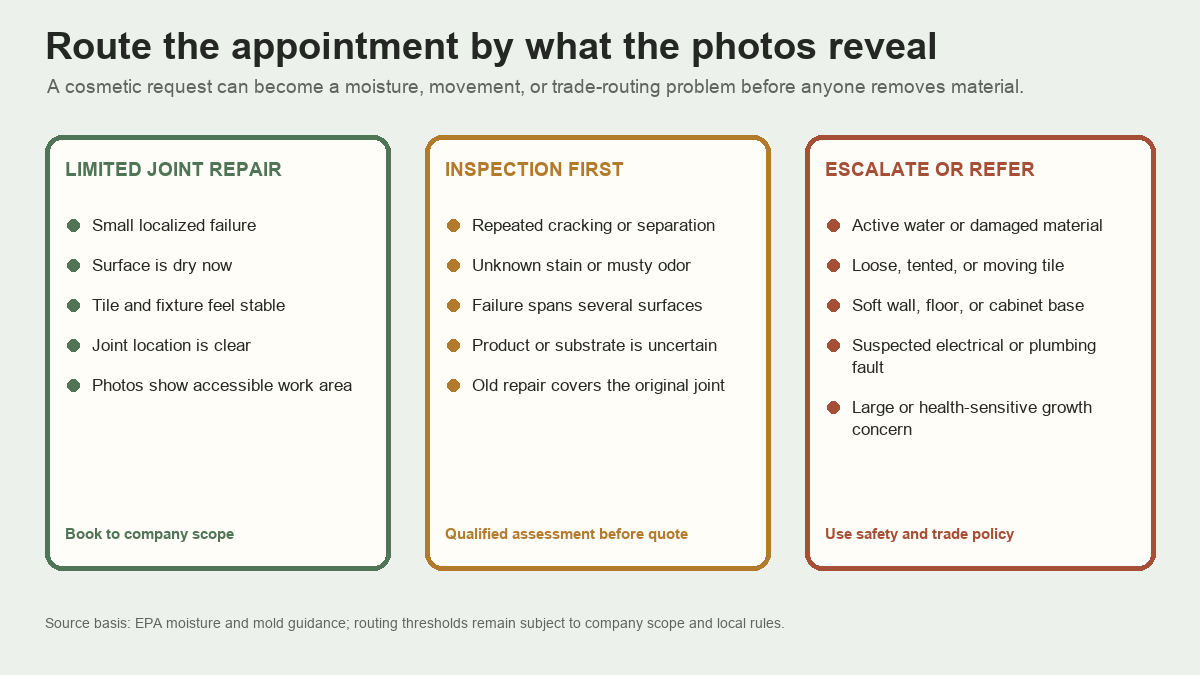
If a caller reports a strong odor, extensive growth, health symptoms, or a condition beyond the company's training, follow the company's escalation and referral policy. Office staff should not identify a substance, offer health advice, or tell someone that a stained area is safe.
Separate the repair call from the whole punch list
Caulk and grout requests often arrive inside a larger bathroom or kitchen list: adjust a cabinet door, hang a mirror, replace trim, patch drywall, and fix the tub line. Keep every condition as its own line item even if the company hopes to group the work into one visit.
The multi-task handyman visit guide shows how to preserve item-level scope across a mixed list. A wet-area joint adds one extra dependency: moisture, movement, and trade responsibility must be resolved before finish work is treated as ready. The handyman resource hub covers other small-job intake patterns that may belong on the same call but need separate evidence.
Access deserves its own note. Ask whether the home is occupied, whether the bathroom is the only one available, whether items can be cleared from the sink or tub edge, and whether a tenant, owner, or property manager approves changed scope. The office can confirm arrival instructions. The technician should confirm surface preparation, cure restrictions, and return-to-use timing after selecting the actual material and method.
Read back a bounded work order
Close the call by reading back location, evidence, route, and unresolved questions. A useful handoff could sound like this:
“Hall bathroom has two separate items. B1 is a split line along the long tile-to-tub joint, about the length shown beside the ruler in the close photo. The caller reports it is dry today and the tub does not move when used normally. B2 is dark staining at the faucet-side corner with a musty odor after showers. No source has been identified. Wide, medium, and close photos are attached. B1 is booked for field confirmation of a limited joint repair. B2 is marked inspection first, with no promise to cover or seal the stained area. The homeowner has an old tube and will send a photo of its label.”
That record gives the field worker a real starting point. When the technician opens the bathroom door, B1 and B2 already describe different joints, different evidence, and different decisions.