A property manager calls on Tuesday with a vacant two-bedroom unit and a new tenant arriving soon. The request sounds simple: patch walls, fix a cabinet, adjust two doors, replace a closet shelf, and “take care of anything else you see.” Photos arrive as an unlabeled stream of close-ups. Nobody can tell which white door rubs, which sink has the stain below it, or whether the wall marks belong to the bedroom or living room.
Do not book that as one vague turnover job. Build the work order room by room. Give each condition its own line item with a location, observed symptom, wide photo, detail photo, materials responsibility, access note, and approver. Then route anything outside the handyman's scope before confirming the visit.
The room is the filing system. That one choice prevents most of the confusion that follows a rushed make-ready call.
Turn the address into a room map
Start with the property identity: street address, building, unit number, floor, and any parking or loading instructions. Confirm whether the unit is vacant, partly occupied, or still holding the former tenant's belongings. Record the lockbox, key pickup, alarm, elevator reservation, pet, and building-hour details that affect entry.
Then name every space in a consistent order. A useful sequence is entry, living area, kitchen, hall, each bedroom, each bathroom, closets, laundry, balcony or patio, garage, and exterior areas included in the request. If the property manager uses room numbers, copy them exactly. “Bedroom 2, street side” is safer than “small bedroom.”
The HUD housing inspection checklist offers a useful organizing model because it proceeds by room and records observable components such as lights, outlets, windows, doors, walls, ceilings, and floors. A handyman work order is not a HUD inspection, and it does not certify the unit. The value here is structural: each observation stays attached to a physical location.
Ask the caller to send one wide photo from the doorway for each room before sending close-ups. The wide view establishes orientation and catches nearby obstacles. The close photo then documents the loose hinge, cracked cover plate, damaged baseboard, stained drywall, or missing shelf support.
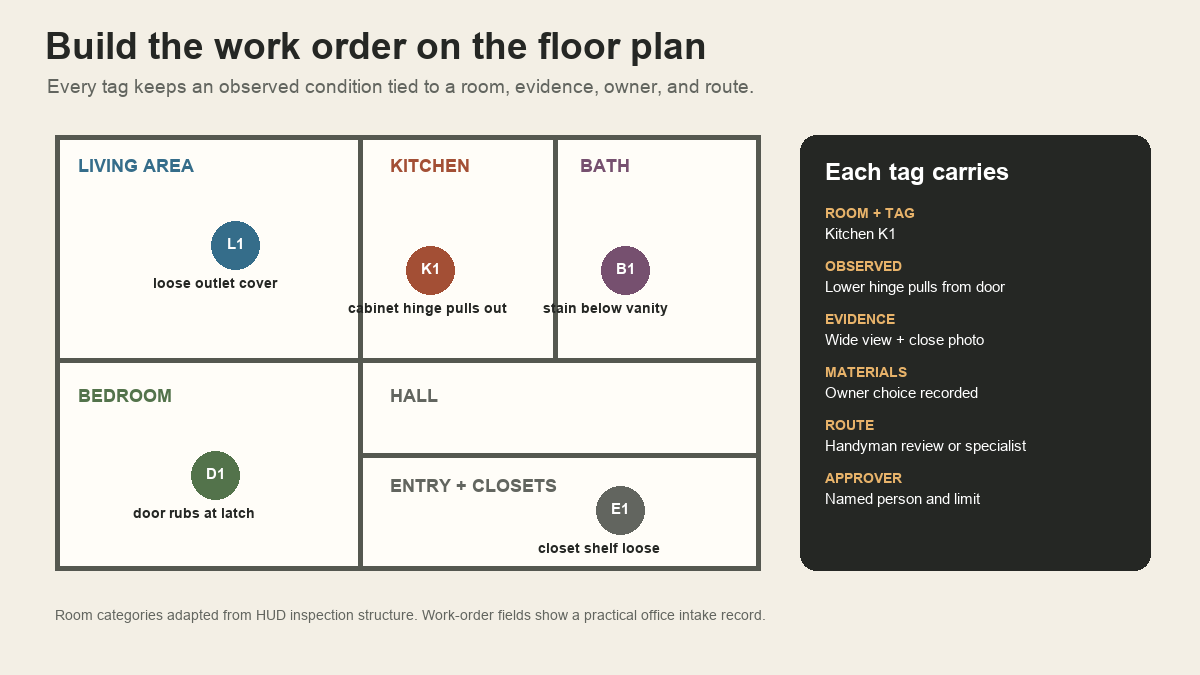
A tag can be plain: K1 for the first kitchen item, B1 for the first bathroom item, and D1 for the first bedroom item. Put the tag in the work order and in the photo filename or caption. When the technician asks about K1, the office should find the right cabinet immediately.
Write what is visible, not a remote diagnosis
A useful line item describes an observed condition and the requested outcome. It does not pretend the call handler knows the hidden cause.
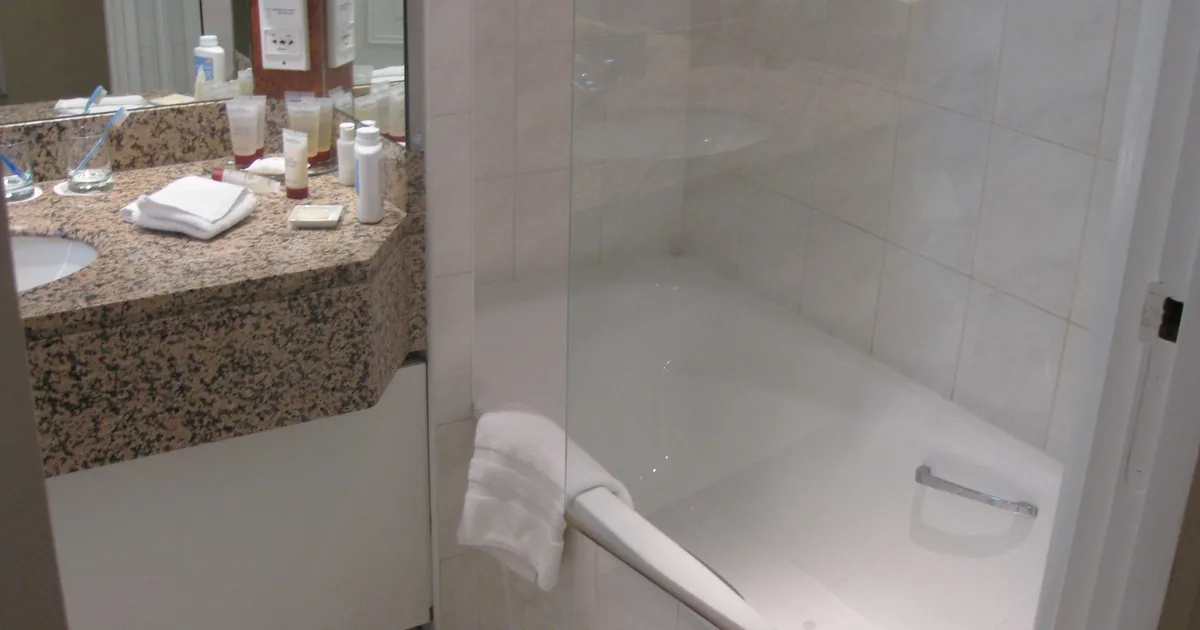
“Bathroom vanity leaking” is too certain if the caller only sees a stain. Write: “Hall bath B1: brown stain and swollen cabinet base below the left basin. Property manager first noticed it after the unit was vacated. Water source has not been confirmed. Wide and close photos attached. Route for plumbing review before cabinet repair.”
The same discipline helps with ordinary items. “Fix bedroom door” becomes: “Bedroom 2 D1: door contacts the frame near the latch and does not close without pressure. No visible split at hinge screws in submitted photos. Technician to inspect and propose repair.” Now the field worker knows where to go, what the caller observed, and what remains open.
For every line item, capture:
- exact room and tag;
- component and observed condition;
- requested result, such as closes freely or shelf secured;
- when the issue was noticed and whether it changed;
- wide photo, close photo, and any video that shows movement or sound;
- who supplies paint, hardware, fixtures, and replacement parts;
- approval contact, spending authorization process, and change-order rule;
- access constraints, occupied neighboring units, and required cleanup.
Keep security-deposit decisions out of the handyman ticket. The contractor can document condition and completed work. The property manager decides responsibility under the lease and applicable law.
Split the list by route before dispatch
A turnover list often mixes simple carpentry with work that needs a licensed trade, specialist, permit review, or environmental protocol. The office should classify those boundaries under company policy while the call is still open.
A loose closet shelf may fit the handyman route. A warm outlet, exposed conductor, repeated breaker trip, active plumbing leak, gas odor, structural movement, suspected mold, pest activity, or damaged fire-protection equipment belongs on a different path. Do not bury one of those observations between paint touch-ups and cabinet knobs.
Paint disturbance needs its own check. The EPA's Renovation, Repair and Painting contractor guidance explains that paid work disturbing painted surfaces in covered pre-1978 housing can trigger lead-safe certification and work-practice requirements. Ask the property age and record what surfaces may be disturbed. Let a qualified person determine applicability, exemptions, testing, and the required work method.
Local licensing and permit rules also vary. The call handler should never promise that a handyman can replace a hardwired fixture, alter plumbing, move a wall, or repair a regulated safety system merely because the item appears on a turnover list. Capture it. Route it.
This classification may create several linked work orders under one unit: handyman repairs, plumbing review, electrical service, painting, floor care, appliance service, cleaning, and final property-manager inspection. The office still needs one master view so nobody schedules finish work before the underlying condition is resolved.
Expose dependencies before choosing a date
A checklist says what exists. A schedule must show what blocks what.
Consider the stain below the bathroom vanity. Cabinet-base replacement should wait until the source has been identified and repaired. Damaged material may need removal under the responsible contractor's process. Wall or cabinet repair follows. Finish work comes later, once the repair condition is ready for it.
The sequence is just as important in dry rooms. Door planing or drywall sanding creates dust, so final cleaning belongs after that work. Wall patching precedes matching paint. A cabinet door should be aligned and tested before the room is closed. Replacement hardware cannot be installed if nobody has approved the product or supplied the correct part.
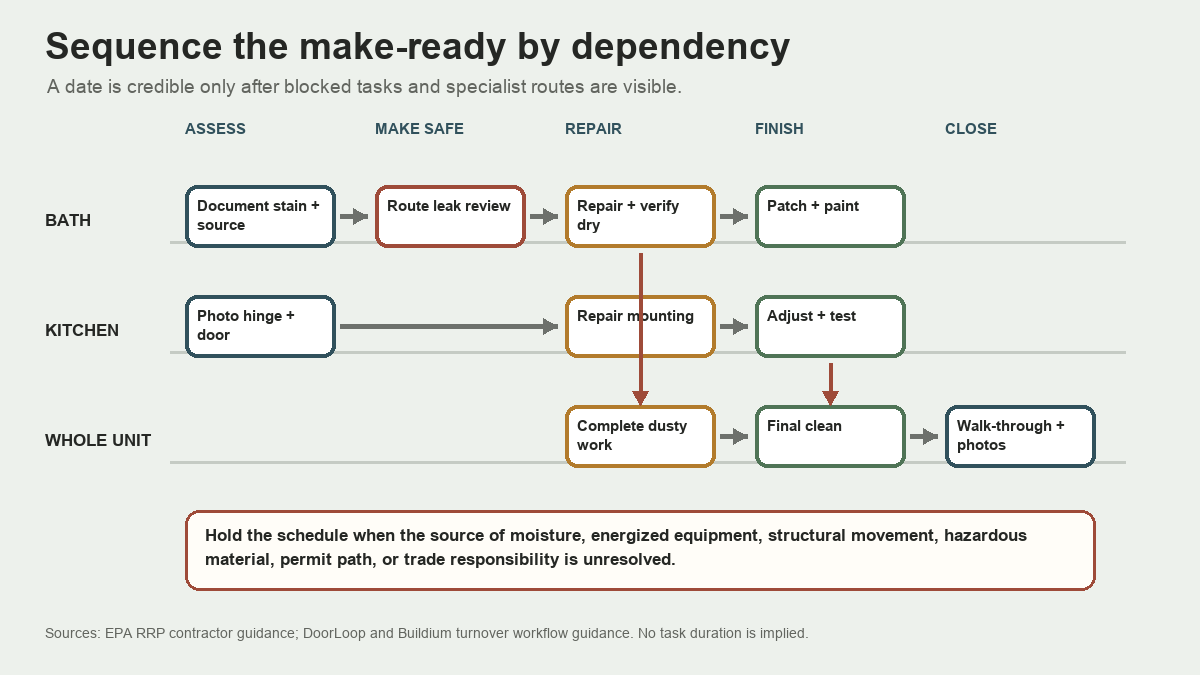
Ask for the required completion date and the reason behind it. A lease start, inspection appointment, cleaner booking, flooring delivery, or owner walk-through creates a real constraint. Record it without promising that every item can fit. The company should first review scope, routes, materials, access, and dependencies.
The DoorLoop apartment turnover checklist and Buildium's tenant turnover guide both frame make-ready work as a documented process with distinct phases. For a handyman office, that means the calendar should reflect the work order's gates. “Turnover on Thursday” is not a schedule.
Control materials and approvals on the first call
Material ambiguity wastes site time. For paint, capture the manufacturer, product line, sheen, color name or code, and where the labeled can is stored. A photo of an old lid is evidence, not a guarantee that the aged wall will match after touch-up. Record whether the property manager expects a touch-up decision or a full-wall estimate.
For hardware and fixtures, ask whether the replacement is already on site. Get a product link, package photo, dimensions where relevant, and the location of any supplied fasteners or instructions. If the handyman supplies materials, define the approval process before the technician starts shopping.
Name one person who can approve changed scope. If the technician opens a cabinet and finds the mounting surface damaged, who receives the photo, who decides the next step, and must work pause until written approval arrives? A property manager with several units may have different limits by owner. Put the correct rule on this unit's record.
The broader multi-task handyman visit guide explains how to group unrelated household requests without losing item-level detail. A rental turnover uses the same discipline but adds room tags, property-management approvals, linked vendors, and a final unit closeout. The handyman resource hub covers other job types that need separate intake rules.
Close with a field-ready readback
Read the work order back by room, then state the unresolved gates. A concise handoff could sound like this:
“Vacant Unit 204 is accessible by lockbox after building approval. The living area has one loose outlet cover routed for electrical review under company policy. Kitchen K1 is a lower cabinet door with a pulled hinge; photos are attached, and replacement hardware requires manager approval. Hall bath B1 is a stain below the vanity with an unconfirmed source, so cabinet repair is blocked pending plumbing review. Bedroom 2 D1 is a door rubbing near the latch. Dust-producing repairs must finish before the cleaner's appointment. Morgan Lee approves changed scope in writing. Final completion photos are required for every tag.”
That readback gives the technician a map of the unit and gives the property manager a map of the decisions. When the worker opens the door to Unit 204, K1 and B1 should already mean something.