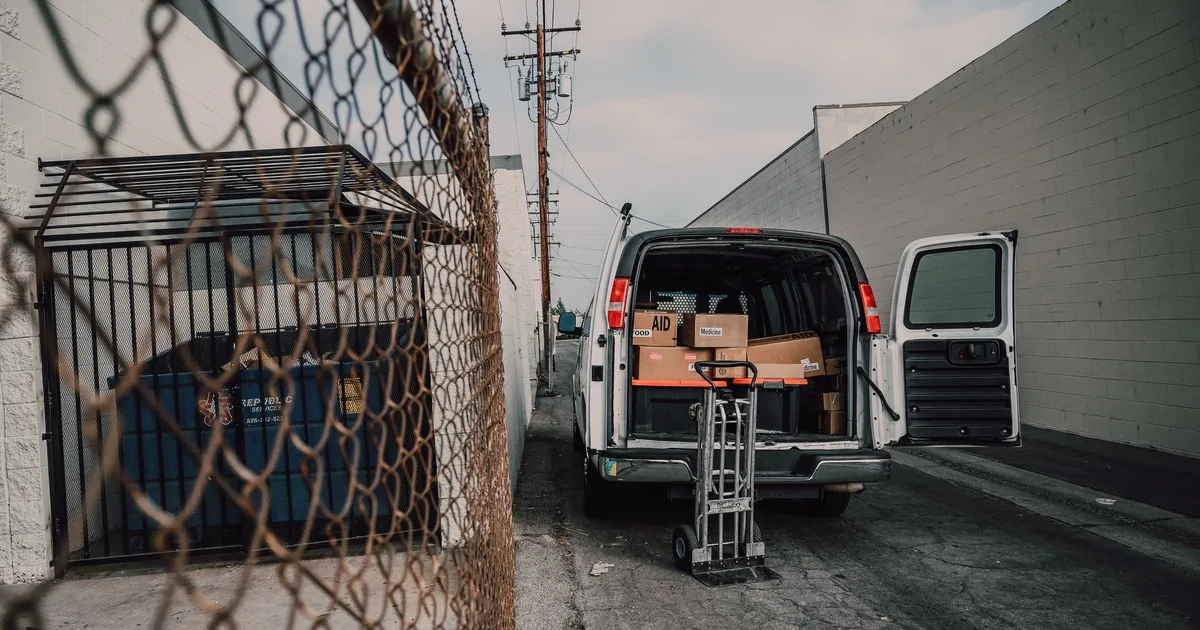
A caller says, “It is one couch, some boxes, and a little garage junk. What will that cost?” The item count sounds manageable. Then the crew arrives and finds the couch upstairs, the boxes filled with books, a locked gate between the driveway and garage, and half-used paint cans mixed into the pile.
The office needed five facts before discussing price: what occupies the truck, what is unusually heavy, where the items sit, what work is required to reach the truck, and whether any material needs separate disposal. Good junk removal pricing questions expose those facts early. They also tell the caller whether the company can provide a firm item price, a provisional range, or an onsite estimate.
Start with the load, not a number
“About half a garage” is a location, not a load description. So is “a pickup truck full.” The customer may be picturing neatly stacked boxes while the estimator pictures loose furniture with empty spaces between pieces.
Begin with named items. Ask for the largest pieces first because they give the description a frame: sectional sofa, dining table with chairs, mattress and box spring, refrigerator, workbench, shelving, or a stack of contractor bags. Then ask what sits around and beneath those pieces. A clear photo taken from the doorway can help, but request another angle when the back of the pile is hidden.
The Housecall Pro junk removal pricing guide describes truck volume as a common pricing base and names labor, disposal fees, drive time, overhead, stairs, heavy items, specialty disposal, and access as other inputs. That is the right way to structure the call. Volume starts the record. It does not finish it.
Ask the customer whether the pile is already staged or still spread across rooms. Ten visible bags beside a garage door are easier to describe than ten bags that still need filling, sorting, and carrying out of a basement. If the company offers packing or cleanout labor, record it as separate work.
Separate space, weight, and special handling
Two loads can occupy similar space and behave very differently. A mattress and several empty moving boxes may fill a broad area without much dense material. Broken tile, soil, books, roofing debris, or wet plaster can look smaller while adding weight and handling constraints. The dispatcher does not need to calculate the load over the phone. The dispatcher does need to flag the difference.
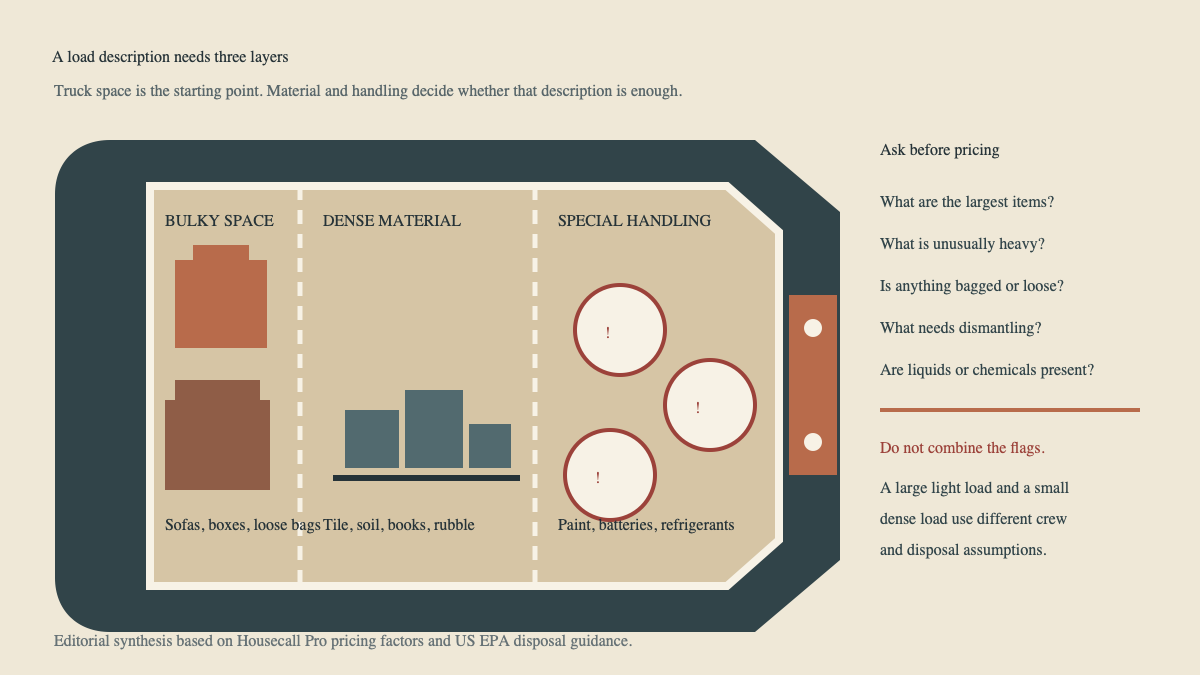
Use plain questions that a homeowner can answer:
- “What are the three largest items?”
- “Are any bags filled with books, tile, soil, concrete, or other dense material?”
- “Is anything still attached, assembled, or connected?”
- “Are there liquids, paint, chemicals, batteries, fuel, propane cylinders, or medical waste in the pile?”
- “Does the load include a refrigerator, freezer, window air conditioner, or another appliance that may contain refrigerant?”
- “Has anyone photographed the full pile from two sides?”
The answers should be recorded as observations, not converted into a guaranteed truck fraction by the call handler. A photo may hide a second layer of boxes. A sectional may come apart into bulky pieces that stack differently. Loose branches behave differently from tied bundles. The crew or estimator should own the final load assessment under the company’s policy.
Walk each major item to the truck
A pile photo usually shows the items and hides the route. Labor lives in that route.
Take the largest or hardest item and walk it out verbally. What floor is it on? Are the stairs straight, turning, narrow, or steep? Is there an elevator, and can the customer reserve it? Will the item fit through the room door, hallway, exterior door, and gate? Can the truck park near the entrance, or is there a long carry across a courtyard, alley, lawn, or parking structure?
A sofa on the curb is a different job from the same sofa in an upstairs room with a tight landing. A dismantled wooden bed frame is different from a sleeper sofa that must remain intact. Even when the company includes ordinary loading labor in a volume price, the office needs enough route detail to schedule the correct appointment and avoid surprising the crew.
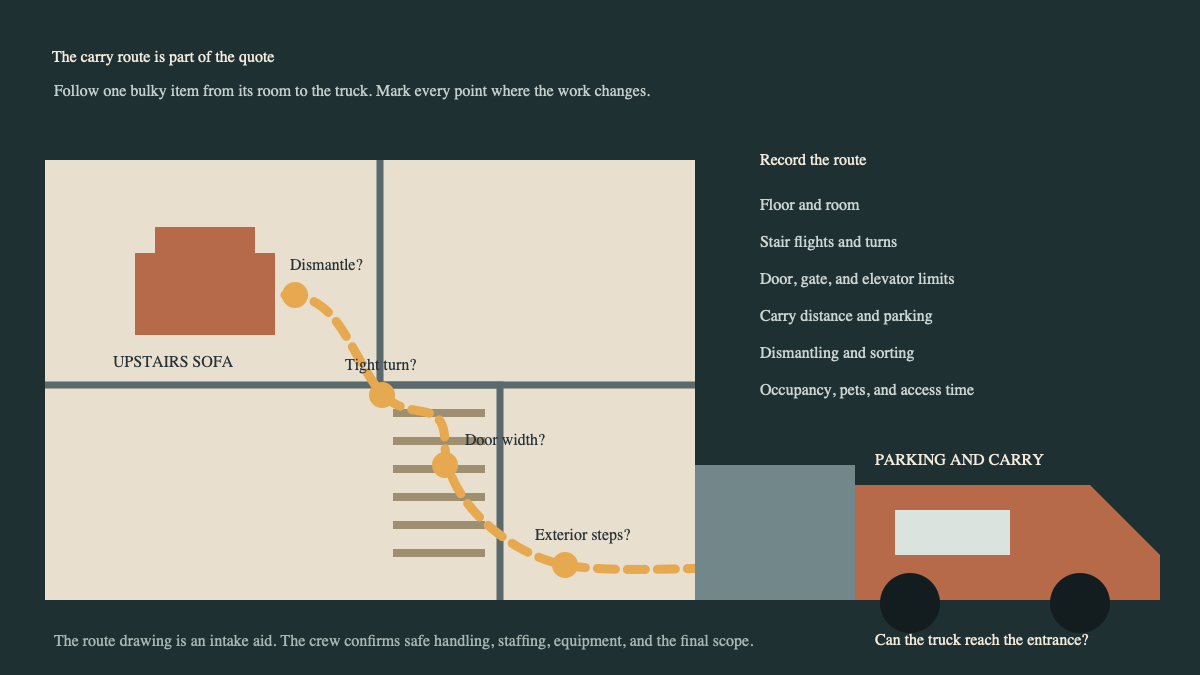
Ask about dismantling without assuming the crew can perform it. “Does the armoire come apart, and do you expect our team to dismantle it?” is useful. “We can get anything out” is a promise the office should avoid. Construction, electrical, plumbing, refrigerant, hoisting, and structural questions belong with the estimator or field crew under company policy.
Parking deserves its own note. A loading zone with a time limit, an alley blocked by another vehicle, a low garage clearance, or a driveway that cannot hold the truck can move the loading point. Record gate codes and building access instructions in the job system, but keep payment details and unrelated sensitive information out of ordinary notes.
Screen disposal exceptions before booking
“Junk” is not one disposal category. Acceptance depends on the material, the company’s licenses and policies, the receiving facility, and local rules.
The US Environmental Protection Agency’s household hazardous waste guidance identifies products such as paints, cleaners, oils, batteries, and pesticides as materials that can contain hazardous ingredients and require special care. EPA advises residents to contact local environmental, health, or solid waste agencies about available collection programs. The EPA municipal landfill overview also notes that some materials may be banned from municipal solid waste landfills. Refrigerators and window air conditioners can involve refrigerant requirements.
That does not mean every listed item is automatically rejected. It means the receptionist should stop treating the pile as ordinary household material and route the question through the company’s approved acceptance list. Local details matter.
Use exact names where possible. “Garage chemicals” is too broad. Record “two one-gallon paint cans, one car battery, three aerosol cans, and an empty propane cylinder,” while making clear that the company must verify condition and acceptance. Ask whether containers are sealed, leaking, damaged, or unlabeled. Do not tell the caller to open, combine, drain, or transport questionable material.
Match estimate confidence to what the office knows
A firm phone price works best when the company has a documented item-price rule and the item, location, access, condition, and disposal path fit that rule. One known mattress at the curb may qualify. A mixed basement pile usually will not.
A range can be useful when the office understands the main items and route but cannot confirm final truck space or a disposal fee. State what the range assumes. For example: “That range assumes the photographed pile is complete, everything is in the garage, there are no restricted materials, and the crew can park in the driveway. The team will confirm the final price before loading.” The company should use its real policy and its own numbers.
An onsite estimate is the honest choice when the load is hidden, spread across many rooms, unusually dense, mixed with uncertain material, difficult to access, or likely to require dismantling or several trips. Junk King’s public pricing process illustrates this boundary. It says a limited number of items may receive a firm phone price, larger descriptions may receive a range, and the truck team provides the firm amount onsite. Other operators will set different thresholds. The useful lesson is to define the threshold and train the office to use it.
For a time-sensitive pickup, use the same-day junk removal scheduling intake to check availability and readiness. For work spread across a home with several decision-makers, donation decisions, or documents and keepsakes, the estate cleanout quote-call guide covers the broader scope.
Read back a crew-ready scope
Close the call with a short readback that separates confirmed facts from field checks:
“Jordan has one three-seat sofa in an upstairs living room, eight contractor bags in the garage, and two flat-packed shelving units. The sofa route has one turning staircase and a narrow front door. The truck can use the driveway. The caller will send photos of the sofa, stair turn, doorway, and full garage pile. Two paint cans are excluded until the office verifies acceptance. The estimate range assumes the bags contain ordinary household items and the photographed pile is complete. The crew will confirm scope and final price before loading.”
That note gives the estimator something usable. It names the load, the route, the disposal flag, the missing evidence, and the estimate boundary. An AI receptionist can collect the same fields after hours, but the hauling company still controls acceptance, staffing, pricing, and the final onsite decision.
The best pricing call leaves the crew with a physical picture of the job before the truck turns into the driveway.
Sources
- Housecall Pro: Junk Removal Pricing Guide
- Junk King: Junk Removal Pricing
- US EPA: Household Hazardous Waste
- US EPA: Municipal Solid Waste Landfills