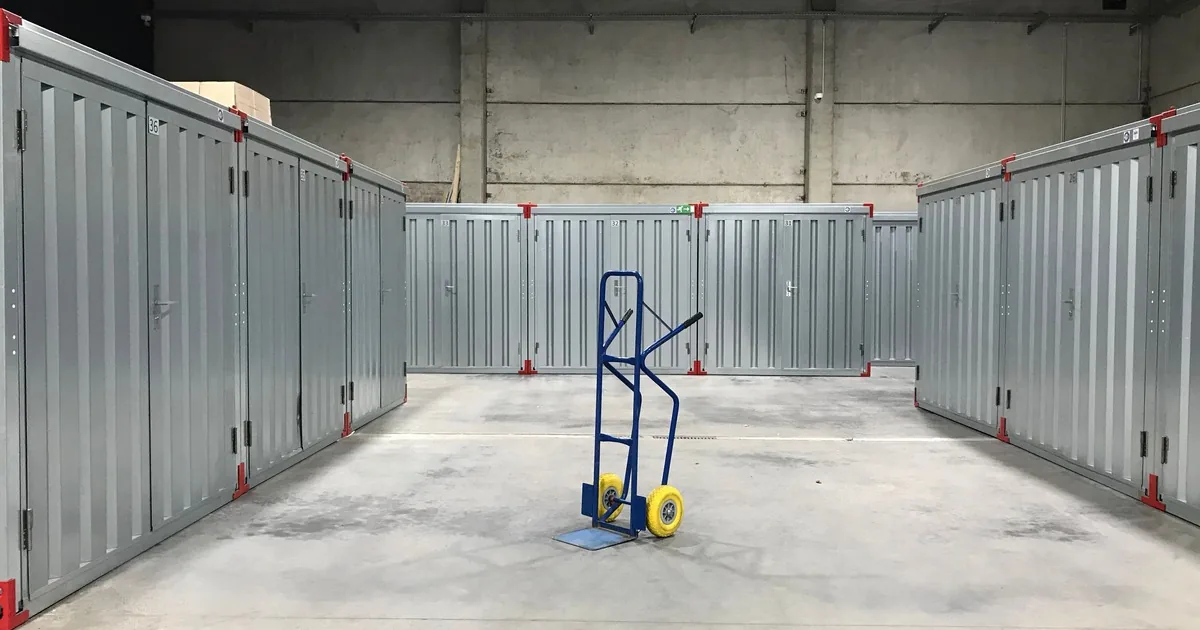
“The unit is only ten by ten, and everything can go.” That sounds ready to book until the office learns that the caller is the renter’s brother, the gate closes at 6 p.m., the unit sits on the third floor, and nobody has checked whether the elevator will hold a sofa.
A useful storage unit cleanout call confirms six things before assigning a truck: who controls the unit, who will provide access, what is leaving, what may stay, how the load reaches the truck, and who handles the facility’s final move-out steps. Ask about batteries, electronics, liquids, chemicals, cylinders, sharp items, pests, and disputed property too. Those answers decide whether the next step is a photo review, site visit, facility call, special collection plan, or scheduled cleanout.
The unit size helps, but it is rarely the best description of the job. A nearly empty 10-by-20 unit can contain one safe, two commercial copiers, and a sectional that will not turn through the hall. A packed 5-by-5 unit may hold ordinary boxes beside the loading door.
Confirm who can open the unit and direct the work
Start with the storage facility name, street address, unit number, and the renter’s full name. Then ask who is calling and what authority that person has to open the unit and decide what gets removed. A relative, property manager, auction buyer, estate representative, or business employee may have a valid role, but the removal company should follow its own verification policy and the facility’s rules before touching property.
A gate code proves very little by itself. It may work only during certain hours. It may open the exterior gate but not the building, elevator, or unit. It also does not settle who owns the contents. Public Storage explains that access credentials and hours are tied to the rental and location, while facility office hours may differ from gate hours. Other operators use different systems.
Record the access handoff in plain language: “Maria Lopez is the renter and will meet the crew at the office with identification, open unit C-318, and remain available to approve keep or remove questions.” If a facility manager must authorize a vendor, reserve an elevator, issue a temporary code, or receive proof of insurance, name the person responsible and the confirmation deadline.
Stop the booking when ownership or disposal authority is disputed. A removal crew should not mediate a family argument at the unit door or decide whether a former employee’s boxes belong to the business.
Map the full route before choosing a crew window
Ask whether the unit is drive-up, ground-floor interior, or on an upper level. For an interior unit, collect the building entrance, hallway turns, door widths if known, elevator location, elevator dimensions, reservation rules, and distance to the loading position. Add stairs, slopes, low ceilings, bollards, speed bumps, and any place where a loaded dolly must make a tight turn.
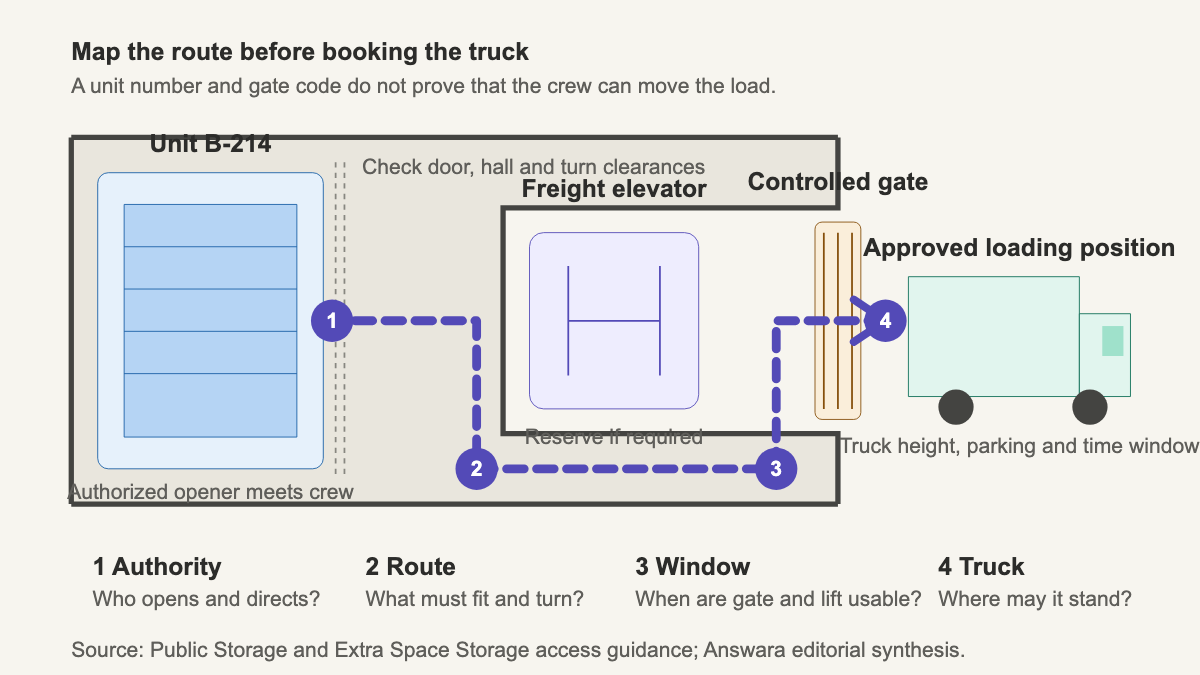
The office also needs two clocks. The first is customer access time: when the gate, building, and elevator will work for this renter. The second is staff availability: when the facility office or manager can solve a failed code, confirm vendor access, inspect the empty unit, or accept keys. A 5:30 p.m. cleanout can fail even when the gate stays open until 9 p.m. if the office closes at 6 and the elevator requires a staff-controlled reservation.
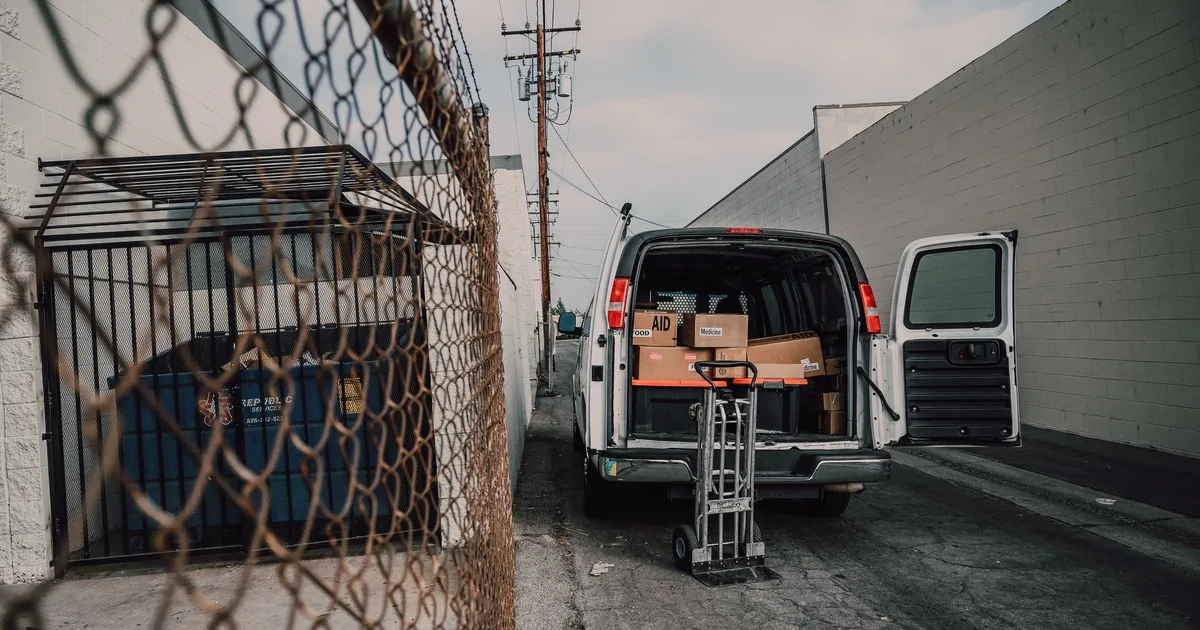
Ask where the truck may stand and whether loading blocks a lane, door, keypad, fire route, or another tenant’s unit. Do not treat an empty curb as approved parking. For larger jobs, get the facility’s loading instructions in writing and attach them to dispatch.
The general guide to junk removal pricing calls covers load volume, labor, density, and carry distance. A storage-unit job adds controlled access and a move-out handoff to those ordinary pricing inputs.
Describe the contents by handling class
Ask for recent photos taken from the doorway and, when safe, from more than one angle. Then have the caller name the large, dense, fragile, attached, powered, or liquid-containing items. Useful descriptions sound like “one queen mattress, metal bed frame, six plastic totes, three book boxes, a two-piece sofa, and a mini refrigerator.” “Household stuff” does not tell dispatch what equipment or route the crew needs.
Capture these distinctions:
- Furniture that needs disassembly, large safes, pianos, exercise machines, tool chests, appliances, commercial equipment, and anything bolted or wired in place
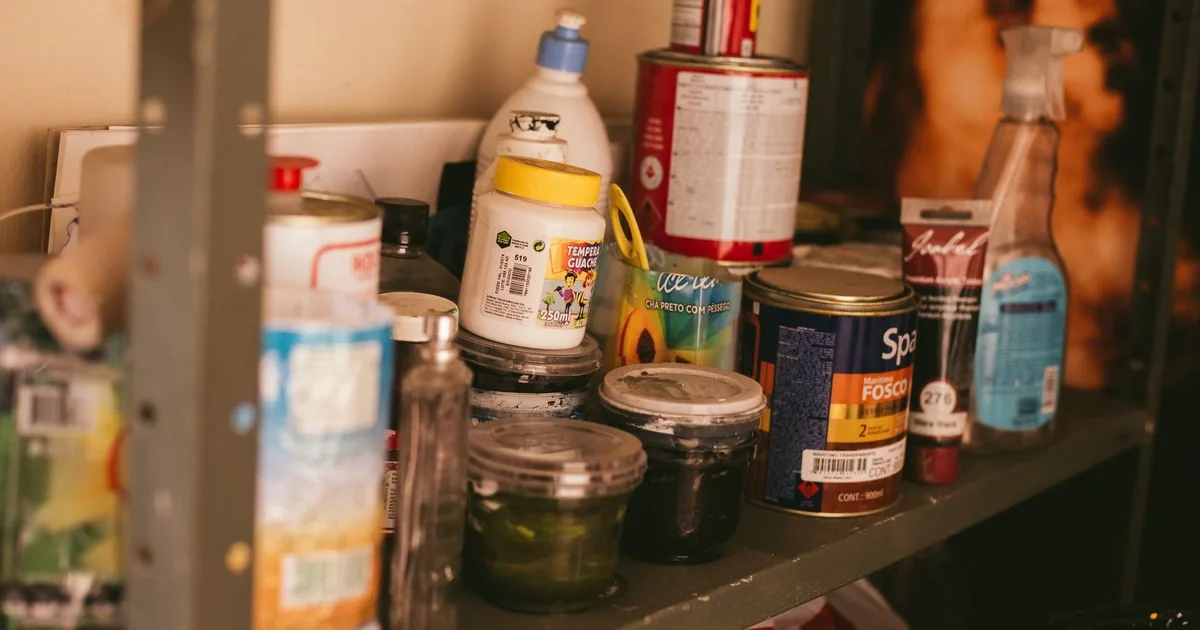
- Boxes or bags with unknown contents, broken glass, loose nails, medical sharps, food, animal waste, pest evidence, wet material, mold-like growth, odors, leaking containers, paint, fuel, propane cylinders, fireworks, ammunition, weapons, electronics, and loose batteries
- Items the customer hopes to donate, records that need controlled destruction, personal documents, photographs, medications, keys, and anything another person may claim
Do not coach the caller to open leaking containers, test unknown equipment, consolidate chemicals, lift a swollen battery, or dig through an unstable stack for the sake of a quote. Mark the condition, keep people away when the company’s safety policy calls for it, and route the case to a qualified reviewer.
The EPA’s lithium-ion battery guidance says lithium-ion batteries and devices containing them should go to separate recycling or household hazardous-waste collection points, not household trash or municipal recycling. It also warns that damaged or crushed batteries can create fire risk. The office needs a named local route before promising that a crew will take them.
For paint, fuel, chemicals, cylinders, and similar exceptions, use the prohibited-item routing guide. Acceptance depends on company policy, receiving facilities, and local rules.
Separate removal, donation, and stop-and-verify decisions
The work order should classify what the caller reports before arrival, then allow the field crew to update that classification after the door opens.
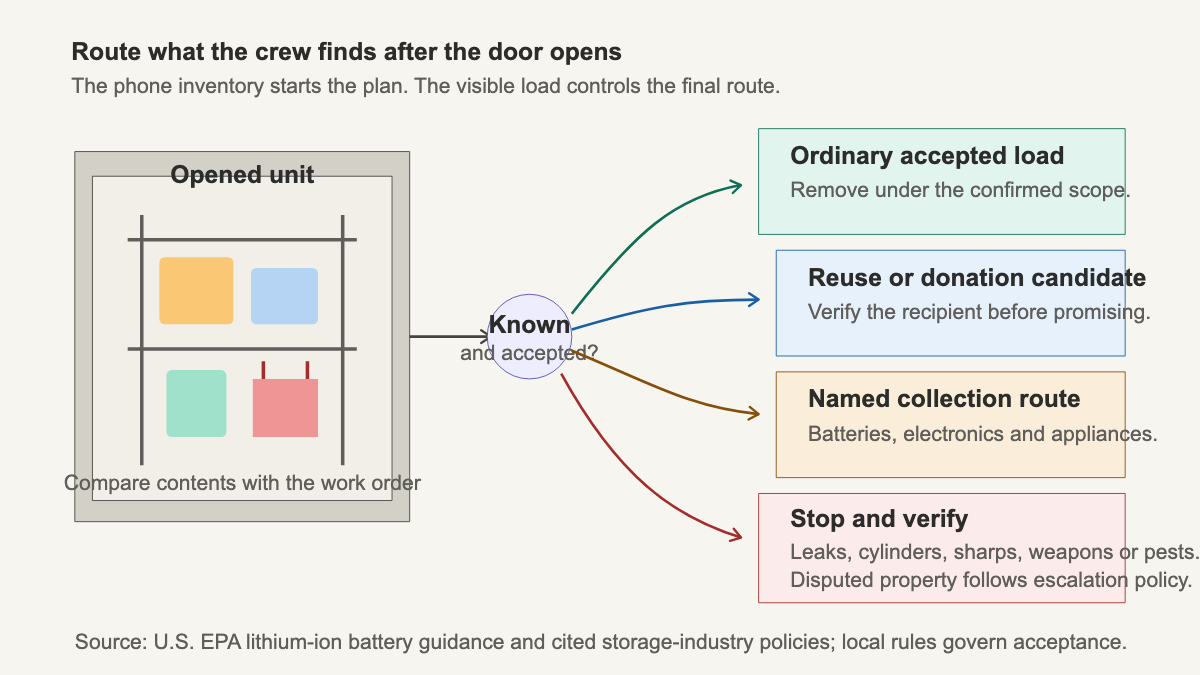
Ordinary accepted material can follow the confirmed haul-away scope. Reusable furniture or boxed household goods can be separated for a donation or resale review, but the receiving organization decides what it accepts. The donation pickup versus junk removal guide gives the office language for that boundary.
Electronics, refrigerant-containing appliances, batteries, tires, paint, and other special materials need the route approved for that item and location. Some may remain on site for a separate vendor. If the crew sees an active leak, damaged battery, gas cylinder with an uncertain condition, medical sharps, weapons, suspected hazardous material, severe pest activity, or property outside the customer’s authority, the field note should trigger the company’s stop-and-verify procedure.
This protects the schedule too. A crew assigned for furniture and boxes should not discover halfway through loading that the remaining third of the unit needs three different receiving facilities.
Define what “empty” means before arrival
A customer may mean “take the large items.” The facility may mean bare floor, no trash, lock removed, account settled, and a completed move-out notice. Ask which result has been ordered.
Record whether the scope includes loose debris, shelving, pallets, sweeping, attached fixtures, padlock removal under approved authority, and material in the hallway or loading area. Ask who checks the unit after the crew finishes. The removal company should not promise that hauling automatically ends the rental, refunds a deposit, cancels billing, or satisfies a lease condition.
Extra Space Storage’s customer guidance covers access, facility rules, and account procedures because those steps belong to the storage relationship. The cleanout company can leave a unit in the agreed physical condition. The renter or authorized representative still owns the facility checkout unless the work order explicitly assigns a permitted handoff.
A strong completion note is concrete: “Crew will remove all contents marked with green tape, leave the four red-taped archive boxes, sweep loose dry debris, photograph the empty unit and retained boxes, return the customer’s lock and keys to Devon Price, and message completion by 4:30 p.m. Devon will inspect the unit and complete move-out with the facility office.”
Read back a dispatch record the crew can use
Before ending the call, read the job in the order the crew will encounter it:
“Customer is the named renter for unit C-318 at Northside Storage, 84 Mason Road. She will meet the crew at the office at 9 a.m., provide identification, open the unit, and remain available by phone. Vendor access and the freight elevator are confirmed for 9 to 11:30. The truck must use loading bay two. The unit contains a sectional, queen mattress, bed frame, 18 boxes, six totes, one mini refrigerator, and two desktop computers. No safe, piano, loose battery, paint, fuel, cylinder, food, sharps, visible leak, or pest activity was reported. Donation is a preference pending recipient acceptance. Four red-taped archive boxes stay. Crew will sweep, photograph completion, and return the lock and keys to the renter. The renter will complete facility checkout.”
That record gives the crew authority, timing, route, truck position, load, exclusions, keep instructions, and a finish line. An AI receptionist can collect the same fields after hours if the company supplies facility, safety, and exception rules. The cleanout starts well when the office can picture the path from the lock to the truck.