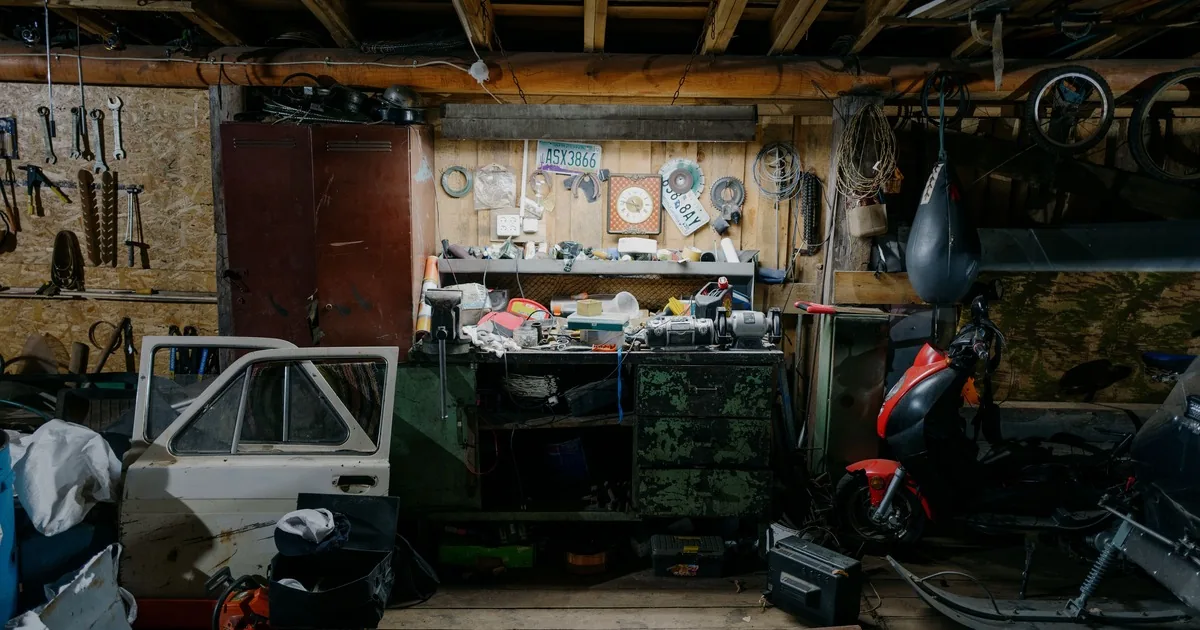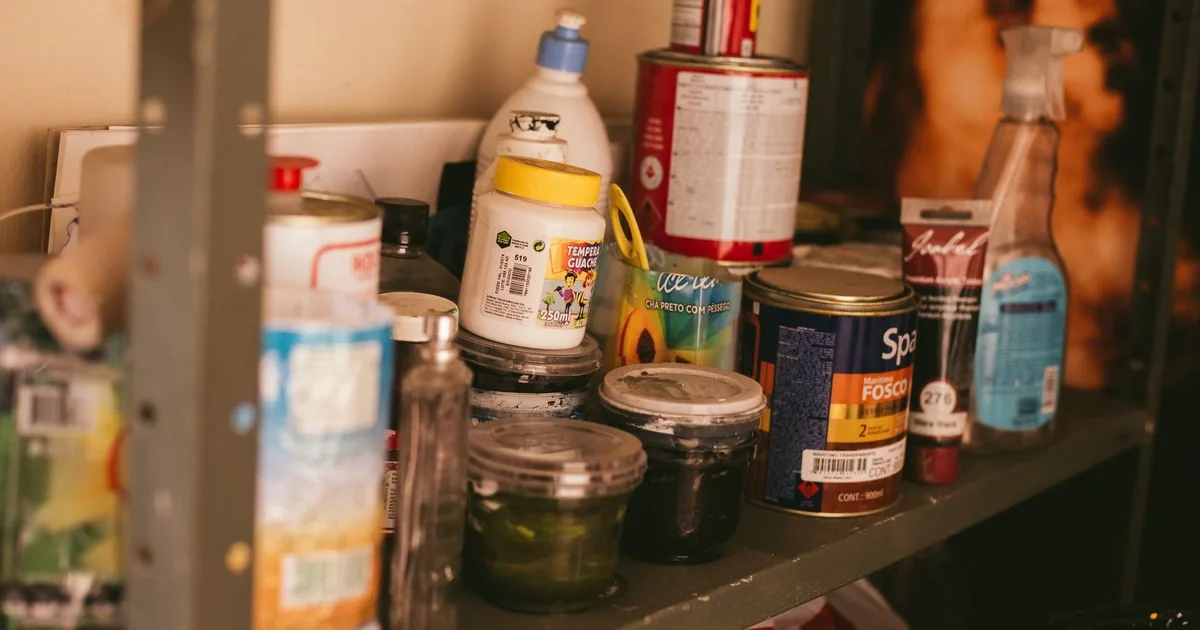
The garage cleanout sounds routine until the caller adds one sentence: “There are some old paint cans and chemicals on the back shelf too.” One lid is rusty. Two bottles have faded labels. The caller wants everything gone on Saturday and assumes it can all ride in the same truck.
That is where ordinary scheduling should pause. A junk removal office should keep paint, solvents, cleaners, oils, pesticides, pool chemicals, and unknown liquids outside the promised load until the team has identified the product, recorded the container condition, checked written company policy, and confirmed an authorized destination. If the container is leaking, swollen, badly corroded, unlabeled, or unknown, the call handler should direct the caller to local official instructions. Do not ask anyone to open, smell, pour, mix, or relabel it.
Start with the item, not the room
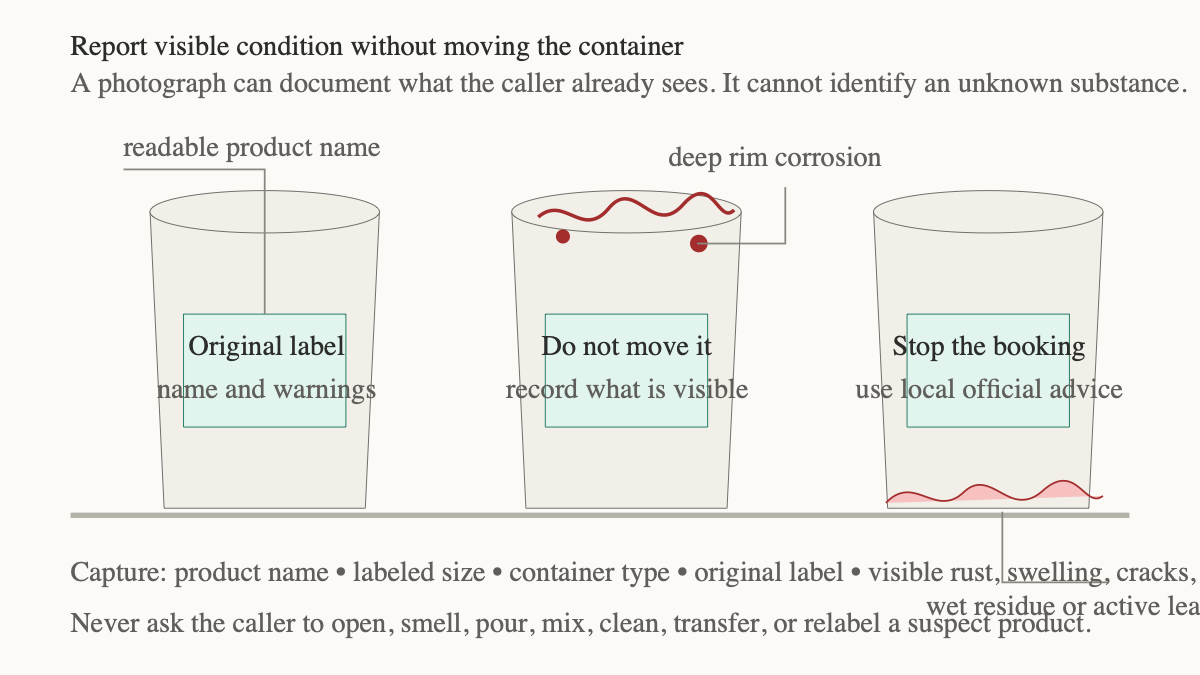
“Chemicals in the garage” is too vague for dispatch. Ask the caller to read what is visible without moving a risky container. Record the product name, manufacturer, container type, approximate amount, and whether the original label is present. A sealed gallon can of interior latex paint creates a different routing question than an unlabeled jar, an aerosol coating, a partly full pesticide jug, or a corroded container of pool treatment.
The useful intake fields are concrete:
- What product name and warning words are visible on the original label?
- Is the container a paint can, aerosol can, bottle, bag, pail, cylinder, or something else?
- Is it sealed, upright, dry, and free of swelling, deep rust, cracks, or residue?
- Has anything leaked onto the shelf, floor, box, or nearby containers?
- Is the material from a household, rental turnover, contractor job, farm, shop, or other business?
- How many containers are there, and what are their labeled sizes?
- Has a local facility already agreed to receive the exact items?
Photos can help the office document labels and condition, but they do not classify an unknown substance. Ask for a wide view of the storage area and separate close views of readable labels only when the caller can take them without touching or shifting suspect containers.
EPA’s household hazardous waste guidance lists paints, cleaners, oils, batteries, and pesticides among products that can contain hazardous ingredients. The agency tells households to keep products in their original containers, retain labels, never mix leftovers, read disposal directions, and contact local officials about corroding containers. Those are strong boundaries for a call script. They are not a remote identification method.
Stop unsafe cleanup advice at the phone
A caller may offer to “make it easier” before the crew arrives. This is where a helpful receptionist can accidentally create risk. Do not suggest pouring liquids into one container, combining partial cans, transferring a product into a food jar, opening a swollen package, testing a mystery liquid, or putting a leaking can into the regular trash.
The same restraint applies to cleanup. A call handler should not prescribe absorbents, neutralizers, ventilation, personal protective equipment, or spill procedures for an unknown product. Read the label from a safe position if possible. For a leak, strong reaction, damaged container, or immediate concern, direct the caller to the local fire department, hazardous materials authority, environmental agency, or emergency service appropriate to the situation.
EPA notes that improper household hazardous waste disposal can include pouring material down a drain, onto the ground, into a storm sewer, or sometimes placing it with ordinary trash. The correct local route varies. The receptionist’s job is to capture the situation and send it to the right authority, not improvise a disposal recipe.
The truck threshold changes the question
A resident may be allowed to take personal household waste to a county collection event. That does not settle whether a commercial junk removal company can take possession of the same material and transport it.
PHMSA’s hazardous materials applicability FAQ draws a useful distinction. It says commercial businesses transporting hazardous materials are considered to be transporting in commerce. In the next answer, it says a private person taking personal household hazardous waste to a county drop-off facility is outside those rules when the person is not engaged in commercial activity. Exact requirements depend on the material and operation, so the company needs its own compliance process.
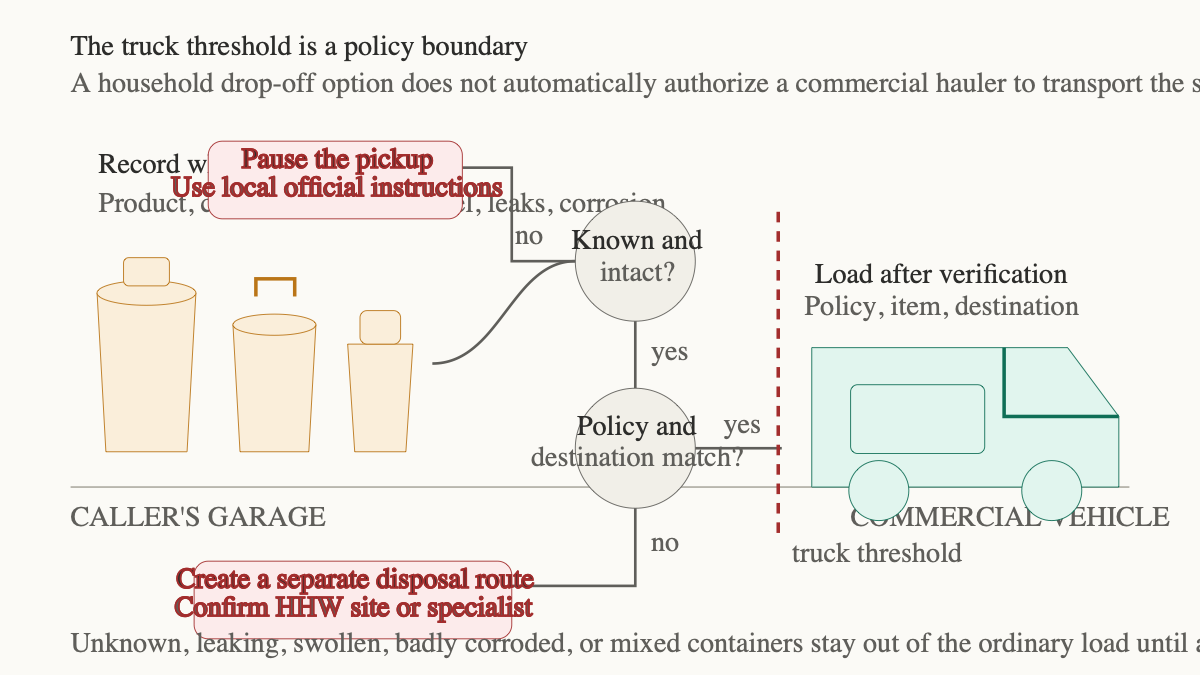
Use a strict gate at that boundary. The item enters the planned load only when its identity and condition are known, the written company accept list covers it, transport requirements are satisfied, and a receiving destination has confirmed acceptance. If any one of those fields is unresolved, separate the material from the ordinary pickup scope.
This keeps the receptionist out of legal interpretation. “Our policy does not allow us to schedule that container until our operations lead confirms the product and destination” is clear. “The county accepts paint, so we can take it” makes a promise the county page may not support.
Confirm the receiving site before offering a slot
A facility locator is the beginning of destination research. Call ahead. Ask whether the site accepts households, businesses, commercial haulers, or some combination; which products qualify; whether appointments or residency documents are required; what container conditions are refused; and whether quantity limits apply.
PaintCare’s drop-off locator gives a good example of why those details matter. The page tells users to confirm hours and availability. It also says listed PaintCare sites do not accept aerosol coatings or leaking, unlabeled, or empty containers. A caller who says “it is all paint” may still have five different routing outcomes on one shelf.
Program coverage also changes by location. Keep the caller’s service address and the waste origin in the record. The nearest site may serve residents of a particular city or county, accept only certain program products, or apply different rules to business-generated material. Never describe a destination as confirmed until someone has checked the exact item, origin, quantity, carrier, and date.
The same principle applies to general cleanouts. The garage cleanout intake guide explains how to separate removal categories before a crew arrives. Paint and chemical containers need their own hold category because a destination and transport decision must come first.
Keep the ordinary quote separate
The rest of the job may still be schedulable. Write two scopes. The first covers ordinary accepted items such as shelving, cardboard, broken furniture, and bagged household clutter under the company’s normal policy. The second lists each paint or chemical container as pending review, excluded, or assigned to a confirmed special route.
Do not bury that distinction in a note that says “miscellaneous garage contents.” Dispatch and the crew need to see the hold before they arrive. A good record names the decision owner and next action:
“Standard garage cleanout scope may proceed. Excluded pending operations review: six one-gallon paint cans with labels, two aerosol coating cans, one sealed pesticide jug, and one unlabeled glass jar. Caller reports deep rust on one paint-can rim and no active leak. Caller will leave all containers upright and undisturbed. Devon in operations will confirm written acceptance and receiving-site approval before any container is added to the work order.”
This also prevents price confusion. The junk removal pricing-call guide covers volume, labor, access, and disposal questions for the ordinary estimate. A special material route may have different requirements, but the office should wait for verified policy and destination details before discussing it.
Give the caller one precise next step
End the call with a readback. Name what is approved, what is on hold, what the caller should leave alone, who owns the review, and when the office will respond. If the company excludes the material, provide the local agency or program page the office has verified for that address. Avoid a casual referral to “the dump.”
An AI receptionist can collect labels, container conditions, quantities, origin, and destination questions after hours. Operations still owns acceptance and transport decisions. The safest Saturday pickup is the one where the rusty can remains on the shelf until the right person has approved a real route.
Sources
- US EPA: Household Hazardous Waste
- PaintCare: Drop-off Site Locator
- PHMSA: Hazardous Materials Applicability FAQs