“The bank needs everything gone by Friday” sounds like a complete request. It is not enough to quote or dispatch. Which bank or asset manager authorized the work? Does “everything” include the shed, refrigerator, tires behind the garage, paint in the basement, and four boxes marked for the listing agent? Is the property vacant, secured, and safe to enter?
A useful foreclosure cleanout call confirms six points before anyone promises a crew date: the client and approval contact, written scope, occupancy status, every structure and exterior area, access conditions, and required completion records. The office should also separate ordinary debris from appliances, chemicals, batteries, tires, sharps, disputed property, and anything the company does not accept.
Large cleanouts deserve a site visit or a controlled photo and video review. A phone estimate can work when the load is visible and limited. A whole property with a basement, garage, outbuildings, exterior piles, blocked access, or unknown containers needs a better look.
Confirm who can authorize removal
Start with the caller's name, company, role, phone number, email, billing entity, property address, and job or work-order number. Ask who can change the scope or approve an added charge after the crew arrives. That person may be an asset manager, servicer representative, listing agent, investor, property manager, or preservation coordinator.
Keys and a lockbox code provide access. They do not tell the crew what may be discarded. Ask for written remove, keep, and do-not-disturb instructions. Record where retained items will be placed and who resolves a disputed item. If the caller says, “The former owner left it, so take it,” the office still needs the authorization required by its own policy and contract.
Keep foreclosure work separate from an estate cleanout. An estate cleanout quote call often centers on heirs, sentimental property, and family decisions. Foreclosure and REO work usually adds an institutional client, a work order, property-preservation standards, documentation rules, and a separate approval chain. The material may look similar. The handoff is different.
Ask whether anyone may still occupy the property or return for belongings. Note vehicles, pets, posted notices, active utilities, alarm systems, changed locks, boarded openings, and signs that entry conditions differ from the assignment. Front-desk staff should route uncertainty to the client or a supervisor. They should not decide possession or ownership.
Walk every structure and exterior area
“Three-bedroom house” leaves too much unseen. Build the scope by zone: main floor, upper floor, basement or crawlspace, attic, attached garage, detached garage, shed, porch, deck, driveway, yard, and curb. Ask for a slow video walkthrough with doors opened only when the caller is authorized and it is safe to do so.
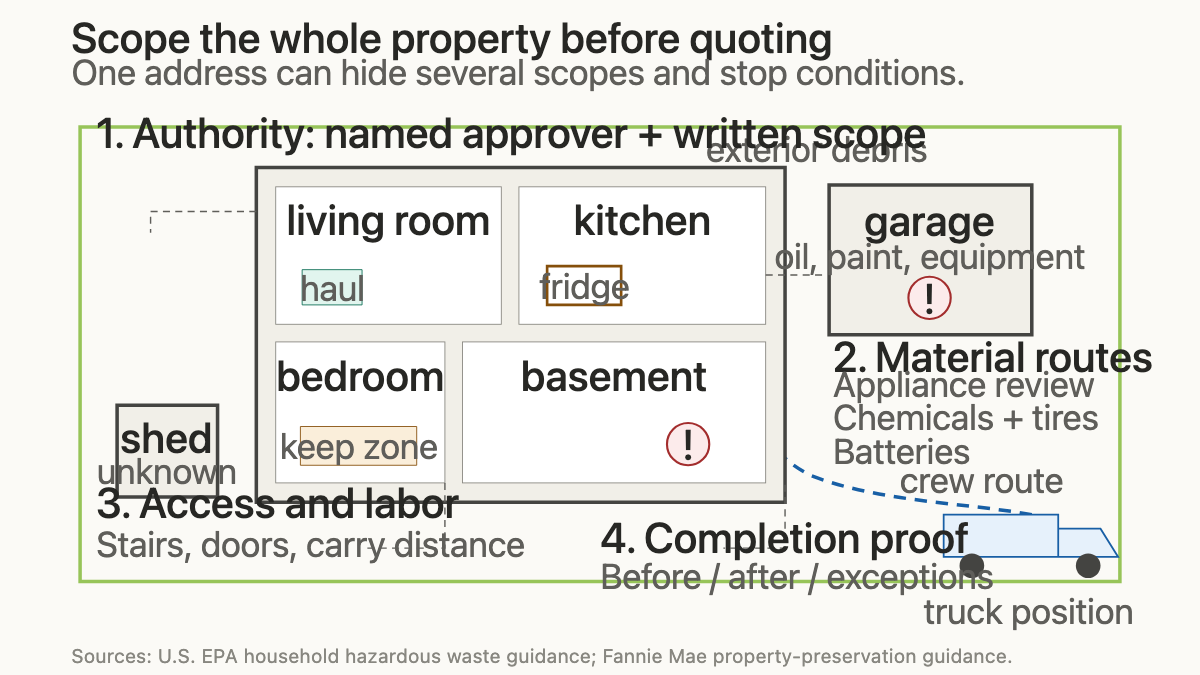
For each zone, capture loose volume and the items that change labor or routing: mattresses, sofas, safes, exercise equipment, shop machinery, refrigerators, freezers, air conditioners, televisions, tires, construction debris, wet carpet, and dense boxes of books or tile. Mark anything attached, wired, plumbed, built in, locked, or too large for the visible doorway.
Then map the path to the truck. Count stairs and sharp turns. Note narrow doors, soft ground, steep drives, low branches, gates, overhead wires, parking restrictions, and the carry distance from the farthest pile. Ask whether the client controls the loading area for the full work window. The general guide to junk removal pricing calls covers volume, density, labor, and access in more detail.
Occupancy status changes the inspection too. A vacant house with water intrusion, broken glass, animal waste, pest activity, unstable stacks, or an open floor cavity should be flagged before a routine hauling crew enters. Record what was observed. Do not diagnose mold, structural stability, contamination, or pest severity over the phone.
Separate ordinary debris from exception materials
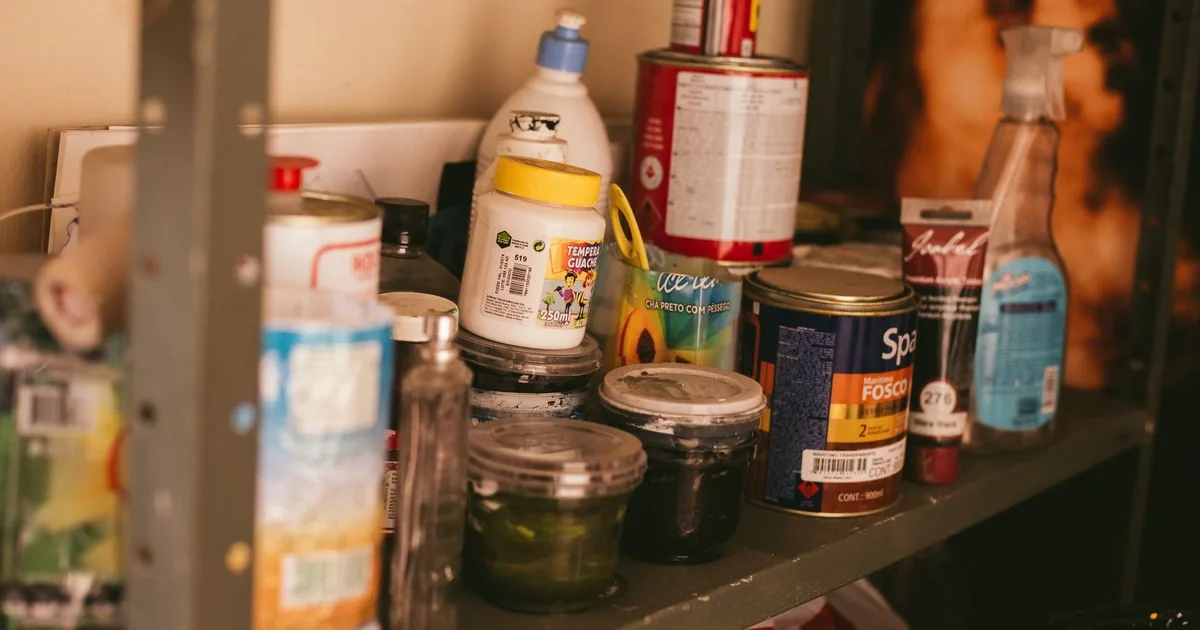
A foreclosure load may combine furniture and bagged trash with products that need another handling route. Ask directly about paint, solvents, cleaners, pesticides, pool chemicals, fuel, oil, propane cylinders, ammunition, fireworks, medications, medical sharps, loose batteries, damaged electronics, tires, and refrigerant-containing appliances.
The U.S. Environmental Protection Agency lists paints, cleaners, oils, batteries, and pesticides among household products that can contain hazardous ingredients. EPA tells households to follow labels, keep products in original containers when possible, avoid mixing leftovers, and check with local environmental, health, or solid-waste agencies for disposal options. Local rules and receiving facilities determine the available route.
That means the call record should name the material and its condition. “Six one-gallon paint cans, labels visible, two partly full, none leaking” helps. “Some chemicals in the garage” does not. Staff should never tell a caller to smell an unknown liquid, open a swollen container, pour products together, or move a leaking package for a better photo.
Use the company's exception matrix before promising removal. The paint and chemical call-routing guide gives a focused intake for those materials. Some items may remain secured on site for a qualified vendor or a client-approved collection route.
Personal papers, photographs, identification, keys, financial records, medication, and clearly marked keep items need their own zone. So do items that another person claims. A cleanout crew should receive a written instruction for these discoveries, such as photograph, stop work in that room, and contact the named approval person.
Choose the quote method after scope review
A small visible load near an exterior door may support a photo estimate under the company's normal policy. A whole-property cleanout often needs an on-site assessment because room depth, dense material, exterior piles, dismantling, carry distance, and special routes are hard to judge from a few doorway photos.
The office can use a simple threshold: if the reviewer cannot state what is included, what is excluded, how the load reaches the truck, and who approves a surprise, the job is not ready for a firm scope. Book an assessment or issue a clearly limited estimate according to company policy.
Ask the client what the price must include. Removal may be only one line. The assignment might also request loose-debris pickup, broom cleaning, appliance handling, carpet removal, yard debris, donation attempts, recycling records, dump receipts, date-stamped photographs, or separate invoices by work-order item. Do not assume that “cleanout” includes cleaning, demolition, repairs, lawn work, lock changes, or utility disconnection.
Fannie Mae's Property Preservation Matrix and Reference Guide illustrates why institutional work needs careful scoping: property-preservation programs can define debris categories, allowable work, and documentation expectations. A particular client may use different rules. Attach the current work order and client instructions to dispatch rather than relying on a remembered standard.
Put approval and documentation into dispatch
The crew needs a short record it can use at the property. Read it back before ending the call:
“Work order 4187 covers the house, detached garage, shed, and exterior debris at 22 Grove Street. The asset manager, Nina Patel, approves scope changes by text and email. The property is reported vacant. The crew will enter through the front lockbox and stage the truck on the driveway. Four blue-taped archive boxes in the front bedroom stay. Paint and oil in the garage are excluded pending local routing. The refrigerator is included if disconnected and accepted under company policy. Before photos, exception photos, after photos, and disposal receipts are required. Nina approves additions before loading.”
That note names the place, authority, access, scope, exceptions, retained property, completion standard, and approval owner. Add the scheduled window, crew or equipment needs, gate details, alarm instructions, utility status, and any site-specific safety hold.
Before-and-after photos should follow the client's required angles and naming convention when one exists. Record rooms or piles that could not be completed and the reason. If disposal tickets, weight records, donation receipts, or recycling records are requested, identify who collects them and where they are attached. Never promise a donation outcome before a recipient accepts the items.
An AI receptionist can collect the first-pass fields after hours when the company supplies its service area, accepted-material policy, escalation rules, and quote thresholds. A supervisor should still review uncertain authority, unsafe conditions, chemicals, disputed property, and a whole-property scope before dispatch.
The best cleanout record lets a crew picture the property before unlocking the door. They know which buildings count, what stays, where the truck goes, which materials need another route, and exactly who can approve the unexpected refrigerator in the shed.
Sources
- U.S. EPA: Household Hazardous Waste
- Fannie Mae: Property Preservation Matrix and Reference Guide
- Junk King: Foreclosure Cleanout Services
- Junk King: Full Service Junk Removal