A caller has a sofa, six boxes of kitchenware, a broken bookcase, and a lease ending Friday. “Can you donate all of it?” sounds like one request. It contains at least two commitments.
The junk removal company can promise the removal service it controls. A donation requires a receiving organization that accepts the specific items, at that location, on that schedule. Those facts may still be unknown when the phone rings. The safest answer is plain: “We can quote the removal. We can also document which items you hope to donate, but acceptance depends on the receiving organization.”
That distinction keeps the work order honest. It also gives dispatch enough detail to build a charity handoff, a paid removal route, or a mixed-load plan.
Name the service before offering a time
Start with the customer’s desired outcome. Some callers want a charity to pick up reusable furniture. Others want a junk crew to remove everything and donate suitable items when a local partner accepts them. A third group has already arranged the donation and needs help moving the accepted items to a pickup point.
Ask one direct question: “Has a specific organization confirmed that it will accept and pick up these items?”
If the answer is yes, record the organization, confirmation method, pickup date or window, accepted item list, preparation rules, and contact name or reference number. Do not treat “I called last month” or “they usually take sofas” as current acceptance.
If the answer is no, explain what your company can commit to. A paid junk removal appointment may cover labor, carrying, loading, and routing under company policy. Donation is still a proposed destination. The quote should say whether the crew will attempt a donation drop-off, whether extra handling or a second stop is included, and what happens if the receiver declines an item.
Habitat for Humanity tells donors to contact the nearest ReStore with the items they have available. Its national guidance says many ReStores offer pickup for large items, yet each store is unique. That is a useful model for call handling: local confirmation beats a national assumption.
Record each item as it exists today
“Good condition” is a conclusion. Dispatch needs observations.
For furniture, capture item type, approximate dimensions, material, visible stains, tears, odors, loose joints, missing cushions, broken drawers, pet exposure, pest concerns, and whether legs or shelves come off. For appliances, record the type, age if known, working status, cosmetic damage, cords or hoses, and whether disconnection is complete. For boxes, note the contents and whether they are sealed, dry, and safe to lift.
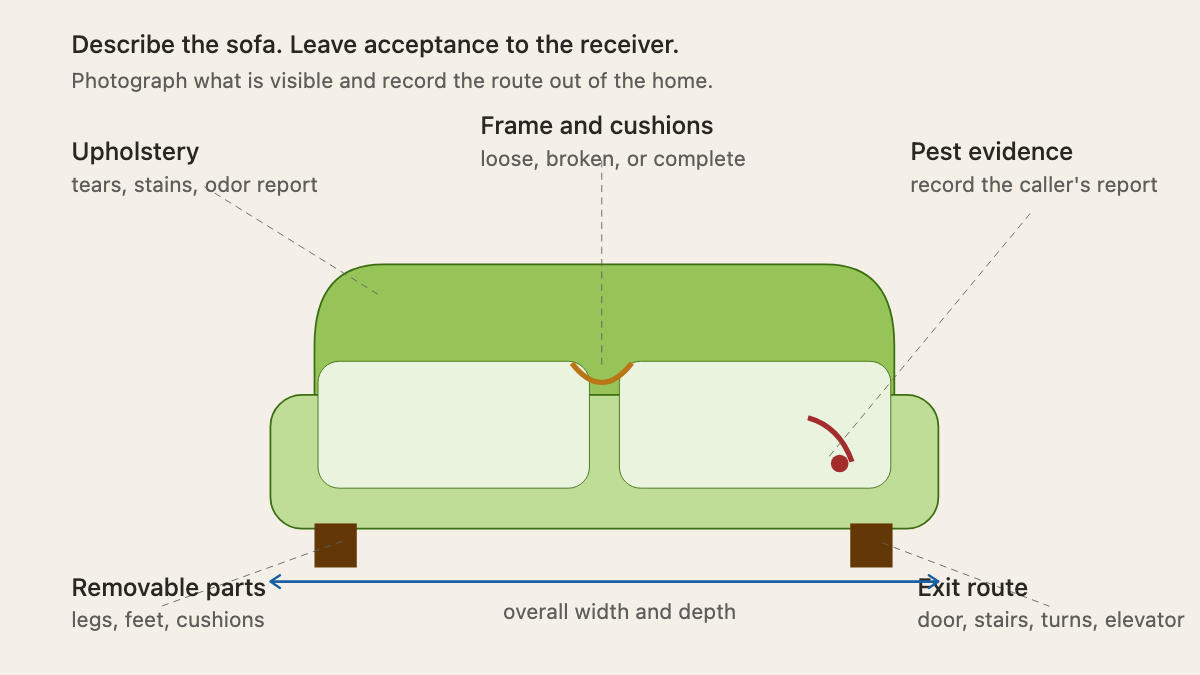
Ask for current photos taken in ordinary light. A full view and close photos of damage are more useful than a flattering angle. The caller should not lift a heavy item, open sealed containers, or move furniture suspected of pest activity just to improve the phone assessment.
Condition matters to the donor too. IRS Publication 526 says clothing and household items generally must be in good used condition or better for a federal charitable deduction, subject to a narrow appraisal exception. Furniture, electronics, appliances, and linens count as household items in that guidance. This does not let the hauler approve a deduction. It explains why vague promises about donation value create trouble.
Use a clean boundary: the receiving organization decides acceptance, and the donor handles tax records and valuation. The junk removal office should not assign a value, promise deductibility, or say that a receipt will be available unless the organization has confirmed its process.
Trace the route before discussing the destination
An accepted sofa can still fail at the doorway. Record the floor, elevator, stairs, tight turns, door width, carry distance, parking position, loading restrictions, pets, locked gates, and building rules. Ask whether the item was assembled inside the room and whether approved disassembly is needed.
For apartment buildings, get the elevator reservation status and certificate-of-insurance requirement before setting a firm window. For houses, note porch steps, narrow side paths, soft ground, low branches, and driveway limits. A customer may describe a pickup as curbside while the sofa remains upstairs.
The destination has access rules too. A donation center may require a scheduled dock time, curbside handoff, staff inspection, or unloading method. Record who will unload and what happens when the receiving site is closed or declines part of the load. Otherwise the crew can arrive with a full truck and no authorized next step.
The same access details affect the paid route. The junk removal pricing call guide explains how volume, labor, and site access belong in one scope before a price is offered.
Split mixed loads before dispatch
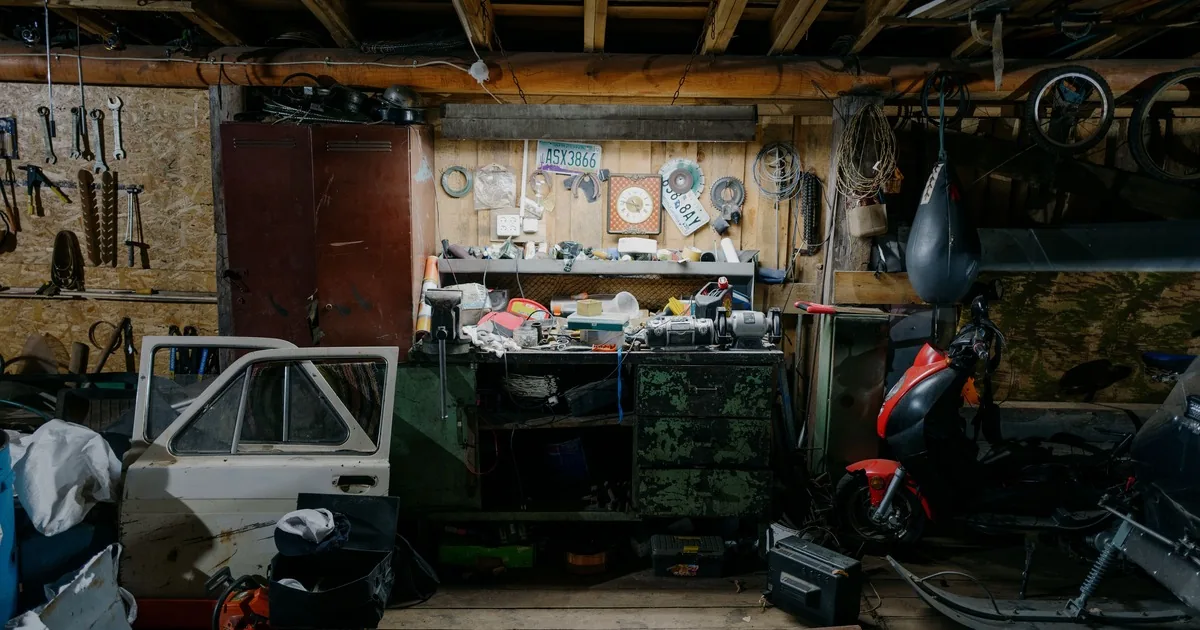
Most real calls contain more than clean, reusable goods. The same garage may hold boxed dishes, a working table, broken particleboard shelves, old paint, loose trash, and a mattress with visible damage. One label cannot route that load.
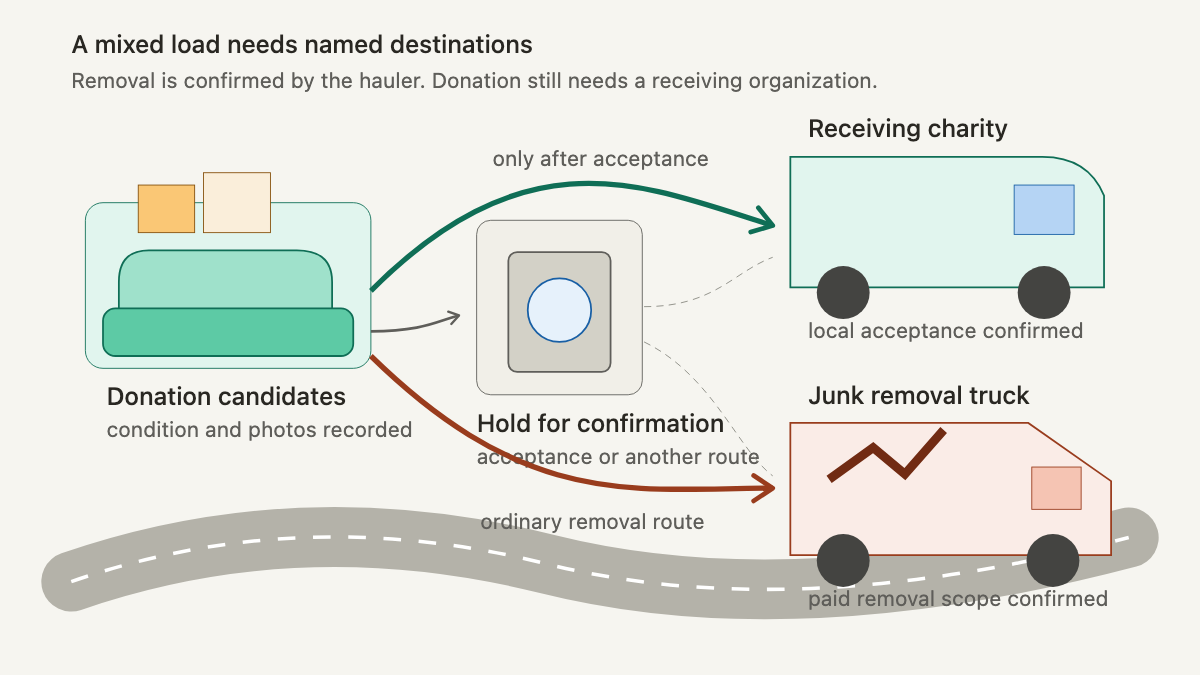
Create separate groups in the intake record:
- Confirmed donation items, with the receiving organization and acceptance evidence attached.
- Donation candidates that still need review, including current photos and condition notes.
- Ordinary junk removal items covered by the company’s written acceptance policy.
- Restricted, hazardous, or specialty items that need another destination or qualified provider.
Keep those groups separate in photos, estimates, and crew notes. If the customer must sort or label items before arrival, say exactly how. “Blue tape means keep, green tape means donation candidate, and unmarked items stay in place” is clear. “We’ll figure it out on site” is where keepsakes, rejected donations, and extra labor collide.
Large cleanouts need another layer: decision authority. Confirm who can approve disposal when a charity declines an item. In estates, rentals, and family cleanouts, the caller may not own every object. The respectful hoarding cleanup intake guide covers room boundaries, protected documents, decision-makers, and items that must remain untouched.
Define the failed-handoff plan
Every donation plan needs a written fallback. Ask what the customer wants if the receiving organization declines one item, closes early, changes its list, or cannot issue the expected receipt.
The company may offer to return the item, complete paid removal under an approved change, route it to another documented destination, or leave it in place. Pick the options your operation actually supports. State any added stop, labor, disposal charge, or rescheduling rule before dispatch.
Avoid a crew-level improvisation. A driver should not have to decide whether to abandon a sofa at a closed dock, transport it to an unapproved facility, or discard an item the customer expected to donate. The work order should identify the decision-maker and the allowed next step.
Receipts deserve the same clarity. IRS Publication 526 has substantiation and reporting rules for noncash contributions. The donor may need records from a qualified organization, depending on the claim. A junk removal invoice proves that removal work occurred. It does not automatically prove a charitable contribution. If the receiving organization issues a receipt, record who receives it and how it is delivered.
Read back a work order that another person can run
Finish the call with a concise scope:
“Remove one three-seat upholstered sofa, one broken bookcase, and six sealed boxes from a second-floor apartment. The sofa measures approximately 84 inches wide and has removable legs. Caller reports no tears, stains, odor, or pest activity; photos are attached. Habitat ReStore acceptance has not been confirmed. Sofa and kitchenware remain donation candidates, not guaranteed donations. Building requires the freight elevator from 10 a.m. to noon; caller will reserve it. Broken bookcase is ordinary removal. If the receiving organization declines an item, crew must call the customer before adding it to paid disposal. Customer retains responsibility for donation valuation and tax records.”
That note separates known facts, open decisions, and the removal service being sold. An AI receptionist can collect the same condition, access, and handoff fields after hours, but the company’s written policy still controls routing.
A caller should finish knowing exactly what is booked today. The charity’s acceptance can be added when it is real.
Sources
- Habitat for Humanity: Donate goods to Habitat ReStore
- IRS Publication 526: Charitable Contributions
- Goodwill Industries International: Donate goods
- WeCycle: Donation Pickup vs. Junk Removal