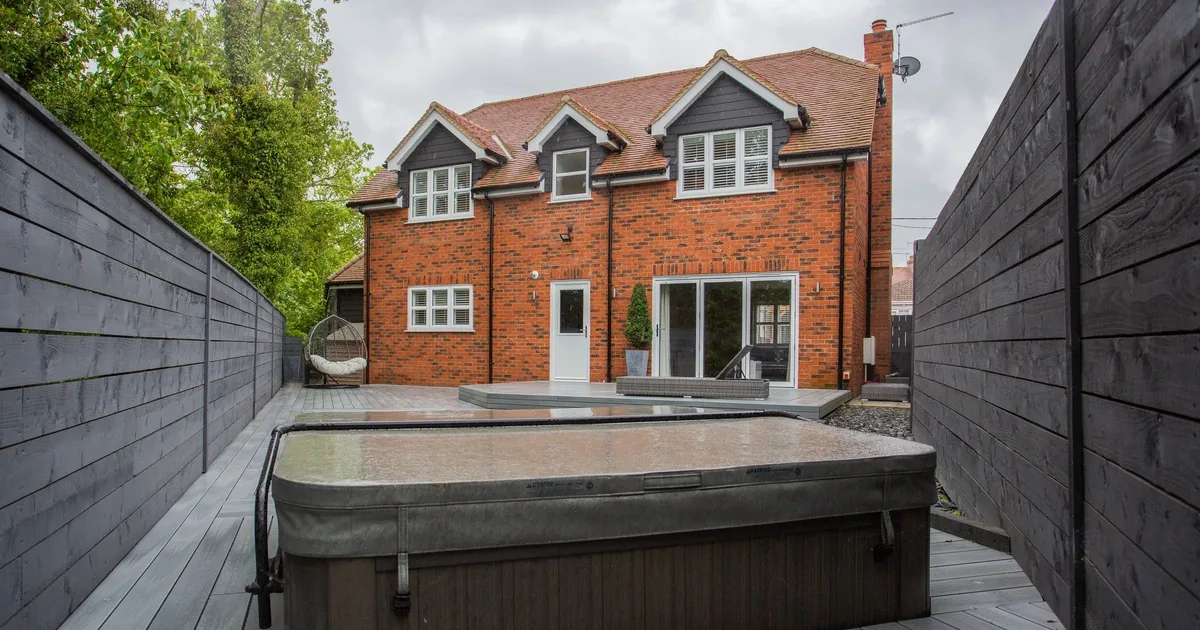
A homeowner calls about “one old hot tub in the backyard.” That sounds like a single-item pickup until the office learns that the spa is recessed into a cedar deck, still connected to power, partly full of rainwater, and behind a gate narrower than the cabinet.
A useful hot tub removal quote starts with five questions: What kind of spa is it? How is it installed? What is the reported drain and utility status? Can the largest expected piece reach the truck? What does the customer expect the crew to remove besides the spa itself? Those answers determine whether the next step is a phone range, photo review, or site visit. They also keep electrical work, demolition, and surface repair out of a vague “haul-away” promise.
Identify the unit and installation before discussing price
Start by establishing what the caller means by “hot tub.” Ask whether it is a freestanding acrylic spa with a cabinet, a plug-in portable model, a wooden tub, an inflatable unit, or a shell set into a deck or patio. Record the manufacturer and model when the label is visible without moving a panel. Photos should show the full unit, each exposed side, and the surrounding surface.
The installation matters as much as the tub. A freestanding cabinet on an open concrete pad presents a different scope than a spa lowered through a deck opening. Ask whether the unit sits on concrete, pavers, gravel, a framed deck, or an indoor floor. Is the cabinet exposed? Are steps, railings, a cover lift, privacy screens, a gazebo, or built-in benches attached to it?
Do not turn the caller’s description into a structural conclusion. “It looks loose” does not prove that fasteners, plumbing, wiring, or hidden framing are absent. Write down what the customer can see and mark the rest for field review.
Junk King’s hot tub removal page describes dismantling, cutting, hauling, and separating component materials as possible parts of the job. That is a useful scope reminder for the office. The call record should say which work the customer expects and which work still needs approval under company policy.
Treat utilities as a qualified handoff
The safest office script does not coach the homeowner through a disconnect. Ask for status and responsibility.
“Is the tub empty?” comes first. If the answer is no, ask whether it contains clean water, rainwater, ice, debris, or unknown material. Then ask who is responsible for draining it and where discharge is allowed under local rules and the property owner’s instructions. Never tell the caller to release water toward a foundation, neighboring property, street drain, septic component, or slope.
Next ask how the spa receives power. The customer may describe a cord and plug, a disconnect box, or hardwired service. Record the description. Do not tell anyone to open a panel, cut a cable, remove a breaker, or test exposed wiring. The US Consumer Product Safety Commission’s spa electrical safety guidance warns about electrical hazards around pools, spas, and hot tubs and points electrical inspection and repair to qualified professionals.
The booking note should name who will verify safe isolation before demolition begins. That may be the customer’s electrician, a qualified employee, or a trade partner, depending on the company’s license and policy. If nobody owns the task yet, the job is not ready for a blind removal promise.
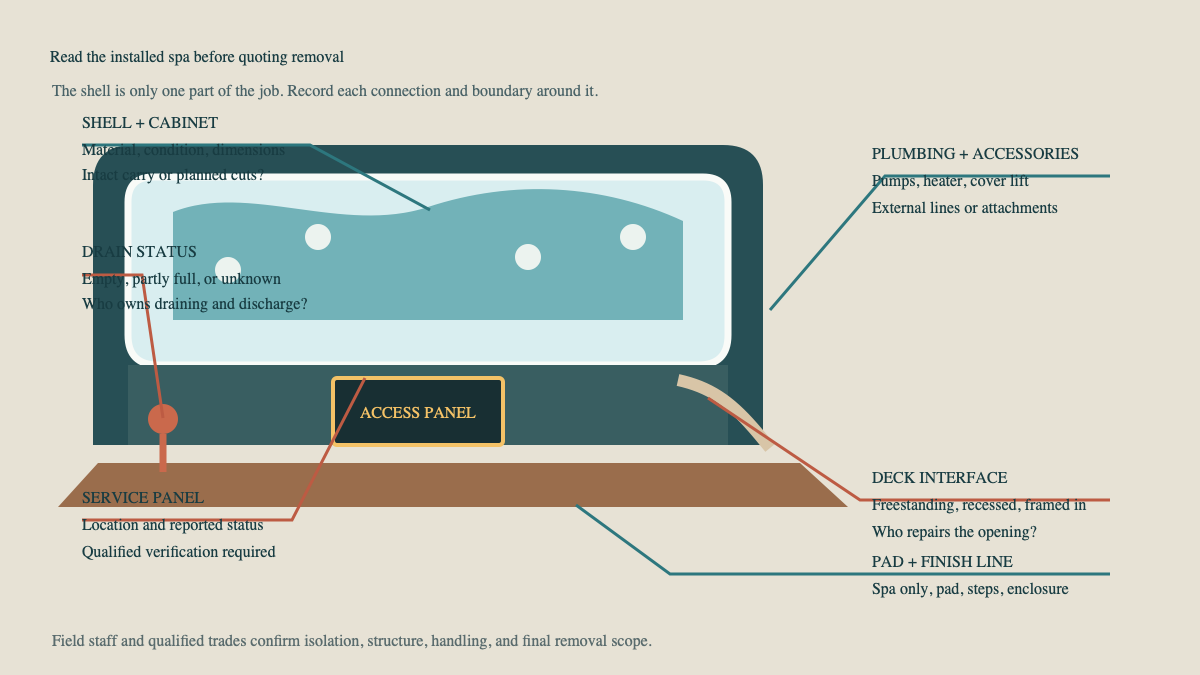
Ask about external plumbing too. Some units are self-contained; others may have visible supply, drain, gas, or equipment connections. The receptionist records what is present and sends clear photos for review. Field staff decide what must be disconnected and which trade can do it.
Walk the largest piece all the way to the truck
A wide photo of the backyard can hide the hardest part of the job. Trace the route one obstruction at a time.
Begin at the spa. If the company might move it intact, ask for the outside dimensions and the narrowest point on the planned route. If dismantling is likely, ask the estimator what the largest expected section may be and use that section for the route check. The homeowner should not be asked to cut the tub or pull apart the cabinet to answer.
Record the gate opening, fence returns, tight corners, steps, handrails, overhead branches, air-conditioning equipment, soft ground, retaining walls, slopes, and finished surfaces. Then locate the truck. Can it use the driveway? Is there a low branch, narrow alley, parking restriction, shared drive, septic field, or weight-sensitive surface between the street and pickup point?
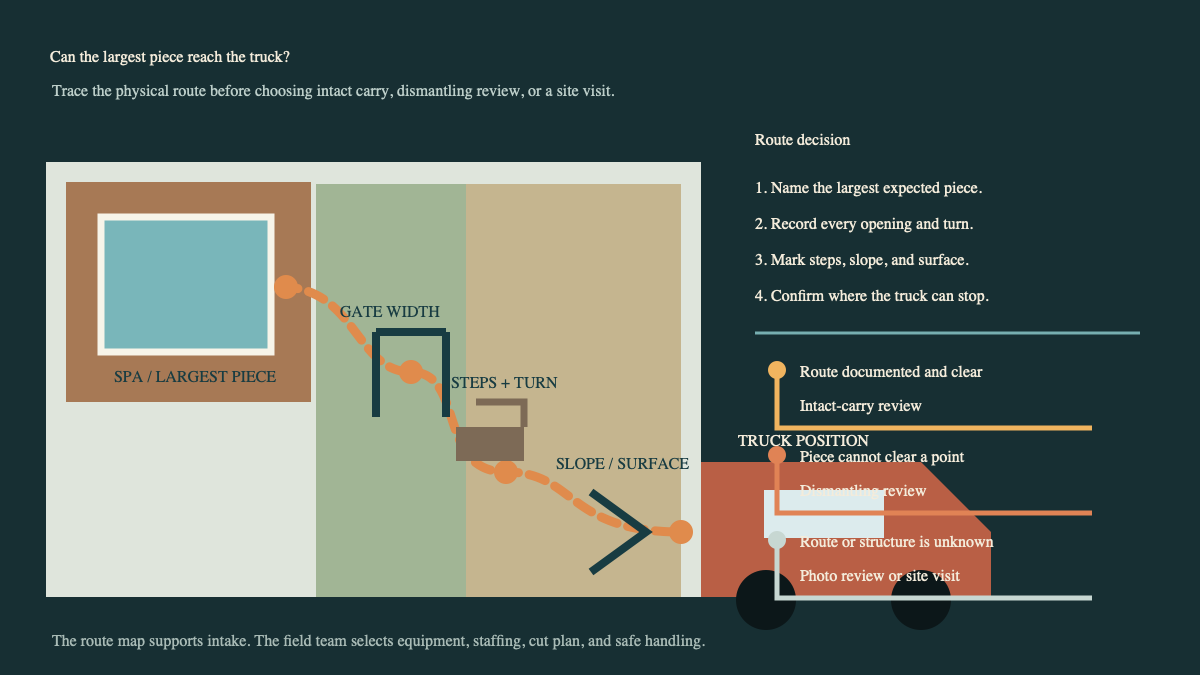
Photos should follow the route in order: spa, first turn, gate, exterior steps, driveway, and expected truck position. A video walkthrough can help, but the job record still needs named access facts. “Easy access” means nothing to a crew carrying a rigid section around a ninety-degree fence corner.
When the route cannot be documented, book a site visit. The same applies when moving a piece may require hoisting, crossing a roof, disturbing a retaining wall, removing a fence section, or protecting a delicate interior floor. Those are planning decisions, not receptionist improvisations.
Define dismantling and the finish line
“Remove the hot tub” can describe four different jobs. One customer expects the crew to haul away a disconnected freestanding spa. Another expects full demolition, removal of an equipment pack, deck-board replacement, and disposal of a concrete pad.
Ask what should remain when the truck leaves. Does the scope include the shell and cabinet only? The cover, steps, handrails, cover lift, equipment, screens, and enclosure? If the spa is recessed, who makes the deck opening safe after removal? If it sits on a slab or pavers, do those stay?
Keep repair language exact. A junk removal crew may be able to remove materials without offering carpentry, electrical work, plumbing, concrete demolition, or finish repair. Read the exclusion back before scheduling. A clean removal note might say, “Spa, cover, steps, and loose accessories are included. Deck framing, pad, electrical equipment, and fence modifications are excluded pending estimator review.”
Disposal also needs a boundary. Hot tubs can contain acrylic or fiberglass shell material, wood or composite cabinet pieces, foam, pumps, heaters, wiring, and metal parts. Local facilities and company policy determine which streams can be reused, recycled, or disposed of. The EPA’s demolition-material guidance supports planning material destinations in advance. Do not promise that every piece will be recycled.
Choose the estimate type that matches the evidence
A firm phone price should be reserved for a documented scope that fits a company rule. The unit, installation, utility handoff, dismantling expectation, route, included accessories, finish line, and disposal path all need to fit that rule.
A range can work when the main scope is visible but one field condition remains. State every assumption. For example: “This range assumes the spa is fully drained, a qualified electrician has disconnected and verified the power before arrival, the cabinet is freestanding on the patio, the photographed gate is the removal route, and no deck or concrete work is included. The crew will confirm the scope and final price before work begins.” Use the company’s actual language and pricing policy.
A site visit is the right next step for recessed tubs, uncertain electrical status, indoor spas, hidden equipment, tight routes, structural attachments, unclear discharge conditions, or customer expectations that include repair. The 1-800-GOT-JUNK? hot tub removal page illustrates why field confirmation matters: its process names draining, power disconnection, accessory separation, path clearance, disassembly, and an in-person estimate.
For a broader mixed load, the junk removal pricing call guide covers volume, dense material, carry conditions, and disposal flags. If the caller needs immediate pickup after a property sale or move, use the same-day pickup intake to confirm readiness and schedule limits.
Read back a crew-ready removal record
End with a readback that separates known facts from required verification:
“Casey has one freestanding acrylic spa on a backyard paver patio. The cabinet is exposed on all sides. The tub contains rainwater, so draining responsibility is still open. The customer reports a hardwired connection at the visible disconnect box; a qualified electrician must disconnect and verify isolation before removal. The planned route has one forty-inch gate, two exterior steps, and a turn beside the air-conditioning unit. The driveway is the expected truck position. The spa, cover, steps, and loose accessories are included. Pavers, fencing, and electrical equipment are excluded. Photos of the label, cabinet sides, service area, gate, steps, turn, and driveway are attached. Estimator review is required before price and scheduling are confirmed.”
That record gives the estimator a physical job to review. An AI receptionist can collect the same fields after hours, but the removal company still controls trade assignments, acceptance, equipment, staffing, and price.
The best hot tub removal call ends with one unglamorous detail settled: exactly how the largest piece gets through the gate.
Sources
- Junk King: Hot Tub Removal Services
- 1-800-GOT-JUNK?: Hot Tub and Spa Removal Service
- US Consumer Product Safety Commission: Electrical Safety In and Around Pools, Spas and Hot Tubs
- US Environmental Protection Agency: Management of Materials and Wastes from Residential Demolition