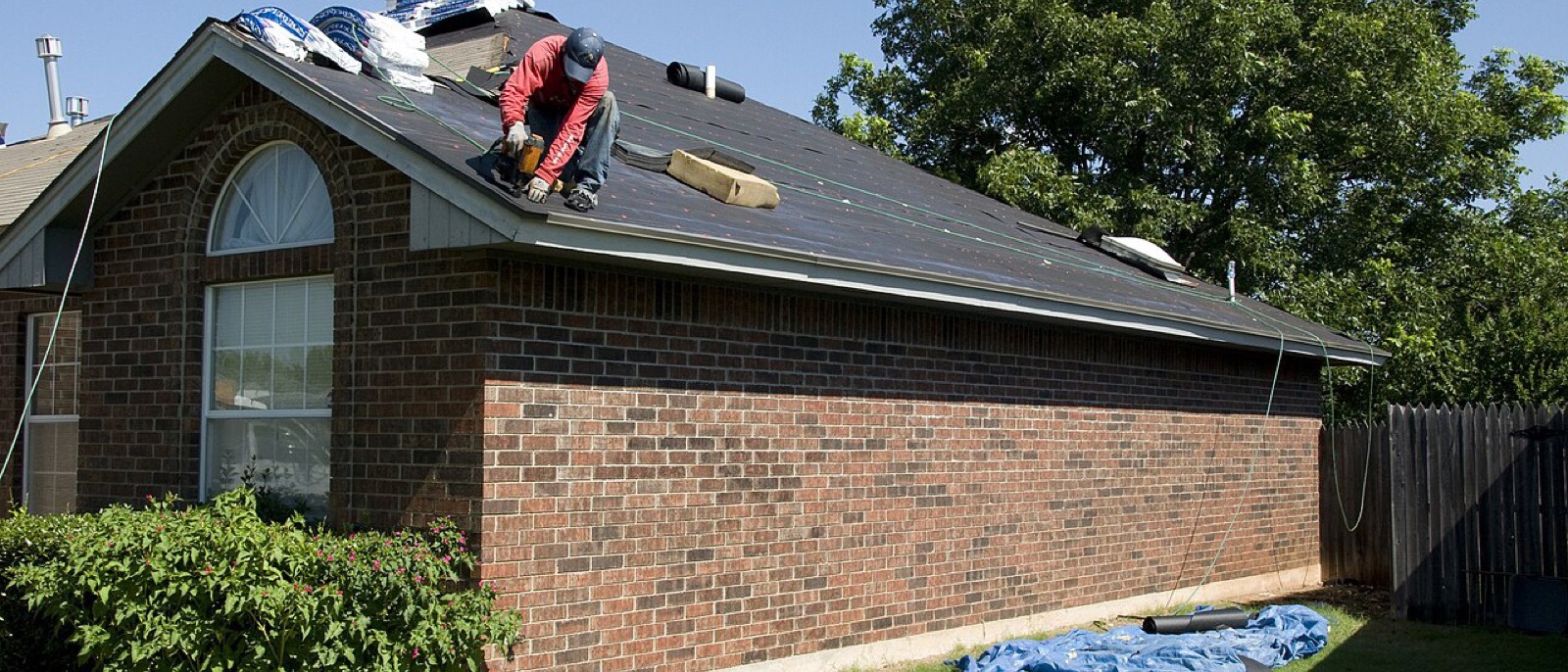
The difference between a flat roof and a pitched roof comes down to one thing: how fast water leaves. A pitched roof moves rain off in seconds using gravity and overlapping shingles. A flat roof, which is almost never truly flat, relies on a slight slope, a continuous waterproof membrane, and drains that have to stay clear. That single distinction drives nearly everything about how each roof is maintained, how it fails, and how much warning you get before a leak reaches your ceiling.
If you own a house with a flat section over a garage, an addition, or a porch, you own two roofs with two maintenance schedules. Plenty of homeowners find that out when the addition leaks and the main roof is fine.
Drainage is the whole game
On a pitched roof, drainage happens by default, and your job is keeping the path clear. Clogged gutters back water up under the bottom courses of shingles, and in cold climates that backup turns into an ice dam, where meltwater refreezes at the cold eave and pushes water uphill under the shingle edge. Valleys, the seams where two roof planes meet, carry heavy volume and collect leaves. Most pitched-roof drainage problems trace back to one of those two spots.
Flat roofs drain on purpose or not at all. The design uses a slope of roughly a quarter inch per foot toward internal drains, scuppers cut through the parapet wall, or gutters at one edge. When any of that gets blocked, the water has nowhere to go and simply sits.
The working benchmark roofers use is 48 hours. Water still standing more than two days after the rain stopped, in weather that should have let it drain or evaporate, is ponding rather than drainage. Ponding is worth taking seriously for a few reasons. It adds sustained weight to the deck, it keeps the membrane and seams under constant moisture, it collects grit and organic debris that hold water even longer, and it hides whatever defect is underneath. It also shows up as an exclusion in a lot of manufacturer warranties.
The important follow-up question is why the water is there. A blocked drain strainer or a debris pile is maintenance. Water pooling in a spot where the deck has sagged, or on a roof that never got the right slope, is a structural or design problem, and no amount of patching fixes it.
What is actually on your roof
Pitched roofs are mostly asphalt shingles, with metal, tile, and wood shake taking smaller shares. The system is layered and redundant. Each shingle overlaps the one below it, underlayment sits beneath as a second barrier, and flashing seals the transitions at chimneys, vents, and walls. Damage tends to stay local because the assembly is thousands of small independent pieces.
Flat roofs use a continuous membrane instead, and the type matters for how it gets repaired.
EPDM is a synthetic rubber, usually black, installed in large sheets with seams bonded by adhesive or seam tape. Field punctures are often straightforward to patch. Seams and flashings are where age shows first.
TPO is a light-colored single-ply thermoplastic with heat-welded seams. Repairs need to be welded in, not glued, which means the work belongs with a contractor who has the equipment.
Modified bitumen is an asphalt-based sheet reinforced with polyester or fiberglass, applied in plies. It repairs well as long as the new material is compatible with what is already up there.
Built-up roofing is the older layered assembly of bitumen and felts under gravel or a cap sheet. Durable, and hard to inspect, because the gravel surface hides the membrane and water can travel between plies.
Two things follow from this. Patching a membrane with the wrong material is a reliable way to create a second leak next to the first. And if nobody can tell you which membrane you have, that alone is a reason to get a real inspection instead of another improvised repair.
How often to inspect each one
A pitched roof over ten years old is worth looking at once a year, plus a check after any significant hail or wind event. Spring is the useful window in most regions because winter damage is fresh and easy to trace. Much of that inspection can happen from the ground with binoculars and from inside the attic, where water stains on the underside of the decking tell you things the outer surface hides.
Flat roofs want more attention, usually twice a year and again after major storms. Membranes are not fragile. The problem is that a flat roof gives you almost no visual warning. A pitched roof announces trouble with curled shingles, granules in the gutter, or a bald patch you can see from the driveway. A flat roof looks the same the day before it leaks as it did five years earlier.
Flat roofs also take more foot traffic. HVAC units, satellite dishes, and solar equipment mean people walking on the membrane, and dropped tools cause a real share of punctures. If a technician was on your flat roof this year, that roof deserves a look.
Where each type fails
Pitched roofs fail at the details more than the field. Flashing around chimneys and skylights is the most common leak source, followed by the rubber boot seals around plumbing vents, which crack with UV exposure. Wind lifts shingle tabs, hail knocks off the granules that shield the asphalt from sun, and valleys wear faster because they carry the most water. Damage is usually visible, and the leak generally shows up near where the water got in.
Flat roofs fail at seams, penetrations, and edges. The recurring list: seam separation as adhesive ages, flashing pulling away at parapet walls and curbs, punctures from traffic and debris, blistering where moisture got trapped in the assembly, and shrinkage that tugs at the details.
The part that catches homeowners off guard is leak tracing. Water entering a flat roof can travel a long way between the membrane and the deck before it finds a path down. The stain on your ceiling may be fifteen feet from the actual breach. That is why a contractor may want a moisture survey or core cuts rather than guessing from the inside.
When to call a roofer
For a pitched roof, call when shingles are missing or scattered in the yard, when you can see daylight through the decking from the attic, when flashing is visibly lifted or rusted, when granules are piling up in the gutters in quantity, or when any part of the roofline looks like it is dipping. Active water coming in during rain is a same-week call, not a someday call.
For a flat roof, call when water is still standing after two days, when you find blisters or soft spongy areas underfoot, when seams are visibly separating or lifting, when a ceiling stain appears anywhere under the flat section, or when the interior smells musty without an obvious cause. Also call after any rooftop equipment work, because that is when punctures happen.
One practical note about actually reaching someone. Roofing demand spikes in the same few days across a whole region, because one storm damages hundreds of roofs at once. Every homeowner calls while every crew is already in the field, and people tend to book with whoever picks up. Some roofing companies now keep an always-on receptionist for roofing contractors answering the phone so a call during that surge gets the address, the leak location, and the roof type captured and scheduled instead of rolling to voicemail.
If you have both roof types on one house, put the flat section on a twice-yearly schedule and check after heavy rain whether the drains cleared. That one habit catches most of what goes wrong up there.
FAQ
Does a flat roof really need more maintenance than a pitched roof? Generally yes, mostly because it gives less warning. Twice-yearly inspection is a common cadence for flat roofs versus once a year for pitched roofs over ten years old. Flat roofs also collect debris, hold water when drains clog, and take more foot traffic from rooftop equipment service.
How long can water sit on a flat roof before it is a problem? About 48 hours after rain stops is the working benchmark. Beyond that it counts as ponding. A blocked drain or scupper is a maintenance fix. Water pooling because the deck has deflected or the roof was never sloped correctly is a structural issue that patching will not solve.
Why is my flat roof leaking somewhere different from where the ceiling stain is? Water that gets through a membrane can travel sideways between the membrane and the deck before finding a path down. The visible stain is often well away from the actual breach, which is why contractors use moisture surveys or core cuts instead of working backward from the stain alone.
What is the most common leak point on a pitched roof? Flashing, particularly around chimneys and skylights, and the rubber boots around plumbing vent pipes. Those boots crack from UV exposure and are a frequent source of slow leaks on roofs that otherwise look fine.
Can I clear my own flat roof drains? Clearing debris from a strainer on a low, accessible flat section is reasonable for many homeowners. Walking on a membrane is a puncture risk and a fall risk, so soft spots, standing water, and anything needing tools are worth handing to a roofer.