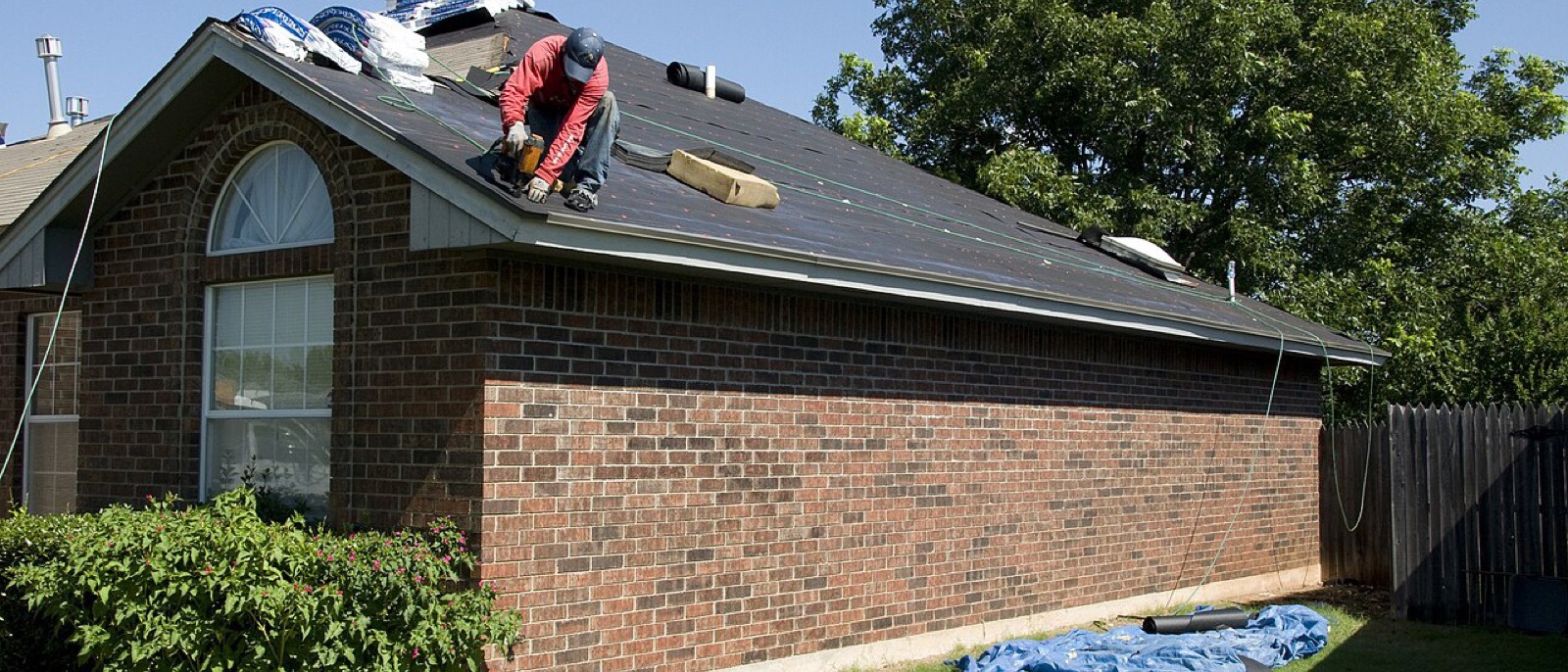
At 5:40 a.m. the radar looks survivable. By 7:15 the front has moved twenty miles faster than the model said it would, and your foreman is standing in a driveway in Cedar Park telling you the deck is too wet to strip. You have four crews out, eleven jobs on the board this week, and a homeowner in that driveway who took the day off work to be there.
Every homeowner who has lived through one spring in a storm belt understands that nobody tears off a roof in the rain. What they hold against you is finding out at 11 a.m. by calling you, getting voicemail, and then wondering until Thursday whether they have been forgotten.
Get the sequence right and a washout costs you a production day. Get it wrong and it costs you a production day plus three reviews that all say the same thing: "never called me back."
Call Before They Call You
There is a narrow window on a weather morning, usually between the foreman's call and about 8 a.m., where you still control the story. Inside that window you are a contractor managing a job professionally. Outside it, you are a contractor who went dark.
The difference is a two-minute phone call, and it has to be a phone call. A text saying "rain today, we'll reschedule" reads as a brush-off to someone who rearranged their week around your arrival. Roofing is a high-anxiety, high-ticket purchase, and the homeowner is already half-wondering whether they picked the right company. A voice on the line settles that. A text does not.
Make the call yourself or have your office make it. Do not hand it to the foreman in the driveway between six other things. He will get through two of the five, and those two will hear a man who is clearly in a hurry.
What the Customer Actually Needs to Hear
Most reschedule calls fail because they deliver only half the information. The homeowner hears "we're not coming today" and the call ends before the part they care about.
A complete reschedule call covers four things, in this order:
Why, specifically. Not "weather." Say the thing: the deck is too wet to get a safe dry-in before the next band moves through, or sustained winds are above what we will put a crew on a roof in. Specificity reads as competence. Vagueness reads as an excuse.
The new date, firmly. This is the part homeowners are waiting for, and it is the part contractors most often fudge. "We'll get back to you later this week" leaves the customer holding uncertainty that is properly yours to hold. If you genuinely cannot commit yet, then commit to the callback instead: "I will call you tomorrow by noon with a firm date." Then actually call at 11.
What happens to their house in the meantime. If the roof is open or dried in, say exactly what is protecting it and how long that protection is good for. A homeowner staring at a tarped section of their own house needs to hear that the tarp is doing its job. If the job never started, say so plainly so they are not imagining exposed sheathing.
What they need to do. Usually nothing. Say that. "You don't need to be home Thursday, the crew has access through the side gate" removes a question they would otherwise have to call back to ask.
Four things, ninety seconds, and the customer hangs up informed instead of anxious.
Sequence the Calls by Exposure, Not by Alphabet
When you have nine calls to make and one office manager, order matters. Work down by how exposed the customer is, not by whatever order the jobs appear on the board.
Call the open roofs first. Anyone with a tear-off in progress, a tarped section, or a dried-in deck waiting on shingles is living with visible incompleteness on their own house. Their anxiety is highest and their patience is shortest, and a leak through a temporary cover is the fastest route to a callback and a claim.
Call today's no-shows second. These are the people who took a day off, moved the cars, and boarded the dog. They are standing at a window right now. Every minute past 8 a.m. that they spend wondering is a minute of goodwill you will not get back.
Call this week's downstream jobs third. Anyone whose Thursday slot is about to become next Tuesday should hear it from you before they hear nothing. This group is the one contractors skip most often, because the delay has not technically hit them yet. It will, and telling them early costs you almost nothing. Knowing how to reslot crews after a weather delay is what lets you give this group a real date instead of a vague one.
Insurance-claim jobs deserve a note of their own. When an adjuster, a supplement, or a mortgage-held check is in the mix, a schedule slip can cascade into deadlines the homeowner does not control and does not understand. If a delay pushes work near a claim deadline, say so on the call and tell them what you are doing about it.
Why the Phones Get Hit Twice on a Rain Day
Here is the operational trap. The morning you most need your office making outbound reschedule calls is the same morning your inbound volume climbs.
Weather that stops your crews is producing damage somewhere. Wind lifts shingles and a driving rain finds every soft spot that has been quietly failing since last year. Homeowners who have been ignoring a stain on the ceiling suddenly have water in it. Those calls come in on the same day, on the same line, to the same person you need dialing outbound.
So one of two things gives. Either your office manager works the reschedule list and new storm leads roll to voicemail, or she answers inbound all morning and your existing customers hear nothing. Missed calls during a weather event are a well-known pain point in this trade, because a homeowner with an active leak does not leave a message and wait. They work down the search results until someone picks up.
Most shops try to do both and end up doing neither well. The reschedule calls get compressed into thirty-second apologies, and the inbound calls get answered on the fourth ring by someone who sounds harried.
Splitting the two jobs is what fixes it. Some contractors pull a second person onto phones for the morning, or route inbound to an answering service for a few hours so the office can work outbound uninterrupted. An AI voice receptionist like Answara covers the same gap by answering inbound storm calls and capturing address, damage type, and insurance intent while your team works the reschedule list. Whatever you pick, decide it before the season rather than at 7:15 on the morning it matters.
Close the Loop the Day Before
One more call, and it is the one that separates the shops with five-star storm seasons from the ones that merely survive them.
The day before the rescheduled date, call to confirm. Short call. The crew is coming Thursday between 7 and 7:30, here is what they will do, here is the foreman's name. Forty seconds, and it does two things: it catches any conflict while there is still time to fix it, and it tells the customer you have been holding their job in mind the whole time.
That is what the reschedule call is really buying. Not forgiveness for the weather, which you never needed. The homeowner is watching how you behave when a plan falls apart, because that is the best available preview of how you will behave if a leak shows up two years after the warranty conversation. A contractor who calls at 7:30 a.m. in the rain with a firm date is telling them something a brochure cannot.