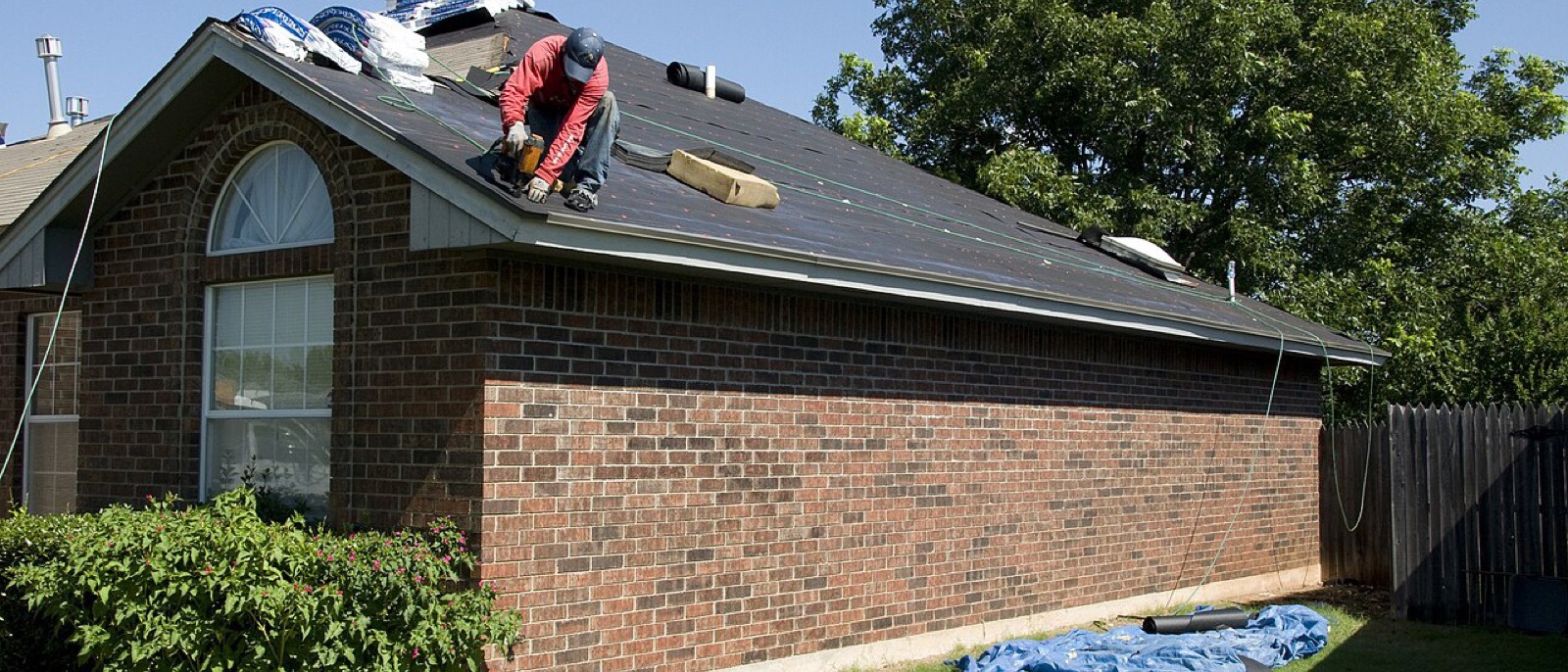
The leak showed up on a Sunday, a brown ring spreading across the guest room ceiling. By Wednesday the homeowner has an estimate in hand: full tear-off and replacement, five figures, and a savings account that covers maybe half of it. So she does what almost everyone in that position does. She starts calling roofers on her lunch break, and her first question has nothing to do with shingles. "Do you offer financing?"
The first company rings through to voicemail. The second answers, but the person at the desk says the estimator handles payment stuff and he's out until Friday. The third company answers, explains in plain terms that yes, they work with a financing partner, the application happens after the inspection, and would Thursday morning work? Thursday it is. The other two roofers never knew they were in the running.
Financing questions are booking questions
A repair call and a replacement call are different animals. Someone with a missing shingle wants to know when you can come out. Someone facing a full replacement wants to know whether they can afford you at all, and they want to know before they let an estimator on the roof. Nobody books an inspection for a project they believe is out of reach. The financing question is the gate in front of the appointment.
That changes what a "good answer" on the phone looks like. The caller does not need loan terms. She needs to hear that a path exists, that plenty of your customers use it, and that the details get sorted with a real application after the inspection. A confident thirty-second answer moves her from "can I afford this" to "which Thursday works." A shrug, a transfer to a voicemail box, or a promise that someone will explain it later sends her back to the search results, where your competitor is one tap away.
The homeowner is usually calling three or four companies in a single sitting. Whoever gives her a clear answer while she has the phone in her hand tends to get the inspection slot. The others get compared against a quote that already exists.
What homeowners actually ask
The questions repeat. Anyone who answers your phone should recognize all of them on sight:
- Do you offer monthly payment plans, and roughly how do they work?
- How big a deposit do you need before work starts?
- Does applying involve a credit check, and will it affect my score?
- We have an insurance claim open. Can you schedule the work before the claim check or the deductible money is in hand?
- Do you have a same-as-cash or deferred-interest option?
- Insurance is covering part of it. Can we finance only the remainder?
- What happens if the final invoice comes in higher than the estimate?
Notice what these have in common. Not one of them requires quoting a rate on the phone. Each one can be answered at the level of "yes, that option exists, here is who walks you through it and when." The caller is checking for the presence of a door, and asking whether the person on the phone knows where it is.
It helps to hear what sits underneath each question. The payment-plan question is really "is this the kind of company that works with normal people, or only cash buyers?" The credit-check question is a homeowner protecting a score she just spent two years repairing. The deposit question is often a spouse in the background asking how much has to leave the checking account this month. When whoever answers your phone treats these as familiar territory, the caller relaxes. When the answer is a long pause and "let me see if anyone here knows," she starts composing the next call in her head while you fumble.
The insurance-claim caller is a different call
Storm-damage callers deserve their own script. This homeowner is juggling an adjuster, a deductible, a supplement she does not understand, and a mortgage company whose name is somehow on the claim check. She is often more anxious than the cash buyer, and her financing question is tangled up with claim timing: can work start before the insurance money lands, and can the gap be financed until it does?
You do not need to resolve any of that on the first call, and you should not try. What wins the call is recognition. An office that can say "we handle claim-funded replacements all the time, the estimator will walk you through how the timing and any gap financing work at the inspection" sounds like the company that has done this a hundred times. Because you have. An office that audibly does not know what a supplement is sounds like a company she should not hand a five-figure project to, no matter how good the crews are.
Answer the question, never quote the loan
Here is where roofers get nervous, and rightly so. Financing is regulated territory. The person answering your phone, human or otherwise, should never state an interest rate, promise an approval, estimate a monthly payment, or characterize anyone's credit chances. That is the lender's job, done through a real application.
The fix is a routing script, and it fits on an index card:
- Confirm the option exists. "Yes, we work with a financing partner, and a lot of our replacement customers use it."
- Name the next step. "The estimator goes over the options at your inspection, and the application itself runs through the lender."
- Book the inspection while the caller is still on the line.
That structure answers the emotional question (can I do this?) without touching the legal one (on what terms?). It also keeps every phone answer consistent, whether the call lands with the owner, the office manager, or whoever grabbed the phone between crews. Print it. Tape it next to the phone. Drill it once at a Monday meeting and the whole financing conversation stops being scary.
There is a hidden benefit to the script beyond compliance. It shortens the call. A financing conversation that tries to explain terms runs twenty minutes and still ends with "the lender will confirm everything anyway." A routing answer runs ninety seconds and ends with a booked inspection. On a storm week, that difference is the phone line staying open for the next caller.
Capture the call you cannot take
Now the hard part. These calls arrive at lunch, on weekday mornings, and right after a storm, which is exactly when your crew is on a roof and the office chair is empty. A financing question that hits voicemail is close to a dead lead. The caller was working down a list. She left no message, or she left one you heard at 6 p.m., after she booked with someone else at 12:40.
If a live answer is impossible in the moment, the fallback is disciplined capture. At minimum you want the caller's name and number, the property address, what she asked about (payment plans, deposit, insurance timing), whether a claim is involved, and the window when a callback will actually reach her. A same-day callback that opens with "you asked about monthly payment options, let me walk you through how that works with us" recovers a surprising share of these leads. A generic "returning your call" two days later recovers very few.
This is the piece worth automating, because it is pure logistics. The judgment lives in the estimate and the lender's paperwork. The phone work is capture and routing, and it has to happen while the shingles are still in her search history.
Answara sits on that gap. When a financing call comes in and everyone is on a roof, Answara answers it, tells the caller that financing options exist and that a team member will walk them through the details, and never quotes a rate, a term, or an approval. It records what the caller asked, takes down her contact details and address, flags an insurance claim if one comes up, and queues the callback for your office. It handles the call. The financing conversation stays with your estimator and your lending partner, where it belongs, and the homeowner with the brown ring on her ceiling hears a human voice back within the hour instead of a beep.