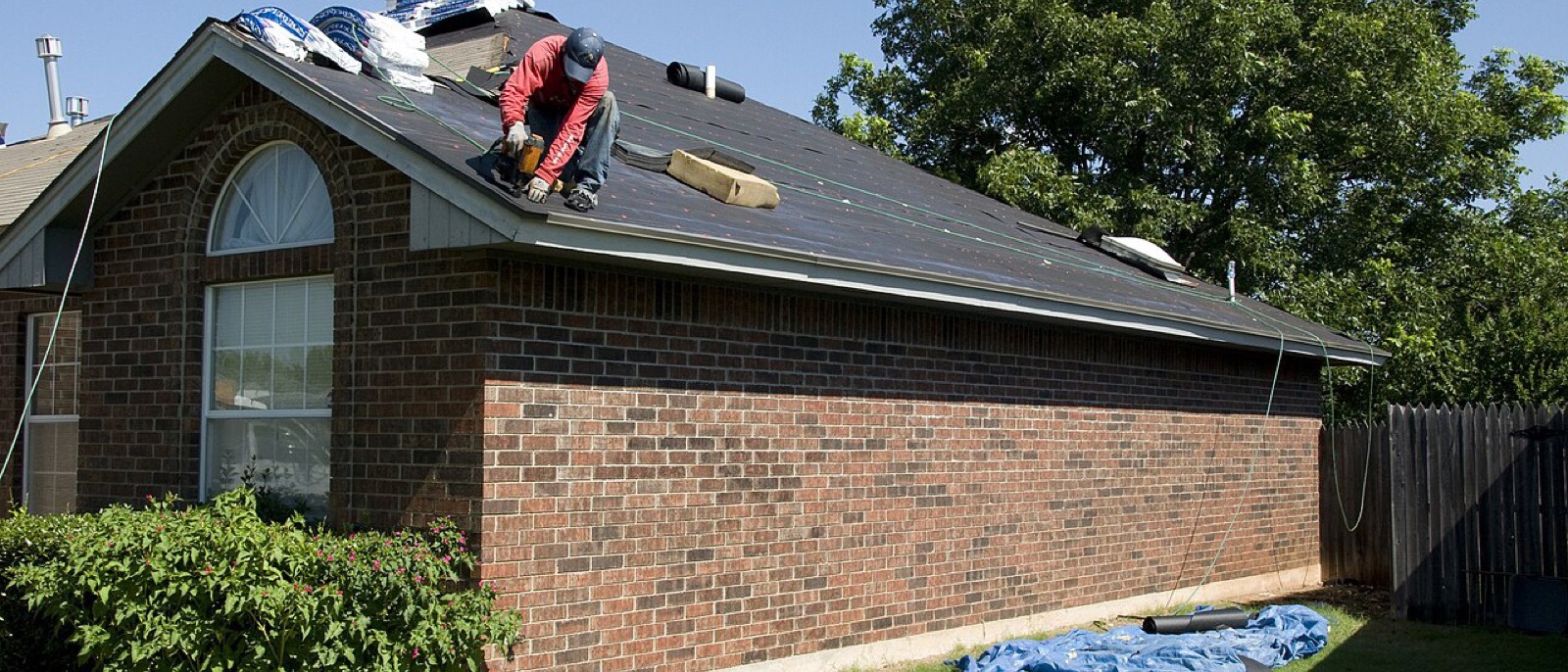
The claim is open. The homeowner filed, the carrier assigned somebody, and your inspection is on the board. Most roofing offices treat that as the finish line for the phone work. It is closer to the starting line, because everything that determines whether the job gets approved at the scope you documented happens in the weeks after, and almost all of it happens by phone.
This is the part nobody writes a process for. Adjuster coordination is unglamorous, interrupt-driven work, and it is where files go quiet and stay quiet.
Three calendars, one roof
The core scheduling problem in claim work is that you need three parties standing on the same roof at the same time: your estimator, the homeowner, and the carrier's adjuster. Any two of those is easy. All three is the thing that eats a week.
The adjuster's calendar is the constraint, and it is not yours to move. After a regional weather event a carrier may be running independent adjusters pulled in from out of state, working a route through neighborhoods with little regard for what you already booked. The homeowner has a job and cannot always meet at 10 a.m. on a Tuesday. Your estimator is the one you control, which means your estimator is the one who absorbs every reschedule.
So build the sequence around the immovable piece. When the adjuster's office calls with a window, the answer your phone gives should be yes with a confirmation, not "let me check and call you back." A callback loses the slot. That means whoever answers needs to see the estimator's calendar in real time and needs standing permission to commit a name to an adjuster appointment. If your front desk has to route that decision through an owner who is on a roof until five, you will lose slots all season.
Then confirm the homeowner separately, and confirm in writing. The most common failure in a three-way appointment is a homeowner who thinks they do not need to be there, or who was told a time verbally on Thursday and has drifted by Monday. A text with the date, the window, the adjuster's name, and a line about who is expected on site closes that gap cheaply.
If the three-way meeting genuinely cannot be assembled, get your estimator on the roof before the adjuster and get the photo set built. Your documentation is what the conversation runs on afterward. Showing up after the adjuster has already written the estimate puts you in a rebuttal posture rather than a shared-observation one.
Adjusters call from numbers you do not recognize
Here is the operational detail that costs roofing companies more appointments than any scheduling theory: adjusters frequently call from blocked numbers, carrier switchboards, or personal cell phones in area codes nowhere near your market, and they often call with very short notice. Two hours, sometimes less. "I'm finishing up in the next neighborhood, can your guy meet me at the Kowalski property at three?"
If that call rings out, the adjuster inspects without you. That is the whole cost. They will document what they document, and your scope gets compared to theirs later with nobody from your side having been present.
A few things follow from this. Unknown numbers get answered during business hours, always, and the "screen the spam calls" instinct has to be suspended on any day you have open claims. Voicemail needs to be checked between roof visits rather than at end of day, because a three-hour-old message about a three-o'clock meet is worthless. And when an adjuster does give you a direct line or a cell, that number belongs in the claim record immediately, because it is the difference between reaching a person and reaching a carrier phone tree.
What the office should have in front of it when the phone rings
Adjuster calls are short and they are transactional. The person on the other end is working thirty files and has your address open for maybe ninety seconds. If your side has to go find things, the call ends with a promise to follow up, and follow-ups are where claim work goes to die.
Everything below should be retrievable in one place, in seconds:
- Claim number and date of loss. The adjuster identifies the file by these, not by the homeowner's name.
- Carrier and the adjuster's own name. Carriers reassign. The name on the file in week one is often not the name calling in week four.
- Homeowner name and property address, including the correct spelling and the unit or lot number if it is a multi-building property.
- Your scope of work as submitted, with line items, and the date you submitted it.
- Your photo documentation, organized by elevation and by damage type, dated.
- A dated contact log for every prior conversation on the file.
That last item is the one people skip and the one that matters most, so it gets its own section below.
Keep this bundle attached to the claim rather than scattered across phones and inboxes. A photo set living only on a crew lead's camera roll is documentation you effectively do not have when the adjuster calls at 4:15.
Supplements and re-inspections should never live in voicemail
Supplements and re-inspection requests are the two follow-through items most likely to be lost, and they are lost the same way: someone submits the request, hears nothing, and the file quietly ages out of anybody's attention.
A supplement is a request to revise an approved scope, usually because conditions came to light after the original estimate. Rotted decking under the shingles. A layer nobody knew about. Code requirements at the ridge or the valleys that the first estimate did not carry. A re-inspection is a request for the adjuster to come back and look again, generally when your documentation and theirs do not describe the same roof.
Both are requests into a system that will not chase you. Treat them as tracked items with a name and a date attached, the same way you would treat a material order that has not shipped.
That means every supplement submission gets logged with the date sent, the method, the line items requested, and a follow-up date. Set the follow-up when you send it, not when you remember. If a week passes with no response, somebody calls, and the call gets logged too. Keep a short weekly review of open supplements and pending re-inspections, and give one person ownership of that list. A list owned by everyone is checked by no one.
The homeowner should hear from you during this stretch as well, even when there is nothing to report. Silence between the inspection and the approval is the window where a homeowner starts wondering whether they picked the right contractor.
Log every contact against the claim file
Write down every adjuster contact: date, time, who called whom, the person's name, and what was said or agreed. Do it inside the claim record where the next person to touch the file can read it.
The reason is practical. Claims run long, adjusters change, and memory of a phone call from five weeks ago is worth very little when the file is being reviewed. A dated log lets anyone in your office pick up the phone and know exactly where things stand, and it means a reassignment does not restart the whole file from zero.
Log the calls that produced nothing, too. "Called the adjuster's direct line, left message, no callback" is a real entry, and a string of those entries is the record of a file that needs to be escalated to a supervisor.
The boundary the office has to hold
This one is worth stating plainly to everyone who answers your phone.
The office schedules, documents, and reports. It does not negotiate scope, and it does not advise the homeowner on what their policy covers. When an adjuster wants to discuss line items, the call goes to the estimator or the owner. When a homeowner asks whether their deductible applies, whether the carrier will pay for an upgrade, or what happens if they disagree with the settlement, the honest and correct answer is that this is between the homeowner and the carrier, and their adjuster or agent is the person to ask.
That is not evasion. Coverage questions genuinely belong to the policyholder and the insurer, and an office employee guessing at them creates a problem for the homeowner and for you. Say what your company observed and documented. Let the policy language and the carrier answer the rest.
When your phone is not covered
None of this holds together if calls go unanswered. Adjuster coordination is the phone work least tolerant of a missed call, because the caller is not going to try you three times.
If your office is small enough that everyone is on a roof by mid-morning, the fix is coverage rather than another process document. An answering service or an AI receptionist like Answara can pick up on the first ring, capture the claim number, the adjuster's name, the callback number, and the requested window, then push that straight to whoever runs your claim board. It will not commit your estimator to a scope discussion, and it should not. The job is making sure the three-o'clock meet request reaches a human who can say yes. The call handling page covers how that handoff works.