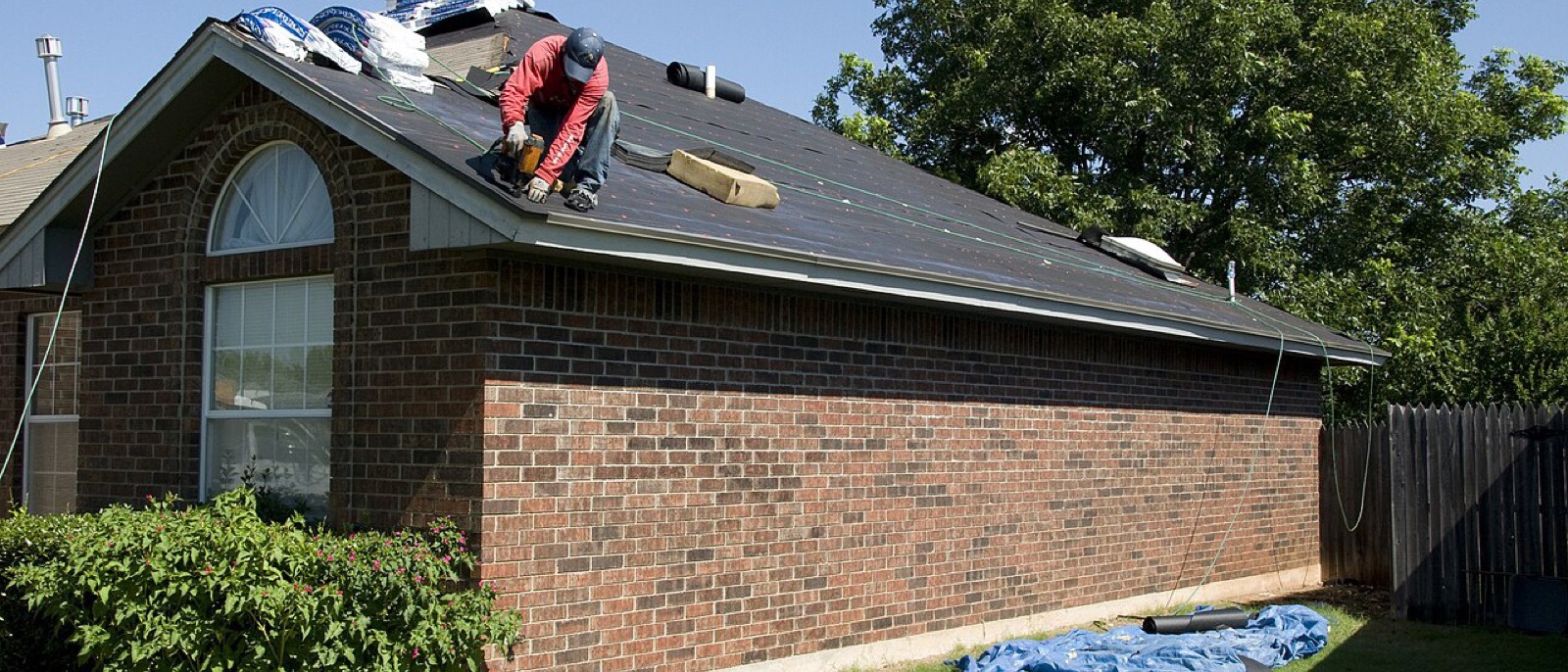
Five men are standing in a driveway at 6:50 in the morning with nothing to do. Tear-off was supposed to start at seven. The shingles are on a truck somewhere between the branch and this street, and the only person who can say where is a dispatcher who does not sit down until eight.
The homeowner is at the front window in a bathrobe. She is going to be the first person to ask what is happening, and if nobody picks up when she calls the office, that is the version of the morning she remembers.
A material delivery looks like a purchasing task. It is actually a scheduling task with four sets of constraints owned by four different people: the supplier routes the truck, the property decides what the truck can physically do, the HOA and the permit office decide what day is legal, and the weather decides whether any of it should happen at all. Those four only meet on a phone call.
The order date and the delivery date are different problems
Suppliers commit to a day. Some will give a morning or afternoon window. The driver's actual route gets built the morning of, which means the window you were given on Tuesday is a forecast, not a promise.
Your crew needs something tighter than that, so build lag into the schedule rather than assuming. A delivery confirmed for the same morning the crew starts leaves no room to recover. A drop the afternoon before leaves the whole evening to fix a shortage.
The order itself deserves a real read-back, and not only on the shingle count. Starter, ridge cap, underlayment, ice and water membrane, drip edge in the right color and gauge, nails, ridge vent, and pipe boots all show up on the same ticket and any one of them can strand the job on day two. Missing ridge cap does not stop a tear-off. It stops the finish, on a roof that is already open.
Ask the supplier to pull the shingles from a single production lot and to tell you if they cannot. Color varies between runs, and a roof finished out of two lots can show it in the right light.
Rooftop load or ground drop
A rooftop load puts bundles on the deck by conveyor or boom, and it saves your crew from carrying every square up a ladder. It also puts a lot of concentrated weight on a structure you may have only looked at from the ground.
Weight is the part people underestimate. Common architectural shingle bundles land in the range of roughly 60 to 80 pounds each, with premium and designer lines running heavier, and three bundles usually make a square, though heavier products run four or five. The product data sheet has the real number for what you ordered, and it is worth reading before anyone decides a thirty-square roof can sit on the decking overnight.
That load has to be spread, not piled. Bundles laid flat and straddling the ridge put the weight across rafters on both slopes instead of stacking it mid-span on a few boards. Older framing, long spans, and any deck with soft spots deserve a decision from whoever actually inspected it rather than from the driver.
Suppliers also set their own limits on rooftop loading, usually a maximum pitch their equipment will handle and a requirement that the boom can reach without fouling anything. Those numbers vary by company and by truck. Get yours in writing instead of assuming the crew that did it last week will do it here.
A ground drop is the right answer more often than crews want to admit. Pick it when the start date is soft, when the deck is questionable, when a service drop or a tree limb blocks the boom, or when the pitch is past what the supplier will load. Then stage it properly: off the septic field, out of the sprinkler zone, clear of the garage door, on a tarp and under one.
The driveway generates most of the complaints
A loaded delivery truck with outriggers down is heavy enough to mark asphalt and crack concrete. Homeowners rarely think about it until the truck is already parked, and by then the conversation is a dispute instead of a plan.
Ask before the truck rolls:
- Concrete, asphalt, pavers, or gravel, and how old is it. Fresh asphalt in July marks under outrigger pads.
- Is there a septic tank, leach field, cistern, or buried propane tank under the drive or the approach.
- Irrigation lines, low-voltage lighting, or a French drain crossing where the truck would sit.
- Overhead service drop height, tree limbs, and eave clearance on the approach.
- Street access: cul-de-sac turning radius, alley width, parked cars, a gate code, weight-restricted approach.
- Whether the homeowner would rather take a street drop and have the crew carry it.
Then say the awkward sentence out loud on the phone: the truck will set outriggers on your driveway, we put pads under them, concrete can still crack, and here is how we handle it if it does. That call takes ninety seconds. The version where you skip it takes a month and a claim.
HOA rules and the permit office set your earliest date
Homeowners associations restrict work hours, dumpster placement, and how long material can sit in view. Some require notice before a project starts, and a color change can need architectural review that runs on its own calendar. Most homeowners do not know their own governing documents. Ask them to send the architectural guidelines when the job is sold, not the week of.
Permits run on a separate clock. Many jurisdictions want a roofing permit issued before tear-off, and some require an in-progress or deck-nailing inspection before anything gets covered. Whether that applies to this address is a question for the authority having jurisdiction, and your intake should capture it rather than guess at it. It changes the delivery plan directly: a rooftop drop the day before a required inspection can bury the exact decking an inspector needs to see.
Weather cancels the delivery, not only the crew
Rain that stops a tear-off should usually stop the rooftop drop too. Bundles on an open deck through a wind event are a hazard to the roof and to the neighbor's car. Bundles sitting in summer sun for a week can seal to each other, and manufacturers publish storage guidance worth following on the specific product.
So when the start slides, the delivery decision moves with it. Either push the truck, or convert to a ground drop and stage it under cover. Both are supplier phone calls with a cutoff time, usually the afternoon before, and both need to happen before your dispatcher goes home. The sequencing for the customer side of a weather slip is covered in how roofing crews communicate weather delays.
The confirmation call checklist
Two calls the afternoon before. Six minutes total.
Supplier, by their cutoff time:
- Job address plus a landmark, and the delivery date with the window you were quoted.
- Driver dispatch number, and who calls whom if the truck cannot get in.
- Rooftop or ground, and if rooftop, which slope and where on it.
- Line-item read-back: squares, color, lot, starter, ridge cap, underlayment, ice and water, drip edge color and gauge, nails, vents, boots.
- Confirmation the shingles come from one lot.
- Clearance check on the boom: service drop, limbs, turning radius.
- Overage handling: return window, restocking terms, who hauls it back.
- The weather cancellation cutoff and the number to call.
Homeowner, that evening:
- What is arriving, roughly when, and exactly where it will sit.
- Cars out of the driveway by a stated time, and where to park instead.
- Gate code, side access, dogs, and anything fragile near the staging spot.
- Whether they need to be home. Usually no, so say it plainly.
- The driveway and outrigger conversation.
- Start time for noise, checked against HOA quiet hours.
- What happens if the truck slips, and your promise that they hear it from you first.
When the delivery slips, call before they notice
The homeowner is tracking one event: a truck showing up. Missing it is visible from the kitchen window, and the gap between what they see and what they hear from you is where the complaint lives.
The failure pattern is consistent. The foreman knows at 6:50. The office learns at 9:15. The homeowner called at 7:30 and got voicemail. By the time anyone reaches her, she has already decided you are disorganized, and the reschedule call is now an apology call.
Name the reason specifically, give the new date or a firm callback time you will actually hit, and say what protects the house in the meantime if the roof is already open.
How an AI receptionist handles this call type
The calls around a delivery are short, repetitive, and badly timed. A driver in the street who cannot find the gate code. A homeowner asking where the truck is. A supplier's dispatcher confirming a window at 6:45 while your whole office is still in traffic. Every one of them is easy to answer and expensive to miss.
An AI receptionist picks up on the first ring at that hour, identifies which job the caller is on, and captures the pieces that matter: driver name and callback number, revised window, what got delivered and what did not. It can read back the staging instructions and gate access you stored for that address, give the homeowner the delivery status your office published, and route a stuck driver straight to the person who can redirect a truck. Answara does this for roofing companies.
It will not decide whether a deck takes a rooftop load, and it cannot move a truck. Those stay with your foreman and your supplier. What it changes is whether the 6:45 call and the 7:30 call get answered by a person or by a voicemail box.
The delivery either lands where the crew needs it or the morning turns into five men standing in a driveway. Most of that outcome was settled the afternoon before, on two phone calls nobody had time to make.