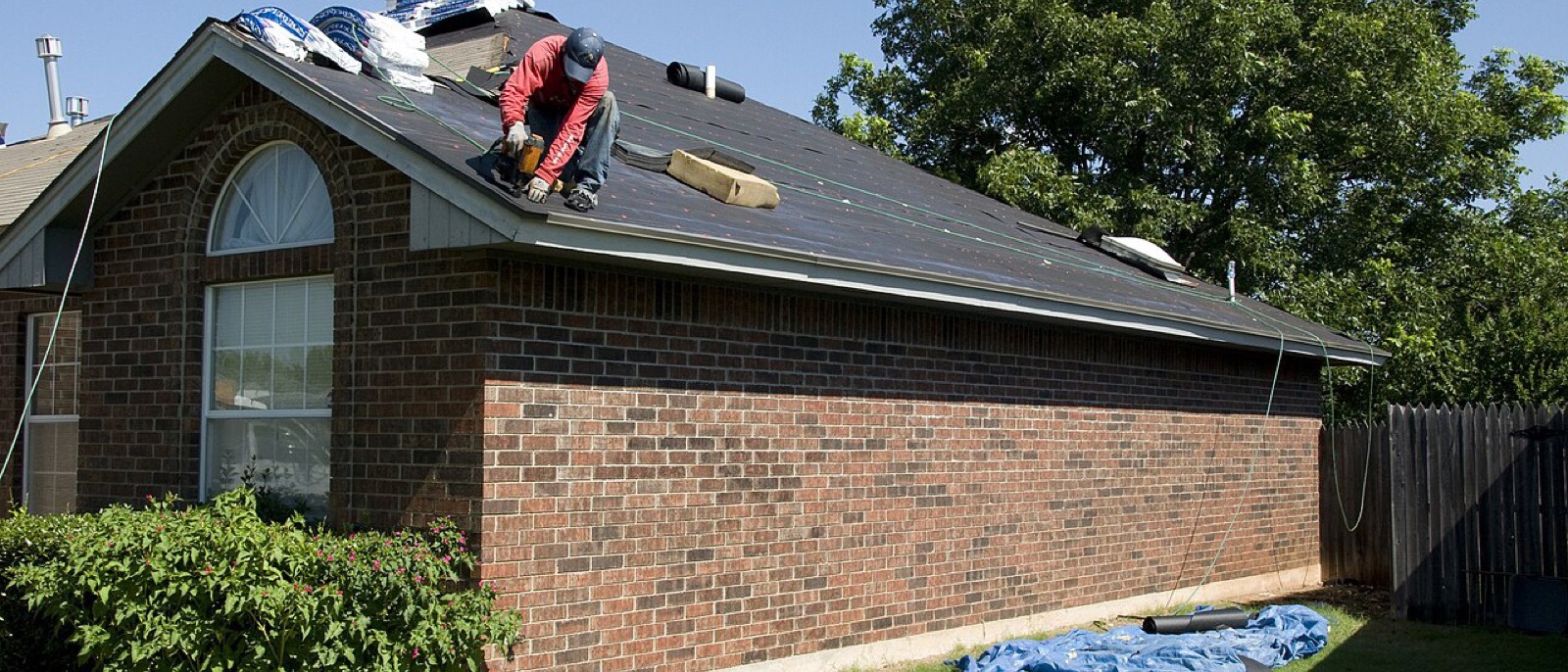
The call comes in at 7:15 on a March morning, two days after the first real rain of the spring. A homeowner watched water sheet over the front of her gutter and land on the porch steps instead of going down the leader. She wants a price. The crew lead who answers is standing on a roof in the wind holding a nail gun, so he says what anyone would say in that position: "I'll have someone call you back with a number."
Nobody calls her back until Thursday. By Thursday she has already had two other contractors out, and one of them noticed the fascia board behind that gutter had gone soft along an eight-foot run and the soffit was stained. That contractor is now quoting a job three times the size of a gutter cleaning, and the first company is quoting nothing at all.
That is the whole problem with gutter and fascia calls. They arrive sounding small, they arrive in clusters after weather, and the ones worth the most money are the ones that sound the least urgent on the phone.
Gutter-only work and roof-adjacent rot are two different jobs
The first job of the intake is to figure out which conversation you are actually in. Callers do not know the difference and will describe both the same way.
A gutter-only job is a replacement of the trough and downspouts on sound wood. The existing fascia is solid, the drip edge is doing its job, the old gutter is just undersized, sagging, or beaten up by a branch. Tear the old one off, check the fascia, hang new, run the leaders. It is a one-day job on most houses and it prices off linear footage and access.
A roof-adjacent job is what you find when the gutter comes down and the fascia behind it is punky. Water that spent five years running behind the trough instead of into it has been feeding the back of that board the whole time. Now you are replacing fascia, likely some soffit, sometimes the ends of rafter tails, and you are into the roof edge: drip edge, the last course of shingles, maybe a strip of decking along the eave. That job takes a different crew day, a different material list, and a different price entirely.
Both callers say "my gutter is leaking." The difference is buried in what they describe next, which is why the questions matter more than the answer you give.
The tells that a call is really a rot call:
- Water running behind the gutter, or staining down the siding beneath it, rather than spilling over the front lip
- Peeling or bubbled paint on the fascia board, or a board that looks wavy from the ground
- Any mention of the gutter pulling away from the house, dropping at one end, or spikes backing out
- Visible soffit staining, sagging soffit panels, or a hole where birds or squirrels got in
- Interior symptoms: water in the soffit corner, a wet spot on an upstairs ceiling near an exterior wall
- The homeowner mentioning the gutters were "never really cleaned" or the house has heavy tree cover
None of that is diagnosis over the phone. It is triage. It tells you whether to send an estimator with a ladder and a moisture reading in mind, or whether a measurement visit will do.
The measurement questions that make a quote possible
Gutter work prices off measurable things, and almost all of them can be captured on the phone by someone who knows to ask. Whoever picks up should get these before the call ends.
Linear footage, or something you can convert to it. Most homeowners cannot give you a number. They can give you the shape of the house and roughly how many sides have gutter. A simple ranch with gutters front and back is a very different quantity than a colonial with a wraparound porch, two dormers, and a garage wing. Ask what the house is, how many sides carry gutter now, and whether the garage is attached.
Story count. This is the biggest single labor driver and it is the question people forget. A single-story run is ladder work off flat ground. A second-story run over a deck, a sloped yard, or a bay window means longer ladders, standoffs, sometimes staging, and a slower pace because every trip up and down costs more. Ask specifically: is any of the gutter on the second story, and is anything under it that a ladder cannot sit on.
Access obstacles. Fence lines, air conditioning condensers under the eave, landscaping beds the crew cannot walk through, a driveway too narrow for the truck and the brake machine. Seamless gutter is fabricated on site, which means the truck with the roll former has to park somewhere it can run material out straight. If the only approach is a shared alley, the estimator needs to know before he arrives.
Existing size and profile. Ask what is up there now if they know. Most residential work is 5-inch K-style aluminum. Houses with big roof planes, steep pitches, or a history of overflow often want 6-inch, which carries meaningfully more water and pairs with larger downspouts. Half-round is its own conversation and usually shows up on older or higher-end homes.
Downspout count and where the water goes. How many leaders exist now, where they discharge, and whether anything is tied into an underground drain. Underground tie-ins change the work at the bottom of the run, and a homeowner who has an old buried line nobody can locate is a scheduling surprise you would rather have in advance.
Age and history. When the gutters went up, whether they have ever been replaced, whether the roof has been done recently and by whom. If the roof was replaced two years ago and the gutters have leaked ever since, drip edge is a live suspect and the estimator should walk up with that in mind.
Material questions callers ask, and how to answer them honestly
Homeowners have usually done twenty minutes of reading before they call, so the same handful of questions come up. Answering them well on the phone builds enough trust to get the appointment, and none of it requires quoting a price.
Aluminum versus copper. Seamless aluminum is the default for good reasons: it is light, it does not rust, it comes in a long list of baked finishes, and it is formed on site so a fifty-foot run has no seam in it. Copper is a materially different product. It is a specialty install, it is soldered rather than sealed at the corners and outlets, it patinas over years, and it is chosen for architecture as much as for performance. The honest phone answer is that copper is a substantially larger investment and a different install method, and if the caller is asking about it for a historic house or a specific look, say so and route them to an estimator who has actually soldered copper. Steel and vinyl come up occasionally. Vinyl is a homeowner-store product that gets brittle in cold climates and is not what most contractors hang.
5-inch versus 6-inch K-style. Six-inch holds more water and usually runs with 3x4 downspouts instead of 2x3, which clogs less with leaf litter. It is the right call on large or steep roof planes and on houses that have overflowed before. It is not automatically better on a small ranch. Frame it that way rather than upselling on the phone.
Seamless versus sectional. Seamless means the run is rolled to length out of a coil on the truck. The only joints are at corners, end caps, and outlets. That is fewer leak points than sectional gutter, and it is standard practice for professional installs.
Gutter guards. Expect this question on almost every call under tree cover. It is worth noting that guard performance varies a lot by type and by what is falling on the house, that pine needles defeat some designs, and that guards reduce cleaning frequency rather than eliminating maintenance. Say that plainly. Homeowners who were promised "never clean your gutters again" by someone else tend to remember who was straight with them.
Fascia material. If rot is in play, the caller may ask about wood versus PVC or composite fascia. Both are real options, they price differently, and the choice interacts with how the existing trim runs and what the neighborhood looks like. This is a look-at-it conversation, not a phone conversation.
When the call has to become an on-site inspection
Some calls can be quoted from a good phone measurement. Many cannot, and the intake should be able to tell the difference so nobody promises a number that later has to be walked back.
Send someone out when any of these are true. Rot is suspected anywhere in the fascia or soffit, because the extent of a soft board is never knowable from the ground and probing is the only way to find where sound wood starts. The gutter is pulling away from the house, which usually means the fascia stopped holding fasteners. There are interior symptoms, since water inside means the failure has been running longer than the homeowner thinks. The house is over two stories or the ground under a run is not level. The roof edge is part of the complaint, because drip edge, the shingle overhang, and the gutter all have to be looked at as one assembly. Or the homeowner has a roof problem and a gutter problem at once and wants both priced together.
There is a version of this that helps everyone: be direct that you can hold a slot for a free on-site estimate now, and that the estimator will bring numbers on the spot after he probes the fascia. Callers accept that readily when they hear the reason. What they will not accept is being told "someone will call you back."
The volume problem after a storm
Gutter calls do not arrive evenly. They arrive the morning after the first heavy rain of a season, after the first ice event, and in the two weeks after the leaves drop. On those mornings a roofing company with three trucks out and one person in the office will take one call and miss five, and the missed ones are the exact calls that turn into fascia and soffit work.
The pattern is well known in the trades: a homeowner with an urgent-feeling property problem calls down a list and stops at the first company that picks up. There is no callback advantage. Whoever answers gets the appointment, and whoever books the appointment gets to be the one who spots the rot behind the gutter.
This is the gap Answara was built for. It answers inbound calls when the crews are on roofs and the office line is stacked, walks the caller through the intake above, captures the property details and the symptoms in their own words, and books the on-site estimate straight onto the calendar. Contractors who want to see how it handles roofing calls specifically can look at answara.ai/roofing.
FAQ
Can a gutter replacement be quoted accurately over the phone? A straightforward single-story replacement on sound fascia often can be estimated closely from linear footage, story count, profile, and downspout count. Anything involving suspected rot, roof-edge work, or difficult access needs eyes on it, because the scope is hidden until the old gutter comes down.
What should intake do when a caller does not know their linear footage? Do not ask for it directly. Ask what kind of house it is, how many sides currently have gutter, whether the garage is attached, and whether any of it is on the second story. That gets an estimator close enough to plan the visit and bring the right ladders.
How do you know if the fascia is bad without getting on a ladder? You do not, and the honest answer to the homeowner is that you do not. Peeling paint, a wavy board, a gutter that has dropped at one end, and staining on the siding below are all reasons to suspect it. Probing the board is what confirms it, and that happens on site.