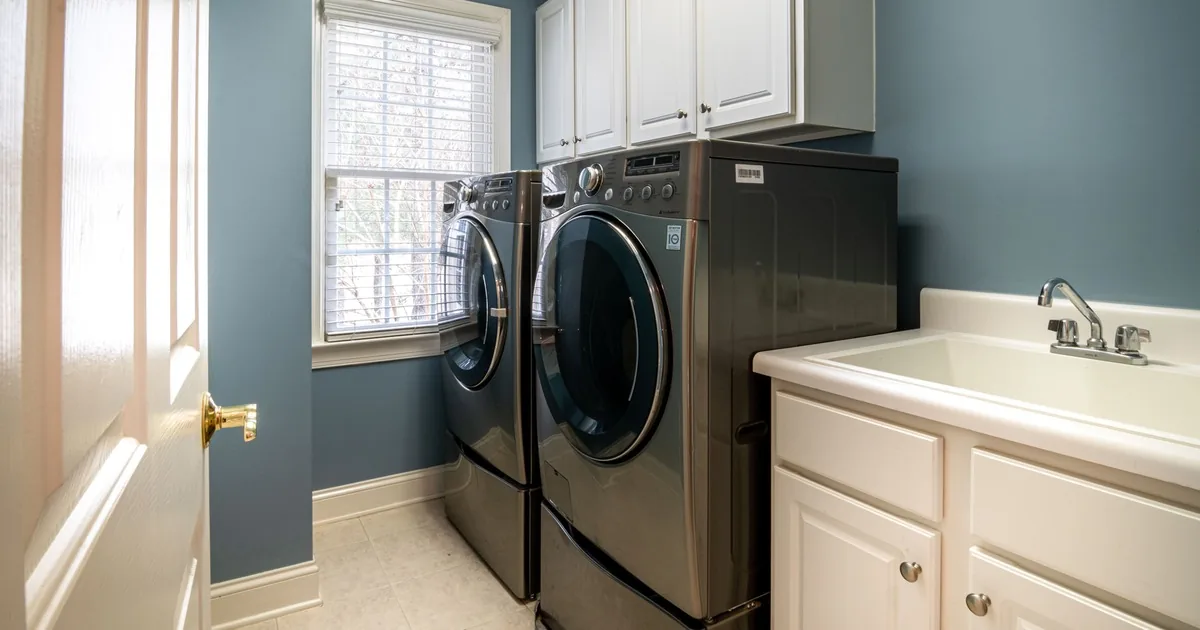
A customer opens with, “My front-load washer smells terrible.” The office still does not know whether the odor is musty, sewage-like, chemical, or hot and electrical. It may be strongest at the rubber door seal, inside the drum, near the drain, or on clothes after a cycle. Each version needs a different follow-up.
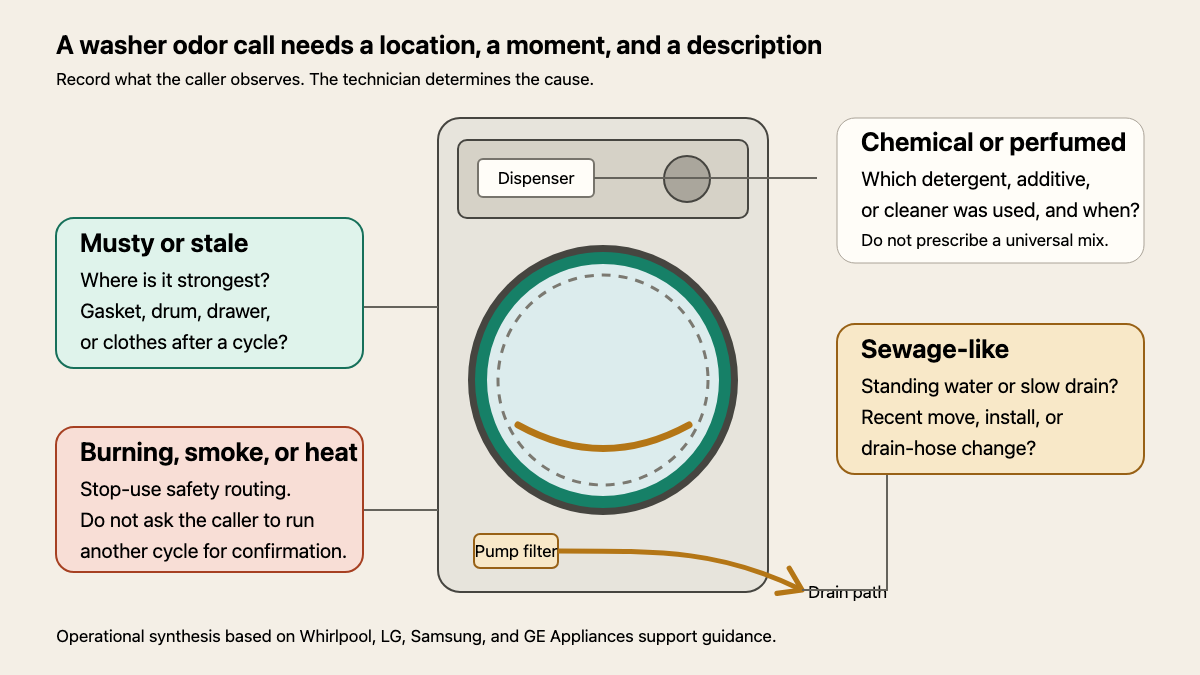
A useful front-load washer odor service call intake records the smell in the caller’s own words, where and when it appears, whether water remains in the machine, what cleaning has already been tried, and the exact model. Burning odor, smoke, sparking, or abnormal heat requires immediate safety routing. Other odor complaints can proceed through a short, evidence-based booking process without assigning a cause by phone.
Name the odor before discussing a repair
Ask, “How would you describe the smell?” Avoid suggesting mold before the caller answers. “Mildew,” “sewer,” “rubber,” “chemical,” and “burning” are useful descriptions. “Bad” needs one more question.
Then ask whether the smell is constant or tied to a moment:
- when the door first opens
- while the washer fills, drains, or spins
- after a completed load
- only when the machine has sat unused
- on the laundry, inside the drum, or in the room
This split matters. Samsung’s washer odor guidance treats burning, sulfur or sewage, and mildew reports as separate problems. That does not establish a diagnosis for another brand. It does show why one generic “clean the washer” script is too blunt for intake.
A burning smell after the machine’s initial break-in period belongs in the company’s safety path. If the caller also reports smoke, sparking, a hot cord or outlet, or a breaker that trips, tell them to stop using the washer if they can do so safely. Do not ask for another cycle, even to confirm the odor.
Find where the smell is strongest
The location gives the technician a starting point. Ask the caller to stand near the closed washer first, then open the door without reaching into any moving or energized area. Where is the odor strongest: the drum, the door seal, the detergent drawer, the lower front service area, the drain standpipe, or the laundry itself?
LG’s odor and buildup guidance separates four maintenance areas: the detergent dispenser, door gasket, drain pump filter, and tub. GE Appliances points owners to the same general zones and also mentions drain-hose placement. These are observation areas for intake. A smell near the gasket does not prove that the gasket needs replacement.
Ask what the caller can see without removing a panel. Useful notes include dark residue in a gasket fold, standing water in the seal, detergent buildup in the drawer, a foreign item trapped at the door, or water visible in the drum after the cycle. A photograph of the open door and gasket may help if the shop accepts images.
Do not ask the caller to open the pump-filter compartment unless the exact model instructions support it and the company routinely gives that guidance. Some machines can release retained water there. Filter access also differs by model.
Separate an odor-only call from a drainage complaint
Ask, “Does the washer finish the cycle and drain the water?” That question often changes the scope of the booking.
Record any slow drain, water left in the drum, wet laundry after the final spin, drain error code, gurgling at the standpipe, or recent overflow. If the caller already cleaned an accessible pump filter according to the manual, note what they found and whether drainage changed. Do not tell them that a clogged filter is the cause. LG says foreign material in the pump filter can restrict draining and leave water behind, but the field diagnosis still depends on the machine and installation.
A sulfur or sewage-like odor deserves installation questions too. Ask whether the washer was recently moved, installed, or pushed closer to the wall. Find out whether plumbing work was performed and whether the smell is also present at a nearby sink or floor drain. Samsung and GE both discuss drain-hose position in odor guidance, though their exact placement instructions are model-specific.
The office should not quote a hose adjustment or pump repair from this conversation. Route a clear no-drain symptom through the shop’s drainage workflow. A related washer-not-draining intake guide can help the call taker gather the rest of that ticket.
Document detergent, additives, and cleaning attempts
Ask which detergent the customer uses, whether it is labeled for high-efficiency machines, and how the amount is measured. Record fabric softener, scent beads, sanitizer, bleach, vinegar, washer-cleaning tablets, or any homemade mixture used recently. The technician needs the sequence, especially when the odor changed after a product was added.
Whirlpool’s front-load washer odor guidance connects excess suds with leaking, drainage trouble, and poor rinsing. It also advises regular dispenser cleaning, prompt removal of wet clothes, ventilation between loads, and the machine’s designated cleaning cycle. GE likewise connects excess detergent with residue in the outer tub.
Avoid giving one cleaning recipe to every caller. Whirlpool, LG, Samsung, and GE use different cycle names and product directions. Even bleach placement can differ. A script that is safe for one model may contradict another model’s manual.
Capture what happened instead:
- the most recent tub-clean or self-clean date
- the product used and where it was placed
- whether the cycle completed
- whether odor improved, returned, or changed
- whether visible residue remained
- whether the caller ran more than one cleaning cycle
LG recommends service when odor continues after repeated tub-clean cycles. That makes persistent odor after documented, model-specific maintenance a reasonable service trigger. It does not mean every first odor call requires a technician.
Get the model and installation context
A model number lets the office check the correct manual, component access, service history, and brand coverage. Ask for a clear photograph of the model and serial label if the caller can reach it safely. Do not guess from the control-panel layout.
The model and serial number intake guide gives the office a consistent way to request that information. For this call, add the approximate machine age, whether it is stacked, and whether a pedestal or cabinet limits access.
Ask about the laundry area. Is the washer in a basement, closet, bathroom, garage, or second-floor laundry room? Can the technician reach the water shutoffs and drain standpipe? Is a dryer stacked above it? Has the washer been leveled, relocated, or reconnected recently? Those details affect appointment time and may determine whether a second person or special moving equipment is needed.
Also record who will authorize the visit. A tenant may report the smell while a landlord approves repairs. A property manager may need photos and a written estimate. Resolve that before dispatch.
Read back a ticket that preserves uncertainty
A useful read-back sounds like this:
“The caller describes a musty odor strongest inside the door gasket after the washer sits overnight. The machine completes cycles and no water is visible in the drum. The caller reports using HE liquid detergent and ran the model’s tub-clean cycle twice this week with temporary improvement. There is no burning smell, smoke, abnormal heat, or breaker trip. The unit is an LG front loader on a pedestal in a first-floor laundry room. Model-label and gasket photos are attached.”
That ticket gives the technician observations, timing, prior work, access, and safety status. It does not claim mold, a blocked filter, a bad pump, or a plumbing defect.
Explain the company’s diagnostic fee and approval process using its normal policy. If the shop does not service the brand, stacked configuration, or related plumbing work, say so before placing the call on the calendar. Appliance-repair owners can standardize those limits across the appliance repair resource hub.
A receptionist or AI call-handling system can collect the same fields after hours. The value comes from the script: name the smell, locate it, capture the moment it appears, check drainage and safety, and preserve uncertainty for the person who will inspect the washer.