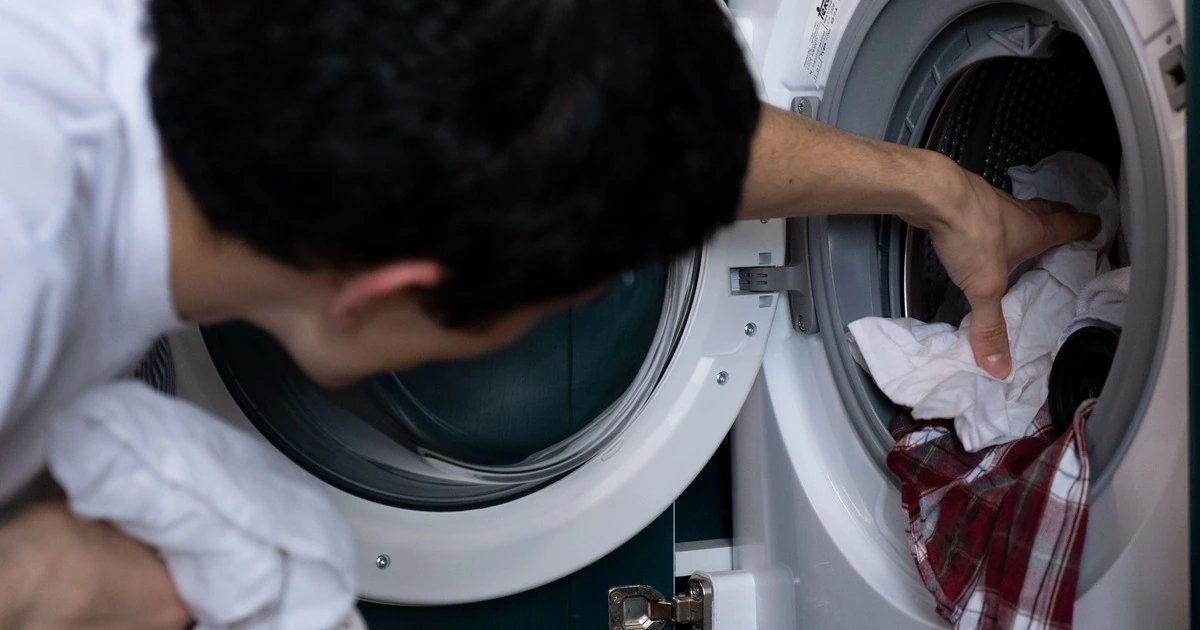
“There’s water in the washer and the door won’t open.”
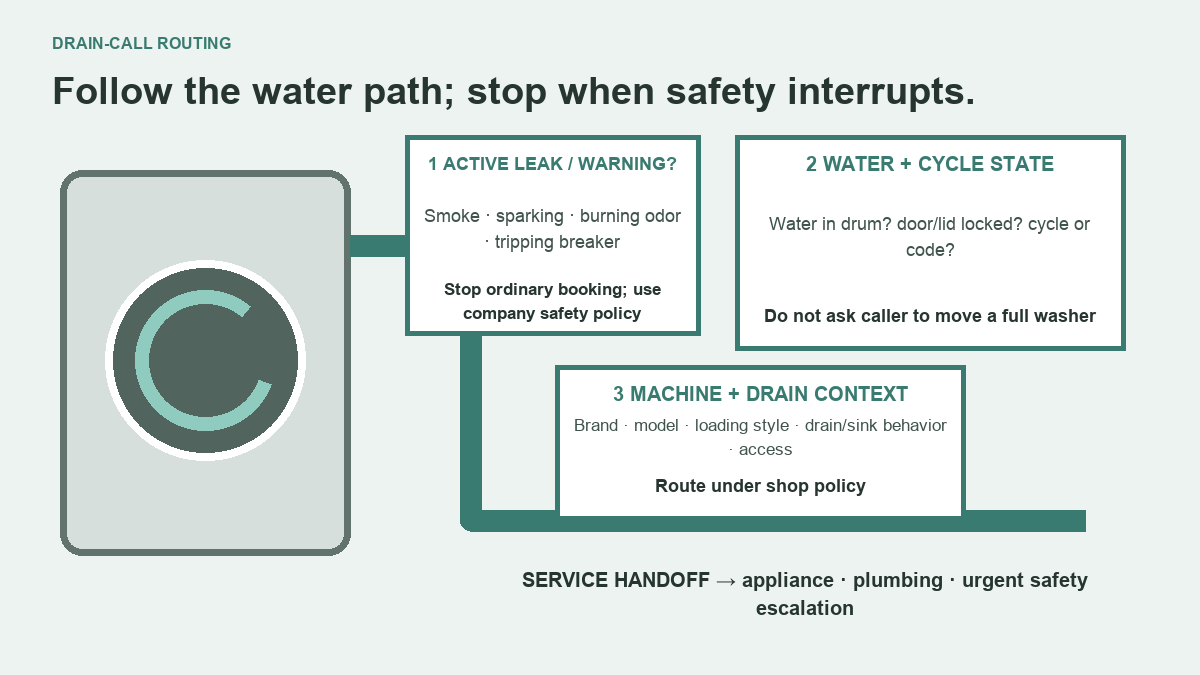
That call needs a different note than “the clothes came out soaking wet,” even though both callers may say the washer will not drain. Start with the room. Ask whether water is leaking onto the floor right now and whether there is smoke, sparking, a burning odor, a tripping breaker, or another immediate hazard. If any warning sign is present, stop ordinary quote intake and follow the shop’s approved safety and escalation policy.
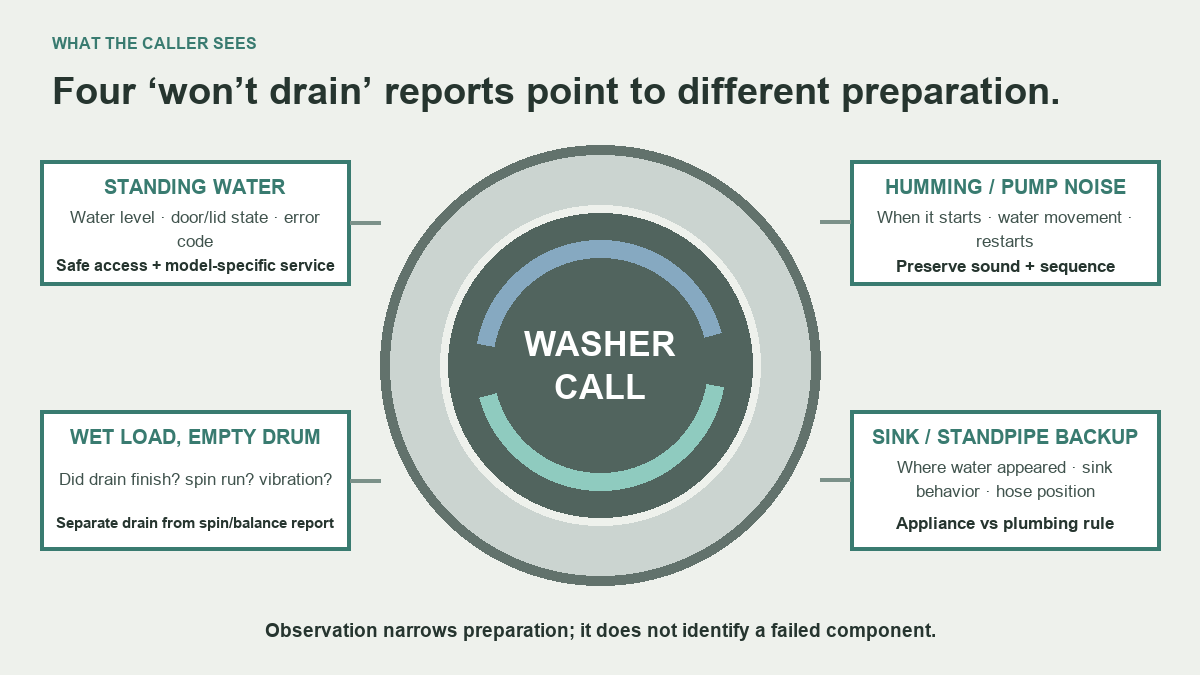
For a stable scene, define what the caller means by “not draining.” Is water still visible in the drum? Is the drum empty but the load unusually wet? Did the cycle stop before drain or spin? Did the utility sink or standpipe back up? Those answers help the shop prepare the visit. They do not identify a failed pump, control, switch, or hose.
Start with the condition of the room
A water-filled washer is heavy, and a leak can put water near electrical connections. The receptionist should not ask a caller to pull the machine away from the wall, reach behind it, remove a panel, or open a filter while water is spreading. Model-specific consumer instructions may describe limited checks, but the office does not know the installation, the caller’s physical ability, or what sits in the water.
Use a plain opening sequence:
“Is water leaking outside the washer now?”
“Do you see or smell anything electrical, such as smoke, sparking, a hot-plastic odor, or a breaker that keeps tripping?”
“Is anyone in immediate danger, and is the machine in a safe area to leave alone?”
Record the caller’s words. “Burning smell near the back during drain” is evidence. “Drain pump overheated” is a diagnosis the office has not earned.
If the scene is stable, ask what the caller has already done. Did they press Cancel? Try Drain and Spin? Unplug the machine? Restart it more than once? Did someone close the water valves or move the drain hose? A technician needs the current state, especially when two people have tried different fixes before calling.
Define what “not draining” means on this call
Four observations account for many versions of the complaint.
Standing water remains in the drum. Ask how high the water appears, whether the load is still inside, and whether the door or lid is locked. Do not tell a caller to force it open. Note whether the machine is a top loader or front loader because access and model instructions differ.
The drum looks empty, but the clothes are wet. Ask whether the cycle completed, whether the machine attempted to spin, and whether the caller heard heavy banging or saw the washer move. This may still belong on a drain-related service call, but the note should preserve the distinction between water remaining in the machine and a load that did not complete its final spin.
The caller hears humming, grinding, clicking, or repeated pumping. Capture when the sound begins and whether any water moves. Ask for a short video only if the shop accepts attachments and the machine can be observed without restarting it. Never translate “humming” into a named part on the booking record.
The sink, laundry tub, floor drain, or standpipe backed up. Ask where the water appeared and whether the household drain was slow before the washer ran. Your shop needs a written rule for appliance service versus a plumbing handoff. The receptionist can apply that rule without promising which trade will find the final cause.
Capture the cycle in the order it happened
A useful note reads like a short timeline. Ask which cycle was selected, what was in the load, and where the cycle stopped. Then ask what the display shows now.
The exact code matters. Write “F9 E1 displayed” or “letters looked like Sd” and attach a photo when possible. Do not tell the caller what the code means unless the shop has a model-specific, approved script. Similar-looking codes can mean different things across brands and product lines.
Official Whirlpool washer guidance separates hose and household-drain conditions, cycle selection, load balance, suds, and lid closure. Maytag Product Help uses similar observation categories. That breadth is exactly why the front desk should collect a sequence instead of naming a component.
Ask whether the caller changed detergent, used a different amount, or saw heavy suds. Record the product and the observation. “Switched detergent yesterday; foam remained against door glass” is useful. “Too much soap caused it” skips the inspection.
Load details matter too. A single blanket, several towels, a regular mixed load, and an empty cleaning cycle can behave differently. Ask whether the load gathered on one side, whether the washer shook, and whether the same complaint happened on the previous load. Keep the language observational.
Identify the machine before offering model-specific instructions
Get the brand, complete model number, and serial number if the tag can be reached without moving the washer or entering a wet area. Ask for a photo of the tag. A partial model name from the control panel may describe a product family, not the exact machine.
Then capture the installation:
- Top load, front load, stacked pair, laundry center, or all-in-one
- Freestanding, under-counter, closet, basement, garage, or another setting
- Recently installed, moved, reconnected, or serviced
- Drain hose visible without moving the washer, and whether it appears kinked or displaced
- Standpipe, utility sink, or another known drain connection
- Stairs, narrow doors, closet clearance, parking, gate, elevator, and pets
- Tenant, owner, landlord, or property manager authorization
Whirlpool’s consumer drain overview notes that some front-load models may have a drain tube or filter-access procedure, while top-load machines may require professional help. That is a strong reason to avoid a universal phone script. Capture the machine first. Follow its manual and the shop’s policy.
Ask whether the washer is under a manufacturer warranty, retailer plan, home warranty, or service contract. Save the administrator, claim number, and authorization steps. Do not promise that a plan will pay for diagnosis, labor, water damage, or repair.
Separate the appliance from the household drain
A washer can send a large amount of water into a standpipe or laundry sink during its drain sequence. When that drain backs up, callers may see water near the washer and assume the appliance itself leaked.
The office can sort observations without settling the cause. Ask whether water came from the washer cabinet, the hose connection, the top of the standpipe, the sink, or a floor drain. Ask whether the sink drains normally when the washer is idle. If the caller already has a photo, request one wide view of the washer and drain area, then a close view of the first place water appeared. Do not ask them to run another cycle for a better picture.
Write the company boundary into the intake guide. A confirmed overflowing standpipe may route to a plumber first. Water from the washer cabinet may stay with appliance service. Another shop may inspect both under a broader service scope. The caller should hear the next step and any uncertainty before the appointment.
This is the same discipline used on dishwasher leak calls, where appliance and household plumbing observations can overlap.
Build a note the technician can read in the driveway
Put every washer drain note in the same order:
Safety: Active exterior water; smoke, sparking, odor, or breaker behavior; machine power status; actions already taken.
Water and cycle: Standing water or empty drum; door or lid state; selected cycle; where it stopped; exact display or code; sounds; suds; load contents.
Machine: Brand, model, serial, loading style, configuration, approximate age, recent installation or service, warranty or claim details.
Drain and room: First water location, sink or standpipe behavior, hose observation if safely visible, photos, stairs, closet clearance, parking, pets, and authorized adult.
Expectation: Appointment window, diagnostic fee explanation, and the fact that repair scope and price follow inspection.
A receptionist can gather this without turning the call into a troubleshooting session. An AI receptionist can follow the same approved sequence after hours and save each answer in the shop’s chosen format. The business still owns the safety script, service boundaries, escalation contacts, and pricing policy.
Pull the last five “washer won’t drain” notes before the next shift. If they do not say whether water remained in the drum, where the cycle stopped, what the drain area did, and which machine is in the laundry room, fix the intake form. The technician should know the difference before opening the van door.