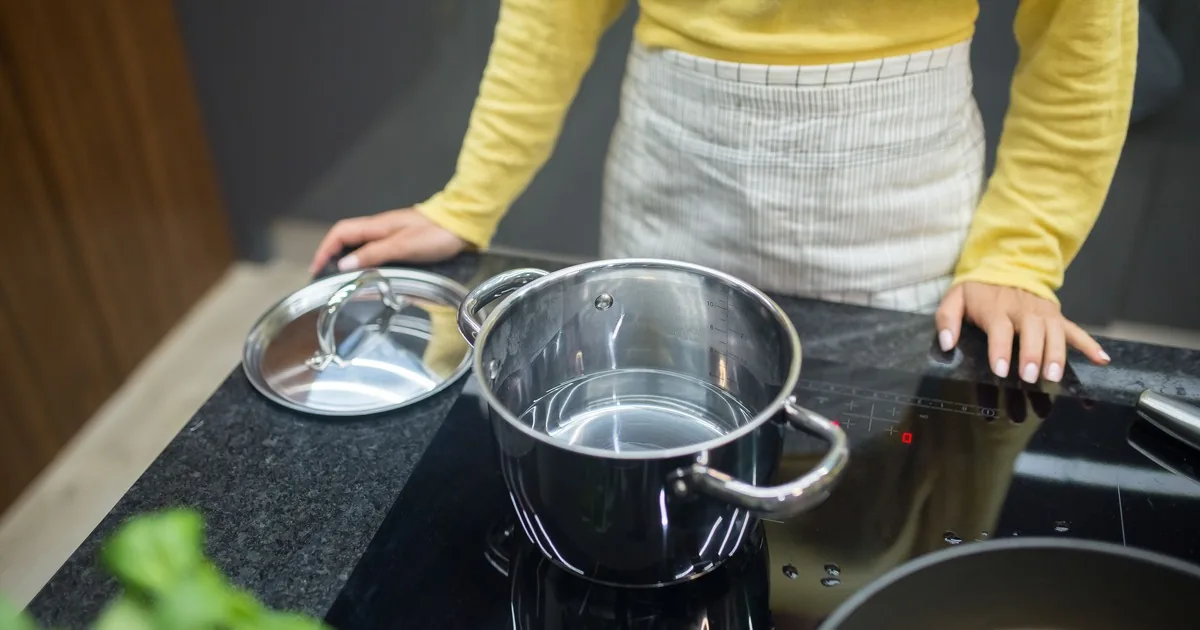
A stockpot slips from a cabinet and lands on the cooktop. The caller sees one pale line across the black glass, says the back burner still looks fine, and asks whether dinner can continue there while the shop orders a replacement top.
The office should settle the safety question first. Ask the caller to stop using the damaged cooking surface, then identify the appliance, capture the crack and any spill or impact, and get the complete model record. Do not clear another cooking zone, diagnose the cause, or promise that the glass is available as a separate part. A cracked glass cooktop repair call should end with a safe next step and a note that gives parts staff and the technician something reliable to work from.
Give the stop-use direction before discussing parts
GE Appliances says a cracked or pitted ceramic glass surface needs service and recommends against using the cooktop until it is repaired. Its guidance covers radiant, induction, and gas-on-glass cooking surfaces. Electrolux likewise directs the user to switch off a cracked glass-ceramic appliance and arrange repair by an authorized technician.
Keep the instruction plain: “Please stop using the cooktop until the correct service path is confirmed.” If a zone is hot, tell the caller to keep people away and let it cool without touching the crack. Do not ask them to press on the line, run a fingernail across it, lift loose glass, tape it, seal it, or start another burner for a test.
A range needs one more question because the oven and cooktop share an appliance. GE advises against using the oven on a range with damaged cooktop glass because the oven vents onto the cooktop. Record the manufacturer and model, follow that product’s instructions, and avoid a blanket statement that oven use is safe.
Active smoke, flame, sparking, a burning odor, liquid entering the break, a damaged power connection, or a breaker that repeatedly trips belongs in the company’s urgent safety script. If there is immediate danger, the caller should leave the area and contact emergency services or the appropriate utility. The appliance repair office does not troubleshoot an active fire or energized hazard by phone.
Confirm which appliance has the damaged surface
“Glass stove” is too vague for dispatch. First determine whether the caller has a freestanding or slide-in range, a separate built-in cooktop, or another configuration. Then ask whether the cooking system is radiant electric, induction, or gas burners mounted through a glass surface. If the caller is unsure, ask for a photo of the whole appliance and controls. Do not turn the call into a quiz.
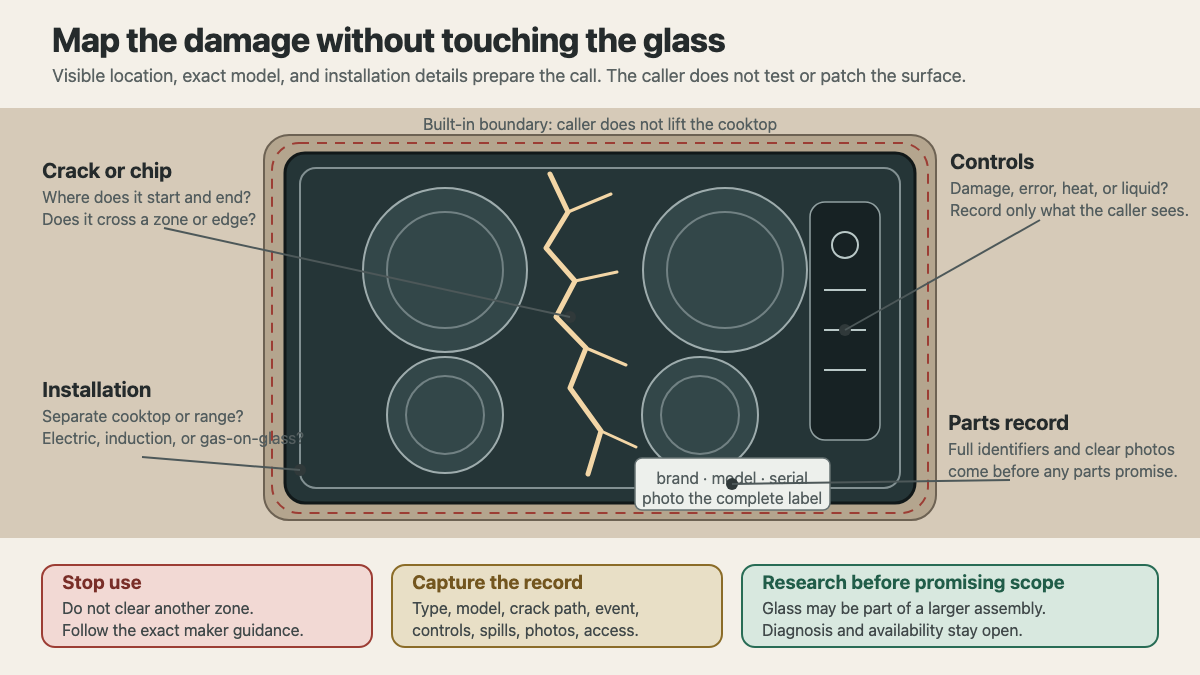
Get the brand, full model number, serial number, and a clear label photo when the label can be reached safely. Copy every character exactly, including letters, zeros, suffixes, spaces, and punctuation. Our model and serial number intake guide explains why a partial identifier can point to the wrong revision or assembly.
Label locations vary. GE shows cooktop labels beneath surface units, beneath the cooktop, behind a control knob, or on the bottom, depending on the product. That does not make those locations safe for a caller to reach. Never ask someone to lift a built-in cooktop, remove a control, reach around broken glass, pull a range out, or open panels just to photograph the tag. Use the manual, purchase record, registration account, or an already accessible label. Mark the identifier as pending when it cannot be obtained safely.
The office also needs ownership and authorization. Ask whether the caller owns the appliance, rents the property, manages the unit, or is calling under a manufacturer or service plan. Record who can approve diagnosis and repair. Warranty coverage stays unpromised until the responsible provider reviews the product, cause, dates, and plan terms.
Map the crack without asking the caller to touch it
A useful damage note describes what the caller can see. Ask where the line begins and ends. Does it run from an outer edge, a chip, a burner opening, or the control area? Does it cross one cooking zone or several? Is a piece missing? Is the surface raised, sunken, pitted, or loose? Has the crack changed since it appeared?
Ask for two photos when they can be taken without leaning on the appliance: one of the whole cooktop and one closer view of the damaged area. The wider image identifies the layout and controls. The close view records the path and nearby features. A ruler placed on cracked glass adds little and asks the caller to put another object near an unstable surface, so skip it.
Capture the event before the damage. Was cookware or another object dropped? Did the line appear during heating or cooling? Was there a sugary spill, a boil-over, recent cleaning, an installation, a move, prior service, or a power event? Record the sequence and the caller’s words. “Crack appeared after stockpot struck front-left edge” is useful. “Thermal shock broke it” is a diagnosis that the call cannot support.
Treat controls and spills as separate intake fields
Damage near controls deserves its own line in the note. Ask whether the display is on, whether any code is visible, whether touch controls respond unexpectedly, and whether the caller sees heat damage or liquid near the control area. Do not have them operate the controls to produce a symptom. A photo of the unchanged display is enough when it can be taken safely.
Wolf’s support guidance says cracks and pitting cannot be patched. It also notes that on its products a replacement glass top can come with a keyboard attached. The larger lesson for intake is narrow but important: “glass top” may describe an assembly, not a bare pane. The model and configuration decide what the parts catalog contains.
Ask whether liquid or cleaning product entered the crack and what material it was. Record water, cooking oil, sugary food, cleaner, or another substance without telling the caller to wipe inside the break. Ask whether any loose material remains on top and whether children or pets can reach the area. The goal is to document exposure and keep people away, not supervise cleanup.
Collect what parts research actually needs
Parts staff need the complete model record and clear photos before they can research the likely assembly. They may also need the appliance color or finish, control arrangement, width, burner layout, trim style, and product revision. Capture those details as observations. Measurements are useful only when the company requests them and the caller can take them without touching damaged glass or moving the unit.
Do not promise that the technician will arrive with a glass top, that the glass can be separated from its frame or controls, or that the part remains available. A catalog listing can still require serial-range confirmation, a revised part, special freight, inspection, or a second technician. The shop’s repair-or-replace call framework helps keep that decision open until availability, diagnosis, condition, and price are known.
Explain the visit using the company’s actual policy. State what the diagnostic fee covers, whether the shop performs glass-top replacement for that appliance type, and when the customer approves additional work. The diagnostic fee guide provides a practical structure without promising the repair outcome.
Capture installation and access before scheduling
A built-in cooktop can change the visit. Ask about countertop material, cabinetry below, drawers or an oven beneath the unit, and whether the appliance is flush, framed, or held by visible trim. Record recent countertop or cabinet work. Do not tell the caller to remove drawers, release clips, disconnect power, or lift the unit.
For a range, note whether it is freestanding or slide-in and whether flooring, an island, anti-tip hardware, or tight counters may affect access. Capture the floor level, stairs, parking, gate or elevator, and any narrow route to the kitchen. Our built-in appliance intake guide covers the access questions that prevent an avoidable surprise at the door.
Ask who will be present and whether the work area can be cleared after the surface cools. The customer should move ordinary items that are safely away from the break. Heavy cookware sitting on damaged glass, loose shards, and anything requiring contact with the crack should be left for the company’s approved procedure.
Send a parts-ready, technician-ready handoff
The final note should contain the appliance configuration, heating type, brand, model, serial, label source, damage location, crack path, missing or loose material, controls affected, spill history, impact or prior event, current power state, smoke or sparking history, photos, ownership, warranty contact, installation, access, and the stop-use direction already given.
A clean summary could read: “Thirty-inch built-in induction cooktop in stone counter above two drawers. Crack begins at front edge, crosses front-left zone, and branches toward touch controls. Caller reports a stockpot impact, no smoke, spark, odor, liquid entry, or loose piece. Unit is off and will remain unused. Whole-appliance, damage, and accessible label photos attached. Full model and serial copied from label. Parts availability and assembly scope pending research. Customer understands diagnosis comes before repair approval.”
An AI receptionist can capture the same fields after hours and preserve the caller’s exact description. The shop still controls safety escalation, parts research, diagnosis, and authorization.
The first call has done its job when nobody is encouraged to use or handle the damaged surface, and the next person opens a record with the exact appliance, visible damage, and access conditions already documented.