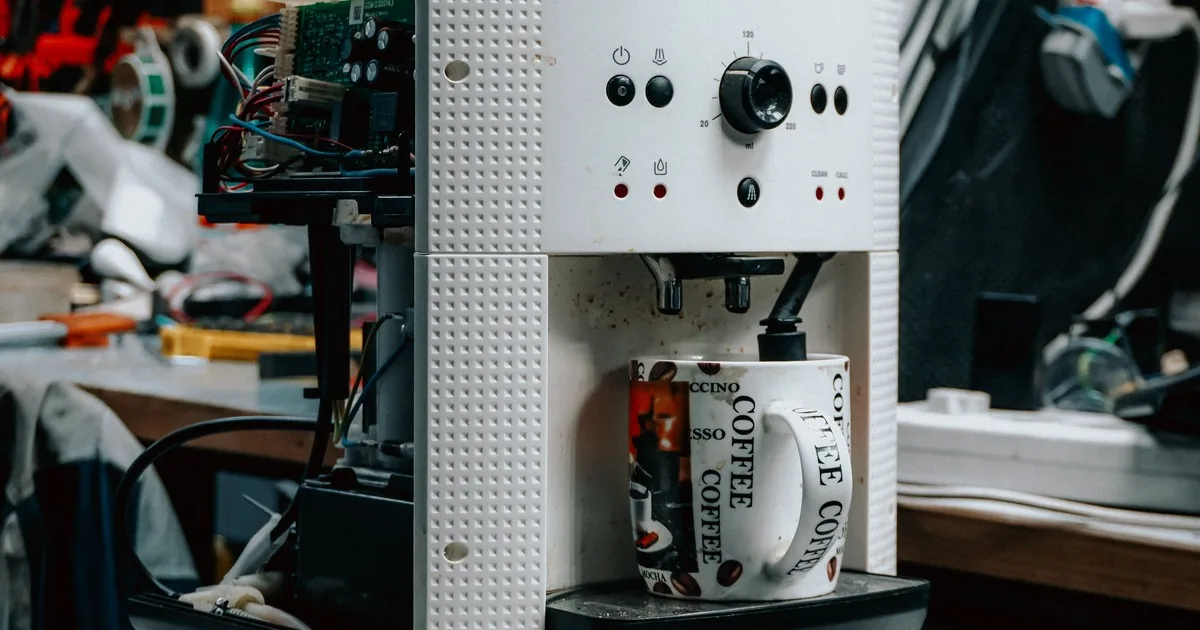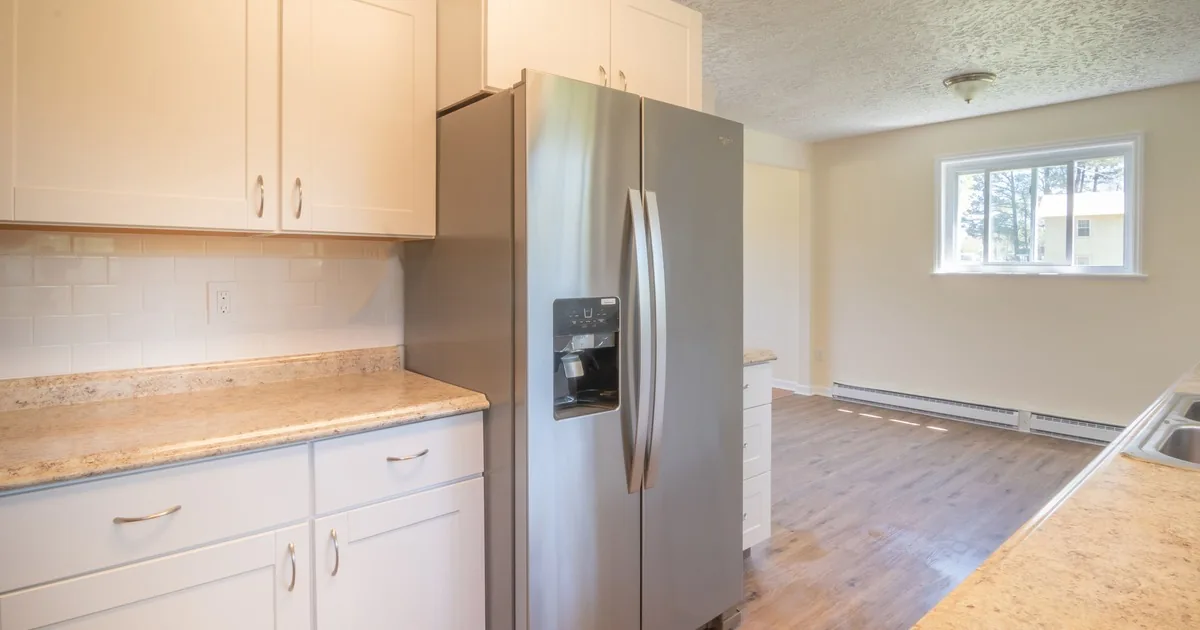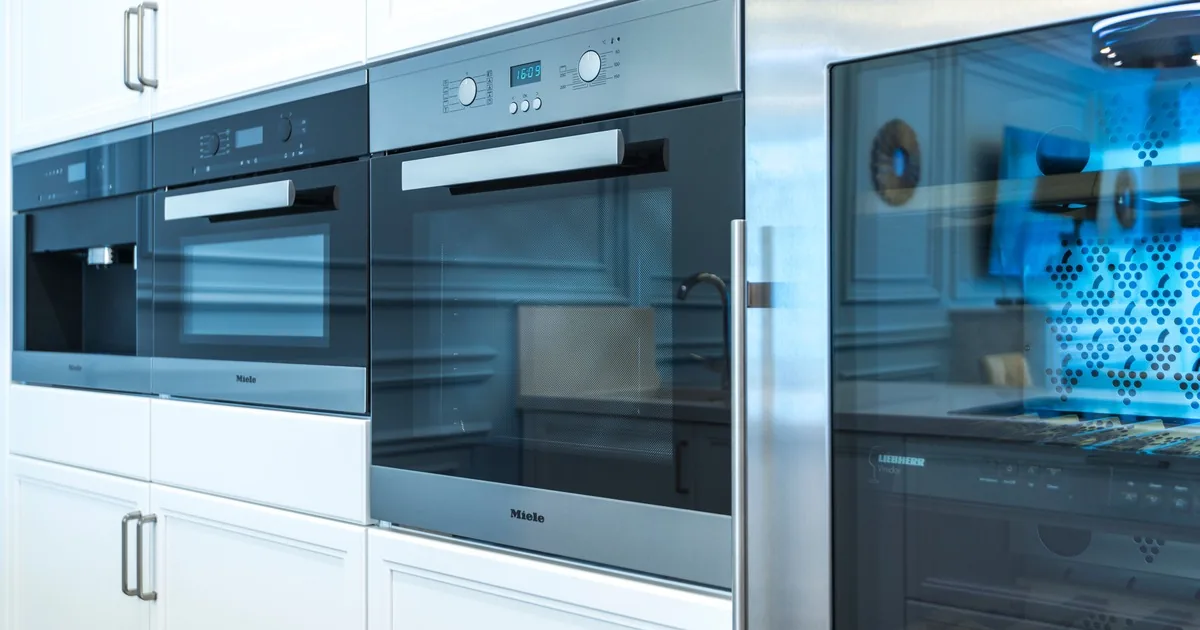
A refrigerator stops cooling on Tuesday night. By Wednesday morning, its owner has already priced a replacement online and calls a repair shop with one question: “Is this worth fixing?” The office has no temperature readings, model number, fault code, or diagnosis. Still, the caller wants a verdict before agreeing to a service visit.
The best answer is direct: the shop can collect the details that affect service, check for an active safety issue, and schedule the right next step. A technician should decide whether repair makes sense after inspecting the machine, confirming the fault, checking parts availability, and preparing an estimate. The front desk should not guess from age or symptom alone.
That boundary makes the call more useful. It also keeps a casual opinion from sounding like a diagnosis or a promise.
Start with the machine, not the replacement price
“Should I repair or replace it?” sounds like a price question. At intake, it is an identification and symptom question.
Begin with the appliance type, brand, complete model number, and serial number. Ask the caller to read the tag or send a clear photo under the shop's normal messaging process. GE Appliances maintains a model and serial number locator because tag locations differ by product. A range tag may be inside the door or drawer area. A refrigerator tag may sit inside the fresh-food compartment. Guessing from a logo and cabinet color will not identify the unit.
The model matters because two machines sold under the same brand and width can use different controls, compressors, pumps, or service procedures. The serial number may narrow the production period and can matter for warranty or recall checks. Capture both exactly, including letters, zeros, and hyphens.
Then record the caller's own description without translating it into a failed part. “The dryer tumbles but the clothes stay wet” is useful. “Bad heating element” is an unconfirmed diagnosis unless a qualified person has already tested it. Keep the caller's words in the job record.
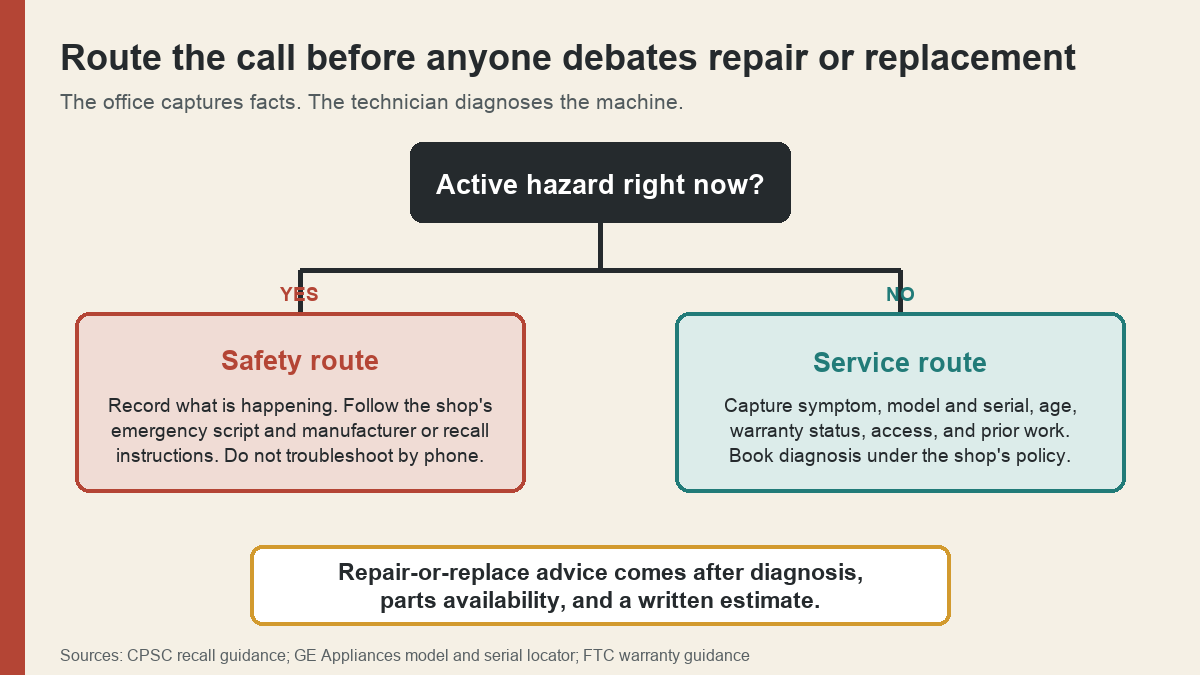
Route active hazards before ordinary scheduling
Some callers bury the urgent detail behind the repair-or-replace question. A range sparked. A dryer smells scorched. Water is spreading under a dishwasher toward a finished floor. A refrigerator door or handle has come loose. Those calls should follow the company's safety and escalation procedure before anyone discusses value.
Ask one plain question early: “Is there smoke, sparking, a gas odor, active leaking, excessive heat, or another immediate hazard right now?” If the answer is yes, stop the ordinary intake path. Follow the shop's approved instructions, which may include ending use, leaving the area, contacting emergency services or the utility, or following manufacturer guidance. Office staff should never improvise electrical, gas, or disassembly instructions.
The Consumer Product Safety Commission recall database is another reason exact identification matters. Recall notices often identify products by model and serial ranges and state the action consumers should take. A recall instruction can be different from the shop's usual service process. Record the information and route it to someone authorized to check.
Build a symptom timeline a technician can use
Once there is no active hazard, get specific about what changed. “Broken washer” gives the technician almost nothing. “The washer fills, stops before agitation, shows code F7E1, and began after a brief outage last night” creates a usable starting point.
Ask these questions in ordinary conversation:
- What does the machine do, and at what point in the cycle does it stop?
- When did the symptom begin? Was it sudden or intermittent?
- Are any codes, lights, sounds, odors, leaks, or temperature changes present?
- Did the appliance move, lose power, lose water, or receive prior service recently?
- Is the unit built in, stacked, connected to gas, or blocked by cabinetry?
- Has anyone opened panels, ordered a part, or attempted a repair?
Photos and a short video can help document a sound, code, leak location, damaged part, or installation constraint. They do not replace testing. Tell the caller what the shop accepts and where to send it, then attach the files to the job instead of leaving them in an employee's personal text thread.
Access belongs in the same conversation. A stacked dryer in a closet, a wall oven held by custom trim, and a refrigerator wedged into a tight alcove require different preparation. Ask about stairs, parking, gate codes, tenants, pets, and the person authorized to approve work. A technically repairable appliance still needs to be reachable.
Check warranty and service-contract details without promising coverage
Callers use “warranty” to describe several arrangements. The appliance may have a manufacturer's written warranty, a retailer plan, a credit-card benefit, or a home service contract. These are separate agreements with their own claim and authorization rules.
The FTC's warranty guidance explains that an extended warranty or service contract is sold separately and differs from the warranty that may come with a product. For the office, that means “I have a warranty” is the start of intake, not confirmation that the visit will be paid.
Ask who issued the coverage, whether the caller has a contract or claim number, and whether authorization is required before service. Collect proof of purchase when the service process calls for it. Whirlpool's appliance warranty guidance, for example, asks customers seeking service to have proof of purchase, model and serial numbers, and a description of the problem.
Use careful language: “We can record the coverage details and tell you what our shop needs before scheduling. Your provider decides what the agreement covers.” Do not tell the caller a compressor, control board, trip charge, or replacement will be covered unless the responsible provider has confirmed it.
Keep intake facts separate from technician findings
A clean handoff has two records. The first contains what the office can verify during the call. The second contains what the technician determines through inspection and testing.
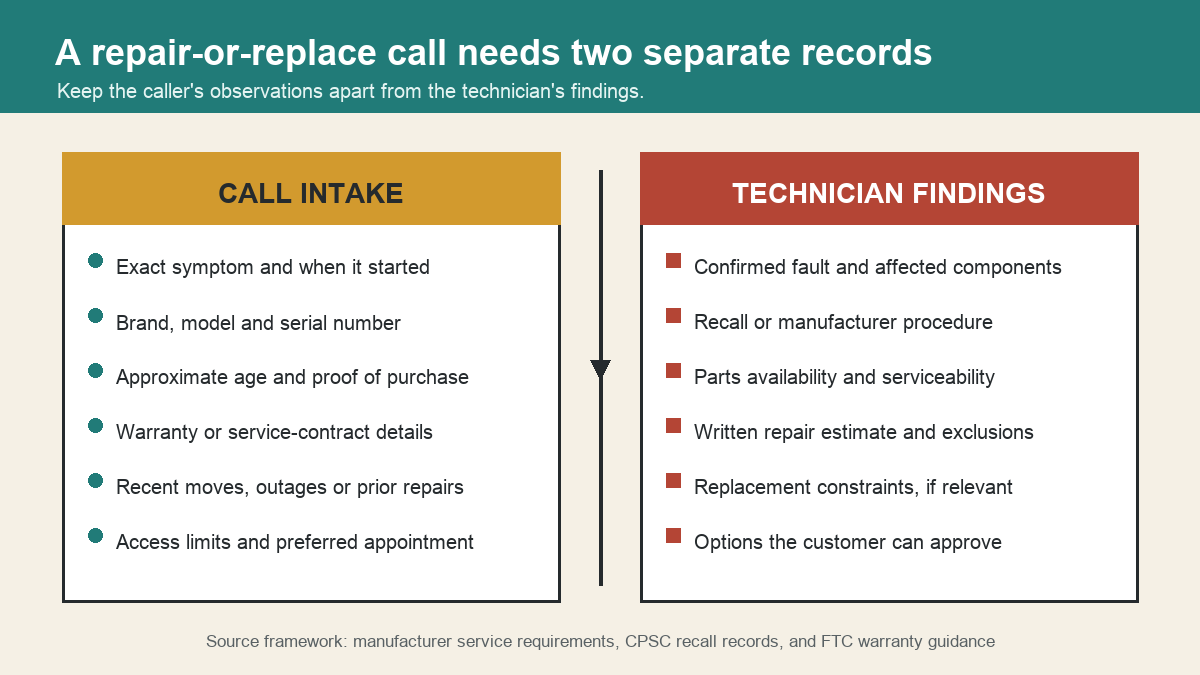
The intake record should include the exact symptom, appliance identity, approximate age, warranty information, access conditions, recent events, prior repairs, and the caller's timing. The technician record can then add the confirmed fault, recall or manufacturer procedure, parts status, labor scope, written estimate, and any replacement constraints that became relevant.
This separation matters when a caller presses for a yes-or-no answer. A ten-year-old machine with a simple accessible fault may be sensible to repair. A newer unit may have unavailable parts, concealed installation damage, or a recall route that changes the job. Age helps frame the discussion, but it cannot carry the verdict alone.
Energy use may also enter the customer's decision for a refrigerator or another high-use appliance. ENERGY STAR's refrigerator guidance offers product information and a replacement calculator. That can inform a household comparison after the current machine is identified. It does not diagnose the failure or tell the repair shop what the failed part will cost.
Give the caller a concrete next step
The close of the call should describe what happens next and who owns each decision. If the shop begins with a diagnostic visit, explain the diagnostic fee, what the visit includes, and whether any portion is applied under the shop's written policy. If photos or model details must be reviewed before booking, give the caller a specific submission method and callback window that the office can actually meet.
A useful close sounds like this: “I have the model, serial number, symptom, warranty details, and access notes. Our next step is a diagnostic visit. The technician will confirm the fault, check service information and parts, and give you the repair options before you approve work.”
If the business uses an answering service or AI receptionist, the same script can run after hours, but escalation rules and field ownership still need to be set by the shop. The system should capture facts and route hazards. It should not decide that a machine is beyond repair.
The caller does not need a rushed verdict. They need a credible path to one, starting with the characters printed on the model tag and ending with a finding they can approve in writing.