A homeowner asks for “the basic chimney check.” Then, halfway through the call, she mentions that the old wood stove was replaced with a gas insert last month. That detail changes the booking conversation.
A Level 1 chimney inspection generally fits routine service when the appliance, fuel, venting arrangement, and use remain substantially unchanged. A Level 2 inspection has a wider scope and is associated with changed conditions, a sale or transfer, relining, a dissimilar appliance replacement, a fire or damaging event, an operating malfunction that may have caused damage, or a Level 1 inspection that cannot establish serviceability.
The receptionist does not make the technical determination. The office collects the trigger, systems, change history, access limits, and requested report, then follows the company’s approved scope or sends the call for technical review. That is the useful distinction for a chimney service office.
Choose by the trigger, not the caller’s label
Callers rarely use inspection terms consistently. “Camera inspection” may mean that the customer saw a chimney video online. “Certification” may come from an agent, insurer, home inspector, or neighbor, each with a different document in mind. “Cleaning and inspection” can describe routine annual service or a concern that followed smoke entering the room.
Start with the reason for the appointment. Ask, “What happened or changed that led you to call today?” The answer usually carries more routing value than the requested service name.
The CSIA Level 1 masonry chimney procedure describes Level 1 as the recommended inspection during routine chimney cleaning and annual inspection when the system will continue to be used without significant change. It covers readily accessible portions and the accessible parts of connected appliances and chimney connections within the defined scope.
The CSIA Level 2 masonry fireplace procedure names changed use, a dissimilar appliance replacement, property sale, relining, fire, severe weather, seismic events, and operating malfunctions likely to have caused damage among the reasons for Level 2. It also applies when Level 1 does not provide enough information to determine whether the venting system is serviceable.
Those documents are professional guidance, not a universal phone script. CSIA says its procedures must be adapted to the operation, and local requirements can differ. Use the current standard, locally adopted rules, company policy, and the chimney professional’s judgment.
Turn scope differences into booking facts
The practical difference reaches beyond the inspection name. It affects access, equipment, appointment length, preparation, and what the inspector can document.
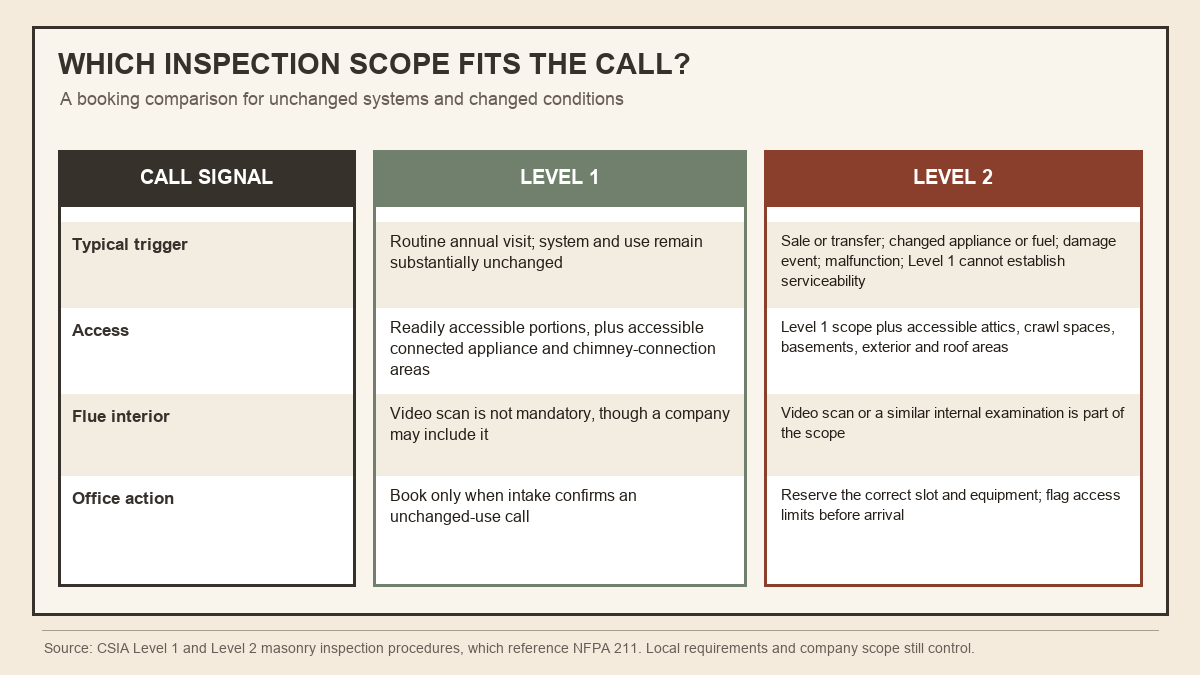
A Level 1 inspection focuses on areas that can be reached within its access definitions. The CSIA procedure distinguishes readily accessible areas, which do not require tools or ladders, from accessible areas that may require a ladder or common hand tools. Neither category assumes destructive access or removal of permanently attached building components.
Level 2 adds accessible parts of the chimney and building that can include attics, basements, crawl spaces, exterior areas, and the roof. CSIA’s Level 2 procedure also calls for video scanning or a similar examination of the chimney interior. When part of that examination cannot be completed because of access, flue size, offsets, weather, or another condition, the limitation belongs in the report.
Video deserves a careful explanation. CSIA says a video scan is not mandatory in every Level 1 inspection, although a company may choose to include one. A camera may also become necessary when offsets or limited sight lines prevent an adequate view. The office should describe the company’s actual service package and avoid implying that every camera service equals Level 2.
Ask the questions that can change the route
A useful intake sequence moves through change, event, systems, and access. Record what the caller observed. Leave conclusions to the inspector.
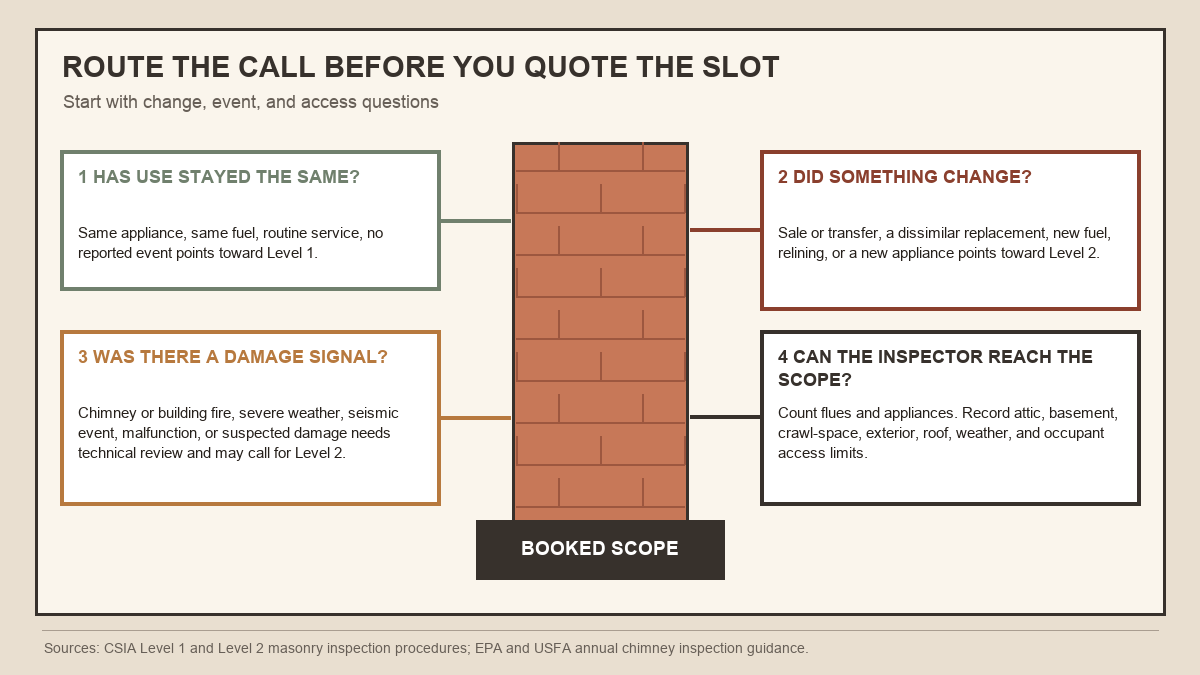
Ask these in ordinary language:
- Is this routine annual service, or did a problem, transaction, installation, repair, or event prompt the call?
- Has any fireplace, stove, insert, furnace, boiler, water heater, fuel type, liner, or vent connection changed since the last inspection?
- Was there a chimney fire, building fire, heavy weather event, impact, unusual sound, smoke problem, or operating malfunction?
- How many fireplaces, stoves, inserts, other connected appliances, chimney structures, and flues are at the property?
- Is the property being sold or transferred, and does a contract, agent, insurer, or authority specify an inspection level or report?
- Can the inspector reach the fireplace, appliance, cleanout, mechanical area, attic, basement, crawl space, chimney exterior, and roof area under the company’s safety policy?
- Are there tenants, pets, locked rooms, stored belongings, alarm instructions, steep or damaged roof areas, or weather conditions that could limit access?
A good note preserves the caller’s wording: “Homeowner reports a brief roaring sound and falling debris in the firebox after use Saturday.” A bad note turns that into “chimney fire confirmed.” The first is evidence for routing. The second is a diagnosis made without an inspection.
The annual-service branch still matters. The EPA’s wood-burning maintenance guidance and the U.S. Fire Administration’s heating safety guidance recommend professional inspection and maintenance each year. Neither source decides whether a particular call is Level 1 or Level 2. The system history does that work.
Keep the home-sale branch in its own lane
A property sale is a common Level 2 trigger, but inspection level is only one part of that call. Real estate work also brings a contract deadline, buyer and seller roles, lockbox access, report recipients, payment authority, and questions about what a lender or insurer expects.
Once the Level 2 branch is identified, use a dedicated pre-sale chimney inspection intake. Ask for the exact wording from the inspection notice, purchase agreement, agent email, or prior home-inspection report. Do not translate “certification” into a company service package without reviewing what the requesting party means.
Keep promises narrow. The office can confirm the booked scope, appointment window, preparation instructions, expected report format, and agreed delivery process. It cannot promise that the system will pass, that the report will satisfy a third party, or that every repair can be completed before closing.
Plan for a scope change in the field
Some calls remain ambiguous after careful intake. The owner may not know which appliance uses which flue. A prior report may be unavailable. A routine cleaning may reveal evidence that warrants broader examination. In those cases, mark the uncertainty before the appointment and follow the company’s technical-review policy.
The appointment should also have a field escalation path. If an inspector starts within a Level 1 scope and finds that the system cannot be evaluated adequately, the next step may be a Level 2 recommendation. That does not mean the office booked carelessly. It means the initial facts changed when a trained person saw the system.
Tell the customer how your company handles that moment. Does the inspector pause and explain a revised scope? Is a separate appointment required? Who approves added work? What gets documented if the customer declines? Clear process language is useful. A premature technical answer is not.
Seasonal capacity can complicate this. During the fall chimney booking surge, a Level 2 slot should not be squeezed into a routine cleaning window because the caller used the word “inspection.” Reserve time and equipment according to the approved scope, then flag uncertainties while the schedule can still absorb them.
Give the inspector a note worth opening
The final appointment record should identify the reason for the call, each reported appliance and flue, what changed, any fire or damage signal, requested inspection level, access limits, report request, and unresolved question. Add prior reports or photographs when the customer provides them. Keep gate codes and alarm details in the company’s secure process.
Read the scope back in one sentence: “I have a Level 2 inspection request for the living-room masonry fireplace after a new gas insert was installed, with attic and basement access available; the technician will confirm the system and document any limitations on site.”
That note gives the inspector facts without deciding the findings in advance. It also gives the customer a precise appointment, which is what the office can responsibly promise before anyone opens the firebox.