A homeowner says, “I need the furnace chimney cleaned.” That sentence leaves the office with five open questions. The equipment might be a gas furnace, an oil boiler, or a water heater. It might enter a masonry chimney through a metal connector, share a flue with another appliance, or vent through a pipe directly outdoors. The caller may want routine service, or they may be reporting exhaust in the basement.
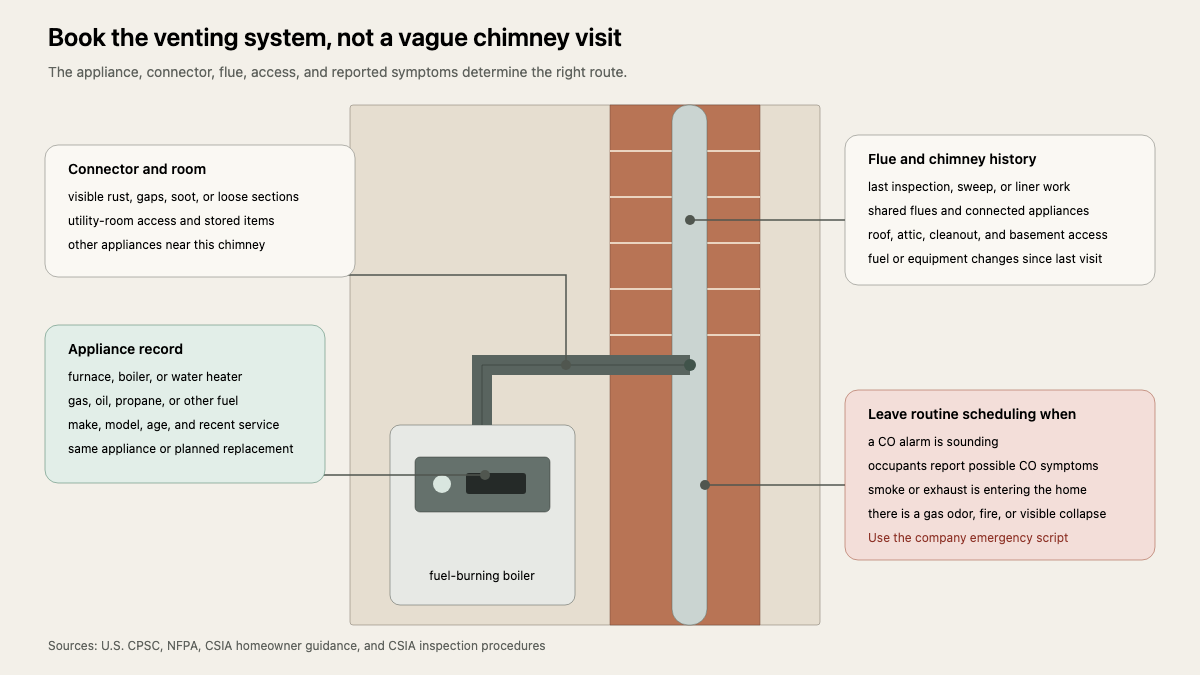
Book the venting system, not the phrase the caller used. Identify every appliance involved, its fuel, the visible vent route, recent equipment changes, prior chimney work, reported symptoms, and access conditions. If a carbon monoxide alarm is sounding, occupants feel ill, smoke or exhaust is entering the home, or there is a gas odor or active fire, leave routine scheduling and use the company’s emergency script.
Start with the appliance, fuel, and reason for the call
Ask which appliance prompted the request. Use concrete choices: furnace, boiler, water heater, wall heater, stove, or another fuel-burning unit. Then record natural gas, propane, heating oil, wood, coal, pellet, or an unknown fuel. An electric furnace or heat pump does not have a combustion flue, though another appliance in the building may.
Get the make and model from a label or recent service invoice when the caller can reach it safely. Ask whether the appliance is operating, newly installed, awaiting replacement, or out of service. Record the customer’s words about the problem. “Routine annual inspection,” “oil technician saw soot,” “boiler was replaced last month,” and “debris fell from the cleanout” lead to different preparation.
The U.S. Consumer Product Safety Commission includes furnaces, boilers, water heaters, chimneys, flues, and vents in its home heating equipment inspection guidance. That is a useful model for intake. The appliance and its exhaust path belong in one record.
Do not promise a cleaning before inspection. Some systems need cleaning, some need repair or technical evaluation, and some reported “chimneys” turn out to be a different vent type outside the company’s service scope.
Determine where the exhaust is supposed to go
Ask the caller to describe the visible route without removing panels or touching hot equipment. Does a round or rectangular metal connector leave the appliance and enter a brick chimney? Do plastic or metal pipes run through an outside wall or roof? Is there a draft hood above a water heater? Is the route hidden behind a finished ceiling?
A photo of the whole mechanical-room wall is often more useful than a close-up. Follow with safe detail photos of the equipment label, connector, chimney entry, and cleanout door. The office is collecting identifiers, not interpreting whether a joint or material complies.
Ask how many appliances enter the chimney. A boiler and water heater may appear to share a chimney area even when their exact venting arrangement is unclear. Record each appliance and fuel. Do not tell the caller to disconnect a connector or open a cleanout.
The Chimney Safety Institute of America explains that oil and gas appliances create different combustion by-products, while both systems remain vulnerable to weathering, deterioration, animal material, and debris. Its heating-system guidance also discusses soot in oil flues and corrosive conditions that can affect some gas-appliance chimneys. Those are reasons for a field inspection, not diagnoses a receptionist should assign from a photograph.
Ask what changed since the last inspection
A direct replacement of similar equipment raises a different inspection question than a switch in fuel, input, efficiency, or venting method. Ask whether a furnace, boiler, water heater, chimney liner, connector, or vent was recently installed, removed, or changed. Capture the contractor’s name, date, permit record if available, and any written recommendation.
Then ask for the last chimney inspection, sweeping invoice, camera report, liner proposal, heating-service ticket, or failed inspection notice. The dedicated chimney liner repair intake guide is the better route when the customer already has a report naming cracked tile, an unlined chimney, corrosion, gaps, or a failed liner.
CSIA’s Level 1 masonry chimney procedure describes routine inspection under unchanged conditions and includes accessible appliance connections, cleanliness, blockage, and continued use. Changed equipment or unresolved conditions may call for a different scope under current standards and company policy. Use the Level 1 and Level 2 scheduling guide when the office needs to classify the appointment.
Screen urgent reports before offering a routine slot
Ask a short safety question early: “Is a carbon monoxide alarm sounding now, is anyone feeling ill, or are you seeing or smelling smoke, exhaust, or gas?”
Carbon monoxide cannot be seen or smelled. NFPA’s carbon monoxide safety guidance says that when a CO alarm sounds, people should move to fresh air, account for everyone, and call for help from outside or by an open window or door. Follow the company’s approved emergency wording. Do not troubleshoot an alarm, suggest silencing it, or hold the caller on the line to finish appointment details.
A gas odor, active fire, visible smoke entering occupied space, collapsed connector, or suspected poisoning also leaves the normal calendar flow. Emergency services or the gas utility may be the proper first call under local guidance. The chimney office can handle later inspection once the immediate hazard has been addressed.
Less urgent reports still need precise notes. Capture soot near the connector, rust streaks, fallen debris, unusual odor during operation, moisture near the chimney base, repeated appliance shutdown, or a heating contractor’s concern. Ask when it happens and which appliance is running. Avoid telling the caller the cause.
Build the access record before assigning the crew
Heating flues often run through basements, utility closets, garages, attics, roofs, or shared mechanical rooms. Ask whether the property is detached, multifamily, commercial, or part of an association. Record who controls each access point and whether tenants, a superintendent, or another contractor must attend.
The field team may need clear space around the appliance and connector. Ask about stored boxes, laundry, shelving, standing water, low ceilings, pets, locked gates, roof height, steep pitches, snow or ice, and parking restrictions. State the company’s preparation rules. Do not ask a caller to move fuel equipment, disconnect venting, climb onto a roof, or enter an unsafe space.
Confirm which services the company actually performs. Some chimney businesses inspect masonry flues serving gas and oil appliances but do not service burners, fuel lines, direct-vent equipment, or high-efficiency appliance internals. If an HVAC or oil technician must also attend, document who will coordinate that visit.
Read back a field-ready appointment note
A useful note sounds like this:
“Caller requests inspection of the masonry flue serving a basement oil boiler. Boiler make and model photo is attached. A metal connector enters the chimney; no one was asked to open or disconnect it. Caller reports dark debris at the cleanout but no active smoke, gas odor, sounding CO alarm, or possible exposure symptoms. The boiler was serviced last week, and the oil technician recommended chimney review in writing. No appliance replacement or fuel change was reported. Last chimney inspection is unknown. Basement and cleanout are accessible through the rear door. Two-story asphalt roof; weather access remains subject to technician review. Booked for heating-appliance flue inspection. Cleaning, repair, liner condition, inspection scope, and safe operation remain field determinations.”
That note tells the technician what exists, what changed, what the customer observed, and what remains unknown. It also keeps the office out of diagnosis. An AI receptionist can collect the same approved intake after hours, provided urgent reports follow the company’s emergency routing and all technical findings stay with qualified people.