A homeowner calls with a fireplace insert already sitting in an online cart. “The opening is about three feet wide. Can you install this one?” A room photo follows, but the rating plate, fireplace type, flue, hearth, mantel clearances, gas service, and permit rules remain unknown.
Book that as a system-fit evaluation, not a confirmed installation. Start with the proposed fuel and exact model. Identify whether the existing fireplace is masonry or factory-built. Collect safe opening and hearth measurements, chimney and liner records, utility details, access notes, and the job address. A qualified person can then inspect the fireplace and venting system, check the current manufacturer instructions, and define the installation scope.
Identify the proposed appliance before discussing fit
Ask what the caller means by “insert.” It may be a wood-burning insert, pellet insert, vented gas insert, electric unit, or a decorative product that the seller describes loosely. Those choices do not share one vent path, power requirement, fuel connection, or approval process.
Capture the manufacturer, full model number, fuel, and a link or PDF for the current installation manual. If the appliance has already been delivered, request a clear photo of the rating label without asking the caller to move heavy equipment. Record whether it is new, used, transferred from another house, or already installed.
The U.S. Environmental Protection Agency’s wood-burning appliance guide defines a fireplace insert as an appliance designed to sit within the firebox of an existing masonry or metal fireplace. EPA also makes an important distinction for factory-built fireplaces: an insert must be specifically designed and tested for the unit that receives it. A similar-looking opening does not establish that match.
For a wood model, note whether it appears in the EPA certified wood-heater database, but keep certification and installation compatibility separate. An EPA-certified wood insert still needs the correct host fireplace, liner, clearances, and local approval. Gas and electric products follow different rules and should not be described as EPA-certified wood heaters.
Classify the fireplace that will receive it
Ask whether the home has a site-built masonry fireplace or a factory-built metal fireplace. Many callers will not know. Useful clues include masonry visible inside the firebox, a metal firebox and louvers, a manufacturer label near the opening, or an old manual stored with the house. Treat each clue as a report, not a final classification.
Request wide photos of the fireplace wall, opening, hearth, mantel, side trim, and any grilles. Then ask for safe measurements:
- opening width at the front and rear, opening height, and usable depth
- hearth depth and width in front of the opening
- distance to the mantel, side trim, nearby shelving, and other combustible finishes
- damper location and any visible obstruction, without asking the caller to reach into the flue
- nearby outlet, existing gas stub, switches, blower cord, and floor covering
- make, model, label photo, or manual for a factory-built fireplace
These details prepare an evaluation. They do not replace one. The EPA installation guidance names appliance and vent clearances, combustible-floor protection, and proper component assembly among the issues a professional installer evaluates. Exact dimensions come from the proposed appliance’s current manual and the site.
Keep the insert, opening, and chimney in one record
A fireplace opening can accept the outer dimensions of an appliance while the rest of the system fails the plan. The flue may be the wrong size or shape. A damper area may restrict the proposed connection. The masonry may need repair. A factory-built system may not permit that insert. The hearth or mantel may fall inside the model’s required clearance. A pellet appliance may need power where no suitable outlet exists. A gas insert adds fuel-supply and venting questions.
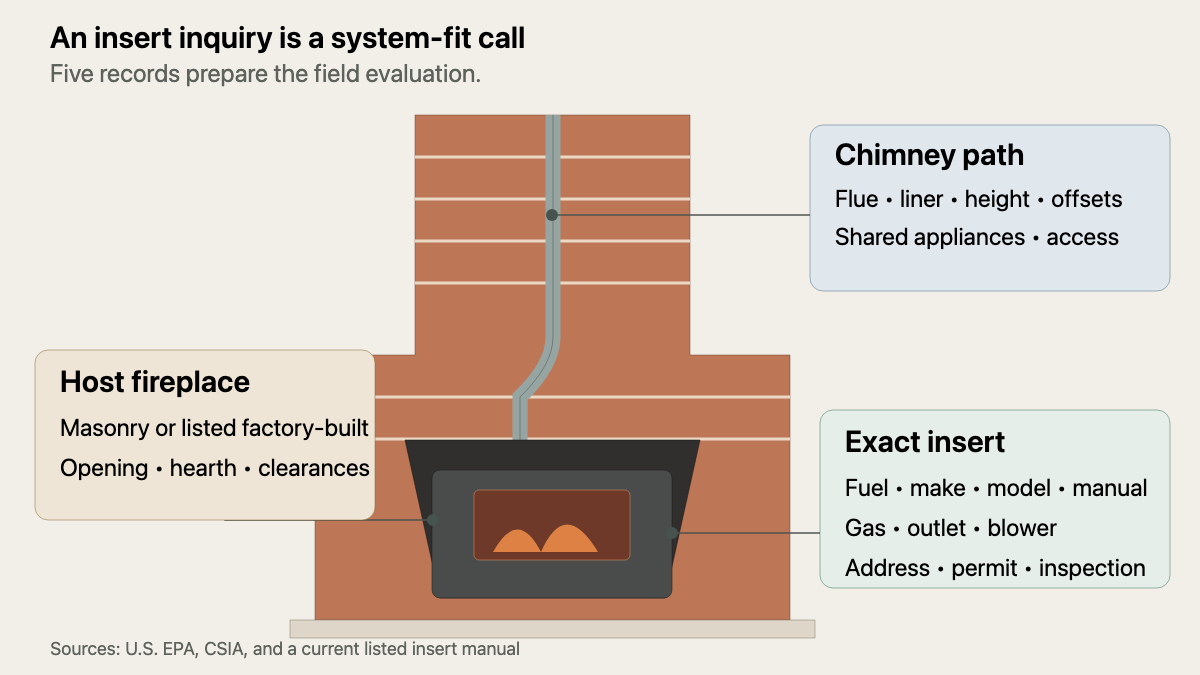
Ask what the chimney serves. Is this the only fireplace or appliance in the structure? Are there multiple flues? Does a furnace, boiler, water heater, stove, or another fireplace connect to the same chimney area? Has any appliance, fuel, liner, or vent connection changed since the last inspection?
Then capture available records: the latest chimney inspection, sweeping invoice, camera report, liner proposal, prior fireplace manual, repair invoice, permit card, and any drawing from the hearth dealer. The chimney liner repair intake guide is the better route when the call begins with a crack, missing tile, failed liner, debris, or an existing repair recommendation.
EPA describes the chimney or vent as the engine of a wood-burning system. Sizing, height, location, protection from cold, and configuration affect performance. Reception should collect facts about those items without selecting a liner diameter or promising that the existing liner can stay.
Flag changed use and condition questions
An insert project often changes the appliance, fuel, vent connection, or use of the fireplace. That history matters to inspection scope. The Chimney Safety Institute of America’s Level 2 masonry fireplace procedure includes changed conditions and dissimilar appliance replacement among the reasons for a broader inspection. It also records the fireplace, flue, liner, dimensions, accessible spaces, and connected systems.
Follow the company’s current inspection policy. The office may book an inspection first, combine inspection and installation evaluation, or send the packet for technical review before assigning a slot. The existing Level 1 and Level 2 scheduling guide explains those booking triggers in more detail.
Ask whether the caller has noticed smoke entering the room, strong odor, fallen tile or mortar, water, rust, damaged masonry, a chimney fire, a carbon monoxide alarm, or a prior report that restricted use. An active fire, gas odor, alarm, heavy smoke, or unsafe structure leaves the sales-consultation lane and follows the company’s emergency procedure. Do not suggest a test fire.
For a factory-built fireplace, route the call carefully. EPA says the insert must be designed and tested for that unit. Capture both models and manuals before anyone promises a site-ready installation. The dedicated factory-built fireplace inspection intake helps when labels are missing, the system has been altered, or the caller cannot identify the components.
Ask about utilities and the intended use
The proposed appliance changes the next questions. A pellet insert commonly needs electricity for feed and blower components. A gas insert needs the fuel type, existing gas service, shutoff location if safely visible, and coordination under company policy. An electric unit needs its electrical requirements compared with the available circuit by the appropriate trade. Wood inserts may include a blower that also needs power.
Do not design the utility work on the call. Record what exists and who may need to coordinate it. Ask whether the customer expects the unit to provide regular supplemental heat, occasional fires, or decorative use. Note the rooms involved and any concern about a blower, cord path, surround, controls, or service access. Those preferences help the field team discuss suitable options, but they do not override the listing or installation manual.
A current manufacturer manual shows why the model number matters. The Regency I1500 manual, for example, specifies its permitted fireplace type, liner arrangement, opening, floor protection, clearances, and optional electrical equipment. Those are requirements for that model. Never copy its measurements or components into a different insert quote.
Use the job address before answering permit questions
Ask for the full installation address and municipality. Local building, mechanical, gas, electrical, fire, and air-quality requirements can differ. The manufacturer manual tells owners to consult the authority having jurisdiction about permits and installation inspection. EPA likewise directs homeowners to their city or county for permit details.
Reception can explain the company’s process: who checks requirements, who applies, which inspections are normally coordinated, and when the customer receives that information. Avoid promising that no permit is needed, giving a universal fee, or guaranteeing an approval date before checking the address and scope.
Access belongs in the same conversation. Record the roof material and approximate height, attic or crawl-space access, steep or damaged areas, parking limits, locked gates, pets, tenant coordination, association rules, and who can authorize work. If the customer has already ordered the insert, note delivery location and whether the field team can inspect the label and packaging without moving it.
Read back an evaluation, not an installation promise
A useful appointment note might say:
“Homeowner wants a wood insert for the living-room masonry fireplace and is considering model Cedar 28, not yet purchased. Manual link and EPA database record are attached. Caller reports no active smoke, alarm, recent chimney fire, or use restriction. Front opening, hearth, mantel, room, and exterior chimney photos are attached as customer measurements only. Existing clay-lined flue was swept last year; report requested. One fireplace uses this flue. Two-story asphalt roof and attic access are available. Nearby receptacle is visible, but electrical suitability is unconfirmed. Booked for chimney inspection and insert compatibility evaluation. Liner, clearances, permit scope, installation feasibility, and final price remain subject to field review and the current model instructions.”
That read-back protects the customer from buying on a guess and gives the technician a usable starting packet. An AI receptionist can collect the same approved questions after hours, provided it leaves product selection, safety findings, vent design, code interpretation, and installation approval to qualified people.