“I have white powder all over my chimney. Can you clean it off?”
The useful answer starts before the cleaning quote. Ask where the mark sits, what it feels like, when it appeared, whether it changes after rain, and whether it has returned after prior cleaning. Record the chimney material, recent masonry or roof work, interior moisture signs, loose surfaces, and safe photos. Then book the inspection your company uses for an unidentified deposit.
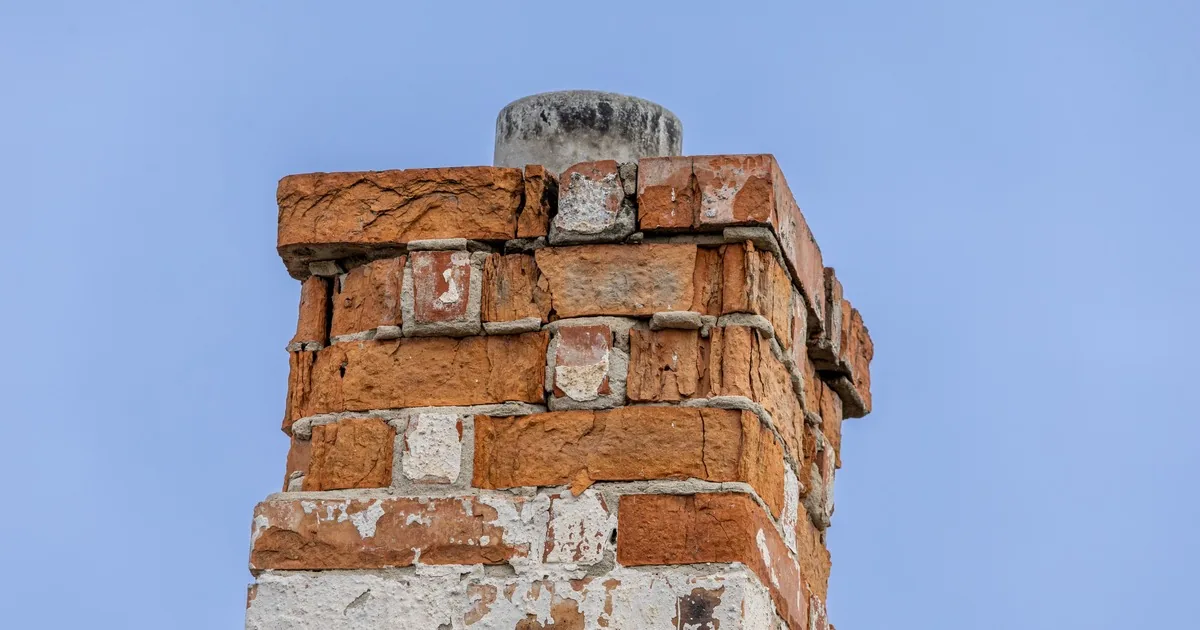
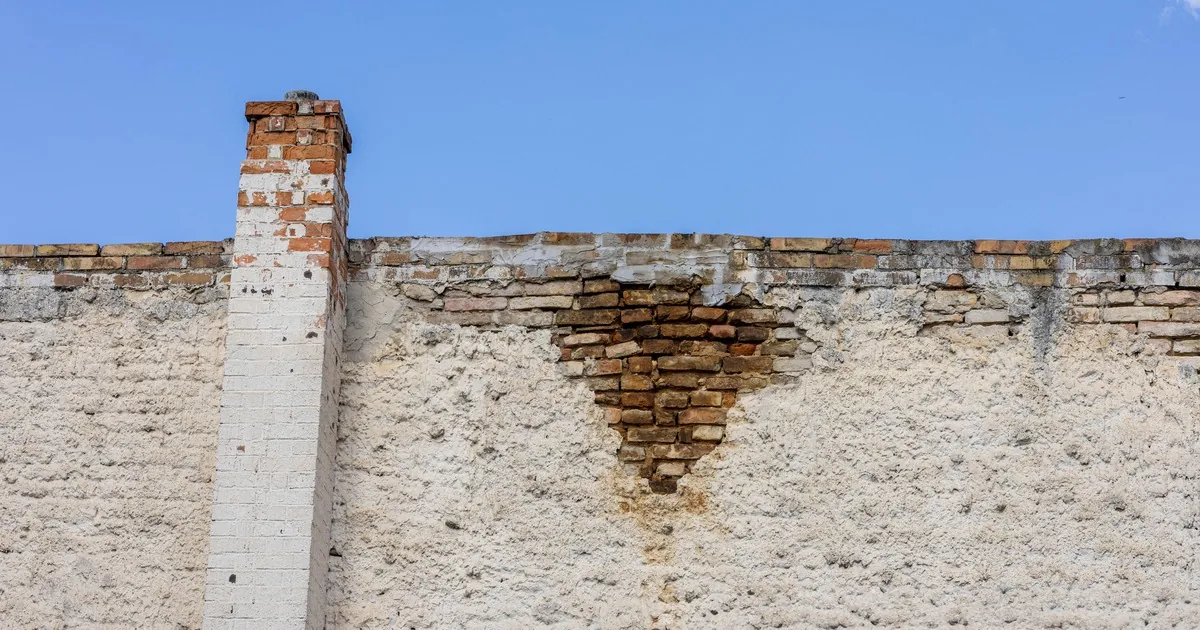
White staining on chimney brick may be efflorescence, but color alone cannot settle that. Paint, old sealant, lime-rich deposits, construction residue, biological growth, and other staining can look pale from the ground or in a phone photo. The office should preserve observations and leave identification to the person who can see the masonry.
Describe the mark before naming it
Begin with the caller’s own words. Is the surface powdery, fuzzy, dusty, hazy, streaked, crusted, smooth, or painted-looking? Does it brush away in dry weather? Has anyone already scrubbed, rinsed, pressure-washed, sealed, painted, or treated it with a cleaner? Do not ask the caller to rub an area that requires a ladder or roof access.
The distinction matters because efflorescence has a specific mechanism. The Brick Industry Association’s Technical Note 23A explains that water dissolves salts within or beside masonry, moves through the pore structure, and leaves those salts on the surface as it evaporates. The same document warns against assuming that every deposit seen on brick came from the brick itself.
Record the material too. A chimney may contain clay brick, concrete masonry, stone, cast concrete at the crown, mortar of several ages, metal flashing, a painted surface, or an older coating. “White powder on red brick” is a better starting note than “efflorescence.” “Hard white run under a concrete crown” is better still.
Ask for the first date anyone noticed it. A broad pale bloom on recent masonry tells a different history than a localized streak that appeared years after construction and returns after storms. The CMHA efflorescence guide distinguishes uniform early-age bloom from heavy, localized, or recurrent deposits that can accompany water entering higher in a wall. That is a reason to document the pattern, not permission to diagnose the source over the phone.
Map the stain to the whole chimney
A close photo can show texture. It can also erase context. Ask for one wide image from a safe ground-level location, then closer images only where the caller can take them without climbing. The wide view should include the top of the stack, the stained face, the roof intersection, and enough of the building to identify which side is shown.
Map the pattern in plain language:
- Which chimney face is marked, and does the caller know its compass direction?
- Does the stain begin below the crown, beside a flue tile, at mortar joints, across brick faces, or near the flashing?
- Is it a broad haze, a horizontal band, a vertical run, isolated spots, or a patch with a sharp edge?
- Does the pattern continue below the roofline, into an attic, around a fireplace, or beside an appliance connection?
- Are dark wet areas, rust, peeling paint, open joints, flaking brick faces, or loose pieces visible nearby?
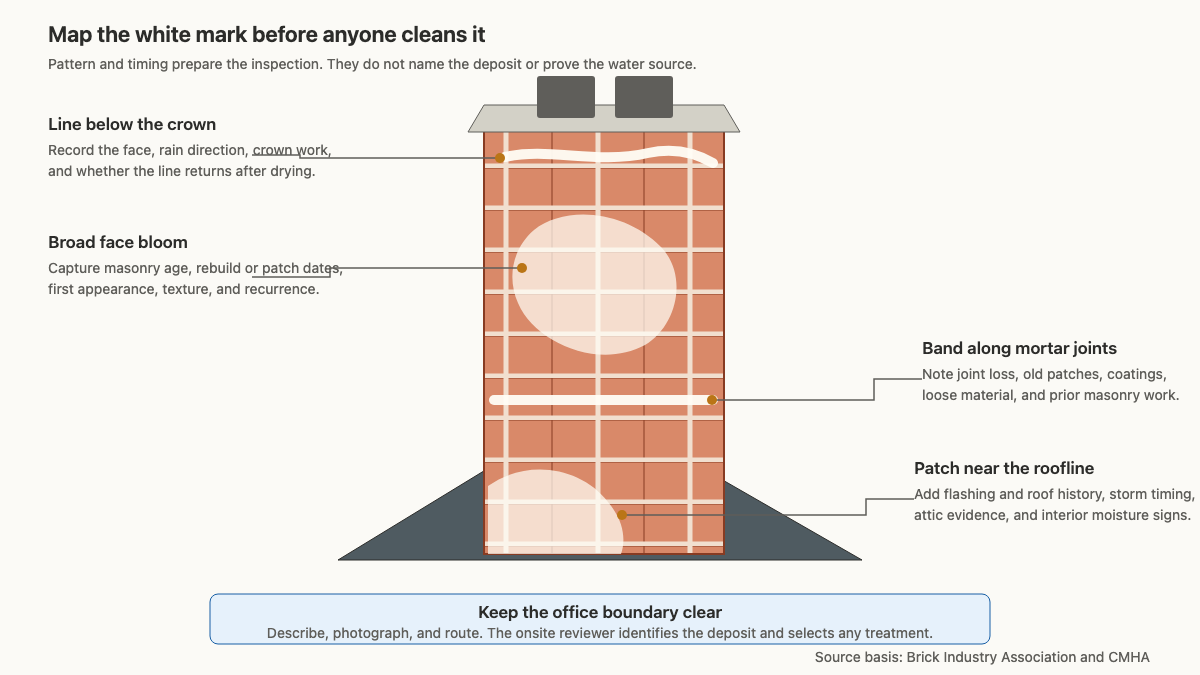
Pattern location helps the technician prepare. A line beneath the crown calls for a clear top-zone photo and recent crown-work history. A broad face bloom makes masonry age and repair dates useful. A band following mortar joints calls for joint and patch history. A roofline patch makes flashing, adjacent roofing, attic evidence, and storm timing relevant. None of those positions proves a failed component.
The chimney leak intake guide owns calls where water is actively appearing in a firebox, ceiling, attic, wall, or roof intersection. Link the records when both conditions exist. Keep the white-deposit complaint as its own observation so it does not disappear inside a generic “chimney leaking” note.
Build a weather, repair, and cleaning timeline
Ask what happened before the mark appeared. Useful anchors include prolonged rain, wind-driven storms, snowmelt, a cold spell, the first heating season after appliance work, roof replacement, flashing work, a new cap, crown repair, tuckpointing, chimney rebuilding, painting, sealing, or prior cleaning.
Then ask what happens afterward. Does the surface darken during rain and turn white while drying? Does the mark fade in summer, grow in cold weather, or return in the same channel? Did cleaning remove it for a week, a season, or not at all? Was the area photographed before the last treatment?
Write those as reported observations. “White streak returns below crown after wind-driven rain” is useful. “Crown leak causes efflorescence” skips the inspection. The first note gives the field team a place to look and a weather pattern to compare. The second turns a clue into a conclusion.
BIA recommends identifying the deposit and investigating the source before removal. CMHA makes the same practical point for recurrent deposits: correct the underlying problem before treating the appearance. That order should shape the call. Cleaning history belongs in the record, but the receptionist should not prescribe acids, pressure washing, wire brushing, a sealer, or a water repellent.
Split visible damage from the ordinary stain lane
A white mark can arrive with no other complaint. It can also sit beside a condition that changes the call route. Ask whether brick faces are flaking, mortar is falling, units look loose, the stack appears to lean or separate, the crown has open cracks, or debris has landed on the roof, walkway, or ground.
Screen the interior too. Is water dripping into the firebox? Is a ceiling or wall wet? Is a light fixture involved? Has smoke entered the room, has an alarm sounded, or has a connected appliance behaved differently? Follow the company’s emergency and safety policy for active electrical, fire, combustion, falling-material, or structural concerns. Do not ask a homeowner to light an appliance, climb a ladder, walk a roof, push on masonry, or collect a sample from an unsafe location.
The white deposit itself does not prove structural damage. It also should not hide damage visible beside it. Route the condition the caller can report, then leave severity and cause to onsite review.
If the caller wants a mortar quote because the stain follows joints, use the separate chimney tuckpointing estimate guide. That intake adds mortar age, joint loss, compatibility, access, finish expectations, and repair records. A white band may guide the photos, but it does not establish that repointing is the required work.
Prepare the inspection record
The Chimney Safety Institute of America’s Level 1 masonry chimney procedure describes inspection of accessible portions of the appliance and chimney, attention to signs of water entry, examination of top components when accessed, and documented findings. The procedure also states that it must be adapted to each operation and local requirement.
That boundary matters at booking. The office can collect evidence and explain what the scheduled service normally includes. A qualified reviewer chooses the actual inspection scope based on system use, access, changes, events, and conditions found. If the call raises a system change, hidden damage, or a significant event, the inspection-level scheduling guide helps keep that decision with the technical team.
A complete ticket should include:
- property address, caller, owner, occupant, and approval contact;
- chimney material, approximate age, flues, and connected appliances;
- exact stain location, pattern, texture, first appearance, and recurrence;
- weather timing, interior moisture, odors, rust, or appliance changes;
- visible cracks, open joints, flaking faces, loose material, or movement;
- roof height and material, ground access, gates, wires, pets, parking, and attic access;
- recent roof, cap, crown, flashing, liner, mortar, cleaning, coating, or appliance work;
- wide and close photos taken only from safe locations, plus prior invoices or inspection reports.
For a rental, condominium, church, or managed building, identify who controls the roof, who can provide interior access, and who may authorize inspection charges. Shared stacks and common roofs can involve more than the person who noticed the mark.
Promise an investigation before a treatment
A useful close sounds like this: “We recorded a white, powdery band on the west face below the crown. It first appeared after the September storms, returned after dry brushing, and the owner reports no active interior leak. We also have a wide ground photo, two close photos from a second-floor window, and the invoice for last year’s crown repair. The technician will inspect the deposit and surrounding chimney conditions before recommending cleaning or repair.”
The National Park Service masonry cleaning brief recommends identifying the stain, choosing the gentlest effective method, and testing before broad cleaning. Its focus is historic masonry, but the intake boundary is sound for any chimney: surface appearance alone is not enough to select chemistry, pressure, coating, or repair.
An AI receptionist can collect the same location, timing, history, access, and safety fields after hours. It should repeat approved booking language and route exceptions. It should never turn “white and chalky” into a diagnosis.
The technician should arrive with the original pattern intact, the weather timeline clear, and the previous work attached to the job. A washed wall and a two-word note leave less evidence than the caller had at the start.
Sources
- Brick Industry Association: Efflorescence, Causes and Prevention
- CMHA: Control and Removal of Efflorescence
- CSIA: Level 1 Inspection of a Masonry Chimney
- National Park Service: Assessing Cleaning and Water-Repellent Treatments for Historic Masonry