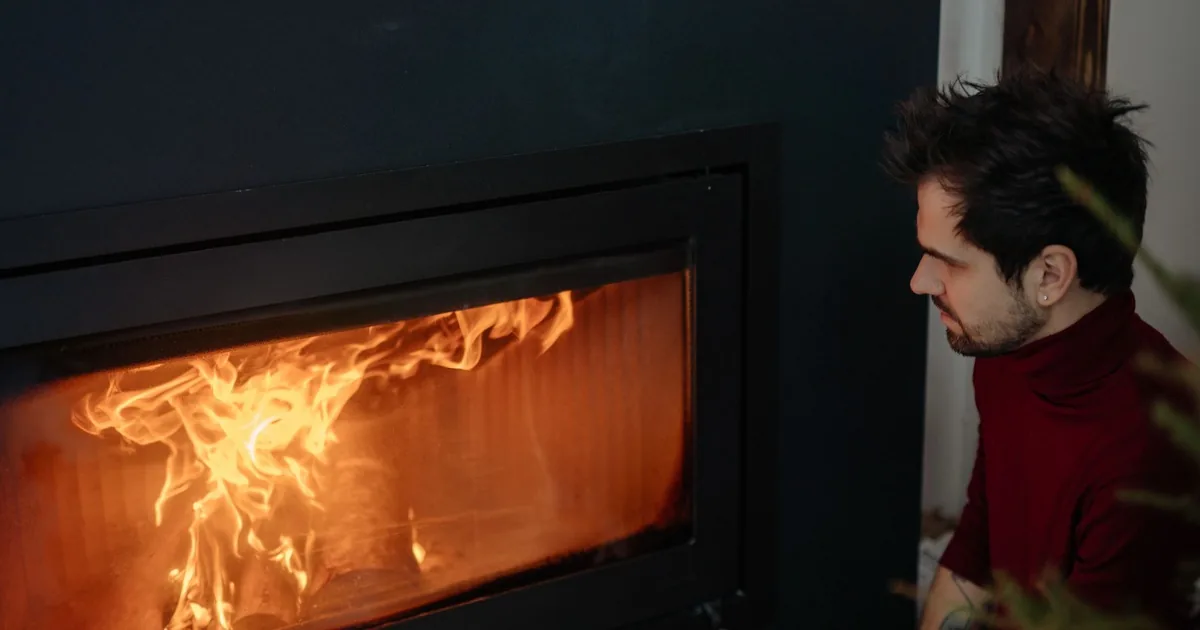
A homeowner calls with a close-up photo of a jagged line inside the fireplace. “Can you patch this, and can we use it tonight?” The image shows tan material and soot, but it does not show whether the fireplace is masonry, factory-built, shifted, or open behind the crack.
For a cracked firebrick or firebox repair call, first screen for smoke entering the room, flame outside the intended fire chamber, loose or fallen material, alarms, and a recent chimney fire. Then identify the firebox type, record the crack's location and visible condition in the caller's words, collect make and model information when available, and book an inspection under company policy. Do not approve continued use or promise a patch from a phone photo.
Screen for conditions that change the route
Ask whether a fire is burning now. If smoke is entering the room, material is falling, flames are visible beyond the firebox, a carbon monoxide alarm has sounded, or the caller reports a chimney fire, use the company's urgent safety procedure. The EPA's wood-burning maintenance guidance tells occupants who smell smoke indoors to shut down the appliance, ventilate, check that the flue is open only when that can be done safely, and call a qualified professional. Emergency services belong in the route when there is active fire, heavy smoke, an alarm, or an immediate threat.
Reception should not coach a caller through touching hot brick, removing panels, reaching above the damper, or lighting another fire to “test” the crack. Ask when the fireplace was last used and whether everything is cool. Photos can wait.
A stable report still needs a clear note. “A brick fell out” differs from “a thin line appeared in a joint.” So does “the back panel moves when touched,” though nobody should be asked to push on it. Capture exactly what the caller noticed and what changed since the last normal use.
Identify the firebox before discussing repair
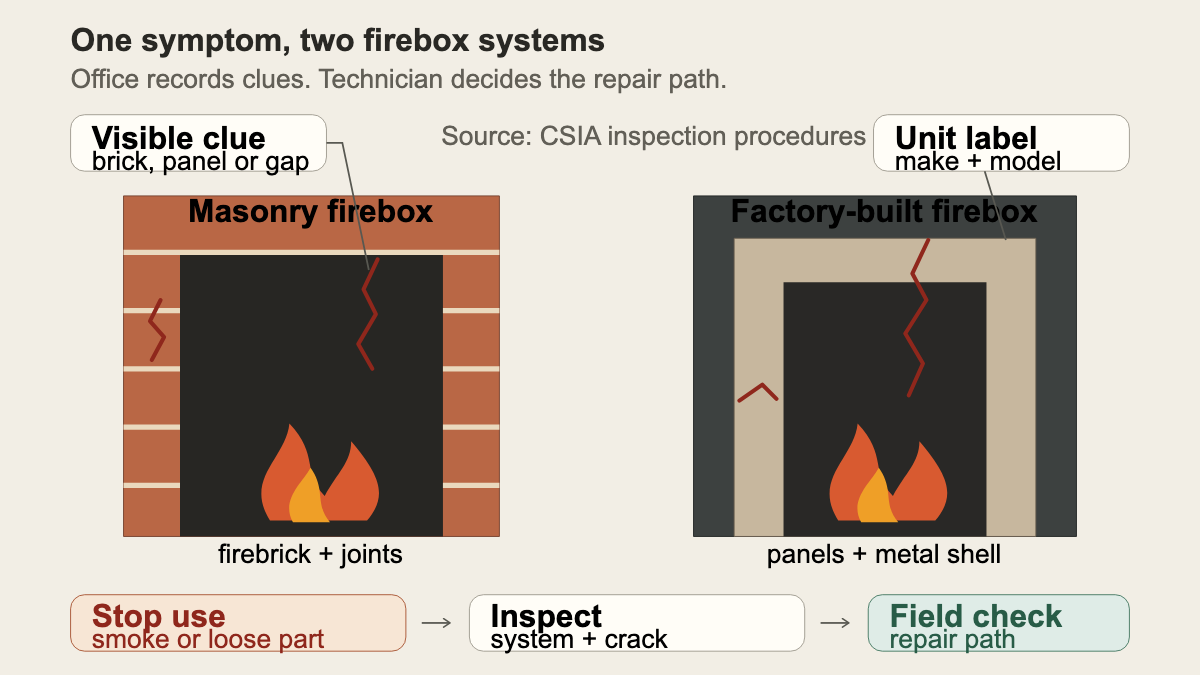
Homeowners often call every tan surface “firebrick.” A traditional masonry firebox is assembled from individual refractory bricks and heat-resistant joints. A factory-built fireplace usually has fitted refractory panels inside a metal firebox shell. The visible patterns can resemble brick, which makes a close photo easy to misread.
Ask whether the interior is made of many separate bricks with mortar joints or a few larger molded panels. Look for straight panel seams at the corners. Ask whether a metal edge, screw, retainer, label, or metal shell is visible. If the fireplace has glass doors, a blower, louvers, or a data plate near the opening, record those details without declaring the system type.
The factory-built fireplace inspection intake guide explains how to request make, model, fuel and label photos safely. This matters for parts. Hearth & Home Technologies' firebrick liner instructions tell installers to verify the appliance size and model before using the kit. A generic promise that “we carry those panels” can create a wasted visit when the unit is obsolete, mislabeled or fitted with a different liner.
If the caller cannot identify the system, keep the ticket neutral: “Crack reported on tan back surface of living-room wood-burning fireplace; system type unconfirmed.” That is better than assigning the wrong crew or material.
Record the crack without diagnosing it
The useful questions describe location, depth clues, movement and recent events. They do not ask reception to decide whether the damage is cosmetic.
Ask the caller:
- Is the line in a brick, a mortar joint, a large panel, the floor, a side wall, the back wall, or near the top transition?
- Does it appear as a hairline on the surface, an open gap, a missing piece, or two sections at different heights?
- Is any brick or panel loose, bowed, shifted, crumbling, or missing?
- Can the caller see metal or a dark space behind the damaged area without touching or removing anything?
- Did the change follow a chimney fire, impact, water leak, renovation, appliance change, or unusually hot fire?
- Are there wide and close photos taken from the room after the fireplace is fully cool?
- Are prior inspection reports, repair invoices, fireplace manuals or label photos available?
The Chimney Safety Institute of America's Level 1 masonry fireplace procedure includes the accessible firebox walls, floor, lintel, damper, smoke chamber and hearth areas. It directs attention to damaged, loose, cracked, missing or deteriorated firebrick and mortar joints. That wider view explains why one close-up is not enough. The visible crack may be the repair, or it may sit beside movement, joint loss, water damage or another condition that changes the scope.
CSIA's factory-built fireplace procedure uses a different component list. It includes refractory panels, sheet metal, the hearth, damper, transition and listed parts where accessible. The technician must evaluate those pieces as a system. Reception can prepare the visit by identifying the unit and damage location, but a phone description cannot establish serviceability.
Keep photos useful and safe
Request one wide photo that shows the whole opening, hearth and surrounding face. Then request close photos of the reported crack and nearby seams. A photo with a ruler is useful only if the ruler can be placed without reaching into a hot, unstable or sooty area. Never ask the caller to remove a panel, scrape a joint, pull a damper, or climb for a better angle.
Preserve the original files when possible. Screenshots from a text thread may hide detail, and aggressive markup can cover the crack. Label each image by location: back wall, left side, floor, upper right corner. If the caller sends an inspection report, request the complete relevant section so the technician can read the inspector's context and recommendations.
Photos help with routing. They rarely settle repair scope. Lighting, soot and molded brick patterns can make shallow lines look deep or hide an open joint.
Set the first appointment honestly
Tell the caller what the company actually does on the first visit. A common path is inspection first, followed by a repair recommendation or estimate once the technician identifies the firebox type and extent of damage. The appointment may lead to refractory mortar work, replacement of individual firebrick, a model-specific panel order, replacement of fitted panels, or a wider fireplace and chimney evaluation. Avoid presenting that list as a prediction.
State the inspection fee, included areas, access needs and whether the fireplace must remain unused before the visit according to company policy. Explain that special-order parts may require a readable label and field verification. If the company does not service the identified brand or does not rebuild masonry fireboxes, say so before booking.
The caller may ask for a price from one image. A firm answer needs the actual company policy and verified scope. Record dimensions only as caller-reported notes. Do not turn them into a material order or fixed quote.
Read back a technician-ready ticket
A strong ticket might say:
“Caller reports a diagonal crack on the back surface of the family-room wood-burning fireplace. No active fire, indoor smoke, alarm, loose material or recent chimney fire was reported. The fireplace is cool. The interior appears to have three large molded panels with corner seams, but system type remains unconfirmed.
“Crack was first noticed after cleaning out ash this week. Caller sees no missing piece and has not touched the panel. Wide and close photos are attached. A label is visible behind the lower screen; caller will send a photo if it can be taken without removing parts. Home was purchased two years ago, and no prior fireplace records are available. Appointment is booked as an inspection, with repair and parts subject to field findings.”
That note gives the technician the symptom, safety screen, likely system, evidence, history and customer expectation. An AI receptionist can collect the same approved fields after hours. The final judgment stays with the qualified person standing in front of the firebox, able to see the brick, panel, joints and connected system together.