A homeowner calls about “the metal fireplace that came with the house.” They want an inspection before winter, but they cannot name the manufacturer and do not know whether the chimney runs through an attic or an exterior chase. That is enough to start the call. It is not enough to choose the inspection scope.
For a factory-built fireplace inspection, reception should capture the data-plate make and model, fuel, reason for the visit, reported symptoms, recent changes or damage events, service history, and access. Ask for photos of the fireplace front, the label, and the chimney exterior when the company accepts images. The inspector should decide the inspection level, system compatibility, serviceability, and repair scope.
Identify the system before discussing the appointment
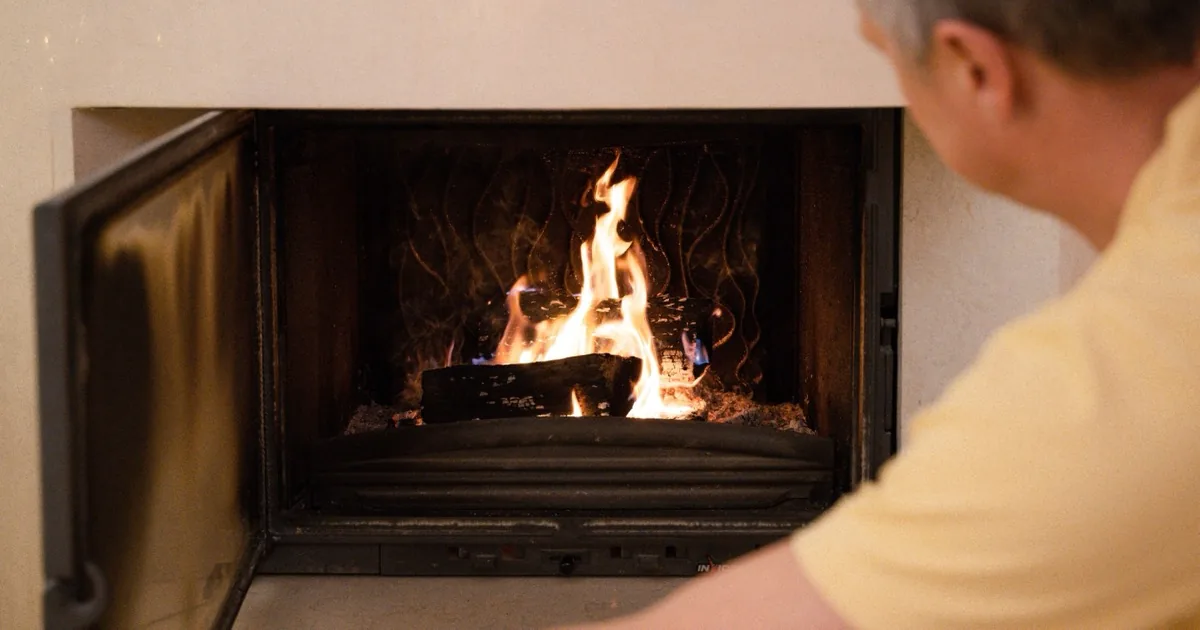
A factory-built fireplace is assembled as a listed system with a manufactured firebox, chimney components, termination parts, and model-specific instructions. Callers may say “prefab,” “zero-clearance,” “metal fireplace,” or simply “fireplace.” Record their wording, then look for a manufacturer label.
The Chimney Safety Institute of America’s Level 2 procedure for factory-built fireplaces tells inspectors to record the make and model. It notes that the data plate is commonly near the front side of the fireplace behind the screen. A plate can be absent, painted over, damaged, or hard to read, so a caller who cannot find it should still be scheduled according to company policy.
Ask the caller to let the unit cool fully before looking near the opening. Do not direct anyone to remove fixed trim, panels, or chimney parts. A wide photo of the fireplace and a close photo of any readable plate are more useful than a caller trying to interpret small print aloud.
Record whether the unit burns wood, uses gas logs, or has another installed appliance or accessory. If the caller is unsure, write “fuel not confirmed.” Avoid deciding that doors, grates, blowers, gas logs, caps, or other parts belong with the system. Compatibility is a field and documentation question.
The reason for inspection controls the handoff
“Just an inspection” can mean routine maintenance, a real-estate deadline, a suspected chimney fire, a new appliance, or smoke entering the room. Ask one direct question early: “What happened, or what changed, that led you to call today?”
CSIA’s Level 1 factory-built fireplace procedure describes Level 1 as the routine scope when the fireplace will continue to be used as it has been and no significant change is involved. It covers readily accessible portions of the fireplace and chimney, along with accessible appliance and connection areas.
The Level 2 procedure addresses changed conditions. Its examples include a property sale, a new or dissimilar appliance, a building or chimney fire, a weather or seismic event, and an operating malfunction that may have caused damage. Level 2 adds accessible roof and concealed-area checks and calls for an internal video scan when possible.
Reception can capture the trigger. The inspector applies the standard, local requirements, company policy, and site conditions. A good call note says, “Home purchased last month; prior service history unknown,” not “Needs Level 2” unless an authorized person has made that determination.
Use a separate urgent path when there may have been a chimney fire. The post-chimney-fire call guide covers that handoff. If smoke is entering the home, tell the caller to stop using the appliance and follow the company’s safety script. The EPA’s wood-burning installation and maintenance guidance advises shutting down the appliance, opening a window, confirming the flue is open only when this can be done safely, and contacting a professional. Use the smoke-entering-the-room intake guide for the fuller question set.
Build the call record by location
Factory-built systems disappear behind finished walls, inside a framed chase, through an attic, and above the roof. A location-based intake record helps the inspector plan access without pretending hidden conditions are known.
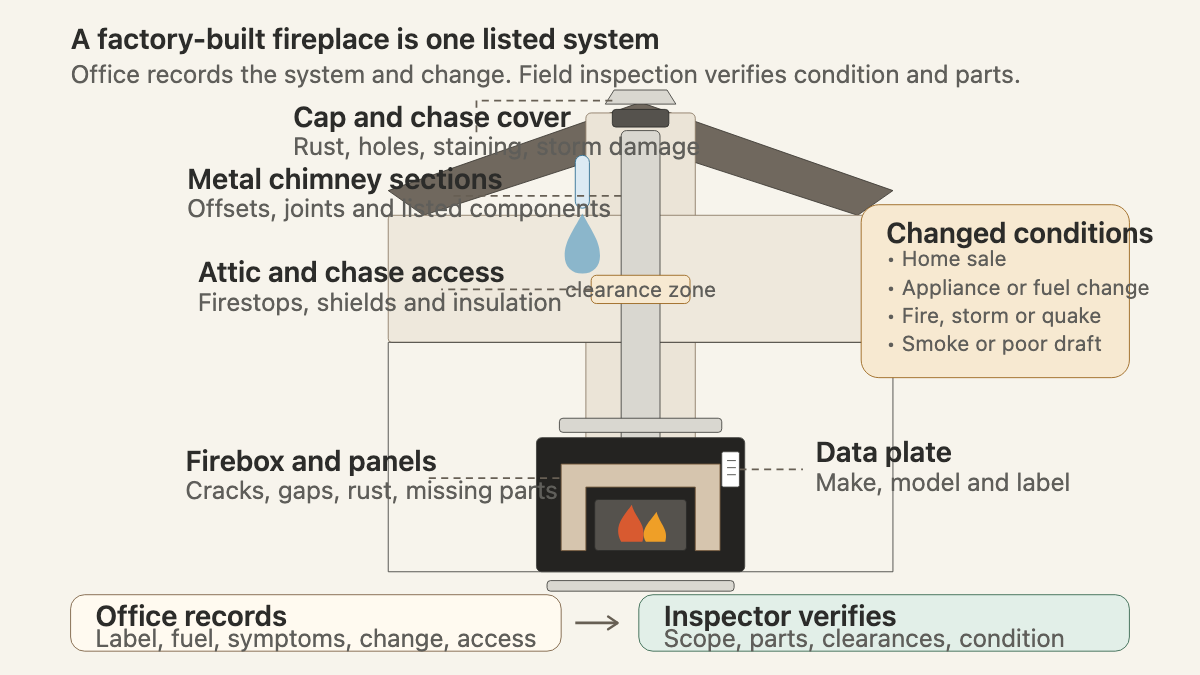
Start at the room. Ask about staining above the opening, damaged panels, rust, gaps, a damper that sticks, broken screens or doors, loose trim, and changes to the hearth or mantel. Record what the caller sees. “Crack in the back panel, upper right, visible when cold” is useful. “Firebox unsafe” is an unsupported diagnosis.
Then ask where the chimney runs. Is there a boxed chase on an outside wall? Does the chimney pass through an accessible attic? Are there locked rooms, stored belongings, loose insulation, pets, or tenant-notice requirements that could affect access? The inspector decides which spaces must be entered.
Finish at the roofline. Ask about a missing cap, a rusted chase cover, water stains, storm damage, or debris that fell into the firebox. Reception should not ask the caller to climb onto the roof. Ground-level photos can establish the general arrangement, while close inspection stays with the technician.
CSIA’s procedures identify the physical items that may matter: refractory panels and sheet metal in the firebox, the hearth, damper and transition, chimney restrictions, the cap, storm collar, flashing or chase cover, accessible clearances and firestops, attic shields, corrosion, water entry, and whether visible parts belong to the system. The exact work depends on access and the applicable inspection scope.
Ask a short set of questions in a fixed order
A call taker can gather the useful facts without turning the conversation into a remote inspection:
- What prompted the inspection today: routine service, a sale, a change, a symptom, or a damage event?
- Is the fireplace used for wood, gas logs, or something else, and has that setup changed?
- Can the caller photograph the full fireplace front and any readable make-and-model plate?
- Has anyone installed new doors, a grate, gas logs, an insert, a blower, a cap, or another accessory?
- Is there smoke in the room, a strong odor, unusual noise, visible flame outside the firebox, or evidence of a recent chimney fire?
- Are there cracked or displaced panels, rust, water stains, gaps, loose parts, or a damper problem?
- Does the chimney pass through an attic, an interior enclosure, or an exterior chase?
- Has the home had recent roof work, remodeling near the fireplace, severe weather, or a change of ownership?
- When was the system last swept or inspected, and is a report, invoice, manual, or repair record available?
- Who can provide access, approve work, and receive the written findings?
Read back uncertain answers as uncertain. “Customer thinks the gas logs were added by a previous owner” preserves the fact. Turning that into “original gas system” creates a bad handoff.
Set appointment expectations without promising a result
Callers often ask whether the fireplace will pass, whether it only needs cleaning, or whether a cracked panel can be replaced. Reception should explain the process: the inspector identifies the system where possible, examines the portions included in the booked scope, documents findings, and recommends the next step. Parts availability and compatibility may depend on the manufacturer, model, installation instructions, and observed condition.
Cleaning and inspection are related but distinct. CSIA’s Level 1 procedure notes that deposits can prevent complete evaluation and may need to be removed before the flue or liner can be fully assessed. Do not promise that sweeping will correct a smoke complaint or produce a clear inspection result.
Access deserves a plain explanation too. A routine visit may focus on readily accessible areas. A broader inspection can require ladders, roof access, attic or crawl-space access, common tools, and video equipment. Weather, roof condition, tight offsets, blocked access, or missing documentation can limit what is completed that day. The final report should state what was examined and any exceptions.
If the caller’s main concern is a stuck or damaged damper, the fireplace damper repair intake guide gives that issue its own appointment-prep path.
Read back a field-ready ticket
A strong readback sounds like this:
“Inspection requested for a wood-burning factory-built fireplace in the first-floor family room. The owner found a plate behind the screen and attached a clear photo showing the manufacturer and model. No appliance change is reported. The visit is for routine service before seasonal use, and the last inspection date is unknown.
“The caller reports a hairline crack in the rear refractory panel and a brown water mark at the upper left corner of the opening after heavy rain. No smoke has entered the room. The metal chimney appears to run inside an exterior framed chase. Ground-level photos show a cap and chase cover, but roof condition has not been evaluated.
“The owner will provide access to the fireplace and attic. The installation manual is unavailable. Reception made no determination about inspection level, continued use, panel replacement, water source, or parts compatibility.”
That ticket gives the inspector a system identity, a reason for the visit, two specific observations, and an access plan. An AI receptionist can collect the same approved fields after hours. The technical judgment stays with the person who can see the fireplace, chimney, and documentation together.