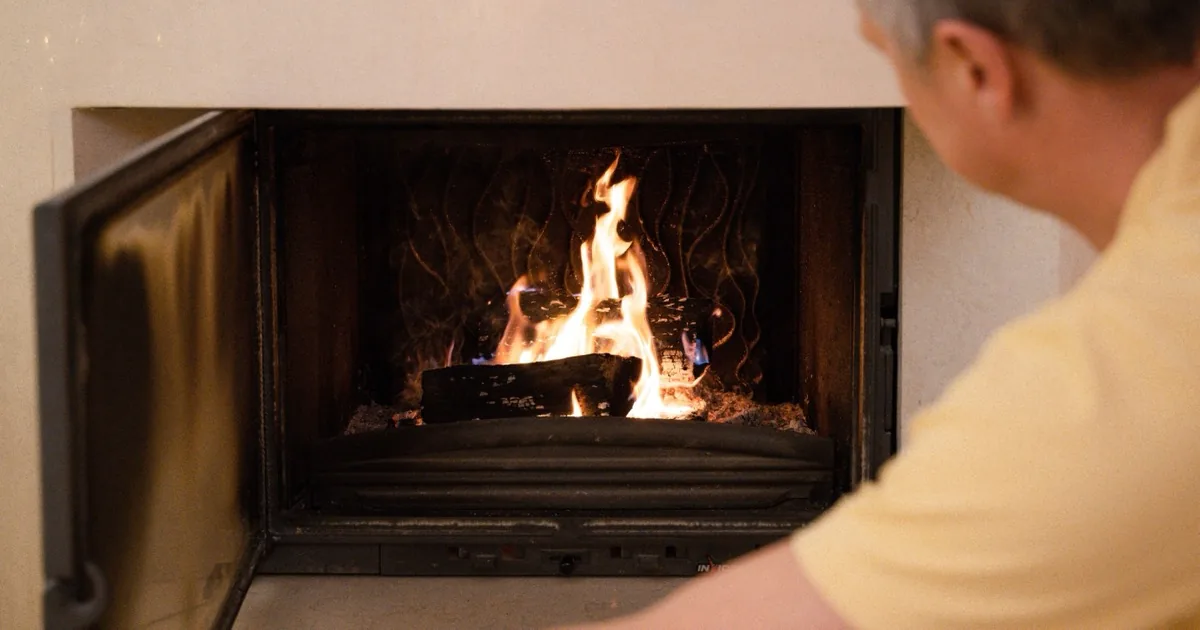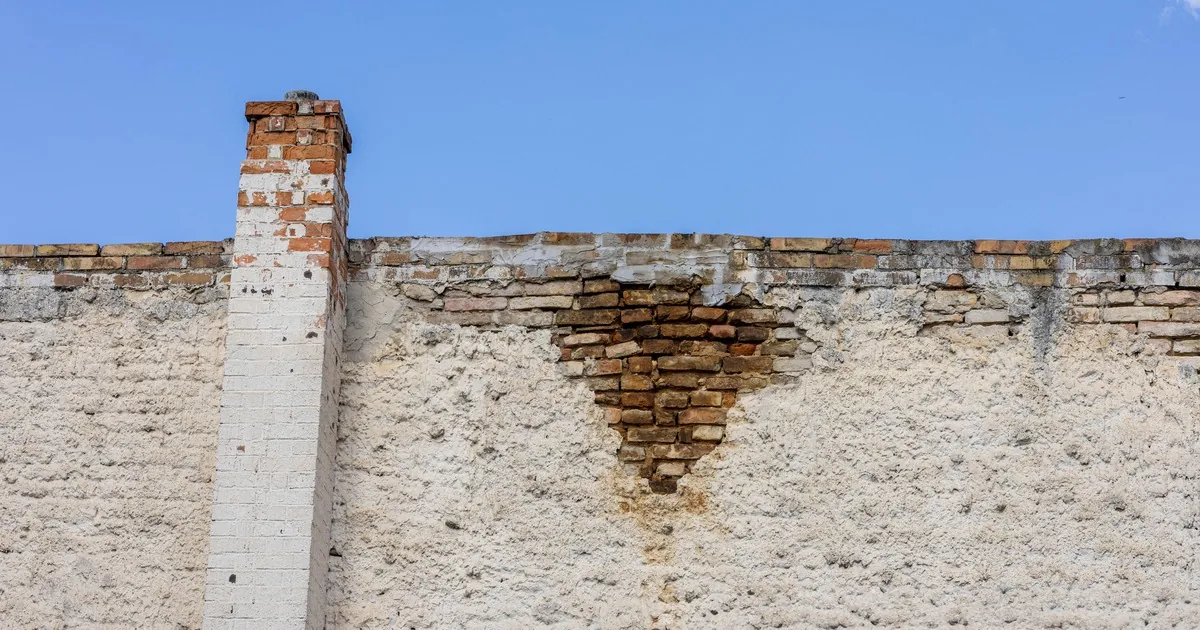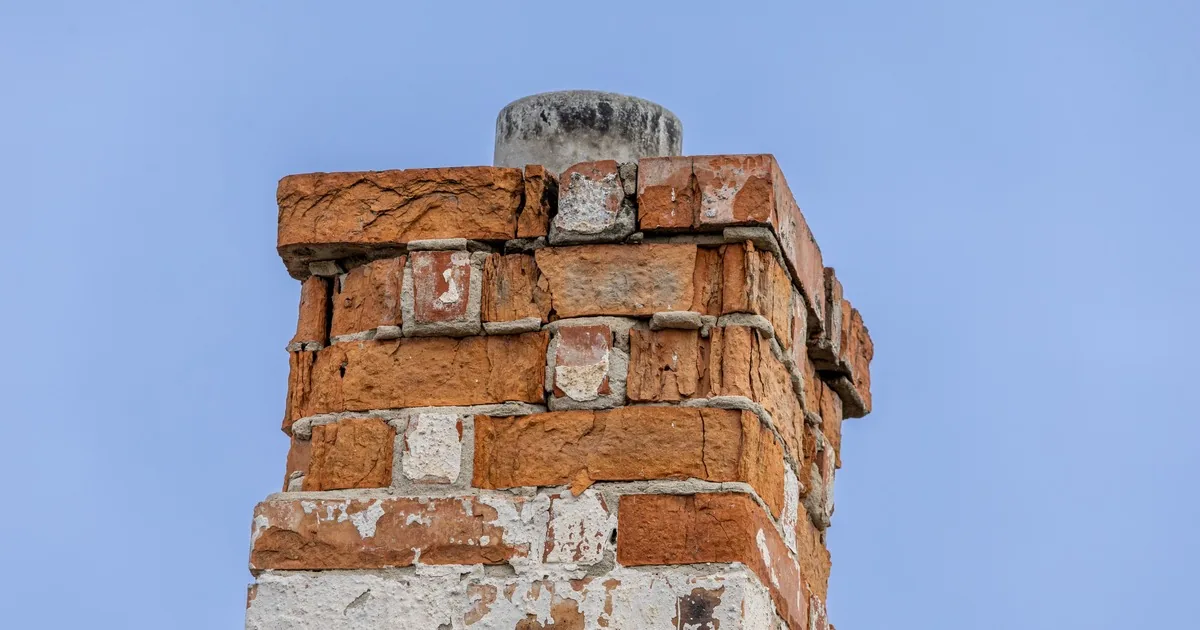
A homeowner calls after the house shook hard enough to empty a shelf. Another calls after wind dropped a branch beside the chimney. Each says the same thing: “It looks fine from the yard. Can we use the fireplace?”
The office should treat both as inspection calls, not visual clearances. First screen for leaning or fallen masonry, active fire, smoke, gas odor, alarms, downed lines, water near electrical equipment, and an unsafe building. Keep people away from a chimney that appears unstable. Record the event, visible changes, debris, water, appliance connections, and safe photos. Then book the company’s post-event inspection scope before anyone uses the fireplace or an appliance that may vent through that chimney.
Clear the hazard zone before discussing an appointment
Ask whether bricks, stone, concrete, a cap, or metal pieces have fallen. Does the chimney lean, look twisted, sit away from the house, or show a new gap at the roofline? Is a tree or large branch resting on the roof? Are there damaged power lines, a gas odor, active fire, heavy smoke, a carbon monoxide alarm, or an official restriction on entering the building?
Those reports leave the routine quote lane. Follow the company’s emergency procedure and direct the caller to emergency services, the gas utility, local building officials, or another qualified responder as the condition requires. Reception should never tell someone to stand below loose masonry, climb onto a damaged roof, push on a chimney, remove debris, or light a fire as a test.
FEMA’s Earthquake Safety at Home guide tells residents to approach masonry chimneys cautiously because weakened material can topple during aftershocks. It also advises keeping people away from a damaged chimney and requesting a home safety evaluation when masonry has cracked, shifted, or dislodged.
The fireplace is only one connection. A furnace, boiler, or water heater may also vent through the chimney. Ask what the chimney serves and whether any technician, utility, fire department, or building official has already restricted use. Do not instruct the caller to operate a connected appliance while damage is suspected.
Name the event instead of writing “storm damage”
“Bad weather” tells the field team very little. Capture the event that reached the property: earthquake shaking, aftershock, straight-line wind, hurricane, tornado, lightning, hail, heavy rain, falling tree, airborne debris, roof impact, flooding, or snow and ice load. Record the date, approximate time, and whether the caller was home.
For shaking, ask what changed during or immediately after the event. Did masonry fall into the yard, attic, firebox, or room? Did the caller hear cracking? Is the chimney visibly out of line when viewed from a safe location? Has a gap opened between the chimney and siding, roof, ceiling, or interior wall? Were there later aftershocks?
For severe weather, ask about direct impact and water separately. A branch strike can affect masonry, cap, liner, chase, roof deck, or flashing. Driving rain can reveal a roof-interface problem without proving that the storm created it. Lightning deserves its own note, including whether the caller saw a strike, heard a close explosive sound, found fragments, or noticed a sudden appliance or electrical problem.
The Chimney Safety Institute of America’s storm guidance identifies tree impact, driving rain, lightning, missing caps, lifted flashing, masonry changes, and water signs as useful post-storm observations. Keep each observation in the caller’s words. “Cap found in yard after high wind” is evidence. “Wind ruined the liner” is a diagnosis the phone call cannot support.
Map the report across the connected system
A chimney crosses several zones that callers experience as one object. Above the roof are the cap or termination, crown or chase cover, and exposed masonry or siding. At the roof are attachment, flashing, shingles or other roof covering, deck, and water-control layers. Inside are the flue or vent, accessible attic interfaces, fireplace or appliance connection, and finished walls or ceilings.
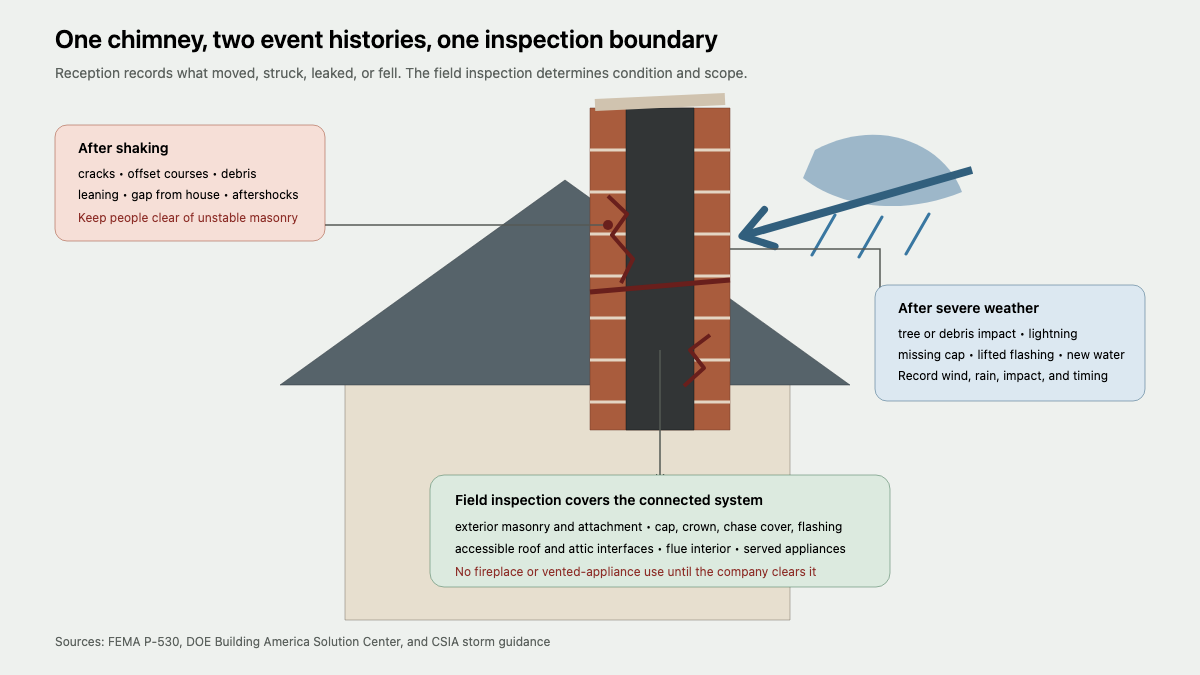
The U.S. Department of Energy’s Building America chimney guide explains why those zones stay connected. A chimney must resist wind and seismic loads through its relationship with the structure. At the roof, flashing and water-control layers must work together to shed rain. A crack above the roof, a wet attic below it, and a shifted flue tile can belong to the same event, or they can have different causes. The field inspection sorts that out.
Ask the caller for observations from safe, normal locations:
- ground-level views from more than one side, with no one standing below loose material
- fallen brick, mortar, cap pieces, flashing, branches, or liner fragments
- new exterior cracks, offsets, leaning, gaps, stains, flaking, or missing components
- water, masonry dust, tile pieces, soot, or metal inside the firebox or appliance area
- ceiling stains, damp attic materials, odors, or new sounds near the chimney
- changes in draft, smoke behavior, or appliance operation noticed before use was stopped
- prior photos, inspection reports, repair invoices, and the latest normal-use date
Photos should include a wide view that locates the chimney on the building and closer views taken only from safe ground or interior access. A dramatic zoom can hide the roof relationship. Tell the caller not to enter an unsafe attic, reach into a flue, move a branch, or cross a restricted area for a better image.
Separate earthquake routing from severe-weather routing
After earthquake shaking, visible exterior condition does not settle the question. FEMA says a fireplace should remain unused until a chimney inspector determines it is safe, regardless of whether damage is visible. That boundary matters because separation or cracking can occur where the caller cannot see it, and aftershocks can add movement.
The chimney company may also need to coordinate with a structural engineer or building official when masonry has shifted, the chimney has pulled from the house, the building shows other structural damage, or repair design exceeds the company’s scope. Reception should describe that possibility without promising which professional will approve the building.
After severe weather, the event mechanics guide the starting point. Impact calls need the strike location, object, visible debris, and affected roof area. Wind calls need missing or displaced components. Rain calls need the first wet location, storm direction, timing, and spread. Lightning calls need immediate changes and any fire or electrical response. The chimney leak inspection guide handles active water-path questions. The missing-cap intake guide owns calls where the missing component is already clear.
Keep insurance language disciplined. Record the carrier, claim number, adjuster contact, required photos, and deadlines if the caller volunteers them. Do not promise coverage, label damage as storm-caused, or tell the caller what an insurer must accept.
Book inspection before repair
Tell the customer what the first visit includes under company policy. For a post-event call, that may cover the readily accessible exterior, cap or termination, crown or chase cover, masonry or enclosure, roof intersection, accessible attic areas, appliance connection, and flue interior. Access, weather, roof condition, system type, and the event can change what is safely inspectable that day.
CSIA’s storm statement recommends a Level 2 inspection after relevant property damage. The exact appointment should still follow current standards, company policy, and the facts of the call. The existing inspection-level scheduling guide can help reception preserve that distinction without declaring a level from one vague sentence.
Set expectations for documentation. Ask whether the customer needs a written report, photographs, a repair estimate, or coordination with a roofer, engineer, utility, fire department, or building official. Confirm who owns the property and who may authorize inspection charges. For a rental, condominium, or shared chimney, identify the occupant, owner, manager, association contact, and access holder.
Do not quote reconstruction, lining, masonry repair, flashing, cap replacement, or waterproofing from the event description. The first visit may find no event-related defect, a maintenance issue that predates the event, concealed damage, or a condition outside the chimney company’s trade.
Read back a field-ready post-event ticket
A useful earthquake ticket might read:
“Moderate shaking was felt at the property Tuesday at 6:14 a.m., followed by two smaller aftershocks reported by the caller. No active fire, gas odor, alarm, fallen utility line, or official occupancy restriction was reported. Caller sees fresh mortar pieces in the side yard and a narrow gap between the exterior masonry chimney and second-floor siding. Nobody is standing near that wall. Fireplace and gas water heater use have stopped pending review. Ground-level photos and the prior annual inspection report are attached. Booked as a post-seismic chimney inspection; structural referral and repair scope remain subject to field findings.”
A storm ticket needs the same discipline:
“Large branch struck the roof beside the chimney during Saturday wind. Branch has been removed by a tree service. Caller reports a crooked cap, new water in the firebox, and a ceiling stain on the uphill side. No loose masonry, active fire, gas odor, electrical contact, or alarm was reported. Fireplace is out of use. Wide exterior, firebox, and ceiling photos are attached. Roofer access may be needed. Booked for post-storm chimney and roof-interface inspection; cause, inspection findings, and repair scope remain open.”
An AI receptionist can capture the same approved questions after hours, but it should never clear the system for use. The handoff is complete when the field team knows the event, immediate hazards, connected appliances, visible changes, access limits, evidence, and customer expectations before anyone approaches the chimney.