A homeowner calls after rain and says, “There is a rusty line running down the side of the chimney box.” Another reports a brown stain above the fireplace but has never looked at the roof. Both may be describing a chase-cover problem. Neither call proves where the water entered.
For a rusted chimney chase cover service call, capture whether water is entering now, where rust or staining appears, which fireplace or appliance the chase serves, recent weather or roof work, safe ground-level photos, interior access, and service history. Book an inspection under company policy before promising a cover-only repair. The inspector needs to check the cover, cap, storm collar, seams, flashing, chase and any accessible moisture damage together.
Screen active water before discussing an estimate
Start inside the home. Ask whether water is dripping now, whether a ceiling is sagging, and whether moisture is touching a light, outlet, appliance control or exposed wire. Smoke, fire, a carbon monoxide alarm, falling material or a visibly unstable chimney belongs in the company’s urgent safety path. Reception should follow the approved emergency script and involve the appropriate emergency service or qualified trade.
For a stable leak, record the room, surface and timing. “Brown line above the left corner of the fireplace after wind-driven rain” is useful. “Chase cover failed” is a diagnosis the caller cannot make from the floor.
Do not send the homeowner onto the roof. Ask for exterior photos only when they can be taken safely from the ground or another normal occupied area. A wide image can show the framed chase, siding and roof relationship. A closer zoom may capture rust streaks, peeling paint or a crooked top without putting anyone on a ladder.
Water inside a framed chase can wet wood, insulation and finish materials that the caller cannot see. The EPA’s home moisture guidance says the water source should be corrected and wet materials dried promptly. The chimney office can document the report and route the inspection. It should avoid diagnosing mold, health effects or concealed damage by phone.
Confirm what the caller means by chase cover
Homeowners use “cap,” “cover,” “crown” and “flashing” for different components. Ask whether the chimney is brick or a framed box finished with siding, stucco, stone veneer or another cladding. A metal sheet spanning the top of a framed chase is commonly called a chase cover or chase pan. One or more metal chimney flues pass through it, with termination parts above.
A masonry chimney usually has a crown or wash at the top. That distinction changes the likely service scope. If the caller cannot identify the construction, keep the ticket neutral: “Boxed chimney on rear wall; broad metal top visible from yard.”
Also identify what the chase serves. Is there a wood-burning factory-built fireplace, gas fireplace, wood stove, furnace or another appliance? Is there more than one flue? Capture the room and appliance label when it is safely accessible. The factory-built fireplace inspection guide explains how make, model, fuel and recent changes help the inspector prepare.
Map the evidence by location
The most useful chase-cover ticket follows the water path without claiming to know it. Work from the roofline down to the room.
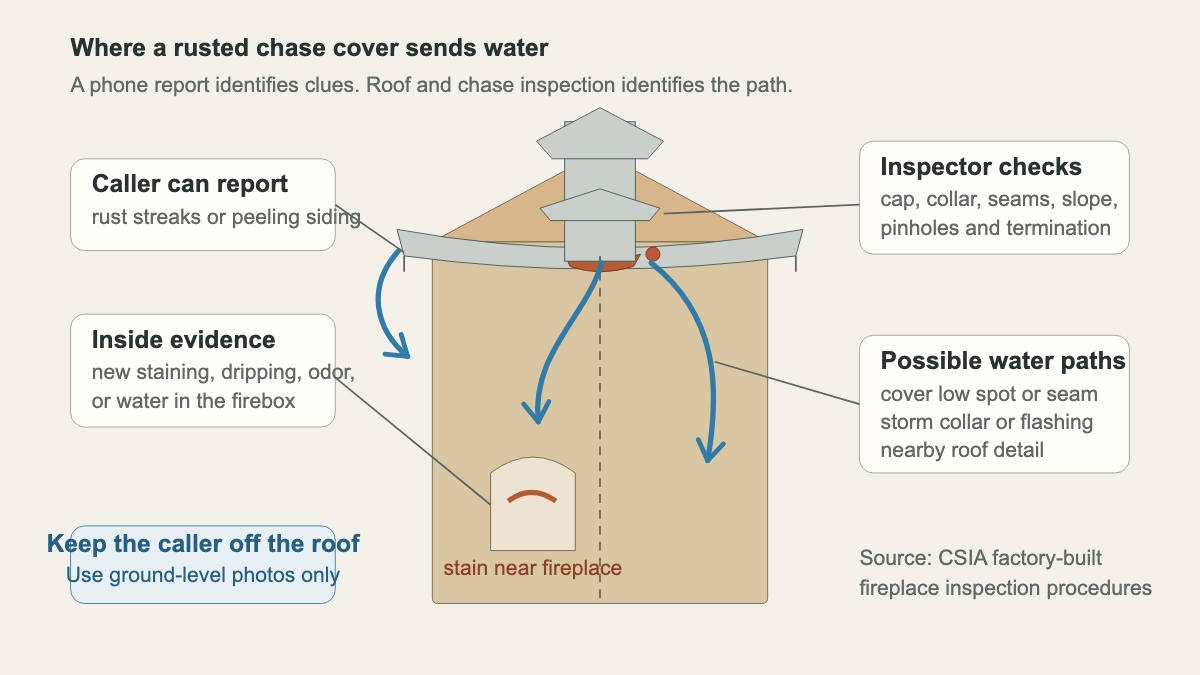
Ask these questions in order:
- Where is rust visible: on the flat metal top, around a flue, at an edge or seam, or as streaks down the cladding?
- Does the top appear flat, dipped, bent, loose or separated from the chase? Record the caller’s wording.
- Where does water appear inside: firebox, wall above the fireplace, ceiling, chase access area, attic or nearby floor?
- Does leakage happen during every rain, wind-driven rain, snowmelt or only one recent storm?
- Has anyone recently replaced roofing, siding, flashing, a chimney cap, storm collar or fireplace component?
- Are there photos, inspection reports, invoices or manufacturer documents available?
- Can the technician access the fireplace, attic or chase opening, and who can authorize additional work?
The Chimney Safety Institute of America’s Level 2 procedure for factory-built fireplaces tells inspectors to examine the storm collar, rain cap and flashing. Where a chase pan is present, it calls for checking rust, low spots and pinholes that let water remain on the pan. It also says water entry through the pan may call for further investigation of moisture damage.
That list matters because visible rust does not isolate the source. Water may enter at a pinhole, seam, collar, fastener, edge detail, roof flashing or another nearby condition. It can also travel before it becomes visible indoors. A photo can help plan the visit, but the roof-level and interior checks establish what the company can responsibly quote.
Separate rust evidence from repair scope
Reception should avoid two promises: “It only needs a new cover” and “We can patch that.” Rust can be surface staining, advanced corrosion, a pinhole or evidence that water has been sitting in a low area. The condition, dimensions, material, flue penetrations and connected details all affect the work.
The CSIA Level 1 factory-built fireplace procedure expects missing, damaged, rusted and corroded parts to be noted when they are readily accessible. It also makes an important scheduling distinction: a Level 1 inspection does not automatically require rooftop access. If a company needs roof access to evaluate the reported cover, the booked service, weather limits and access requirements should say so plainly.
Ask the operations team what the first appointment includes. Some companies perform an inspection and measure during the same visit. Others separate diagnostic work from fabrication or installation. State the actual policy, including the inspection fee, whether roof access is weather dependent, when a written repair proposal is prepared and whether a return visit is expected.
Never quote dimensions from a satellite image or a homeowner’s guess. A replacement cover may require field measurements of the chase and penetrations. The technician may also need to identify the listed fireplace and chimney system before changing termination components.
Capture recent events that change the visit
A rusty streak may have been visible for months, while the service call begins after one hard storm. Ask what changed. A missing cap, displaced shroud, fallen branch, new roof, siding work, animal activity or chimney fire can widen the inspection scope.
If a top component is on the ground after high wind, use the missing chimney cap after storm intake. If the caller mainly reports water and cannot identify the source, the broader chimney leak inspection guide covers cap, crown, masonry, flashing and chase-cover possibilities.
Property sales and new ownership deserve their own note. The caller may have an inspection report with a single photograph labeled “rusted chase cap.” Request the complete relevant page, the photo at its original resolution and any deadline. Avoid treating a home inspector’s label as a finished repair specification. The chimney technician still needs to confirm the component and condition.
Read back a field-ready service ticket
A useful ticket might read:
“Caller reports orange streaks below the rear edge of a sided chimney chase. The streaks are visible from the backyard. Water appeared as a brown mark above the family-room fireplace after two recent rain events, with no active dripping during the call. No smoke, alarm, falling material or electrical contact was reported.
“The chase serves a wood-burning factory-built fireplace. Make and model are not yet confirmed. The roof was replaced last year, and the owner does not know whether the chase cover or storm collar was changed. Ground-level photos and the roof invoice will be attached. The attic hatch and fireplace are accessible. Roof access and repair scope remain subject to technician review and weather.”
That note gives the field team a component description, symptom location, timing, connected appliance, recent work and access plan. It also preserves uncertainty. An AI receptionist can collect the approved fields after hours, but inspection and repair decisions stay with the qualified person who can examine the complete system.