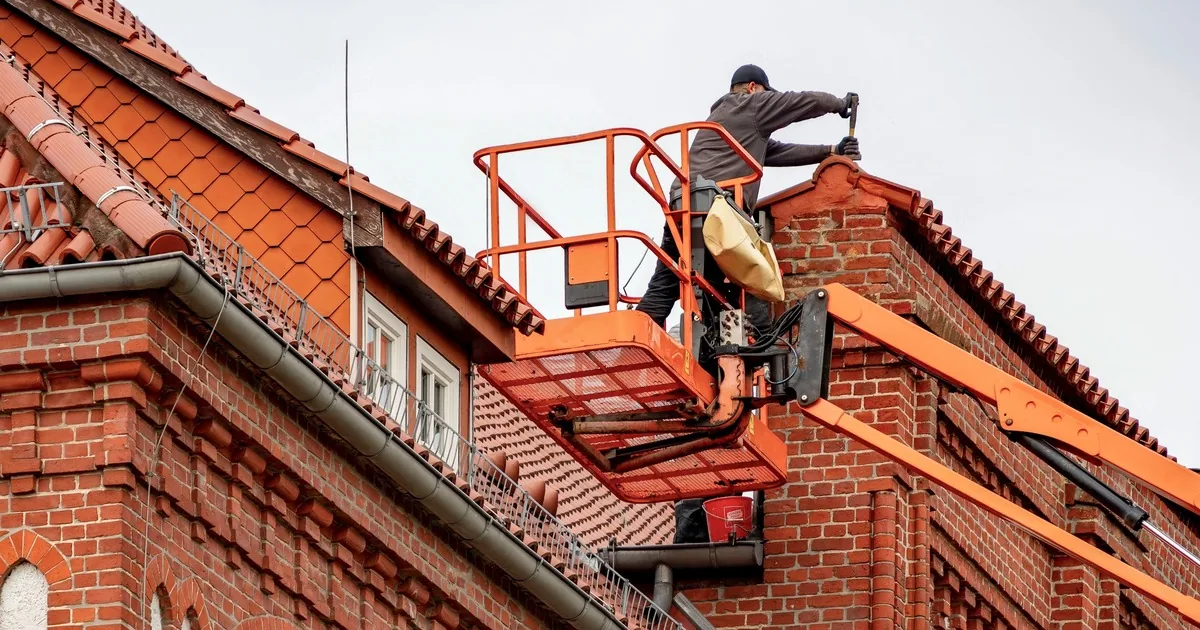
A homeowner calls the morning after a windstorm and says, “The chimney cap is in the yard.” Before offering a replacement appointment, the office needs to know whether the storm has passed, whether anything is still hanging from the roof, which chimney the object came from, and whether a fireplace or heating appliance has run since it moved.
A useful chimney cap missing after storm intake follows a clear order. Screen for active hazards first. Then identify the object and connected system, record water or debris entry, request photos only from safe locations, and send the inspection scope for technical review. Do not promise a cap-only repair from the phone. Wind strong enough to move the top piece may have affected hardware, masonry, a liner termination, a chase cover, or nearby roofing that the caller cannot see.
Clear the safety screen before discussing an appointment
Ask whether severe weather is still active at the property. The National Weather Service advises people to assess damage after the threat has ended, report downed power lines, and stay out of damaged buildings. A service script should not send someone outdoors for a better photograph while lightning, high wind, hail, flooding, or falling branches remain a concern.
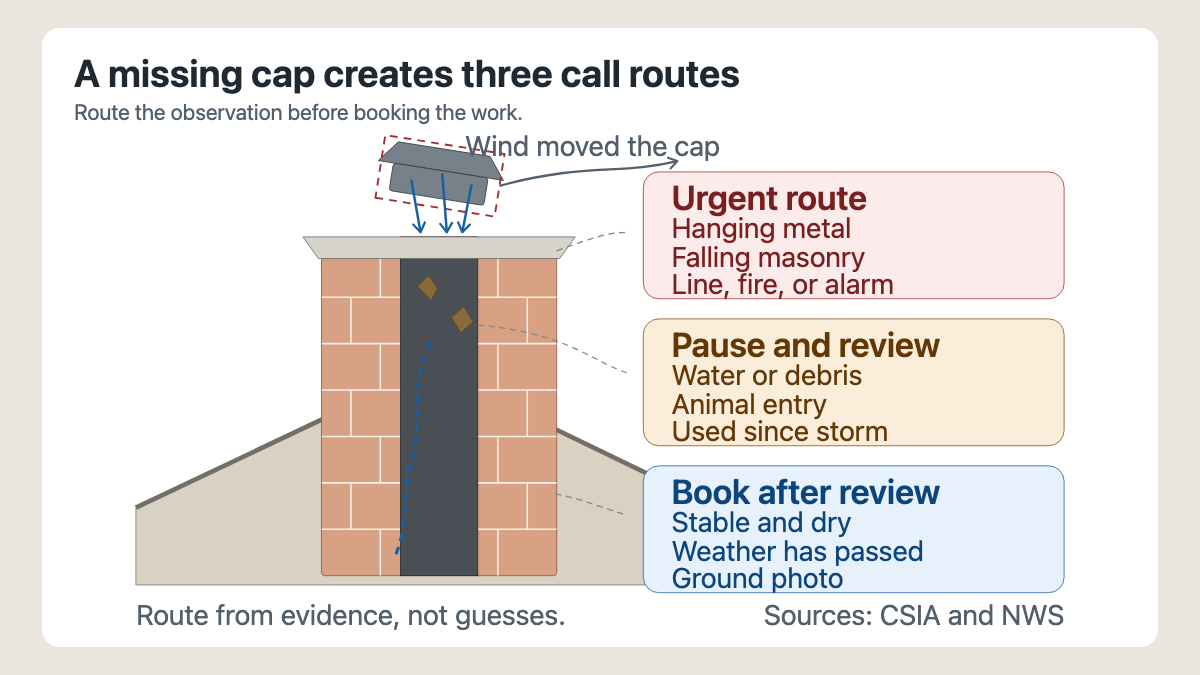
Next, ask where the reported cap is now. A piece lying flat in an empty yard creates a different route than sheet metal hanging over a walkway, caught in a tree, resting on a power line, or sliding on a roof. Ask whether brick, tile, mortar, or other material has fallen. Record any visible lean, fresh gap, roof opening, impact damage, fire, smoke, carbon monoxide alarm, gas odor, or injury.
Those reports leave the ordinary quote flow. Follow the company’s emergency policy and direct the caller to the appropriate emergency service, utility, building official, or qualified responder. Keep people and pets away from the fall area when they can do so safely. The chimney office should not tell anyone to retrieve metal, climb a ladder, walk the roof, move a line, or inspect loose masonry.
If the site appears stable, continue. “Stable” is an intake description, not a structural finding. A caller viewing the chimney from a window or the ground cannot clear concealed damage.
Find out what the caller means by chimney cap
People use “cap” for several parts at the top of a chimney. The object in the yard might be a rain cap over one flue, a multi-flue cap, a top-sealing damper, a decorative shroud, part of a factory-built chimney termination, or sheet metal from a framed chase. A caller may also confuse a chimney crown, chase cover, storm collar, or roof flashing with the cap.
Ask the caller to describe the object without handling sharp or unstable material. Is it a small hood with mesh sides, a broad metal cover, a round termination, or a piece of masonry? Where was it found? Does it have screws, clamps, legs, or torn metal attached? If the company accepts images, a photograph taken from the ground can help a qualified reviewer identify the likely component.
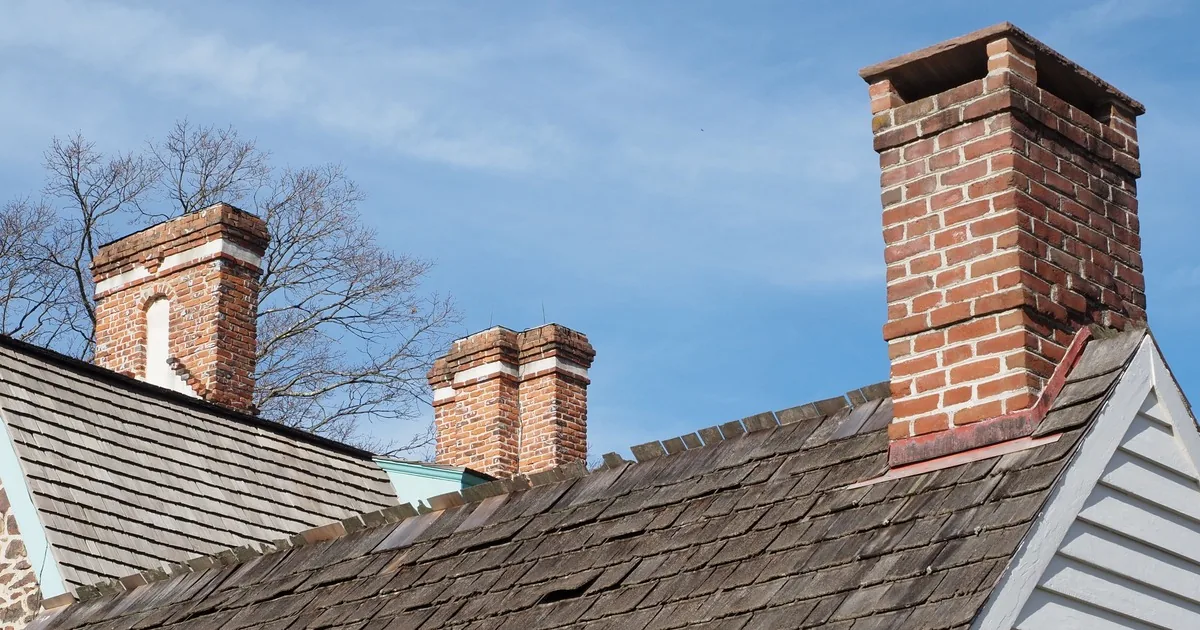
Then identify the chimney. Get the address and ask how many chimney structures are visible. Find out whether the reported opening serves a wood-burning fireplace, wood or pellet stove, gas fireplace, furnace, boiler, water heater, or another appliance. More than one flue may rise through the same masonry stack. “The left chimney above the garage” is better than “the big one.”
The Chimney Safety Institute of America says a well-designed cap helps keep rainwater, birds, and animals out and may also serve as a spark arrestor. Those functions explain why the connected system and the exact missing piece matter. They do not tell the office which replacement fits.
Record what entered and what has operated
Ask whether rain, snow, leaves, branches, roofing material, masonry fragments, or animal activity appeared after the storm. The caller may report water in the firebox, damp ash, debris at a cleanout, staining near the chimney, a new odor, scratching, or a bird near the opening. Preserve the observation. Do not convert “water in the firebox” into “failed cap,” because water can follow several roof and chimney paths.
The dedicated chimney leak inspection guide covers the cap, crown, masonry, flashing, adjacent roof, and interior routes that may need examination. If an animal or nest is reported, move to the chimney wildlife scheduling process. The office should never suggest lighting a fire to clear debris or wildlife.
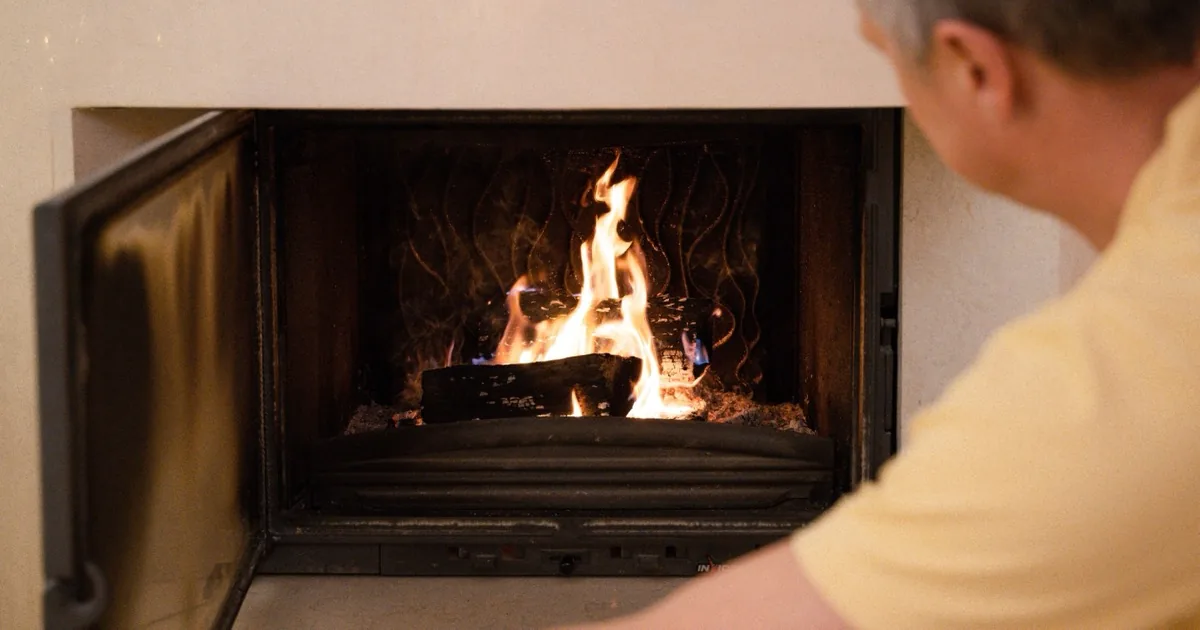
Ask whether any connected fireplace, stove, or heating appliance has operated since the storm. Capture what happened: normal operation, smoke in the room, unusual odor, sound, shutdown, alarm, or no attempted use. Under the company’s approved safety policy, a storm-affected system may need to remain unused until it is evaluated.
CSIA’s post-storm home-heating guidance recommends professional chimney inspection before a fireplace, woodstove, or furnace is returned to use after water and wind damage. The call taker should state the company’s actual instruction and avoid improvising tests. No one needs “one quick fire” to prove that the flue still drafts.
Ask for evidence without sending anyone onto the roof
Useful photographs come from safe, ordinary positions. Ask for a wide ground-level view that shows the chimney and roofline, a closer view only if the caller already has a safe vantage point, the object where it landed, and interior evidence such as water or debris in the firebox. Existing doorbell, security-camera, or pre-storm photos may show when the piece moved.
Do not ask the caller to stand beneath a loose component, enter a taped-off area, lean from a window, use a drone near power lines, climb a ladder, or walk on wet roofing. Photos are optional evidence. The appointment should not depend on a homeowner taking a risk that the field crew would avoid.
Record access conditions for the technician. Note roof height and pitch as the caller understands them, roofing material, gates, trees, overhead lines, solar panels, a narrow drive, snow or ice, and whether the chimney is on a steep slope or near a ridge. Ask about attic, fireplace, appliance, mechanical-room, and cleanout access. Weather may still prevent roof work even when the road and yard are clear.
The office also needs recent history. Ask about prior cap, liner, crown, masonry, flashing, roof, or appliance work. Note the last chimney inspection if known. Request invoices or prior photos when they are available, but do not delay urgent routing while someone searches an email archive.
Let the event and evidence set the inspection scope
A missing cap does not automatically define an inspection level. The severity of the event, connected system, visible changes, operating symptoms, access, and company policy all matter.
The CSIA Level 2 masonry chimney procedure identifies a weather event likely to have caused damage as a reason to consider Level 2 inspection. Its scope can include the roof, accessible attics, basements and crawl spaces, connected appliances, and a video scan of the chimney interior. CSIA also says the procedure must be adapted to the operation and local requirements.
That makes the office’s role straightforward: capture the event and observations, then apply the company’s approved review process. The related Level 1 versus Level 2 call guide helps staff record the triggers and access facts. A receptionist should not announce “You need a Level 2” merely because the caller used the word storm.
Avoid promising that a replacement can be installed during the first visit. The technician may need to identify the chimney or liner system, measure the termination, check attachment points, clear debris, document water entry, or coordinate roof and masonry work. A cap that looks close enough in a catalog can still be wrong for the flue, fuel, listing, or site conditions.
Read back a ticket the field team can trust
A useful handoff sounds like this:
“Caller reports that a metal hood with mesh sides was found in the rear yard after last night’s windstorm. Weather has passed. Nothing is hanging from the roof, and no fallen brick, downed line, smoke, fire, gas odor, or alarm is reported. The cap is believed to have come from the masonry chimney above the family-room wood-burning fireplace. The fireplace has not been used since the storm. Caller sees a small amount of wet debris in the firebox. Ground-level photos of the chimney, roofline, landed piece, and firebox are attached. A steep rear roof slope and overhead service line are noted. Inspection scope awaits technical review.”
That note preserves uncertainty while giving the reviewer a location, system, event, current condition, use history, evidence, and access picture. It also sets a clean customer expectation: the visit begins with evaluation, and the repair follows what the chimney and roofline actually show.
An AI receptionist can capture the same fields after hours if the escalation rules and service boundaries are written clearly. The chimney service resource hub can support the rest of the office script. For this call, the final check is simple: nobody is being sent into active weather or onto a roof, and nobody has promised a replacement before the system has been identified.