The caller says, “There’s water by the fireplace every time it rains. Do I need a new chimney cap?” That question sounds narrow. The service call rarely is.
A good chimney leak intake begins with the place where water appears, the weather when it appears, and any immediate hazard inside the house. Then the office gathers enough detail to prepare an inspection of the chimney top, crown, masonry, flashing, adjacent roof, flue, and interior path. Do not promise a cap, crown repair, masonry coating, or flashing job from the phone. The wet spot may be several feet from the entry point.
Start with the wet spot, not a guessed chimney part
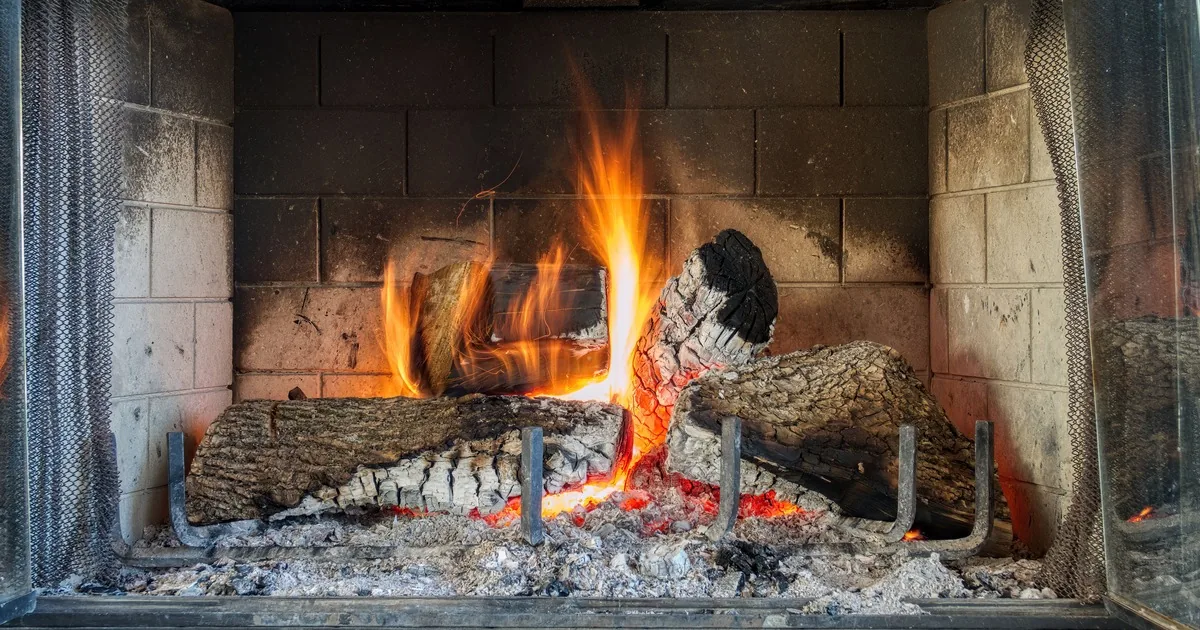
Ask the caller to take you to the evidence. Is water dripping into an open firebox, running down a stove pipe, staining the ceiling beside the chimney, darkening brick, or wetting a wall on the floor below? Record the room, floor, and side of the chimney. “Upstairs bedroom, ceiling stain on the uphill side of the stack” gives the technician much more than “chimney leaking.”
Next, pin down the timing. Did the stain appear during the rain, several hours later, or the next morning? Does it happen in every rain or only when wind blows from one direction? Did snow melt precede it? Is the water clear, rusty, sooty, or carrying grit? Has the spot grown since the last storm?
Those observations matter because water does not always fall straight down. It can follow masonry joints, framing, sheathing, flashing, a liner, or an appliance connector before becoming visible. The National Park Service moisture guidance recommends tracing moisture patterns and identifying the source before choosing a treatment. The same discipline belongs in a chimney office.
Ask for photos from safe locations: the firebox, stained ceiling, damp wall, attic area if it is normally accessible, and a ground-level view of the chimney. Never ask a caller to climb a ladder or walk the roof. A blurry phone image taken from the yard is optional evidence. It is not worth a fall.
Route immediate hazards before the inspection lane
Most chimney leak calls can be scheduled through the normal inspection process. A few need an immediate safety handoff.
Ask whether water is touching a light fixture, outlet, electrical panel, appliance control, or exposed wiring. Ask whether the ceiling is sagging, masonry is falling, the chimney or chase appears to have shifted, or water is entering fast enough to make the room unsafe. Fire, smoke, a carbon monoxide alarm, or a suspected structural failure also leaves the ordinary quote flow. Follow the company’s emergency policy and direct the caller to the appropriate emergency or qualified trade response.
For a stable leak, have the caller stop using a wet fireplace or appliance until the system has been evaluated under company policy. Do not coach them through removing a cap, opening a chase cover, applying roof cement, or testing the fireplace. Temporary buckets and moving belongings away from the wet area may protect finishes if that can be done safely, but the office should not prescribe a roof repair.
Wet drywall, insulation, wood, and carpet also deserve prompt attention. The EPA’s homeowner moisture guide tells homeowners to fix the water source and dry wet materials promptly. A chimney company can document visible dampness and coordinate its own scope. It should not diagnose mold, health effects, or the full interior restoration requirement by phone.
Map the complaint to every inspection zone
The caller may be certain that one component is responsible. Keep the language provisional.
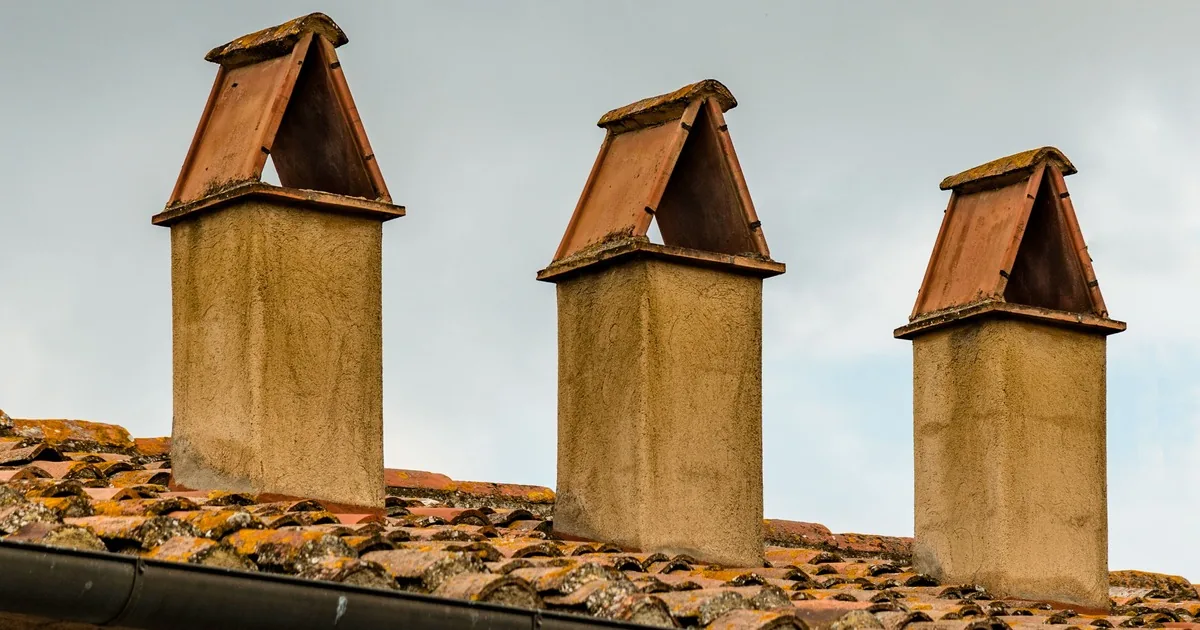
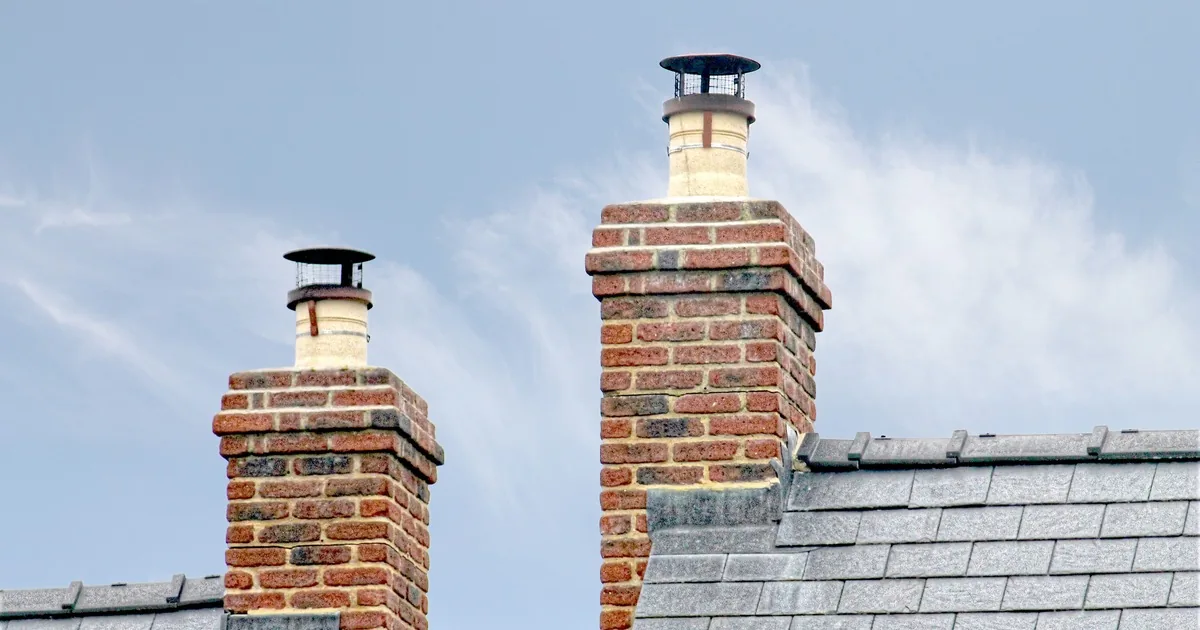
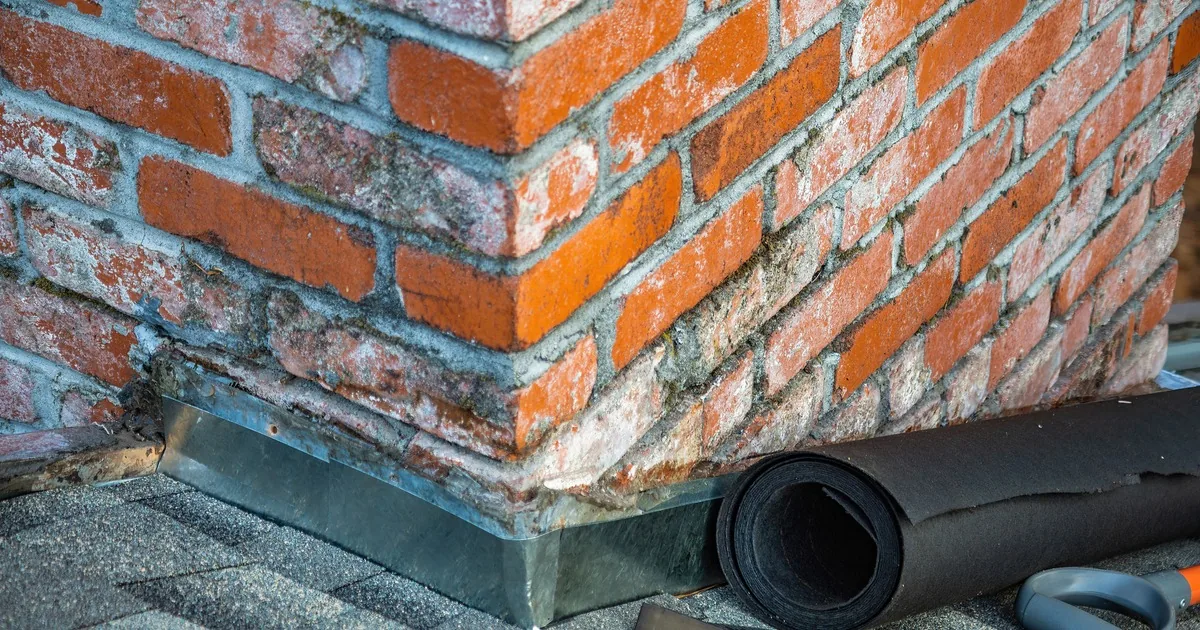
A missing, loose, rusted, or undersized cap can allow rain and debris into a flue. A cracked or poorly formed crown can expose the masonry below. Open mortar joints and damaged brick can admit water. Flashing at the roof intersection can fail at laps, corners, counterflashing, or transitions. The adjacent shingles, underlayment, cricket, valley, gutter, or roof penetration may be the actual source. Moisture inside the flue can also involve condensation or an appliance condition.
The Chimney Safety Institute of America includes caps, flashing, masonry, and interior signs in its discussion of chimney water problems. CSIA’s masonry fireplace inspection material also includes crown and flashing review. That breadth is the reason a leak booking should preserve several possible paths.
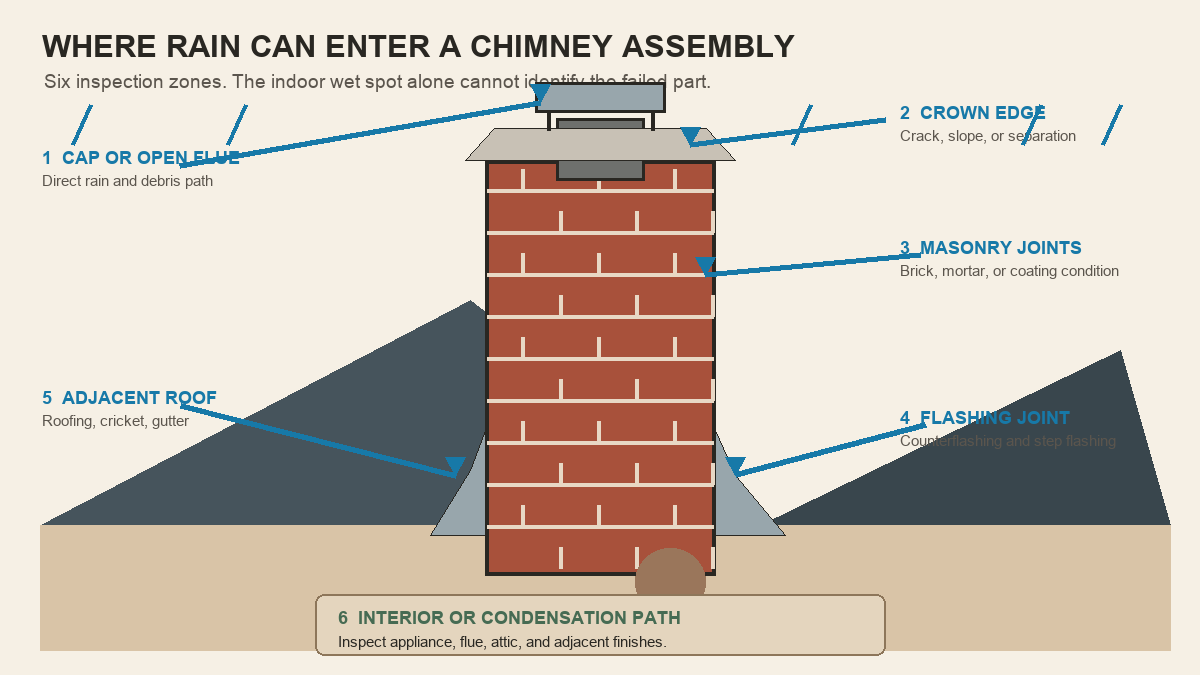
Use plain notes. “Water appeared in the firebox during a wind-driven storm” is solid. “The cap leaked” goes beyond what the caller has established. Likewise, “ceiling stain beside the chimney” does not prove flashing failure. A roof defect uphill from the chimney can send water toward the same interior location.
Capture the structure, recent work, and access
Chimneys called by the same name can have very different water paths. Identify what is present: masonry chimney, factory-built metal chimney, framed chase with a metal chase cover, wood stove connector, gas appliance, or more than one flue. Ask whether the chimney serves an open fireplace, insert, furnace, boiler, water heater, stove, or a combination.
Record the roof material and shape if the caller knows them. Asphalt shingles, metal panels, tile, slate, and flat roofing require different access and coordination. Note whether the chimney sits at the ridge, on a roof slope, in a valley, or against an exterior wall. Add roof height, steepness, gates, power lines, solar panels, limited parking, pets, tenant access, and attic access.
Recent work often changes the inspection starting point. Ask about:
- roof replacement, patching, gutter work, storm damage, or solar installation
- chimney sweeping, cap or chase-cover replacement, crown work, tuckpointing, waterproofing, liner work, or appliance installation
- interior painting or repaired stains that may hide the first appearance of moisture
- invoices, warranties, before-and-after photos, and the date the leak first appeared
Do not turn that list into a verdict. A leak after roof replacement belongs in the history, but timing alone does not assign responsibility. The field inspection needs to document the current condition and the relationship between assemblies.
For a rental, condominium, or managed property, identify the occupant, owner, manager, association contact, and person authorized to approve inspection charges. Shared chimneys and common roofs can require access or notices beyond the unit where the stain appeared. The coordination principles used for chimney inspections before a home sale also apply when several parties control the building.
Match the observation to an inspection route
Different observations change where the technician starts, what access may be needed, and whether a roofer or masonry specialist may need to join the job. They still do not prove the cause.
Water in the firebox puts the top opening, cap, crown, flue, appliance connection, and interior masonry on the list. A ceiling stain beside the stack adds flashing, roof deck, attic, cricket, and adjacent roofing. Damp brick or white mineral deposits call for a closer look at masonry, drainage, crown details, and possible interior moisture. A leak limited to wind-driven rain makes storm direction and exposed joints especially useful notes.
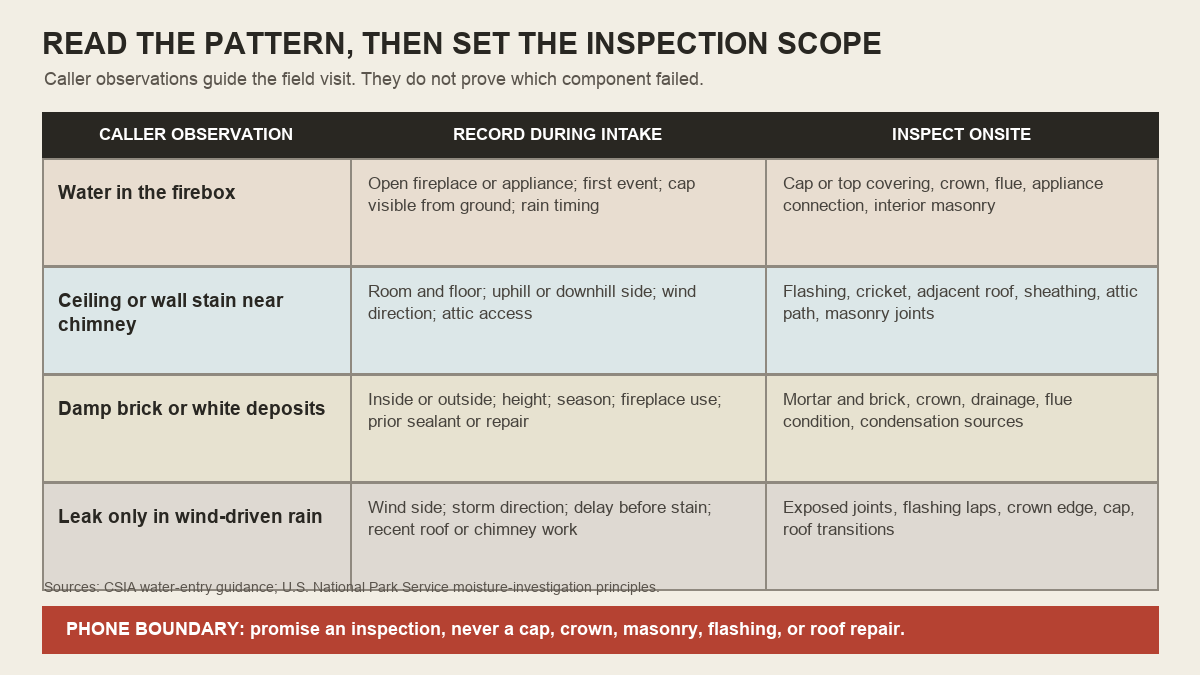
If the system has changed, damage is concealed, or the leak followed a significant event, the company may need a broader inspection. The office can use its documented triggers and the framework in Level 1 vs. Level 2 Chimney Inspection Calls, then leave the final scope to a qualified reviewer.
Promise the investigation before the repair
The safest booking language is direct: “We’ll inspect the chimney and the areas we can access around it, document the likely water path, and explain the repair options after the onsite evaluation.” Add any limits that matter. Some companies inspect chimney masonry but refer roof flashing work. Others coordinate both. State the real service boundary before the appointment.
Be equally careful with coatings. The National Park Service masonry guidance recommends completing necessary repairs and making the masonry watertight before considering a water-repellent treatment in selected areas. “We can waterproof it” is a poor first-call promise when the actual issue may be an open flashing joint, failed crown, damaged roof, or incompatible prior repair.
Leave the technician a record that includes the wet location, storm timing, wind direction, water appearance, first occurrence, chimney and appliance type, roof details, recent work, safe photos, access conditions, and every party involved. End the call with one firm boundary: nobody should climb onto the roof or use a wet appliance to help the office diagnose the leak.
That record turns “water by the fireplace” into a visit the field team can prepare for. The repair answer comes after the chimney, roofline, and interior evidence have been seen together.