A homeowner calls with a chimney inspection report open on the kitchen counter. One line says, “Smoke chamber is not parged smooth.” They want a price and ask whether they can use the fireplace tonight. The report may be enough to book the right next step. It is not enough for reception to define the repair or approve continued use.
For a smoke chamber parging consultation, start with the document or event that prompted the call. Capture the fireplace type and fuel, the exact report language, visible photos, smoke or odor complaints, known chimney-fire history, prior repairs, access, timing, and who can authorize work. An inspector should verify the chamber condition, applicable requirements, material, access method, and repair scope on site.
Start with the finding that prompted the call
Ask, “Who identified the smoke chamber concern, and what does the report say?” Keep the caller’s wording separate from the inspector’s words. A note such as “homeowner says the chamber is cracked” loses an important distinction if the written report actually says “rough corbeled masonry visible above damper; further evaluation recommended.”
Request the full report when company policy allows attachments. One cropped sentence can omit photographs, inspection limitations, fireplace dimensions, evidence of a past fire, or a recommendation tied to another defect. Record the inspection date, inspector or company, inspection level if stated, and whether the report includes interior images.
Then ask why the caller needs help now. Common answers include a home purchase, a pre-season inspection, a repair estimate, a smoke complaint, or follow-up after a suspected chimney fire. Each answer changes the handoff. A real-estate deadline belongs in the ticket, but it does not turn an inspection into a guaranteed same-day quote.
If the caller reports a recent chimney fire, active smoke entering the room, heat where it should not be, or falling masonry, follow the company’s safety and escalation policy. The post-chimney-fire inspection call guide and smoke-entering-the-room intake guide cover those narrower situations.
Know where the smoke chamber sits
The smoke chamber is the sloped masonry area above the firebox and damper and below the flue. It transitions the broad fireplace opening into the narrower flue. In many masonry fireplaces, bricks are stepped inward to form that transition. Parging applies refractory mortar over the interior masonry to create a smooth surface.
The Chimney Safety Institute of America’s explanation of smoke chamber parging describes the repair as a mortar coating applied to brick. The article also points to conditions that complicate the job, including irregular construction, voids, poor chamber geometry, and damage after a chimney fire.
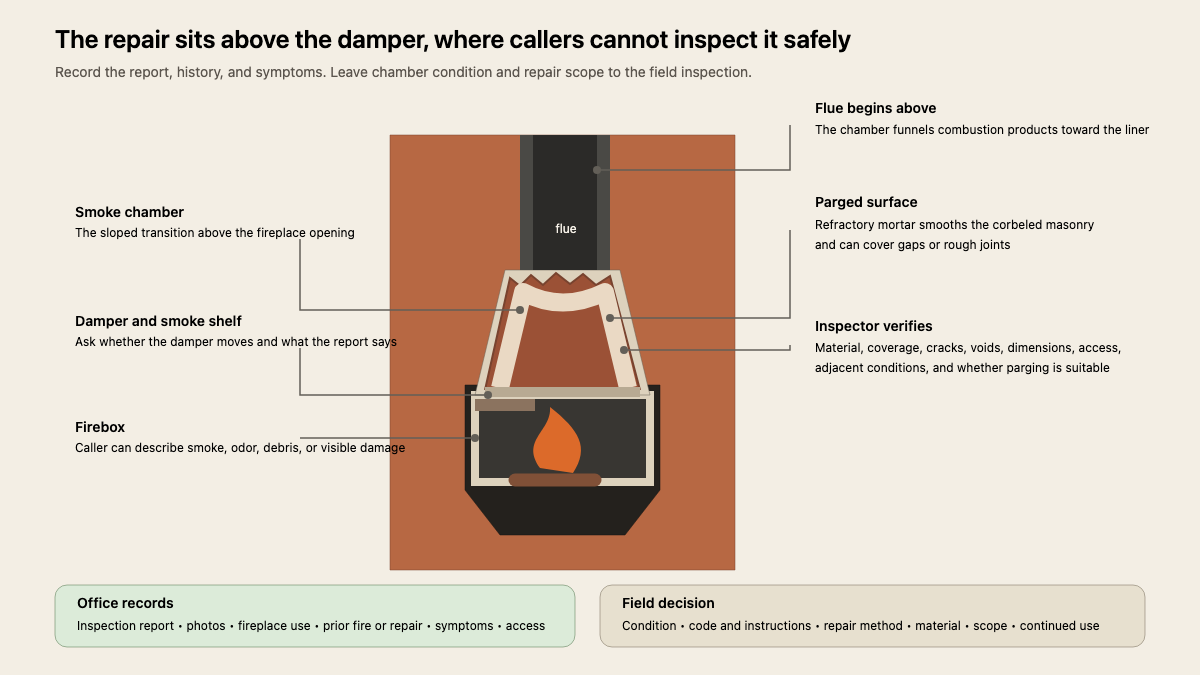
This location explains why a phone quote is risky. The caller usually cannot see the whole chamber from the room, and reception should never direct someone to reach above the damper, remove fixed parts, or climb for a better angle. Existing inspection images are safer and more useful than a new improvised inspection by the homeowner.
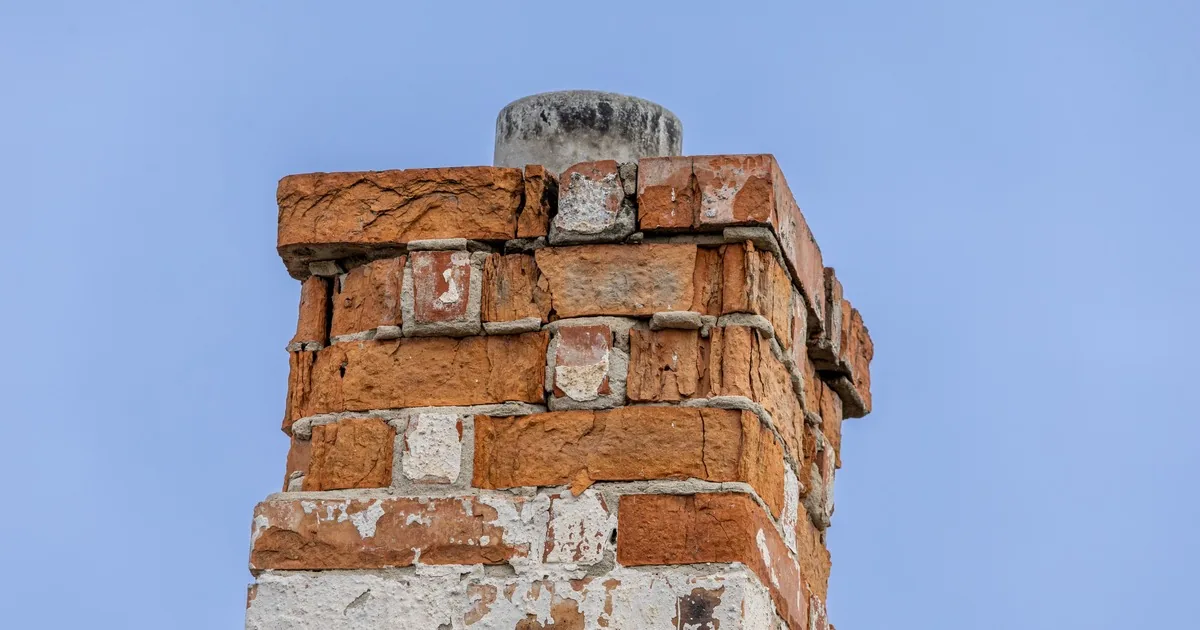
It also prevents a common routing error. Smoke chamber parging is different from exterior mortar-joint repair. If the caller points to deteriorated joints above the roofline, use the chimney masonry tuckpointing intake guide. If the report names the chamber above the fireplace, keep the call with the fireplace inspection or interior masonry workflow.
Capture the fireplace and its history
The office needs enough context to prepare the inspector, not enough to diagnose the chamber. Ask whether the fireplace is site-built masonry, a factory-built metal unit, or unknown. Record the fuel and current setup: wood, gas logs in a masonry fireplace, an insert, or another appliance. If the caller is unsure, say so in the ticket.
History can expose the reason a simple-sounding estimate needs inspection first. Ask about a known or suspected chimney fire, previous parging, liner work, fireplace rebuilding, damper replacement, an installed insert, water entry, or remodeling around the fireplace. Get dates when the caller knows them. Do not convert “before we bought the house” into a guessed year.
Symptoms belong in the record too. Ask whether smoke has entered the room, the fireplace smells strongly when idle, debris has fallen into the firebox, the damper sticks, or the caller sees cracks or missing mortar from the room. These details help with routing. They do not prove that parging will correct the complaint.
The CSIA Level 2 masonry fireplace procedure shows what field verification can involve. When accessible, the inspector examines the smoke chamber and shelf with a light and mirror, notes irregularities, checks dimensions and wall angle, and records whether the chamber walls are parged smooth. Exposed masonry type and wall condition also matter.
A clean ticket preserves those unknowns. Write “inspection photo appears to show exposed brick; field verification pending,” not “unparged brick chamber,” unless a qualified inspector has already documented that conclusion.
Ask for useful photos without creating a hazard
Existing report photos are the first choice. If the company accepts customer images, ask for a wide photograph of the fireplace opening, a close image of the report page, and any interior image the previous inspector supplied. A photo of the chimney exterior can help identify the general system and access, though it will not show the chamber surface.
Keep callers on the floor. They should not stand on the hearth, reach above the damper, remove the damper, enter a smoke shelf, or climb onto the roof for intake photos. A missing photograph is an access note for the technician, not a reason to coach a homeowner through concealed fireplace parts.
Ask about practical access before promising a visit format. Is the fireplace behind furniture or a screen? Is the home occupied by a tenant? Are there pets, alarm instructions, parking restrictions, or gate codes? Can the person approving work attend? Does the company need the fireplace cold for a specified period under its own policy? Use the company’s approved preparation language instead of inventing a cooling interval.
Treat code questions as address-specific
Callers often say, “The inspector told me this is not to code.” Reception should record the statement and the property address, then explain that the technician will review the observed construction against the requirements that apply there.
The 2021 International Residential Code model provision for smoke chambers calls for the inside surface to be parged smooth with refractory mortar that meets its cited standard. That is useful technical context. It does not establish which code edition, amendments, existing-building rules, or enforcement interpretation applies to every home.
Avoid promises such as “parging will bring the fireplace up to code” before the rest of the system has been evaluated. The chamber may be one finding among several. Access can reveal additional conditions, and the repair method must fit the actual masonry and fireplace configuration.
The same caution applies to continued use. Reception should not clear a fireplace after reading a report sentence. If the report restricts use, preserve that language and route the call according to company policy. If the caller asks for immediate safety advice, use the approved escalation script or transfer to the qualified person designated by the business.
Use a fixed consultation question set
A short sequence keeps the call focused:
- What prompted the call, and is there a written inspection report?
- What exact words describe the smoke chamber or parging concern?
- Is this a masonry fireplace, factory-built unit, or unknown?
- What fuel or appliance is currently used in the fireplace?
- Has there been a chimney fire, smoke in the room, falling debris, water entry, or another recent event?
- Has the chamber, damper, liner, insert, or fireplace masonry been repaired before?
- Are report photos, invoices, permits, or prior inspection records available?
- Is the request tied to a sale, insurer, permit, seasonal deadline, or current operating complaint?
- What room is the fireplace in, and what access limits should the technician expect?
- Who owns the property, who can approve work, and who should receive the findings?
Read the key facts back. This catches mix-ups between an exterior chimney, a fireplace smoke chamber, and a connector serving another appliance.
Set an honest estimate boundary
A caller may want a price before agreeing to an inspection. Explain what the company can quote from records and what requires a site visit. The report may support a preliminary conversation, but chamber size, shape, surface condition, existing material, access through the fireplace, adjacent defects, and required preparation can affect the work.
Do not promise a repair method. Hand application, sprayed material, partial repair, or a broader masonry correction are technical choices. The technician needs to see the chamber and follow current product instructions, company procedure, and local requirements.
A useful appointment confirmation says what will happen: “The technician will review your report, inspect the accessible fireplace and smoke chamber, document the condition, and explain the available next step. A repair quote may follow once scope and access are confirmed.” Adjust that language to the company’s real workflow.
Read back a field-ready ticket
A strong ticket might read:
“Homeowner is under contract to purchase a 1970s house with a wood-burning masonry fireplace in the living room. A Level 2 inspection dated October 18 states, ‘smoke chamber walls are rough exposed masonry and not parged smooth.’ The report includes two interior images. Reception received the complete report and attached it to the appointment.
“No active smoke in the room, falling debris, or recent chimney fire was reported. The buyer has not used the fireplace. Prior repair history is unknown. The seller will provide access, and the buyer will attend to approve any further evaluation. The closing deadline is November 12.
“Reception did not confirm code status, continued use, repair material, price, or completion timing. The inspector will verify the chamber, review applicable requirements, and define scope.”
That record gives the field technician evidence, system context, urgency, access, and a clear decision boundary. An AI receptionist can collect the same approved fields after hours, provided the escalation rules and company language are already set. The technical answer still belongs at the fireplace, where the chamber can actually be seen.