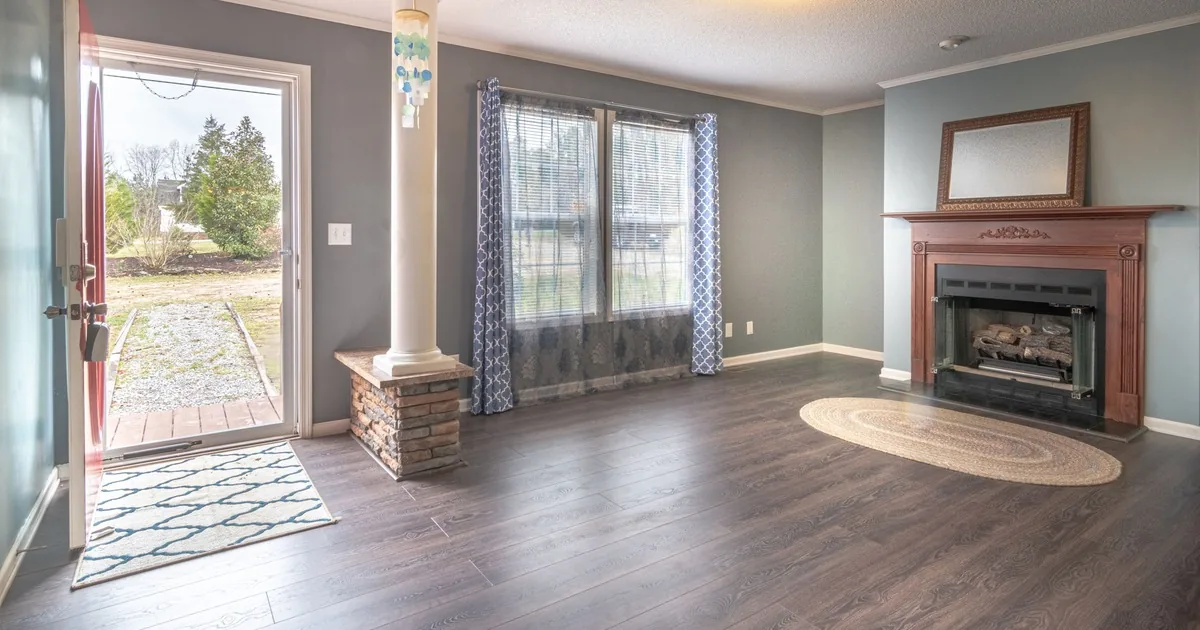
The call often starts with a comparison: “The living room smells like an old campfire, but only when the air conditioner runs.” That detail matters more than a guess about the cause. A chimney odor complaint should be booked around the conditions that produce the smell, with inspection ahead of any promise to clean, seal, deodorize, or replace a part.
The office needs the odor’s location, timing, weather pattern, appliance type, recent use, service history, and what equipment is running in the house. It also needs a safety override. Smoke in the room, a carbon monoxide alarm, illness symptoms, or a suspected fuel leak should leave the routine appointment queue and follow the company’s approved emergency policy.
Start with the safety override
Before asking whether the smell is smoky or musty, establish what is happening now. Is there visible smoke? Is a fireplace, stove, furnace, boiler, or water heater operating? Has a carbon monoxide alarm sounded? Does anyone feel dizzy, nauseated, short of breath, unusually tired, or headachy? Does the caller describe an active gas or oil odor rather than a stale fireplace smell?
A receptionist should not troubleshoot combustion over the phone. The U.S. Consumer Product Safety Commission recommends professional inspection of flues and chimneys for leakage and blockage by creosote or debris and advises homes to have carbon monoxide alarms outside sleeping areas. A live alarm or possible exposure deserves the caller’s immediate attention under local emergency guidance, not the next open sweep appointment.
That boundary protects routine odor calls too. Once active danger has been screened out, the person answering can slow down and build a useful record.
Record when and where the smell appears
“Chimney smell” is too broad for a work order. Ask the caller to stand where the odor is strongest without approaching a hot appliance, opening a firebox, or climbing anywhere. Is it strongest at the fireplace opening, around a stove, near a cleanout, in a basement utility area, or in a room served by another flue? Does the house have more than one fireplace or heating appliance connected to the chimney structure?
Then ask for the trigger. Some callers notice the odor after rain. Others notice it on humid afternoons, when central air starts, when a kitchen hood runs, or after the clothes dryer has been on. A few report it all day. The difference gives the technician something to reproduce.
The Chimney Safety Institute of America notes that odor from creosote deposits can become more noticeable during humid summer conditions and while air conditioning is running. CSIA also explains that water mixed with creosote can create a strong odor. Those facts support condition questions. They do not prove that every humid-weather smell is creosote or that every post-rain smell comes through the same exterior defect.
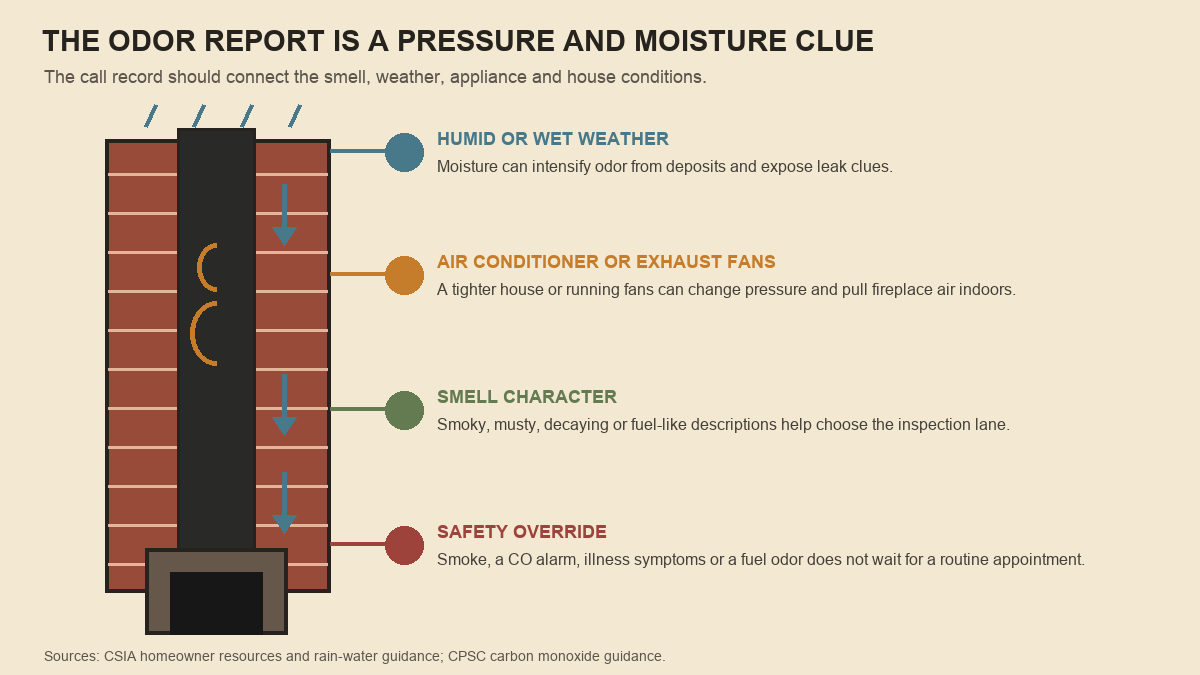
Ask these questions in a consistent order:
- Where is the smell strongest, and which appliance or opening is closest?
- When did it begin, and is it constant or intermittent?
- Was there rain, a sharp humidity change, or recent fireplace use?
- Were the air conditioner, kitchen hood, bath fan, dryer, or another exhaust appliance running?
- What fuel and appliance are connected to the flue?
- When was the system last inspected or cleaned, and was any repair completed afterward?
- Are there water stains, damp masonry, debris, scratching, chittering, or insects near the opening?
A “yes” does not settle the diagnosis. It gives the field technician a starting condition and helps the office reserve the right type of visit.
Use smell descriptions as clues, not diagnoses
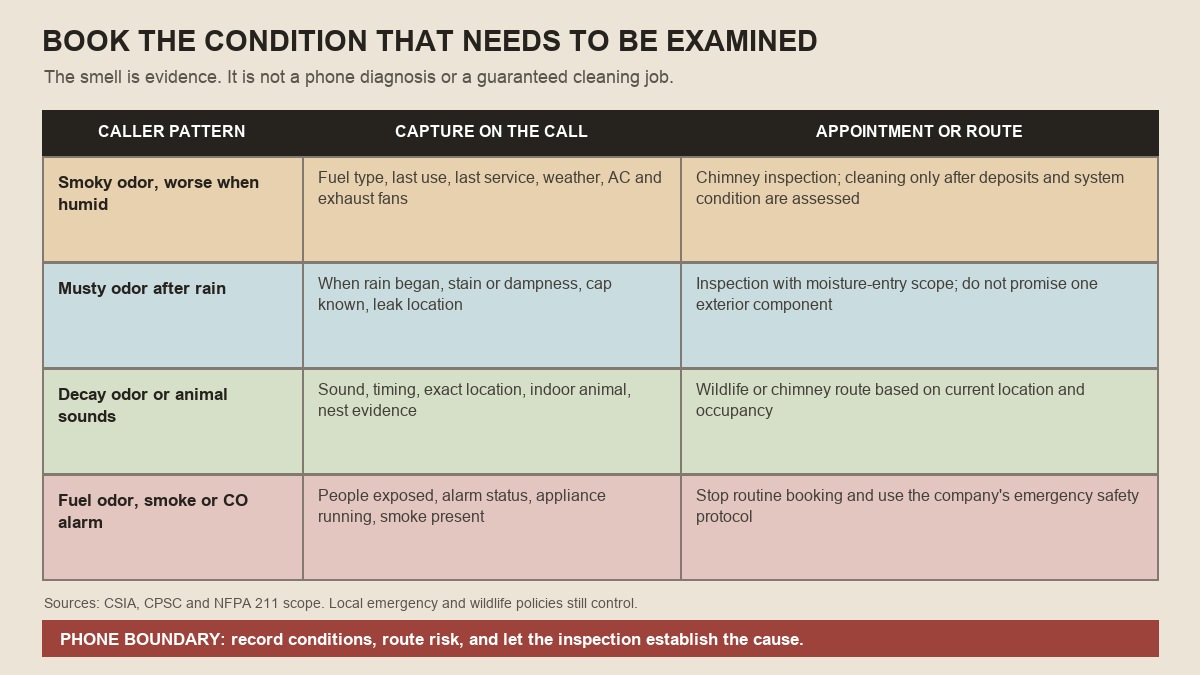
Homeowners use familiar words for unfamiliar systems. “Smoky” may mean stale soot at a cold fireplace, smoke entering during use, or an odor carried from another part of the house. “Musty” may arrive after rain, but the caller cannot tell whether water entered at the cap, crown, flashing, masonry, or somewhere else. “Rotten” may come with animal sounds, visible nesting material, or no wildlife evidence at all.
Record the caller’s exact phrase. Do not translate it into a completed diagnosis in the work order.
For a smoky odor that appears during humid weather or while fans run, capture the operating conditions and book an inspection of the chimney and connected appliance. If the caller says smoke enters the room during a fire, use the dedicated smoke-entry intake route, because active venting behavior requires a sharper safety screen.
For a musty odor after rain, note visible stains, dampness, the date of the weather event, and where the evidence appears. The appointment can include a moisture-entry inspection, but the office should not promise a cap replacement by phone. Caps, crowns, masonry, and flashing create different work. The chimney leak inspection guide shows how to keep those exterior clues separate.
For a decay odor or animal sounds, identify the animal’s current location and whether the caller sees an active nest. Do not tell anyone to reach into the firebox, dismantle a damper, light a fire, or climb onto the roof. An animal in the living space, a trapped animal, and an occupied nest lead to different responders. Use the chimney wildlife scheduling steps before promising removal or cleaning.
Book inspection before promising cleaning
A caller may ask, “Can you just sweep it?” The honest answer is that the company needs to examine the system first. Cleaning may be appropriate when deposits control the problem. It will not repair a leak, remove an active wildlife restriction, correct a damaged venting system, or establish why house pressure is pulling air through a fireplace opening.
The appointment description should name what the technician must inspect: the reported odor location, connected appliance and fuel, accessible chimney or venting components, deposit and debris conditions, visible moisture evidence, and the operating conditions reported by the customer. NFPA 211 covers inspection and maintenance of chimneys, fireplaces, vents, and solid-fuel appliances. The exact inspection level still depends on the system, history, and conditions. The office can use the inspection-level scheduling guide when a caller also reports a chimney fire, property transfer, system change, or hidden-condition concern.
A useful booking note sounds like this: “Smoky odor strongest at first-floor fireplace. Began after two days of humid weather. Stronger when central air and kitchen hood run. Wood-burning masonry fireplace, last used in March. Last inspection date unknown. No visible smoke, alarm, illness symptoms, fuel odor, water stain, or animal sounds reported.”
That note gives the technician a baseline. “Customer says chimney stinks” does not.
Give the technician a condition to compare
Odors can disappear before the truck arrives. That does not make the appointment pointless, but it raises the value of the intake record. Ask the caller whether the smell changed after opening an exterior door, turning off an exhaust fan, or after the weather dried. Record what happened without directing an experiment around a running fuel-burning appliance.
Safe, ground-level photos can help when there is a visible interior stain, debris at the hearth, or a clear exterior condition photographed from the yard. A picture cannot prove the hidden route of water or air. It can show the technician where the caller noticed evidence and prevent the work order from collapsing into a vague smell complaint.
The office should also preserve negative observations. No recent fire. No alarm. No visible smoke. No damp stain. No animal sound. These statements do not clear the system, but they show which questions were asked and what the caller reported at that moment.
A person or an AI receptionist can capture the same sequence after hours: safety status, exact location, trigger, appliance, weather, house equipment, recent use, service history, and related evidence. The value comes from the sequence and the limits. Diagnosis stays with the qualified person who can see the flue, fireplace, vent, and house conditions together.
When the technician opens the next morning’s work order, the useful detail is not that the house smelled bad. It is that the smell returned during Tuesday’s rain, became strongest at the basement cleanout when the dryer ran, and faded after the weather cleared.