“There is scratching in the chimney, and now something is flapping behind the fireplace screen.”
The first useful question is about location: Where is the animal right now? A bird loose in the room, a young animal below the damper, repeated sounds higher in the flue, and birds circling the chimney top belong in different call routes. The office should locate the report, check for immediate danger, record what the caller actually observed, and then involve the right local wildlife or chimney professional.
Do not promise removal during that first minute. Do not tell the caller to light a fire, reach into the firebox, climb onto the roof, dismantle a damper, or handle the animal. A nest may be active, the species may be protected, and the chimney company may need to wait until wildlife occupancy has been resolved before cleaning or installing an exclusion device.
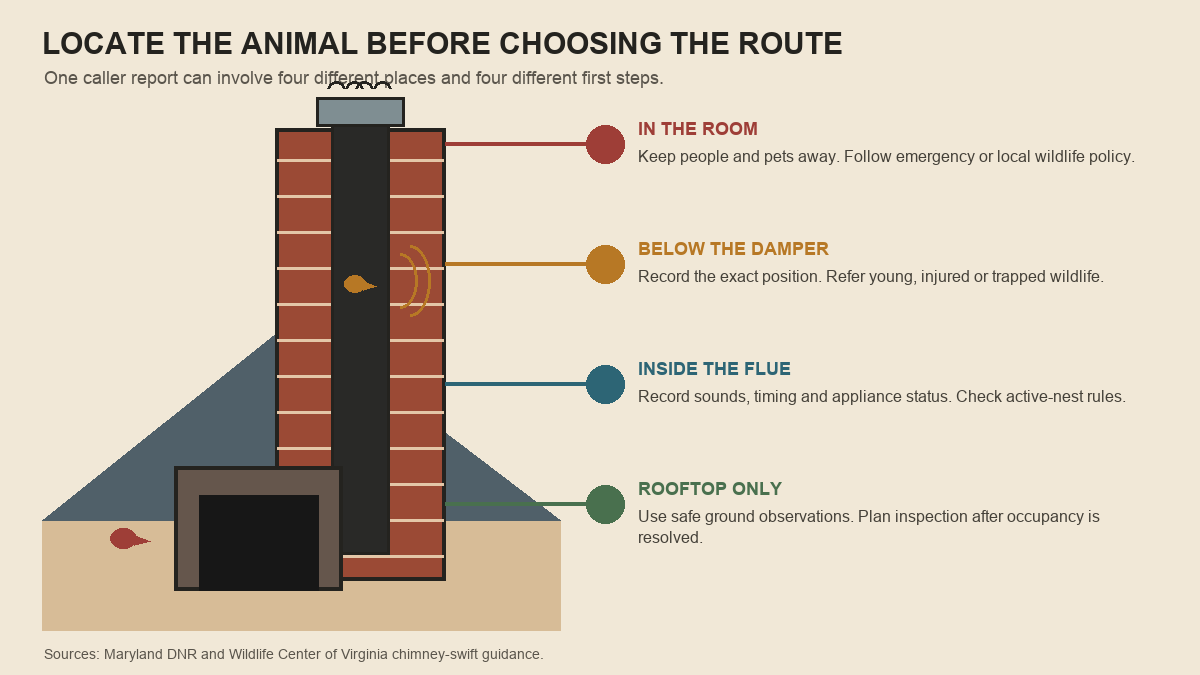
Find the animal's current location first
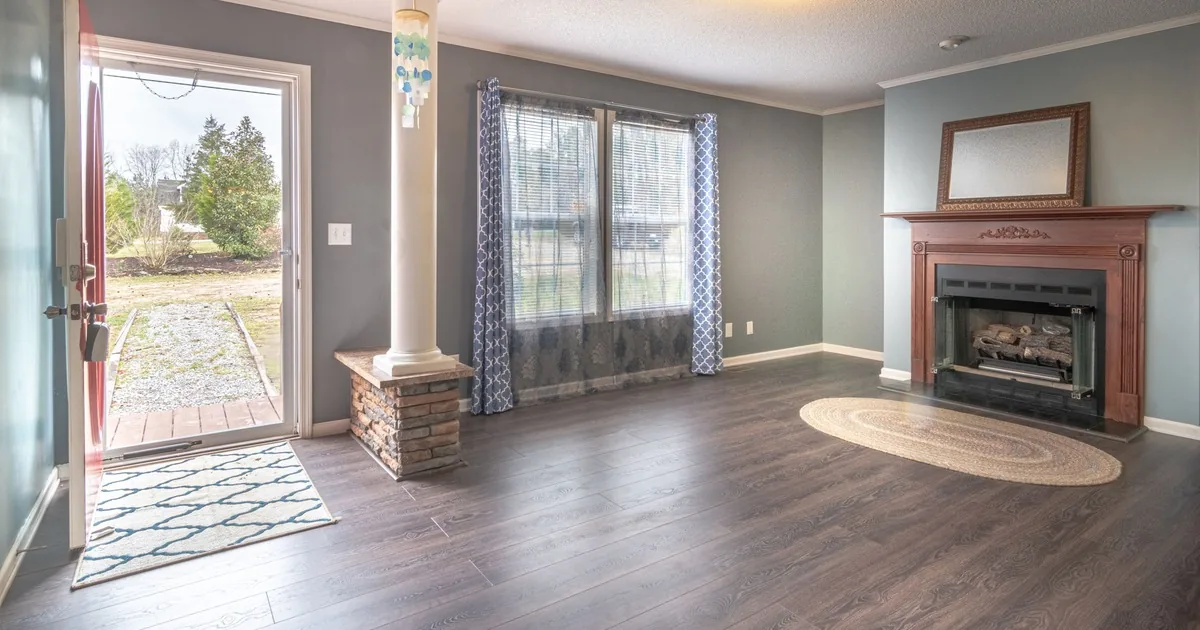
Ask whether the caller can see an animal in the living space. If yes, follow the company's emergency and local wildlife policy. Keep people and pets away from the room when that can be done safely. If there is an active fire, smoke entering the home, a carbon monoxide alarm, an injured person, or another immediate hazard, leave the ordinary scheduling script and use the appropriate emergency route.
If the animal is behind a closed fireplace screen or below the damper, record that exact position. Avoid giving improvised capture instructions. Young, injured, or trapped wildlife may need a licensed rehabilitator, animal control officer, or wildlife operator whose scope covers that species.
Sounds inside the flue create a different record. Ask where the sound is loudest, when it started, whether it is steady or intermittent, and whether the caller hears scratching, wings, or repeated chittering. Record the caller's words. Sound alone cannot identify a bird, bat, squirrel, raccoon, or another visitor.
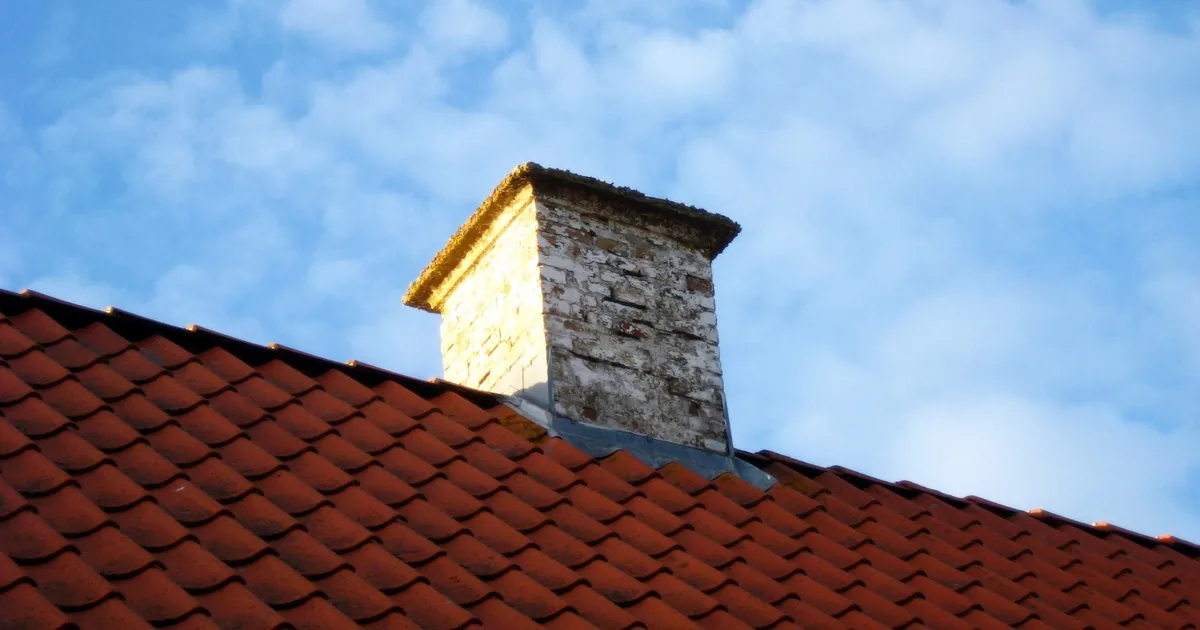
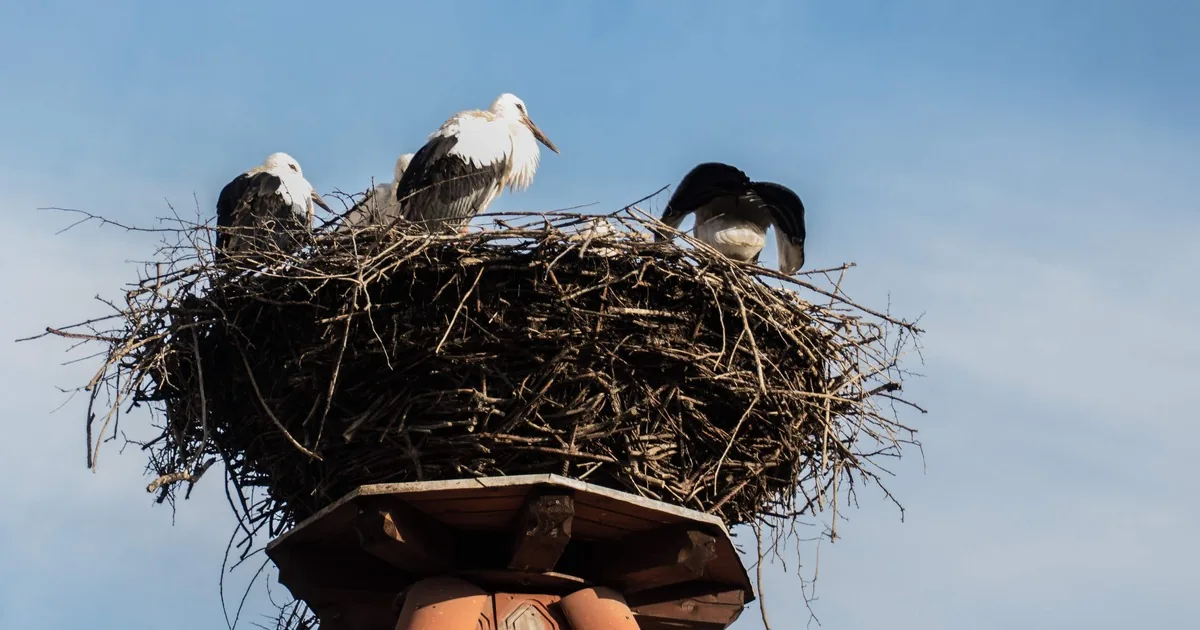
A rooftop observation is useful when made from the ground or another safe location. Ask whether birds or animals enter the chimney, sit on the cap, carry twigs, or disappear behind a roof feature. Photos or short video taken without climbing can help a qualified person review the situation.
Repeated chittering may mean dependent young
Chimney swifts deserve specific attention because their behavior changes what a sweep can schedule. The U.S. Fish & Wildlife Service explains that these birds cling to rough vertical surfaces and use masonry chimneys, barns, silos, and vents for nesting or roosting. Their distinctive chittering can be heard around an occupied chimney.
Young swifts can be especially loud. The Maryland Department of Natural Resources says the sound heard inside a home may be nestlings begging for food. That clue belongs in the work order, but the office still should not announce, “Those are definitely chimney swifts.” A safe note says, “Caller reports repeated chittering high in the chimney, strongest in the afternoon, with birds seen entering near dusk.”
Federal protection matters here. FWS identifies chimney swifts as migratory birds protected by the Migratory Bird Treaty Act. Its bird nest guidance says an active nest with eggs, chicks, or young birds still dependent on it cannot simply be destroyed. A local or federal wildlife authority should answer legal questions about a particular nest and species.
The office can say that active occupancy must be checked before cleaning or nest removal is scheduled. It should avoid quoting a universal departure date. Nest stage, species, season, location, and local rules affect the next step.
Capture evidence without sending the caller into danger
A strong intake record lets the wildlife contact or field technician understand the report without asking the homeowner to investigate the flue. Capture these details:
- the caller's exact description of the sound, movement, odor, nesting material, or animal;
- where the activity is seen or heard, including the room, fireplace, damper area, flue, or chimney top;
- when it began, how often it happens, and whether activity changes around dawn or dusk;
- the appliance and fuel connected to the flue, plus whether it has been used since the activity began;
- the damper position if the caller already knows it and can check the normal control safely;
- any ground-level photo or video, along with the date and viewing location;
- signs of smoke, fire, an alarm, injury, indoor animal exposure, or a damaged screen or cap.
Do not ask the caller to test the chimney by starting the appliance. Smoke is not a humane identification tool, and fire can turn nesting material or a blocked passage into a larger hazard. Likewise, a phone agent should not direct someone to push foam, cloth, mesh, or another object into an unknown venting system.
Some wildlife guidance discusses closing a damper to separate birds from a room. The Wildlife Center of Virginia gives that advice for chimney-swift situations. An office script still needs a boundary: use only the appliance's normal control when the caller can do so safely, and never improvise around heat, smoke, a damaged mechanism, or an animal already below it.
Route the caller before booking chimney work
The call record should name the next owner. “Animal in chimney” is too vague for a dispatch board.
An active fire, smoke event, alarm, or human injury follows emergency policy. Wildlife loose in a room or visibly trapped may belong with animal control, a licensed rehabilitator, or a qualified wildlife operator. Repeated nest sounds or observed feeding activity calls for occupancy and species guidance before a sweep disturbs the area. An apparently empty nest can move toward a chimney inspection only after the right person confirms that the timing and work are appropriate.
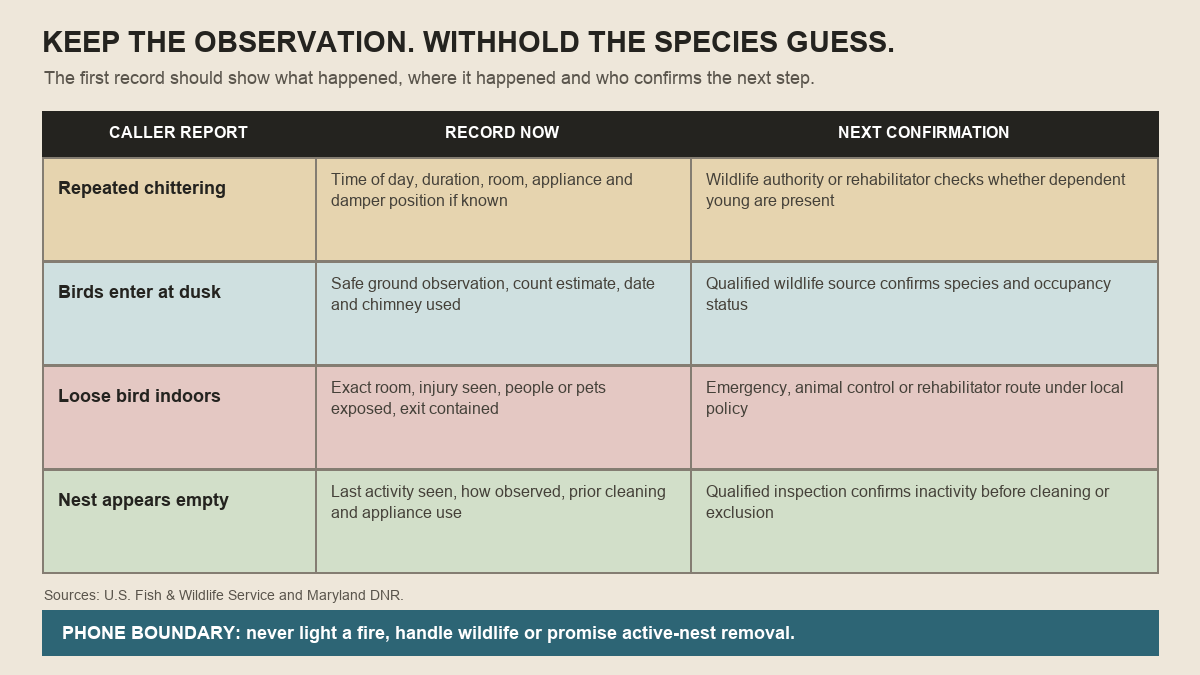
This handoff protects the caller from being bounced between companies. If the chimney business does not perform live wildlife removal, say so plainly and explain which part it does provide. For example: “We can inspect and clean the chimney after wildlife occupancy is resolved. For the bird currently in the room, your next call should be the local wildlife contact on our approved referral list.”
Keep that referral list current. It should show service area, hours, covered species, licensing or credential checks required by company policy, and the situations each provider will accept. A receptionist should not discover during an urgent call that the listed rehabilitator moved two years ago.
Schedule the chimney appointment at the right stage
Once a qualified source says the nest is inactive or the animal has been removed, the chimney company can define its own field scope. That may include an inspection for nesting material, blockage, damage, moisture, odor sources, or an entry opening. Cleaning and repairs depend on what the technician finds.
The future prevention discussion may include a chimney cap or another exclusion measure suited to the actual flue and appliance. Avoid promising “we will cap it” before someone confirms the system, termination, current hardware, condition, and applicable requirements. Active nests and occupied roosts also need to be kept out of that sales conversation until wildlife guidance permits the work.
Choose the appointment type from the facts. A caller with smoke entering the room needs the company's smoke-call safety intake. A caller whose home changed ownership, appliance, or venting system may need a different inspection scope; the guide to Level 1 and Level 2 chimney inspection calls explains those scheduling triggers. The broader chimney sweep resource hub can support related office training.
Close by reading back the location, evidence, immediate route, wildlife contact, and what must happen before chimney work. A precise ending sounds like this: “I recorded repeated chittering in the flue and birds entering near dusk. We are holding the cleaning appointment until the wildlife contact confirms the nest status. After that, we can schedule the chimney inspection and discuss cleaning or prevention based on what the technician finds.”
That note gives the next person a location, an observation, and a clear boundary. It also keeps a frightened caller away from the fireplace with a flashlight and a pair of kitchen gloves.