A caller says, “I need the chimney cleaned,” then mentions a wood stove in the basement. That one detail changes the file. The technician may be dealing with a freestanding appliance, a connector pipe with two elbows, a stainless liner inside a masonry chimney, and a roof that cannot be approached from the driveway.
The office needs more than an address and a preferred morning. Start with the appliance, trace the venting path in plain language, ask what prompted the call, and record how the system can be reached. That gives the technician a usable service record without asking the receptionist to diagnose deposits or choose a cleaning method.
Start with the appliance, not the word chimney
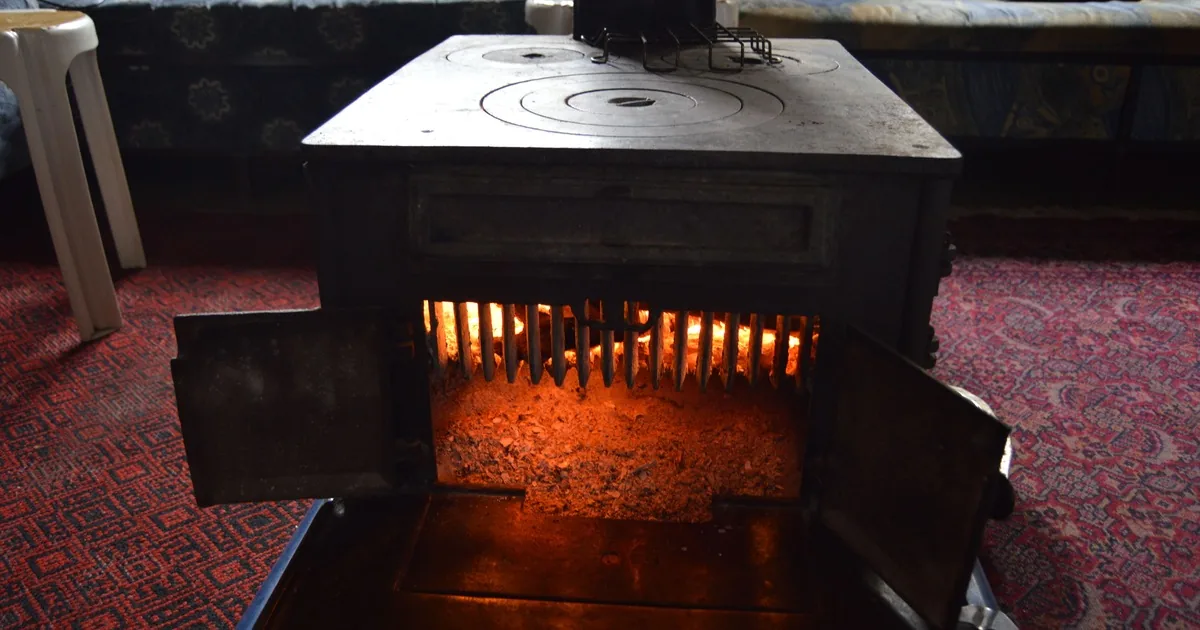
“Wood stove” can describe a freestanding cast-iron stove, a fireplace insert, or an appliance the homeowner inherited with the house and cannot identify. Ask where it sits and what it looks like. Then ask for the brand and model. A photograph of the rating plate is better than a guess typed into the schedule.
The caller may not know where the plate is. Do not send them reaching behind a hot appliance during the call. Ask whether they have the manual, an installation invoice, or a clear photo of the front and connector pipe. Those records can be attached later.
The useful first-pass questions are specific:
- Is this a freestanding stove or an insert built into a fireplace opening?
- What brand and model are shown on the appliance or paperwork?
- Does it burn cordwood, pellets, or another listed fuel?
- When was the stove, connector, and chimney last inspected or cleaned?
- Has the appliance, liner, connector pipe, or fuel type changed since that visit?
- What happened before this call: a seasonal reminder, smoke, odor, an alarm, a chimney fire, or a home sale?
Fuel belongs in the record because “stove cleaning” is not one universal service label. A pellet appliance has components and maintenance needs that differ from a cordwood stove. The office does not need to explain those differences. It needs to preserve the distinction before a slot is assigned.
The EPA’s Burn Wise guidance recommends annual professional inspection and cleaning of the wood stove, chimney, and vents. That wording is useful for intake because it names the full system. The call should do the same.
Trace the venting path in plain language
Once the stove is identified, ask the caller to follow what they can see without moving anything. Does a black connector pipe rise straight up? Does it turn into a wall? Does the stove vent into a masonry chimney, or does a metal chimney continue through the ceiling and roof? Are there visible elbows? Is there a cleanout door elsewhere?
These are observations, not conclusions. A homeowner may call every metal section “the flue,” while the technician distinguishes the connector, chimney, and liner. Keep the caller’s words in the notes and add a neutral description: “Black pipe rises about three feet, turns toward the wall, and enters brick chimney.” A photo can settle the terminology later.
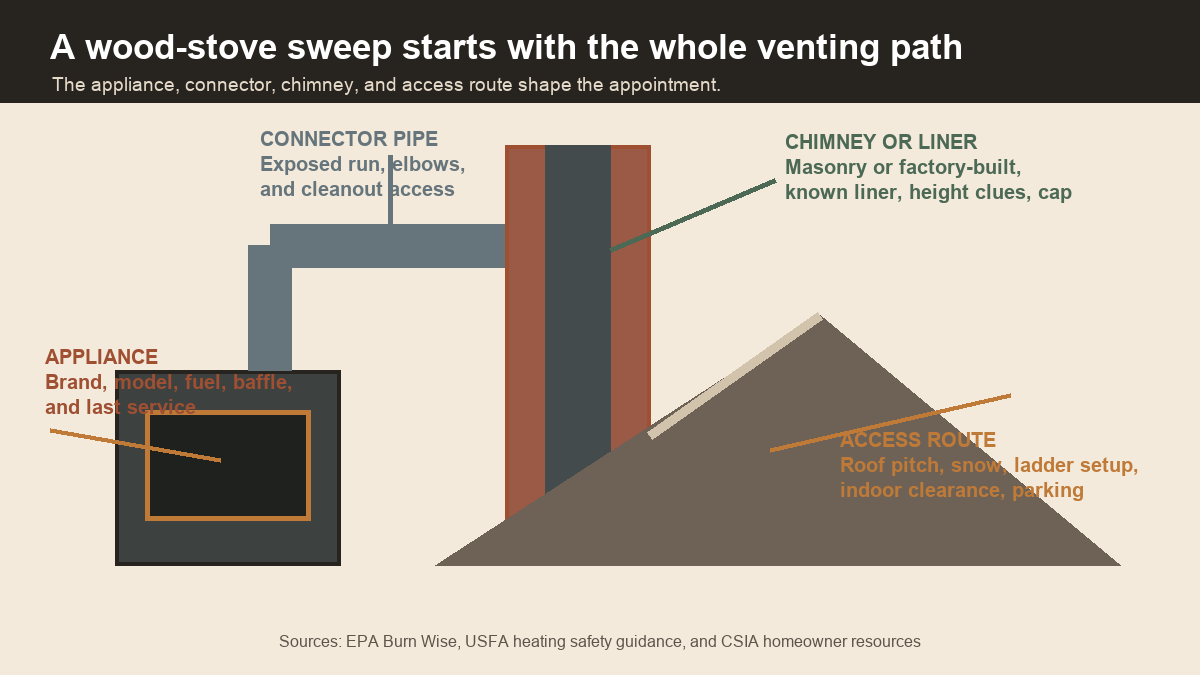
The route matters because the technician needs to plan for the installed system, not a generic chimney. A long exposed connector, several offsets, a basement appliance, or a liner termination behind a sealed component can affect access and preparation. Office staff should not promise that service will happen from the roof, from inside, or with a particular brush. The installed system and its condition decide that onsite.
Ask whether the caller knows what is inside a masonry chimney. “There is a stainless liner” is useful, especially when a receipt or installation record supports it. “I think it is lined” belongs in the file as uncertain. Never turn uncertainty into a fact while repeating the notes back.
The event behind the call sets the starting route
A routine seasonal request has a different shape from a call made ten minutes after smoke entered the room. Ask what prompted the appointment before discussing dates.
If smoke is entering the living space now, an alarm is sounding, or anyone reports symptoms, follow the company’s safety script and local emergency policy. Do not continue as though this were an ordinary cleaning inquiry. Our separate guide to chimney smoke call intake covers the questions that belong in that handoff.
A recent chimney fire also changes the route. Capture when it happened, whether the fire department responded, whether the appliance has been used since, and what reports or photographs exist. Do not tell the caller that a cleaning alone will settle the system’s condition.
System changes deserve their own flag. A new stove, a different fuel, a replaced liner, or altered connector pipe gives the technician relevant history before choosing the inspection scope. The office can review the company’s Level 1 and Level 2 inspection call framework, but it should avoid assigning an inspection level from a vague description.
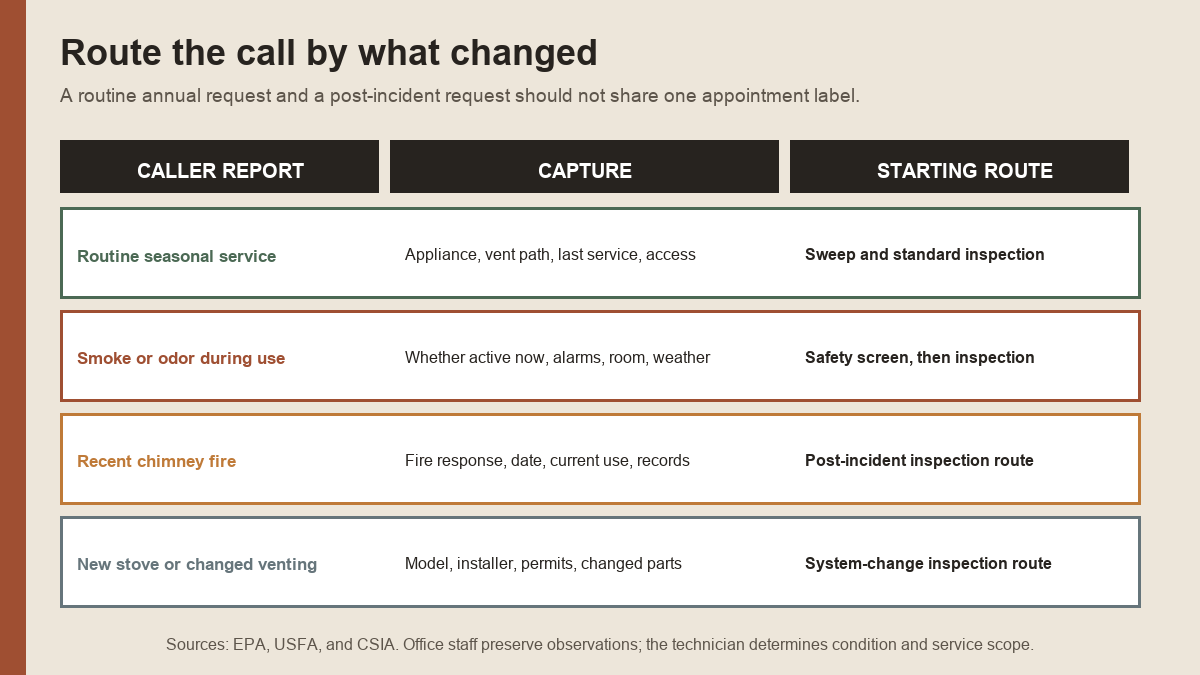
The matrix gives the receptionist a boundary: routine service can stay on the ordinary path when the company’s policy allows it, while smoke, a fire, or a changed system gets reviewed before the appointment is labeled.
Record use history without diagnosing creosote
Callers often want a verdict. They may say the pipe looks clean, the stove hardly gets used, or they burned only “good wood.” The office should capture those statements without deciding whether cleaning is necessary or whether the system is safe.
Ask how the stove is used during the heating season, what kind of wood or fuel goes into it, and whether the caller has noticed smoke, odor, unusual sounds, falling debris, or a change in draft. EPA explains that wet wood, restricted airflow, overloading, and cooler chimney conditions can contribute to smoke and creosote formation. That supports asking about use. It does not support a phone diagnosis.
If the caller mentions an odor when the stove is idle, note when it appears and whether weather or exhaust fans seem connected. Route persistent odor through the company’s inspection policy. The chimney odor intake guide has a separate condition-based sequence for those calls.
Avoid promising a price based on the homeowner’s description of buildup. “A little soot” can mean different things to different people. Glazed deposits, damaged parts, blocked access, or disconnected components may only become clear during the visit. The clean handoff says what the caller observed, when they observed it, and what records or photos are attached.
Plan access before the appointment lands on the calendar
A wood stove in a walkout basement presents a different setup from one on a second-floor hearth. Ask where the appliance is, which entrance is closest, and whether steps, narrow turns, finished floors, furniture, pets, or stored firewood limit the work area. Record parking and gate details too. A truck that cannot reach the house is part of the job plan.
Then cover exterior access. Ask whether the chimney exits through a steep roof, whether the property has snow or ice, and whether trees, solar panels, additions, or neighboring structures affect the approach. The caller is describing conditions. The technician decides the safe access method.
Preparation instructions should come from the company’s written policy. Some shops ask customers to stop using an appliance for a stated period before service and to clear a working area around it. That interval should never be improvised by whoever answers the phone. Read the approved instruction exactly, send it in writing, and record that it was sent.
The U.S. Fire Administration recommends professional chimney cleaning and inspection each year. Its safety guidance is a sound reason to keep the call cautious. It is not permission to tell a homeowner that a particular system is ready to burn.
Build one record the technician can trust
Before ending the call, read back the essential facts: appliance type and model status, fuel, visible vent route, last service, reason for the call, known changes, symptoms, incident history, photos or records promised, and indoor and exterior access. Mark each uncertain item as unknown. Unknown is useful. A confident mistake is not.
The final appointment note might read: “Freestanding cordwood stove in finished basement. Brand photo pending. Black connector rises and turns into interior masonry chimney. Caller does not know liner type. Routine seasonal request, no reported smoke or recent fire, last service date unknown. Steep rear roof with solar panels; basement access through side door. Technician review requested before confirming service scope.”
That note gives the field team a real starting point. A receptionist or an AI answering service can collect it consistently, but the operating rule stays the same: preserve what the caller knows, label what they do not, and leave the condition of the stove and flue to the person who can inspect them.