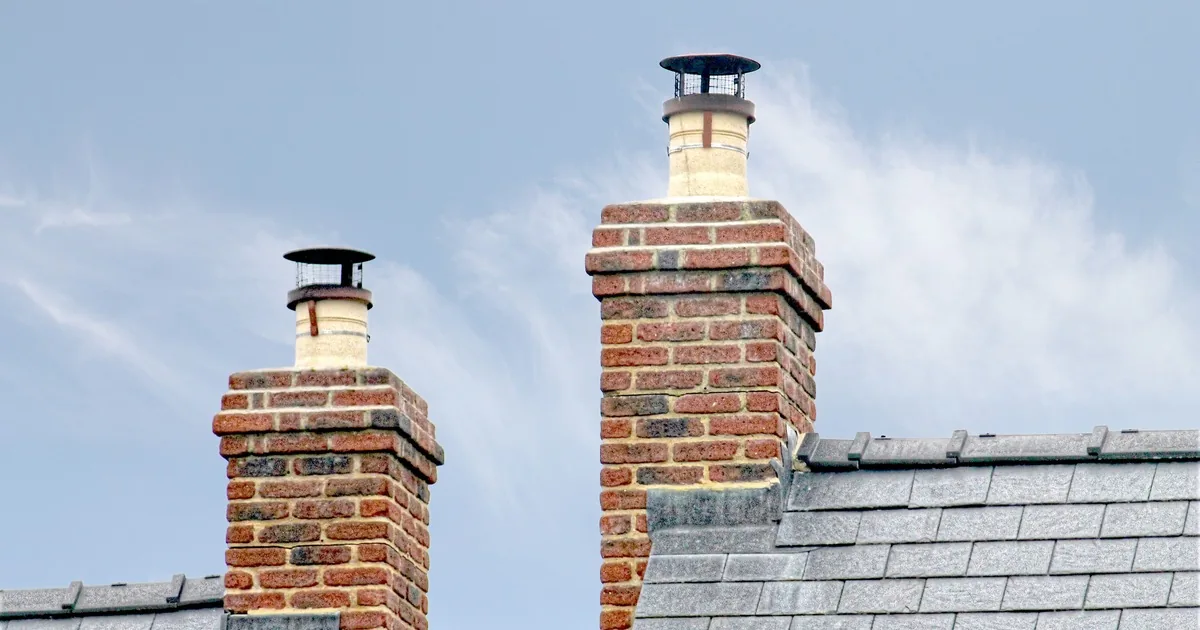
A homeowner calls after finding gray crumbs on the roof and says, “I need the chimney tuckpointed.” The office now has a repair label, but almost no usable scope. The crumbs may have come from an open mortar joint. They may also sit below a spalled brick, a cracked crown, an old surface patch, or masonry that has started to move.
Treat the request as a masonry condition that needs to be seen. Capture where the damage appears, what else is happening around the chimney, how the technician can reach it, and whether older work or local rules may affect the job. Then book the inspection or estimate your company uses for that evidence. A price based on one close photo is rarely a sound promise.
Book the condition before accepting the repair label
Tuckpointing and repointing are often used as everyday names for replacing deteriorated mortar in masonry joints. The National Park Service’s repointing guidance describes a careful process: deteriorated mortar is removed, the joints are prepared, and compatible replacement mortar is installed. Its brief focuses on historic buildings, but the intake lesson travels well. Mortar work depends on what is already in the wall.
Start by writing down the caller’s exact observation. “The mortar is gone between three bricks on the north side” helps. “The chimney is falling apart” does not tell the estimator what the caller saw. Ask when the condition first appeared, whether it changed after winter, rain, a wind event, roof work, or chimney service, and whether anyone has already patched it.
Then screen for signs that should leave the ordinary quote queue. A loose brick over a walkway, visible leaning, fresh separation from the house, falling masonry, smoke entering occupied space, an alarm, or a recent chimney fire deserves the company’s urgent safety and inspection route. Office staff should not ask a homeowner to climb onto a roof, push on loose brick, or light a fire to produce more evidence.
A calm boundary works: “We can record what you see and arrange the right visit. The technician will determine whether the work is limited to the joints after inspecting the chimney.”
Separate mortar joints from the surrounding chimney
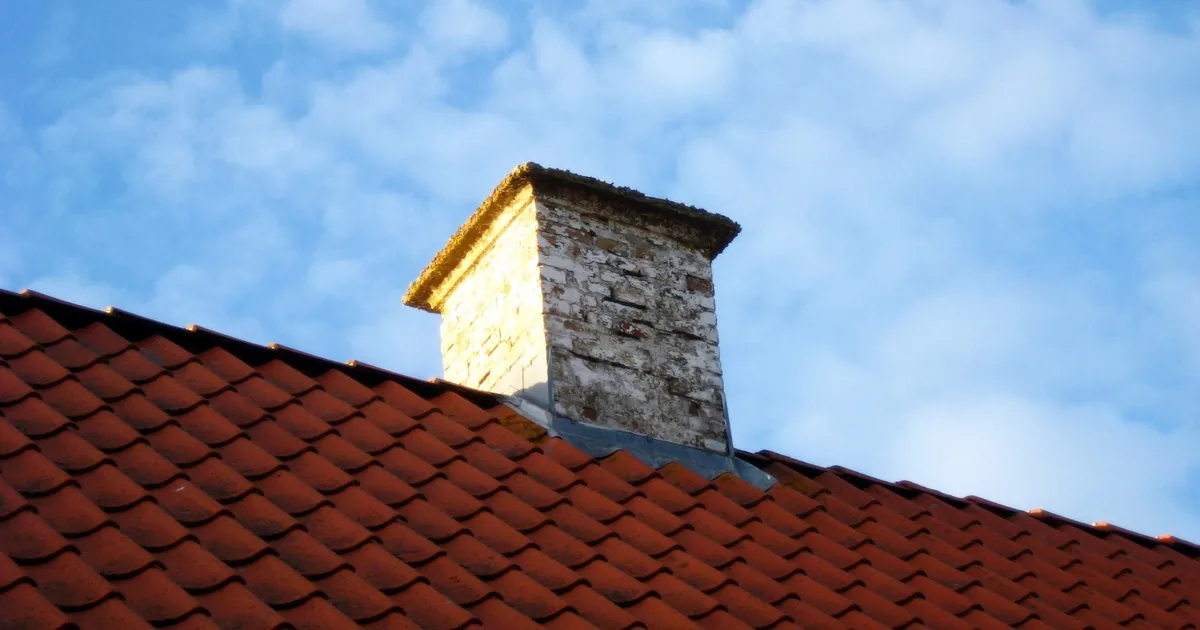
A caller can photograph one recessed joint and miss four nearby components. The crown or wash at the top may be cracked. Brick faces may be flaking, broken, loose, or displaced. Flashing may be open where the chimney meets the roof. The cap, flue, or interior firebox may show a different problem.
Connecticut’s consumer guidance on chimney cleaning and repair lists damaged brick and missing or crumbling mortar as separate inspection observations. The distinction matters on the phone. Replacing joints cannot restore a brick face that has broken away, correct movement in the stack, or settle the source of every leak.
Ask for two kinds of images if your company accepts customer photos. A wide view should show the whole chimney in relation to the roof. Close views can show the joint, brick face, crown edge, or roof intersection the caller noticed. Photos help the estimator prepare. They do not establish hidden condition, safe access, mortar compatibility, or final quantity.
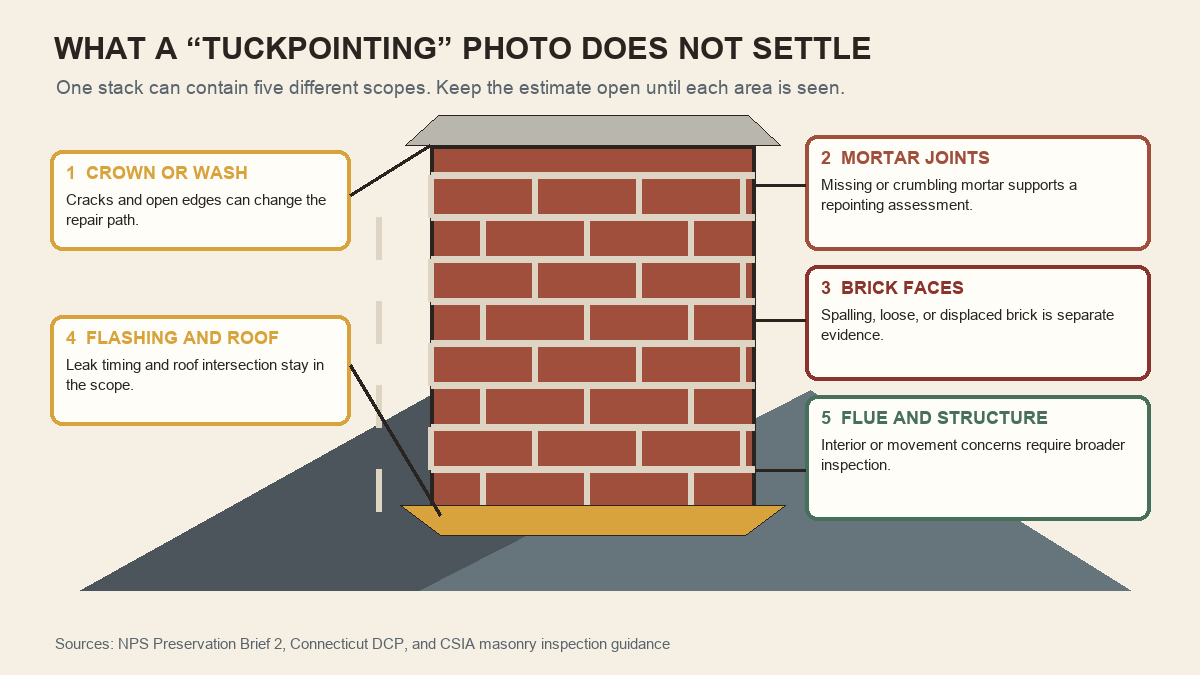
Leak reports deserve their own note. Record where water appears indoors, which weather brings it out, whether the roof or flashing was recently changed, and whether staining occurs inside the firebox, on an adjacent wall, or in the attic. The chimney leak intake guide explains why cap, crown, masonry, flashing, and roof paths need to remain open until inspection.
Map the property and access before choosing a time slot
Chimney masonry sits where ordinary estimate scheduling becomes site planning. “Two-story house” still leaves unanswered whether the chimney rises through a low porch roof, an exposed side wall, a steep main roof, or the center of a complex roofline.
Capture the job address first. Then ask:
- Where is the chimney: outside wall, roof ridge, roof field, rear addition, or detached structure?
- How many stories are below it, and does the ground fall away on that side?
- What roof surface is present, and does the caller describe the pitch as low, moderate, or steep?
- Are there gates, narrow side yards, overhead wires, landscaping, neighboring property, parking limits, or locked roof access?
- Can the technician reach the fireplace, cleanout, basement, attic, or appliance connection if the inspection scope requires it?
- Can the owner or another authorized person attend, approve work, and provide prior records?
Do not convert a homeowner’s roof description into a safety judgment. “It looks walkable” is a caller observation. Your field policy decides whether roof access, a lift, scaffolding, ladders, or another method is appropriate.
Weather belongs in the appointment note too. Masonry evaluation may depend on seeing dry surfaces, and exterior work can be delayed by rain, ice, wind, or temperature limits set by the repair method and product. State the company’s real scheduling policy. Avoid guaranteeing that an estimate appointment will also become a same-day repair.
Ask about age, old mortar, coatings, and previous patches
The age question is useful even when the homeowner only knows that the house is “old.” Ask for an approximate construction decade, any major chimney rebuild date, and invoices from prior masonry work. A photo from before the last patch can be more informative than a freshly coated surface.
Material compatibility is a technical issue, especially on older masonry. The National Park Service warns that an inappropriately hard or impermeable replacement mortar can contribute to damage in historic brick or stone. That does not mean the receptionist should select lime content, compressive strength, color, sand, or joint profile. It means prior materials and building age belong in the estimate file for the mason.
Record paint, waterproof coating, sealant, stucco, parging, or a thin mortar smear over the brick face. Ask who applied it and when. A cosmetic patch may hide the edges of deteriorated joints. It may also change the preparation needed before the underlying masonry can be evaluated.
This is a good place to ask what the customer expects the finished work to look like. Some people care most about weather resistance. Others expect a close color and joint-profile match on a visible historic facade. The estimator needs to hear that before the proposal is written, especially if a test panel or material analysis may be appropriate.
Build one estimate file with four evidence groups
A useful intake record reads like a small job folder. Keep four sections: condition, access, material history, and documentation. That structure prevents a dozen phone notes from becoming one paragraph the technician must decode in a driveway.
Condition covers the caller’s words, location of damage, leak timing, loose material, movement concerns, and adjacent brick, crown, or flashing observations. Access covers height, roof and ground conditions, gates, parking, interior entry, and pets. Material history covers approximate age, previous repairs, coatings, and known brick or mortar information. Documentation holds wide and close photos, invoices, inspection reports, permit records, and the name of the person authorized to decide.
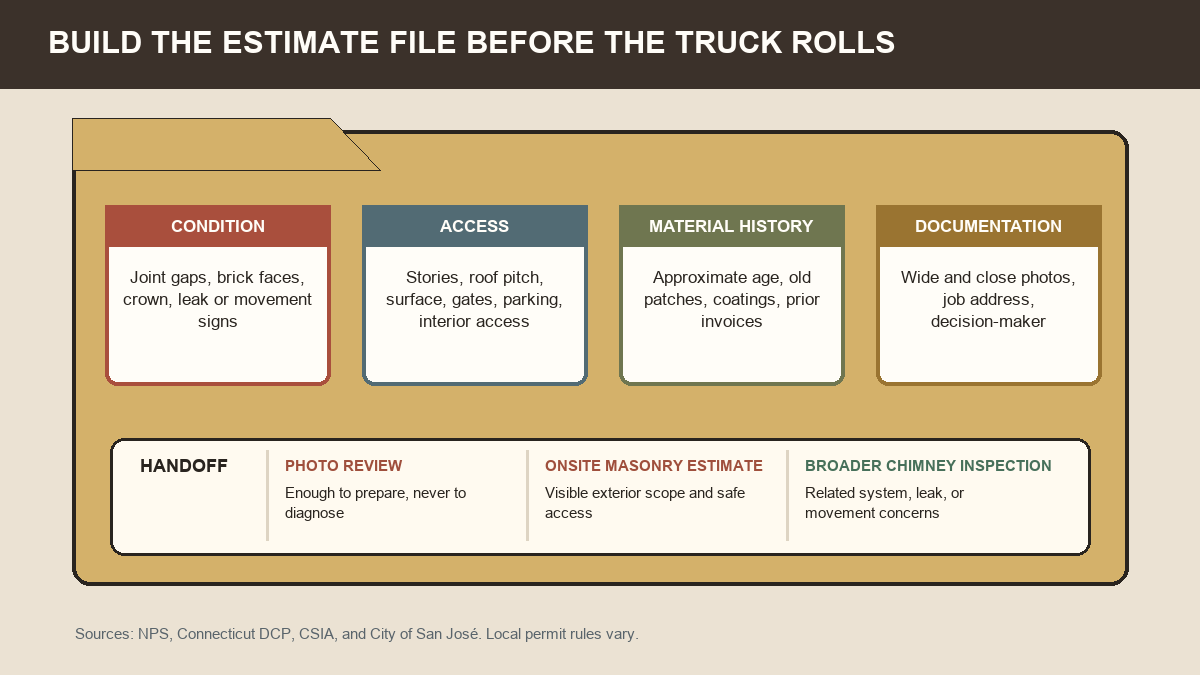
The evidence then supports one of three handoffs under company policy. Clear photos may be enough for advance preparation. An onsite masonry estimate fits a visible exterior condition with a defined access plan. Related leak, venting, liner, firebox, movement, or use-change questions may call for a broader inspection. The inspection-level scheduling guide can help the office preserve that distinction without assigning an inspection level from a few loose words.
Keep permit and credential promises local
Rules change by state and municipality. Connecticut, for example, treats mortar replacement as chimney repair covered by its home-improvement registration rules. The City of San José says a building permit is required there for structural chimney repair or relining. Neither example creates a national rule for every joint-repair job.
The front desk needs the property address and the company’s documented process. Say who checks local requirements and when. Do not promise that no permit is needed, that approval is automatic, or that a structural repair will follow the same path as limited joint work. If the property is in a historic district, condominium, homeowners association, or managed building, record that as another approval question for the estimator.
Promise a useful visit, not an unseen repair
A strong close to the call is specific: “We have the damaged area, chimney location, access notes, prior work, and your photos. The estimator will inspect the masonry and explain whether the scope is limited to the mortar joints or includes other chimney components.” Confirm what the appointment includes, any fee, who must attend, how photos should be sent, and whether the schedule may change for unsafe access or weather.
The chimney-sweep resource library has related intake guides for leak, liner, smoke, wildlife, and inspection calls. An AI receptionist can collect the same estimate fields after hours if those questions and escalation boundaries match the company’s field policy. The valuable part is the record waiting for the mason: a whole chimney, not a two-word repair label.