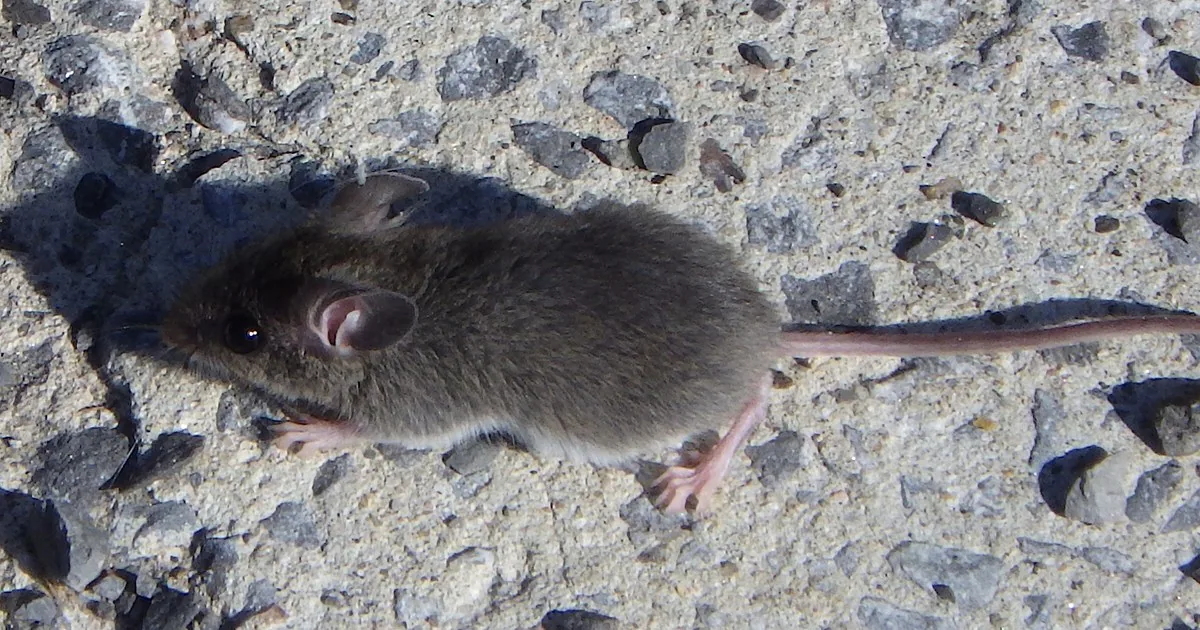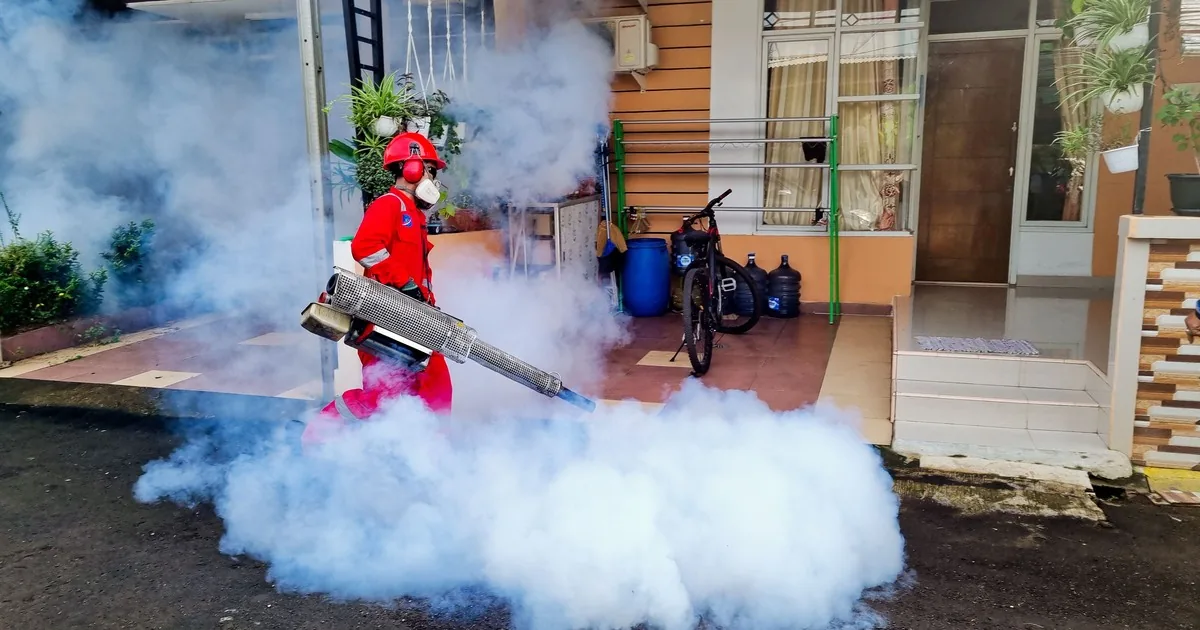
A homeowner calls after wiping a line of ants off the kitchen counter for the fourth morning in a row. They want a price and the earliest appointment. Before offering a slot, the office needs a sharper picture: where the ants appear, when activity started, which direction the trail runs, whether winged insects or damaged wood are present, and what products have already been applied.
Those details affect the inspection plan. Ant species differ in nesting sites and food preferences, so the technician may need access to a sink cabinet, exterior foundation, damp wall, attic edge, crawlspace, or a sample of the insect. The office should gather observations, screen for hazards, and set a truthful expectation that identification and treatment scope are confirmed on site.
Start with the exact place and pattern
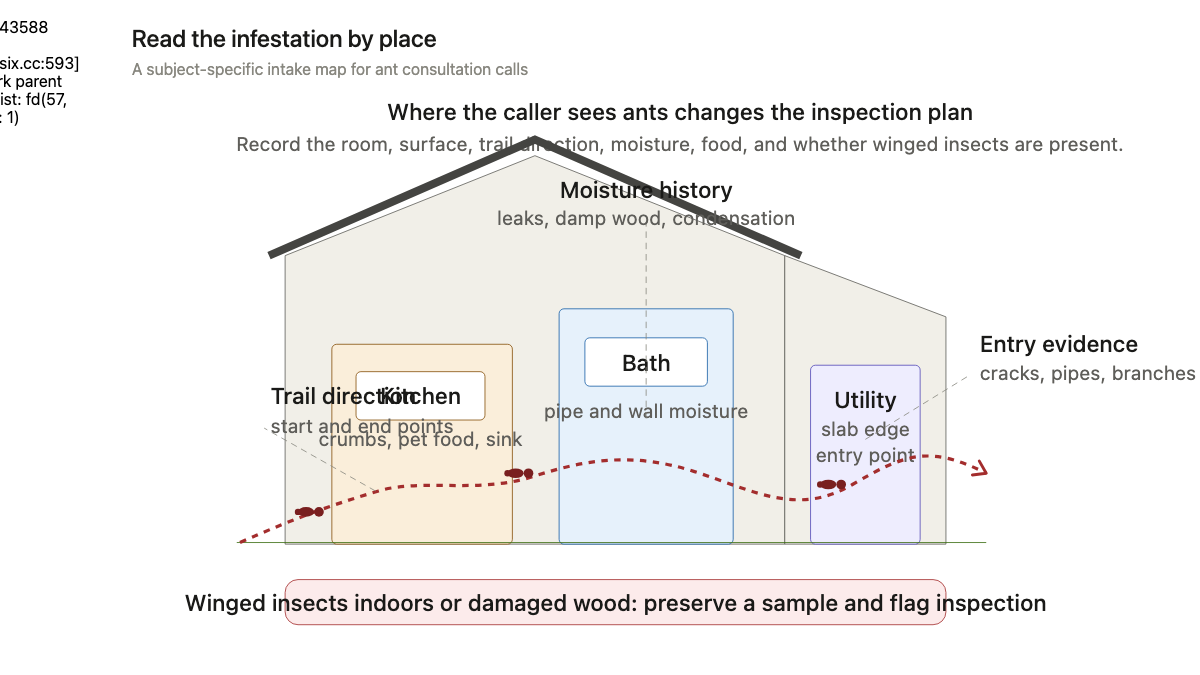
“Ants in the house” gives dispatch almost nothing. Ask for the room first, then the surface. Ants along a backsplash suggest a different search area than activity around a bathtub, window frame, slab crack, pet bowl, or tree branch touching the roof. Record whether the caller sees a scattered few, a steady trail, a mound outdoors, or a sudden group of winged insects.
Ask where the trail begins and ends from the caller’s point of view. Useful answers sound like “they come through the gap behind the faucet and go to the cat food” or “they travel from the baseboard to the pantry shelf.” The caller does not need to follow insects into a wall or move an appliance. A safe photo of the trail and the surrounding surface is enough for the intake record.
Timing helps too. Record the date first noticed, the time of day activity is strongest, and whether rain, plumbing work, a leak, landscaping, or a recent move preceded it. Ask whether the problem is limited to one room or appears on different floors. In an apartment or condominium, note the unit, shared wall, neighboring reports, and property manager contact because access may involve more than one household.
Identification starts with evidence, not a phone guess
The University of Minnesota Extension ant guide explains why identification matters: species vary in nesting behavior, food preference, and treatment response. Color and size can help narrow the possibilities, but they are rarely enough by themselves. Reception should avoid naming a species from a verbal description or a blurry phone photo.
Ask the caller to describe approximate size by comparison with a familiar object, along with color and whether all workers look similar in size. Then ask whether any have wings. Winged ants can be confused with termite swarmers. That distinction also matters when the office handles termite inspection booking calls. The Extension guide notes visible differences in waist shape, antenna shape, and wing proportions, but those features may be hard for a caller to judge. Flag the record for inspection when the caller reports an indoor swarm, discarded wings, damaged wood, or uncertainty between ants and termites.
A sample can help if company policy allows it. Tell the caller how your technicians prefer samples to be preserved, and do not improvise chemical handling instructions. A clear close photo beside a ruler or coin may also help the technician prepare, though final identification still belongs in the field.
Ask about moisture, food, and possible nesting areas
Ants need food, water, and a place to nest. Intake should cover each without turning the call into a home inspection. Ask about recent leaks under sinks, damp wood, condensation, roof or window leaks, and plumbing penetrations near the activity. Carpenter ant calls deserve a specific note when large ants appear near moisture-damaged wood, sawdust-like debris, or an indoor swarm.
Food sources are equally practical. Record open pet food, crumbs, grease, sweets, recycling, pantry goods, or outdoor aphid activity near the wall. This is not a reason to blame the homeowner. It gives the technician context for inspection and for any preparation instructions the company has approved.
Outdoor observations matter when the trail crosses the foundation. Ask about mounds, landscaping timbers, stacked firewood, thick mulch, branches touching the building, and cracks around utility lines. Do not promise that sealing one visible gap will solve the infestation. Ants may forage far from a nest, and more than one colony can be active.
The Extension guide says the most effective control depends on locating and treating the nest or using an appropriate bait that workers carry back. It also warns that spraying foraging workers may have little effect on the colony. That is why prior product use belongs in the intake record.
Record every product already used
Ask for the product name, where it was applied, when it was applied, and whether activity changed afterward. If the caller still has the container, request a safe photo of the front label and the EPA registration number. Never tell a caller to mix products, apply more than the label allows, or place a pesticide in an unlabeled container.
The EPA’s safe pest-control guidance directs consumers to use pesticides according to their labels. Prior sprays also matter because they can interfere with some bait programs. Reception should document the facts and leave product selection to the licensed or qualified technician under local rules.
Screen for people and animals who may affect access or preparation: infants, pets, aquarium animals, residents with mobility constraints, and anyone who cannot leave a treatment area when required. Do not give medical advice. If the caller reports an active pesticide exposure or a serious reaction, stop ordinary scheduling and follow the company’s emergency protocol. The EPA pesticide exposure page directs urgent cases toward emergency help and Poison Control guidance.
Route the consultation by risk and information need
Most ant calls can be booked through the company’s normal inspection or treatment-consultation process. A few need a different route. Active medical emergencies and unsafe chemical exposures leave the sales workflow. Indoor winged swarms, suspected wood damage, uncertain ant-versus-termite evidence, and multi-unit properties usually need stronger inspection notes and access planning.
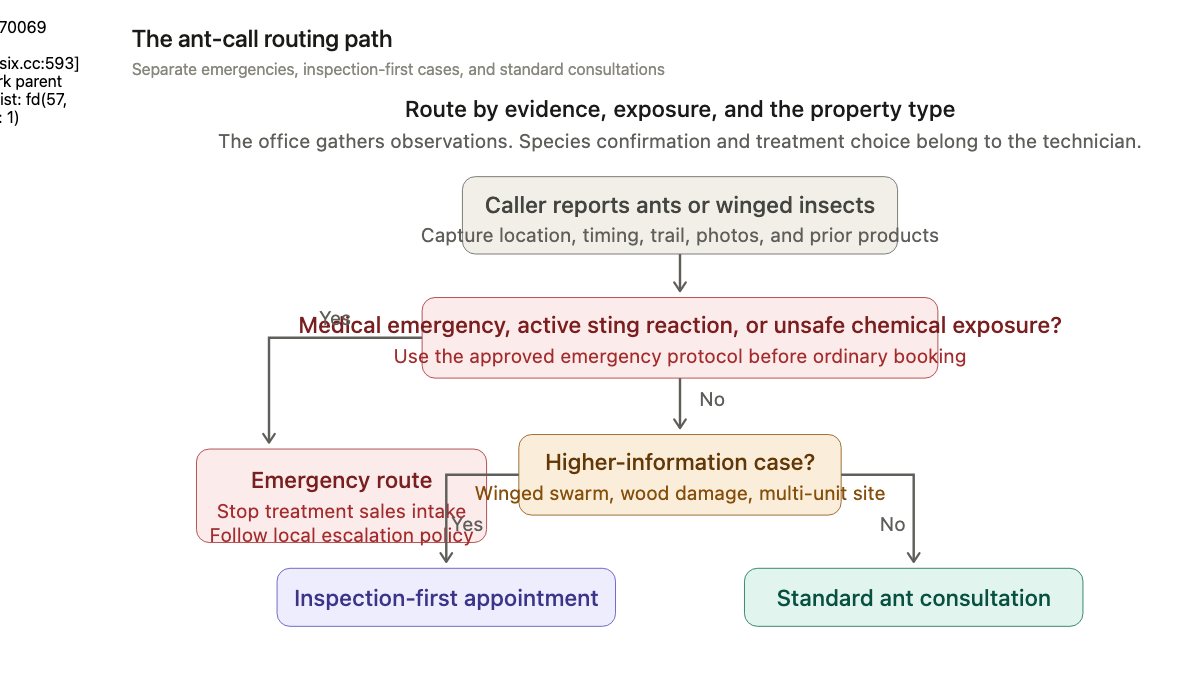
For a standard consultation, confirm the service address and property type. Ask whether the caller owns, rents, or manages the property, and identify who can authorize service. Record access constraints such as locked gates, crawlspace hatches, attic entries, tenant notice, parking, or a pet that must be secured.
Set the appointment expectation carefully. Say that the technician will inspect the activity, identify the likely ant type when possible, assess nesting and entry conditions, and recommend a treatment plan. Avoid guaranteeing one visit, a specific product, a permanent result, or a price before the company has enough information. If the company charges an inspection or service fee, explain exactly what that fee covers.
Give the technician a dispatch-ready record
A strong ant consultation record should include:
- exact rooms, surfaces, and trail direction
- first sighting date, strongest activity time, and spread through the property
- worker appearance, winged insects, discarded wings, or possible wood damage
- leak, dampness, food, pet food, mulch, branches, firewood, and exterior mound observations
- every pesticide, bait, cleaner, or home remedy already used
- safe photos, an approved sample note, and any label image
- property type, unit or tenant details, decision-maker, access, children, pets, and aquarium concerns
- emergency screening result and the route chosen
Read back the key details before ending the call. A compact confirmation catches costly mistakes: “I have the trail at the kitchen sink, strongest in the morning, a leak repaired last week, two store-bought baits in place, no winged insects, and a dog that will be secured before the visit.” That record gives the technician a real starting point.
An AI receptionist can capture the same approved questions after hours and send the answers into dispatch review. The script still needs company rules for emergencies, service areas, fees, treatment boundaries, and escalation. The useful outcome is a booked consultation with enough evidence for the technician to arrive prepared.