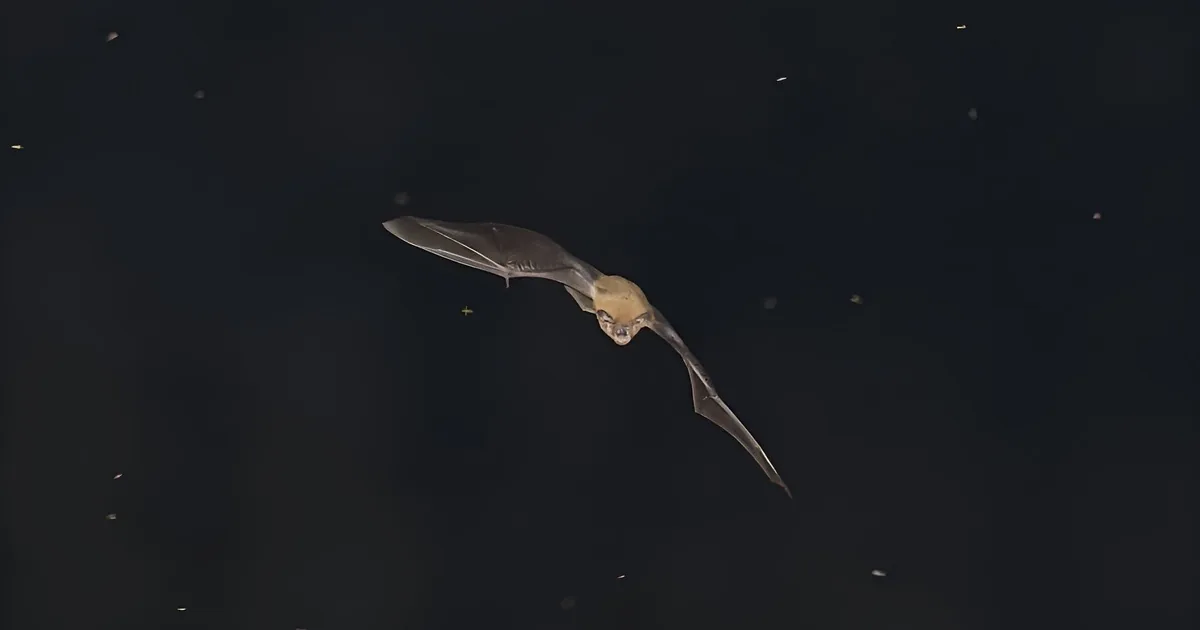
A caller whispers that a bat is circling the bedroom ceiling. Her child was asleep in the room ten minutes ago, the dog is barking at the doorway, and someone has already opened a window. This is not the moment to begin an ordinary pest-control estimate.
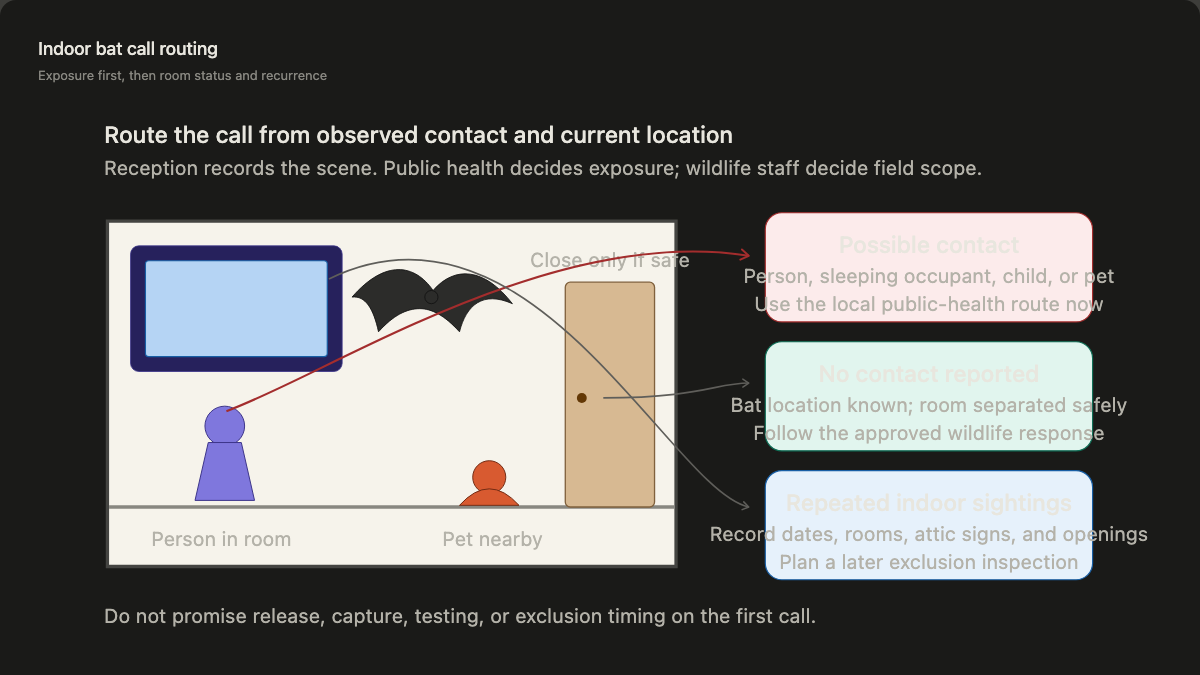
The first question is about possible contact. Ask who was in the room, whether anyone was sleeping, and whether a person or pet may have touched the bat. Then locate the animal, keep the caller from releasing it before public-health guidance, and route the case under the company’s written policy. Questions about entry points and exclusion come later.
Ask about contact before you discuss removal
Start with the people and animals in the home. Ask whether anyone reports a bite, scratch, direct touch, or contact with saliva. Ask whether the bat was found in a room with a sleeping person, an unattended child, or someone who may not be able to describe what happened. For pets, record the animal, where it was, and whether the caller saw contact.
Do not decide exposure on the phone. The Centers for Disease Control and Prevention says bat bites can be tiny and may go unnoticed. CDC advises urgent medical help after a known bite or scratch and tells people who think they had contact with a bat to speak with their health department. The office’s job is to identify that question and make the approved handoff quickly.
Use plain words: “I need to check possible contact before we schedule wildlife service. Was anyone asleep in the room, did anyone touch the bat, or could a child or pet have reached it?” Record the answer as reported. “No bite seen” is different from “no exposure.” The second phrase sounds like a conclusion that reception is not qualified to make.
If someone reports an injury or possible contact, follow the company’s emergency and local public-health procedure. Do not leave the request in a routine callback queue. Medical questions belong with a healthcare professional or public-health authority, while pet-exposure questions may also require the caller’s veterinarian and local authority.
Find out where the bat is now
Once the exposure route is underway, establish the current scene. Is the bat flying in one room, resting on a wall or curtain, behind furniture, inside a fireplace, somewhere in the attic, or no longer visible? Ask when it was last seen and whether the caller has changed anything since then, such as opening a door or window.
If a room can be separated without approaching the bat, the caller may be able to keep children and pets out and close the interior door. The U.S. Fish and Wildlife Service advises containing a bat to a room or area and keeping children and pets away. That is a useful intake boundary. It does not authorize reception to coach a capture.
Never tell the caller to swing a broom, throw a towel, climb on furniture, grab the animal, or send a pet after it. Avoid improvised advice about gloves and containers. Public-health guidance, local animal control, and company policy should determine who handles the bat and how.
A clean location note sounds like this: “Bat last seen resting above the bedroom curtain at 1:20 a.m. Bedroom door is closed. Two adults are outside the room. Child had been asleep in the room before the sighting. Dog remained in hallway; caller did not observe contact.” That gives the next responder facts without pretending uncertainty has disappeared.
Preserve the option for public-health testing
A frightened caller may want the bat outside immediately. Slow that step down. CDC says that when a bat is found in a home, the person should contact animal control or the health department for safe capture and should not release it until speaking with a public-health expert. Release can remove the option to test the animal when testing is recommended.
Ask whether the bat is still available and whether anyone has already released, injured, or disposed of it. If it is dead, do not tell the caller to pick it up. Record its location and use the approved local route. If someone has already removed it, record who did so, how it was handled, where it went, and whether public health has been contacted.
The office should also avoid promising that testing will happen. A health department or animal-control authority may decide whether capture and testing are appropriate. Reception can preserve the facts and the animal’s availability while that decision is made.
This is why the first-call order matters. A technician may be excellent at exclusion work and still be the wrong first owner for a possible exposure question. Public health can address the exposure decision while wildlife staff prepare for the property work that may follow.
Separate a single visitor from a recurring entry problem
After the immediate situation has an owner, ask whether this is the first indoor sighting. One bat may have entered through an open door or window. Repeated sightings, staining near a roof opening, sounds in a wall, droppings below an attic area, or bats seen leaving at dusk point toward a building inspection.
Record the dates, rooms, time of day, and any pattern. Ask whether the caller has seen bats outside near a chimney, soffit, vent, roof edge, shutter, or siding gap. Ground-level photos taken in daylight can support a later inspection. Do not send anyone onto the roof or into the attic during the call.
FWS notes that recurring incidents call for a search for exterior openings and that removal can be affected by season, weather, protected species, and dependent young. The office should never promise “we will seal the hole today.” A qualified wildlife professional needs to confirm occupancy, entry points, legal requirements, and appropriate timing before closing anything.
The broader wildlife-in-the-attic intake guide covers sound patterns, roofline mapping, attic access, and multi-species evidence. Use that workflow after the indoor exposure and room-status questions have been handled. A bat in a bedroom should not wait behind a generic attic-noise script.
Build a handoff that another person can act on
The call note should let public health, animal control, a manager, or a wildlife technician understand the event without asking the caller to reconstruct it again. Capture these fields:
- address, callback number, caller’s location, and current time
- bat’s current or last known room and whether the room is separated
- everyone who was in the room, including sleeping occupants, children, and people who may not be able to report contact
- pets present, observed contact, and vaccination details only if the approved script requests them
- any reported bite, scratch, touch, saliva contact, injury, or uncertainty
- whether the bat is alive, visible, contained, released, dead, or missing
- public-health, animal-control, veterinary, or emergency contacts already made
- prior indoor sightings, attic or exterior evidence, and any work already attempted
Read the critical facts back. “You found the bat in the upstairs bedroom where your child had been sleeping. The bat is still in that room, the door is closed, and nobody has entered since. You did not see a bite, but contact is uncertain. We are using the local public-health route before any release, and our wildlife manager will handle the building-service follow-up.”
That read-back corrects room names, timelines, and assumptions while the caller is present. It also tells them what happens next without making a medical or wildlife promise.
Keep the script narrow under pressure
A bat call can arrive at 2 a.m. when the normal office is closed. The after-hours script should still collect the same facts in the same order. An AI receptionist can ask the approved questions and escalate the call, but its route, contacts, and wording must match the company’s service area and local policy.
Review the script with the local health department, animal-control contacts, and the person responsible for wildlife work. Store the current phone numbers and escalation rules where every receptionist can reach them. Then test the path with a specific scene: one bat, upstairs bedroom, sleeping occupant, dog outside the door, animal still visible.
The best last sentence is concrete: “Keep everyone out of the room if you can do that without approaching the bat, and do not release it until the public-health contact tells you what to do. I have recorded the bedroom, sleeping occupant, dog, and the bat’s last known position for the handoff.”