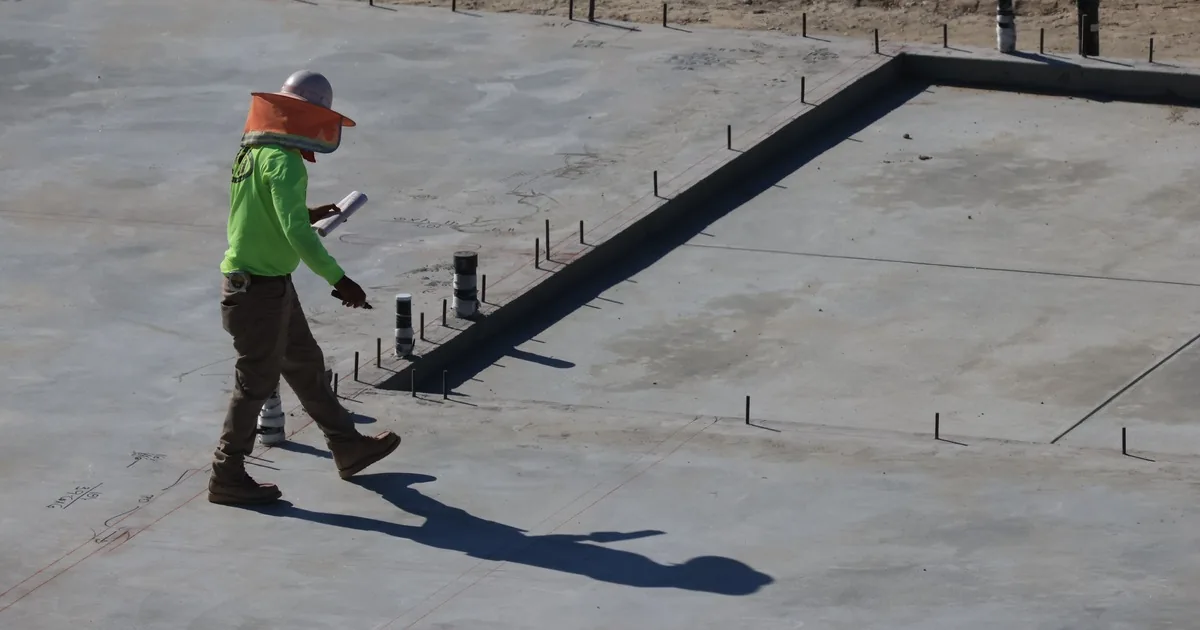
A superintendent calls at 3:40 p.m. and says the slab crew is pouring tomorrow morning. He needs a “termite pretreat” at a new house, but the office note has no lot number, foundation plan, square footage, site contact, or confirmation that the fill is ready. Booking a truck from that sentence alone is how a construction schedule turns into an expensive argument.
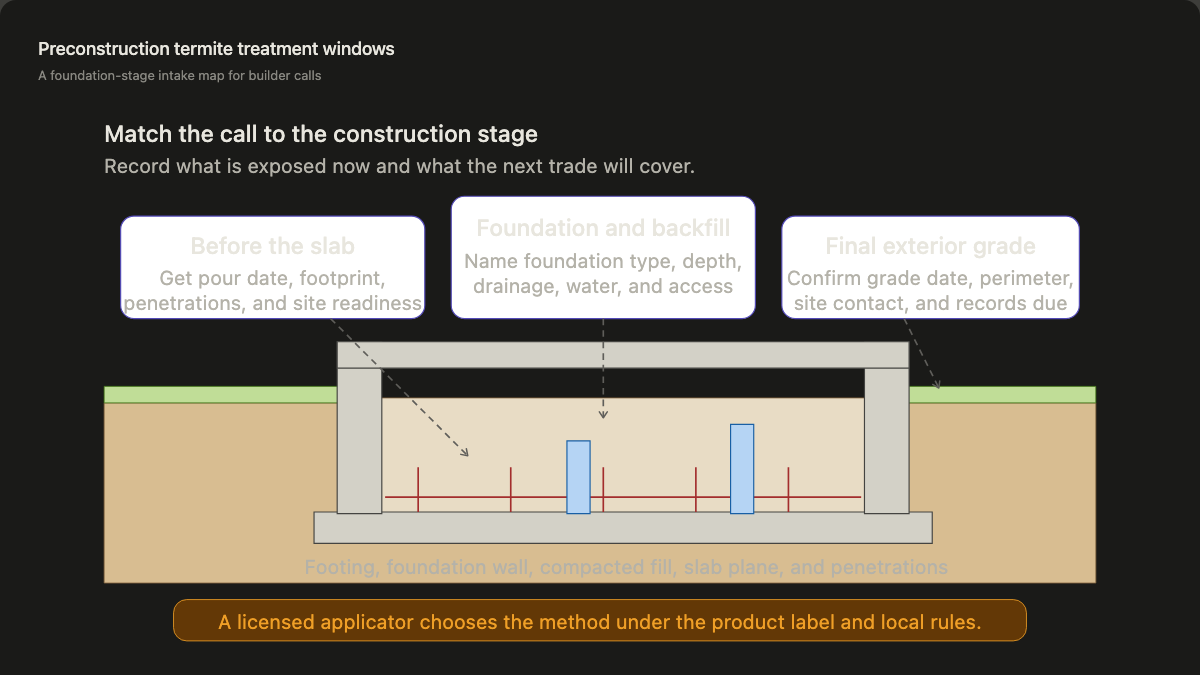
Start with the project address and current stage. Ask what is exposed today, what work happens next, and when the next trade will cover the area. Then collect the plan, foundation type, utility penetrations, site conditions, responsible superintendent, access instructions, and documentation request. A licensed termite professional should review those facts before reception promises a method or appointment.
Tie the request to one project
Production builders may have several houses active on one street. A custom builder may refer to a project by the owner’s surname, while the permit and treatment record require a street address and lot. Capture every identifier the company uses: street address, subdivision, lot or parcel number, builder name, project name, and purchase-order number if one exists.
Identify the caller’s role too. A homeowner asking about protection for a future house is a different handoff from a concrete foreman asking for tomorrow’s access window. Record the builder, general contractor, superintendent, person authorizing service, accounts-payable contact, and the on-site person who can answer the phone when the technician reaches a locked gate.
Check the account before creating work. Is this a new builder, an existing master account, or another address under an active development agreement? Search by builder and address. The office should know whether pricing, insurance documents, purchase orders, or approved service terms already exist before anyone quotes a date.
A useful opening sounds like this: “I have 214 Willow Trace, lot 18 in Cedar Ridge, for Northline Homes. You are the site superintendent, and Rosa at the main office approves the work. Is that correct?” Thirty seconds spent here prevents the treatment record from landing on the wrong house.
Ask what has been built and what comes next
“Pretreat” is too vague for scheduling. New-construction termite protection may involve different materials and stages, and the licensed applicator decides which method fits the project, product label, company program, and local rules. Reception needs observable facts.
Ask whether the project has bare excavated soil, poured footings, foundation walls, backfill, compacted sub-slab fill, plumbing rough-ins, reinforcement, a scheduled slab, exposed framing, or final exterior grade. Then ask which area is involved: living space, attached garage, porch, patio, stem wall, basement, crawl space, addition, or a separate building.
The North Carolina Department of Agriculture and Consumer Services describes several construction-stage visits around footings, foundation backfill, leveled slab areas, and final grading. That sequence is useful for intake because it shows why one generic appointment cannot cover every project. It is North Carolina guidance, not a national schedule. The local office must use the requirements that apply at the job address.
For a below-slab request, get the exact pour date and time. Ask whether all fill, plumbing, utilities, bath traps, joints, and other penetrations shown on the current plan are in place. Ask whether another crew may disturb or cover the area before the technician arrives. Never tell the caller the site is treatment-ready. Record what the superintendent reports and send it for field review.
Get the plan and the site facts
A foundation plan answers questions that a rushed caller cannot. Ask for the current drawing or takeoff that shows the footprint, footings, foundation walls, slabs, attached structures, piers, expansion joints, plumbing groups, utility entries, and square footage used by the company’s estimator. Record the plan date or revision. An old PDF can be worse than no PDF when the garage or porch moved last week.
Then build a short site note:
- foundation type and the areas included in the request
- current stage, next construction event, and requested treatment window
- footprint or plan source, plus the current revision date
- visible penetrations, bath traps, joints, piers, and attached slabs
- soil condition, standing water, rain, frozen ground, or unfinished grading reported by the caller
- wells, cisterns, drains, drainage systems, ponds, or other water features identified on the plan or by the site contact
- gate, road, parking, hose, water, equipment, and material-access details
- site-specific safety orientation, check-in point, and required protective equipment
These details do not choose the treatment. They tell the licensed reviewer what needs attention. The EPA’s termite guidance says soil-applied barrier products must be labeled for that use and warns that improper work can contaminate the home or nearby drinking-water wells. Product labels then control the actual application.
Avoid quoting a rate or quantity from memory. Labels differ, methods differ, and local restrictions differ. If a builder asks, “How many gallons will you put down?” the office can say the licensed professional will calculate and document the application after reviewing the plans, site, and selected product label.
Protect the treatment window from the pour schedule
A slab appointment has a hard edge: concrete will cover the area. One current EPA-accepted termiticide label directs that horizontal treatment zones be applied before the slab covers them. It also contains instructions for contractor notification, worker clearance, soil conditions, runoff protection, penetrations, foundations, wells, and drainage. That label is a product-specific primary source, not a universal prescription.
Turn the builder’s requested time into a real operating window. Ask when the site will be ready, when the concrete truck is booked, how much notice the concrete crew needs for a delay, and who has authority to move the pour. Get a mobile number for the superintendent. Ask who will tell other trades about the treatment area and keep them out as required by the selected label and site plan.
Weather belongs in the same handoff. Reception should not decide whether soil is suitable after rain or whether a forecast blocks work. Record recent rain, standing water, frozen soil, and the forecast concern the caller raises. The licensed applicator decides under the label and company policy. If the pour moves, one named person should notify the pest-control office before the crew drives to the site.
Do not promise “we can squeeze it in before seven” while the field reviewer still lacks a plan. Use conditional language that names the gate: “I have your requested window of 6:30 to 8:00 a.m. before the 9:00 pour. Scheduling will confirm after the licensed reviewer checks the plan, site stage, and service area.”
Keep treatment choice out of reception
Some callers ask for “the spray under the slab.” Others request a brand name they used on the last development. The EPA lists several registered approaches, including liquid soil-applied termiticides, baits, treated building materials, and wood treatments. Availability and suitability depend on the structure, stage, label, law, and provider program.
Reception can capture the requested method and the reason for it. It should not confirm that request as the final scope. Ask whether the contract, plans, specification book, builder standard, pest-control proposal, lender, or local official names a method or document. Send the actual page when possible. “The inspector wants it” is not enough to identify the requirement.
The same boundary applies to code claims. Requirements vary by jurisdiction. Record the city or county, permit number, inspection contact, and exact document requested. A provider may supply a treatment record, certificate, graph, warranty, label information, or another local form, but the office should name only documents its program actually issues.
Existing termite activity changes the call as well. A new-construction prevention request and a report of active tubes or damaged wood should not share one vague note. Record the observed evidence and route it for technical review. The guide to termite inspection booking covers inspection requests that are not tied to a live construction stage. The pest-control resource library keeps that workflow alongside other service-call intake guides.
Read back a field-ready builder handoff
Finish with a readback that another person can schedule from. Include the address, lot, builder, current stage, next covering event, requested window, plan revision, included areas, reported site conditions, access, superintendent, authorization contact, and documents due. State what still needs review.
Here is a usable version: “This is lot 18 at 214 Willow Trace for Northline Homes. Sub-slab fill and plumbing rough-ins are reported complete. The attached foundation plan is revision C, dated October 5, and includes the house, attached garage, and rear porch. The concrete pour is booked for 9:00 a.m. Thursday. You requested field access between 6:30 and 8:00. The gate opens at 6:00, superintendent Luis Ortega will meet the technician, and he reports no standing water. Scheduling remains pending licensed review of the plan, site stage, product requirements, and service area. Rosa Kim needs the completed treatment record tied to lot 18.”
An AI receptionist can collect these approved fields after hours and route the request, but the escalation rule matters more than a polished greeting. When the caller says “the truck pours tomorrow,” the note needs a named superintendent, current plan, exact stage, and decision owner before the office calendar changes.