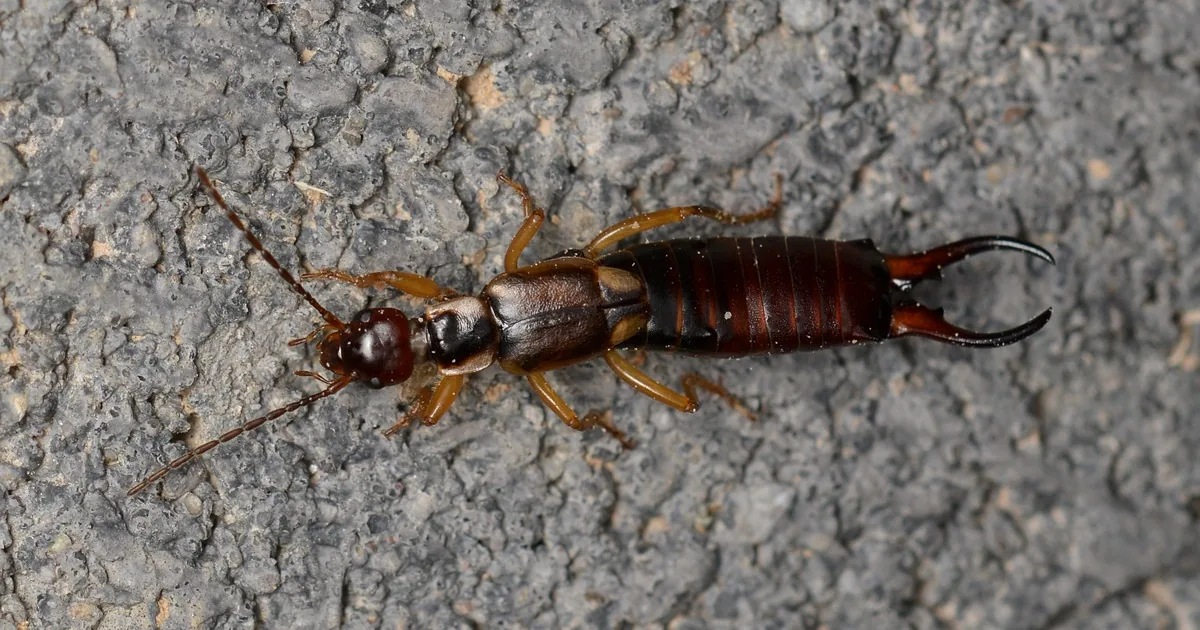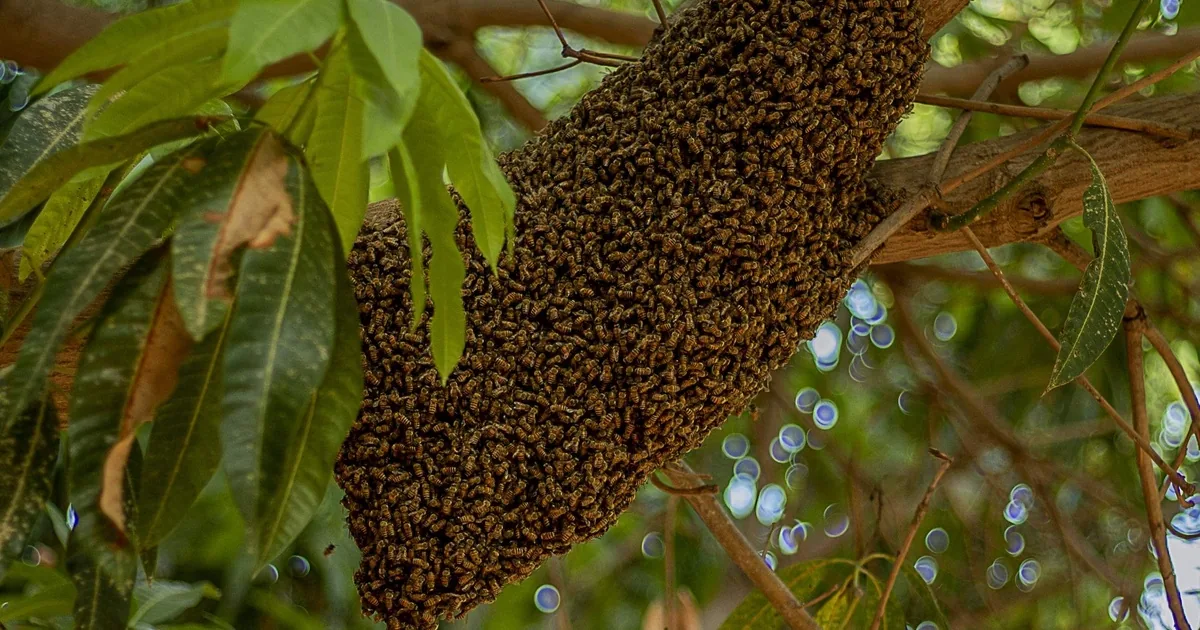
A caller says, “There’s a huge swarm of bees by my house. Can you spray it today?” The receptionist has one useful job at that moment: turn the word “swarm” into a description that a beekeeper or pest professional can act on.
Start with what the caller can see from a safe distance. An exposed cluster of bees hanging from a branch may be a temporary honey bee swarm. Bees traveling through the same gap in siding may belong to an established colony inside the wall. Insects flying around a gray paper structure may be wasps or hornets. Those calls need different people, equipment, and scopes.
The office should ask about shape, movement, location, height, nearby people, and access. Request a clear photo only when the caller can take one without approaching the insects, climbing, or standing in traffic. Then route the record for qualified review. Do not promise free collection, same-day treatment, or a species identification on the phone.
Ask what the caller sees before naming the insect
The first question should be concrete: “Are the insects gathered in one exposed cluster, moving in and out of a hole, or flying around a visible nest?”
That phrasing gives the caller three observable choices without asking them to become an entomologist. Follow with the exact location. “In a tree” leaves too much unanswered. Ask whether the cluster is on a branch over the driveway, in a shrub beside the front walk, under a roof edge, or inside a wall opening.
Next, capture movement. A dense mass resting in one place suggests a different situation than a stream of insects entering one crack all afternoon. Ask when the activity was first noticed and whether it has moved. Michigan State University Extension explains that a honey bee swarm is a colony searching for a new home and advises callers to report if the swarm leaves before a beekeeper arrives. Its swarm guidance also recommends providing the location, height, and surrounding hazards.
A photograph can help the reviewer, but it never justifies a risky approach. Tell the caller to stay on the ground and use the camera zoom. If the insects are near a door, sidewalk, school pickup area, livestock pen, or pet run, record that too.
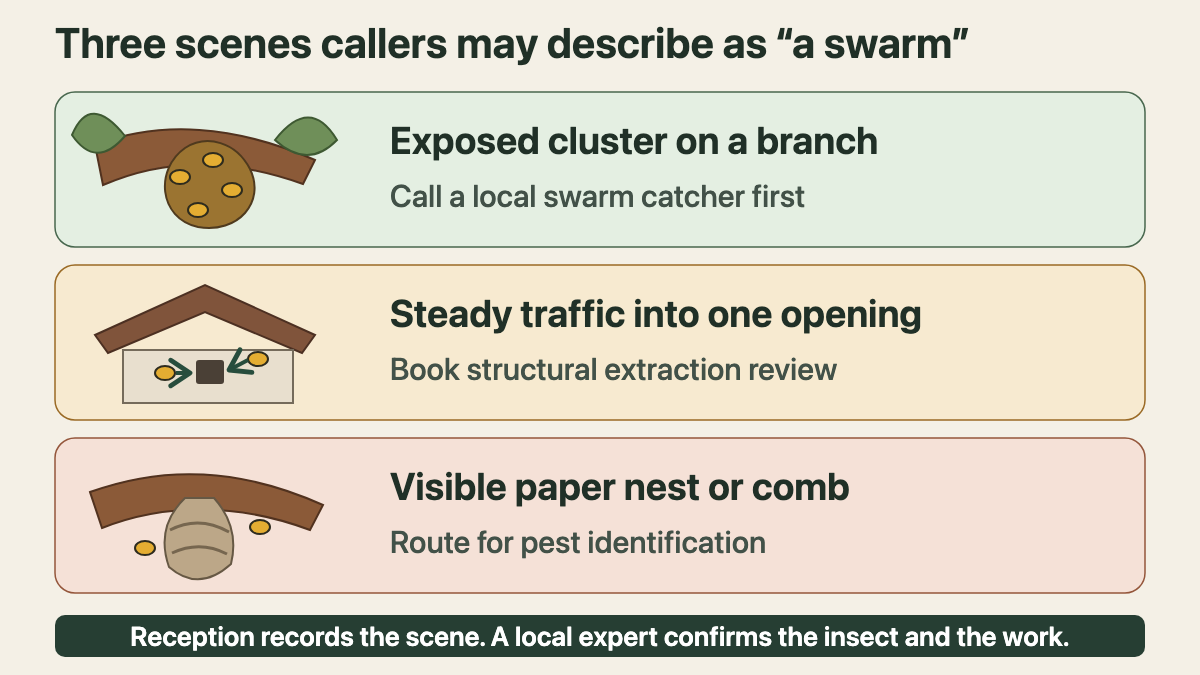
Route an exposed honey bee cluster to a beekeeper first
When the description and photo suggest an exposed honey bee cluster, the best first route is usually a local beekeeper or swarm catcher. University of California IPM describes clustered swarms as temporary and says a beekeeper can often collect one when removal is needed. The UC IPM removal guide also draws a firm line between collecting an exposed cluster and removing an established colony from a building.
Build and maintain a referral list before swarm season. Include the counties each beekeeper serves, whether they collect only exposed swarms, their height and access limits, typical response hours, and whether they charge for travel or difficult access. Never tell the caller that collection will be free. Some volunteer beekeepers collect accessible swarms without a fee, while high branches, long drives, or structural work may change the arrangement.
Regional rules matter. University of Georgia Extension advises a different route in areas where Africanized honey bees are present: the county Extension office or state agriculture department may need the report. A pest control company with offices in several states should keep referral notes by branch, not one national script.
Reception should also screen for immediate exposure. Ask whether anyone has been stung and whether a person is having trouble breathing or another severe reaction. The office does not provide medical triage. A caller describing a medical emergency should contact emergency services. For the property itself, keep people and animals away from the cluster until the local expert gives instructions.
Bees entering a wall need a structural extraction review
A caller may say “swarm” when they have watched bees enter the same soffit gap for weeks. Treat that as a possible structural-colony inquiry. The dispatcher should record the entry opening, the room or cavity behind it, how long the activity has been present, and whether the caller sees comb, honey, staining, or insects indoors.
Do not promise that a beekeeper who catches branch swarms will open a wall. Structural extraction can require locating the colony, opening part of the building, removing bees and comb, cleaning the cavity, closing entry points, and repairing finishes. The University of Georgia’s guidance on bees in walls explains why the nest material matters: leaving comb and honey behind can create further building and pest problems.
The right provider may be a bee-removal specialist, a licensed pest professional with bee experience, a contractor working with a beekeeper, or a combination arranged under local rules. Ask what the company actually performs. If your team handles identification and treatment but does not open and repair structures, state that boundary before scheduling.
This is also where a clear comparison with your wasp and hornet call-routing procedure helps. A visible paper nest under an eave does not belong in the same workflow as honey bees using a wall void. If the activity is in an attic and the caller cannot tell whether it involves insects or another animal, use the broader wildlife-in-the-attic intake until a qualified reviewer narrows it.
Give the responder a site record, not a guessed diagnosis
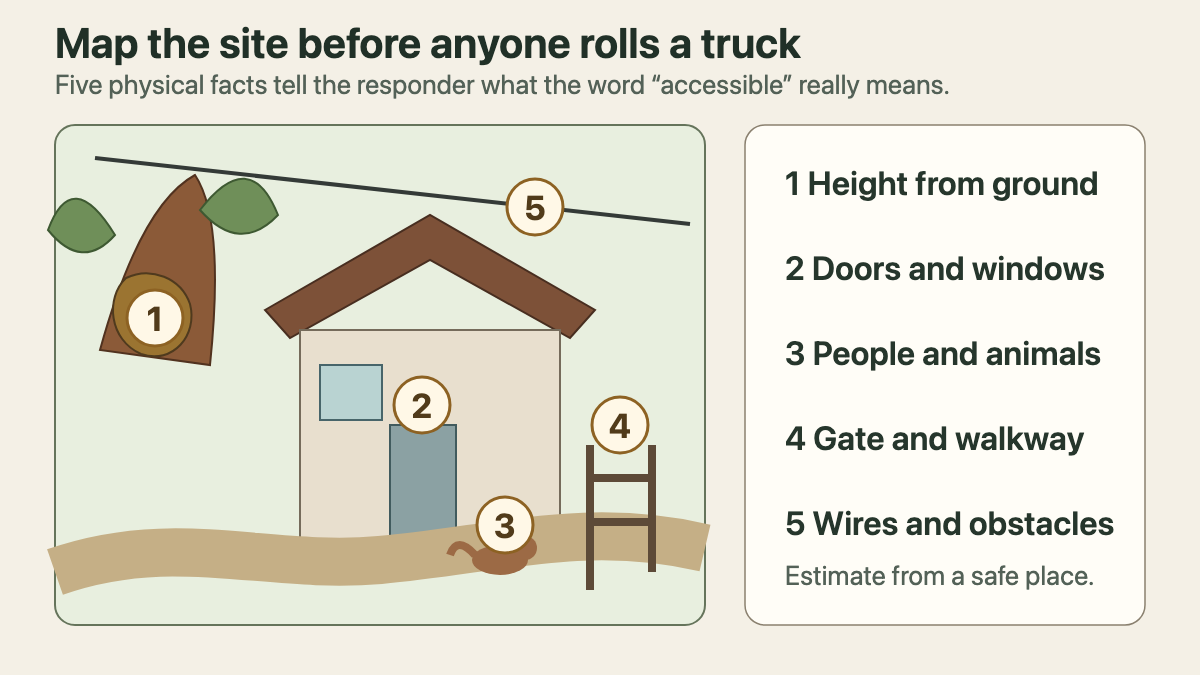
After the likely job type is routed, the work order still needs physical detail. “Bee swarm in backyard” can send a responder to the wrong gate with the wrong access equipment.
Capture these facts:
- The address, onsite contact, and the owner or manager who can authorize access.
- The cluster, nest, or opening location in relation to a door, window, roof edge, tree, fence, or utility box.
- A ground-based height estimate, such as shoulder height, second-story eave, or high tree limb.
- Nearby walkways, parking, locked gates, slopes, pools, pets, livestock, and occupied play areas.
- Overhead wires, narrow side yards, fragile roofing, or other visible obstacles near the approach.
- The time the insects are most active and whether the pattern has changed since the first report.
- Any pesticide, water, smoke, or physical disturbance already attempted by the caller.
That last answer matters because it changes the scene the responder will find. The office should record what the caller says without endorsing another application. EPA’s pollinator protection guidance explains that pesticide labels carry use restrictions and risk measures for pollinators. Product selection and application belong with a qualified professional following the label and local requirements.
Use a short script that preserves the handoff
A receptionist can handle the opening minute with plain language:
“Please stay a safe distance away and tell me what you can see. Are the insects gathered in one exposed cluster, moving through the same opening, or flying around a visible nest? Where is that in relation to the house, and about how high is it? Are people, pets, or a doorway close to the activity? If you can take a clear photo from the ground without moving closer, I can attach it for review.”
Close with an honest next step: “I’ll send these details to the person who reviews bee and stinging-insect calls. They will confirm whether we can handle it or whether a local beekeeper or extraction specialist is the better contact.”
The script avoids two expensive promises. It does not guarantee treatment before the insect and site are reviewed, and it does not tell a worried caller that every cluster is safe. The office remains calm, specific, and useful.
Keep the referral record current
A good bee-call workflow depends on local contacts. Review the list at the start of the local swarm season and whenever a referral stops responding. Keep separate entries for exposed-swarm collection, structural extraction, pest control, and building repair. Note service areas and access limits, but let each provider quote its own work.
If the company uses an answering service or AI receptionist after hours, give it the same boundaries. It can capture the scene, attach the photo, flag nearby exposure, and send the record to the right reviewer. It should never identify the insect, recommend a chemical, or promise that someone will remove the cluster for free.
The strongest handoff sounds ordinary: an exposed cluster on the maple branch, about twelve feet above the lawn, fifteen feet from the back door, with a dog that uses the yard and a clear photo attached. A beekeeper or pest professional can work with that.