A caller says fleas are biting their ankles in the living room, but the dog has already been treated. They want the earliest appointment and a guarantee that one visit will end the problem. The office needs to slow the call down long enough to map the infestation: every pet in the home, favorite resting areas, rooms with activity, recent veterinary care, products already used, outdoor exposure, and any pesticide reaction.
That first record shapes access, preparation, treatment planning, and follow-up. Reception should never choose a pet medication or diagnose a bite. The useful job is narrower. Gather reliable observations, separate urgent exposure concerns from routine scheduling, and explain that pet care and property control have to run on the same timeline.
Start with people, pets, and the exact rooms
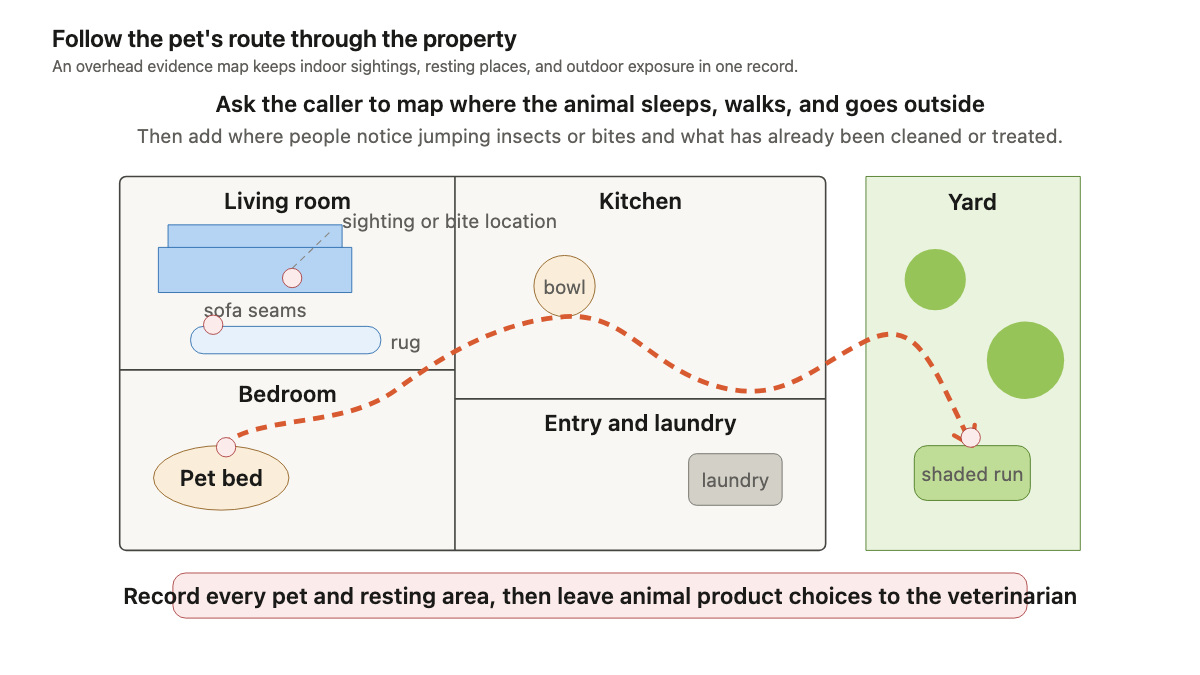
Ask where the caller first noticed fleas and where activity is strongest now. “Downstairs” is too broad. “On the rug beside the sofa where the dog sleeps” gives the technician a place to begin. Record bites or sightings by room, floor surface, furniture, baseboard, pet bed, crate, basement, porch, or crawlspace.
Then list every animal that lives at or regularly visits the property. Include dogs, cats, rabbits, and visiting pets. Ask where each animal sleeps, which rooms it can enter, and whether it spends time in a yard, dog run, garage, shaded porch, or under a deck. A pet that never goes upstairs can still matter if blankets, laundry, or people move between floors, but the office should record movement rather than invent a cause.
The CDC’s flea guidance treats sanitation, pet care, home treatment, and follow-up as connected parts of control. This is why “Has the dog been treated?” cannot be the only pet question. Ask whether every pet has been addressed and when. If the caller needs help choosing a product for an animal, direct that question to their veterinarian.
Ask what the caller actually saw
People use “flea” for several small insects and for unexplained bites. Ask whether the caller saw a jumping insect on a person, pet, sock, floor, or piece of furniture. A close photo may help the field team prepare, though it may not support identification. If company policy allows samples, give only the approved collection instructions.
Ask when activity began and whether it followed a move, a tenant turnover, a pet-sitting visit, wildlife under the building, time away from the home, or the arrival of a new animal. Note whether the property has been vacant. Adult fleas can emerge after vibration and movement disturb a quiet space, so “the bites started when we came back” belongs in the technician’s notes.
The University of California Statewide IPM Program explains that eggs can fall from an animal into bedding and carpet, while larvae develop in protected areas with suitable humidity. Pupae are harder to reach and can produce later adult emergence. Reception does not need to teach entomology on the phone. It should capture the surfaces and resting zones that make those life stages relevant.
Record cleaning and every product already used
Ask what the caller has done, using exact names and dates. Useful details include vacuuming, steam cleaning, laundering pet bedding, foggers, carpet powders, indoor sprays, yard products, flea shampoos, collars, topical products, and oral pet medication. Request a safe photo of a label when the technician needs product details. Never advise the caller to combine products, repeat an application early, or use a dog product on a cat.
The EPA recommends frequent vacuuming, with attention to carpets, cushioned furniture, floor cracks, baseboards, and basements. It also advises washing bedding used by pets. Those recommendations support the intake questions, but company preparation instructions should still come from an approved service protocol. A receptionist should not improvise cleaning steps that conflict with the technician’s plan.
Ask whether a veterinarian is managing the pets and whether the caller can contact that clinic about animal treatment. Keep the boundaries clear. Pest control handles the property under its license and service policy. Veterinary professionals select products for an individual animal’s species, age, weight, health, and current medications.
Screen pesticide exposure before ordinary booking
A caller may mention dizziness, breathing trouble, vomiting, eye exposure, a pet reaction, or a child touching a recently treated surface. Stop the standard sales script. Follow the company’s emergency procedure and direct the caller to emergency services, Poison Control, a veterinarian, or the product label as required by that procedure. Do not diagnose symptoms.
For a nonurgent call, record children, pregnancy, residents with mobility constraints, pets, aquariums, and anyone who may have difficulty leaving a treatment area. Ask whether the property is occupied during the day and whether the caller can meet access requirements. These details belong with dispatch because they affect preparation and scheduling.
Also identify who can authorize service. In a rental, record the tenant, owner or property manager, unit number, shared hallways, neighboring reports, and notice requirements. Flea activity that spans units may require coordination beyond one apartment.
Set follow-up expectations on the first call
The caller may continue seeing fleas after initial work because the infestation includes more than exposed adults. CDC guidance says moderate or severe infestations can take months to control and may require two or more follow-up treatments within 5 to 10 days after the first application. A company’s actual schedule depends on its inspection, products, label directions, local rules, and service plan.
Reception should explain the company policy without promising a fixed result. A safe phrasing is: “The technician will inspect the activity and recommend a property plan. Flea work often includes cleaning, coordinated pet care, and follow-up because different life stages respond differently. We will explain the schedule after the inspection.”
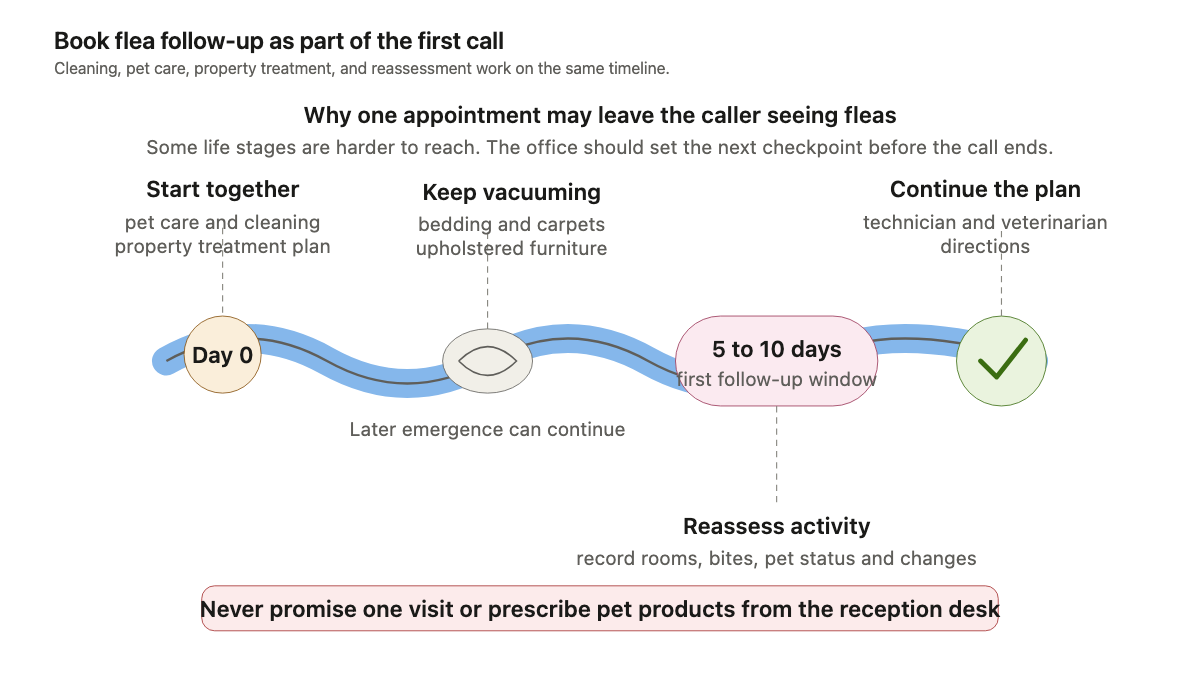
Ask how the caller will report continued activity. Some companies want the room, date, time, pet status, and a photo before deciding whether to revisit. Put that process in the appointment confirmation. It prevents a vague callback such as “we still have fleas” from becoming a blank ticket.
Build a dispatch-ready flea consultation record
The final record should give the technician enough context to prepare without turning reception into a treatment desk. Capture:
- service address, property type, unit, authorization, occupancy, and access
- every resident or visiting pet, where each animal sleeps, and indoor or outdoor movement
- exact rooms, surfaces, furniture, pet bedding, bite locations, and sighting dates
- veterinary treatment status, while leaving product selection to the veterinarian
- vacuuming, laundering, steam cleaning, foggers, sprays, powders, yard products, and application dates
- shaded outdoor areas, porches, crawlspaces, wildlife activity, and pet runs
- children, aquariums, mobility needs, reported reactions, and the emergency screen result
- the appointment route, preparation instructions, fee explanation, and follow-up policy
Read the important details back. “I have activity around the downstairs sofa and dog bed, bites on ankles in that room, one dog treated through the veterinarian four days ago, one untreated visiting cat last weekend, daily vacuuming, and no indoor pesticide used.” That sentence is far more useful than “customer has fleas.”
The office can also link the caller to the company’s approved preparation page or written instructions after booking. Do not send a generic internet checklist. The instructions must match the service the technician expects to perform.
Keep the promise narrow and useful
A strong flea call ends with a clear next step: inspection or treatment appointment, preparation instructions, who must be present, what access is needed, how fees work, and when follow-up is assessed. Avoid guarantees about one visit, one product, or a permanent result. Avoid telling the caller that continued sightings prove treatment failed.
Pest control offices already handling bed bug consultation calls will recognize the same discipline: map rooms and movement, record prior products, screen risk, and protect the technician’s diagnostic role. Flea intake adds the pet and veterinary side, which must stay visible in every handoff.
An AI receptionist can ask the approved flea questions after hours and send a structured record for review. The company still owns the service boundaries, emergency route, preparation language, fee policy, and follow-up rules. When those rules are explicit, the 8 p.m. call can arrive in dispatch with the dog bed, downstairs rug, recent pet treatment, and visiting cat already documented.