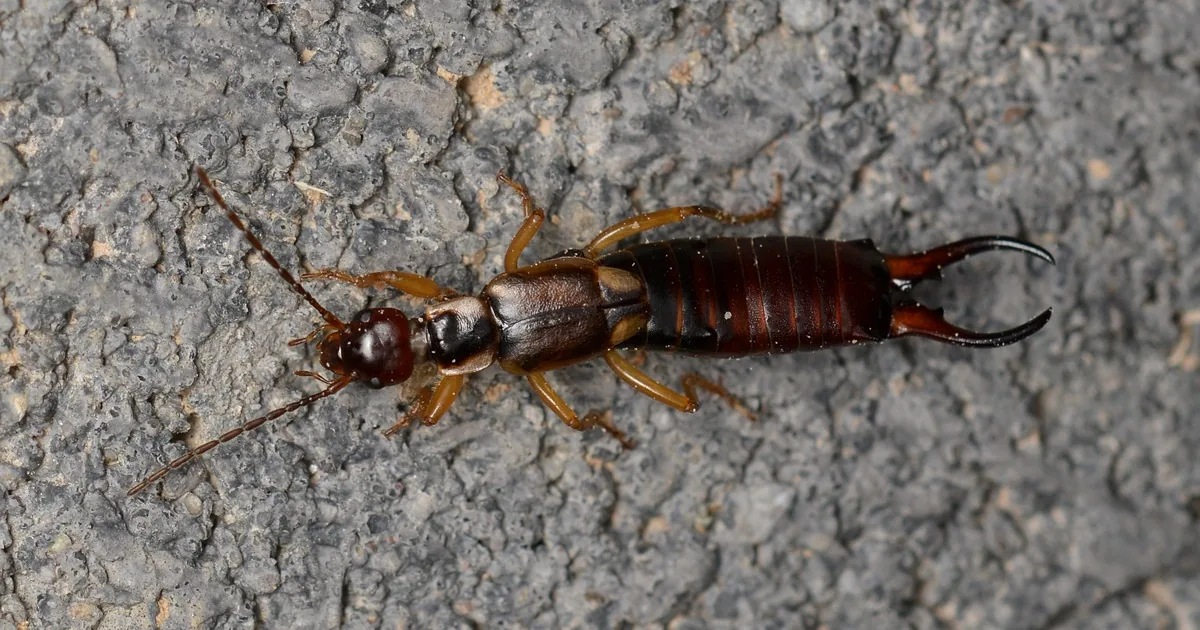
The dinner manager calls at 8:12 p.m. and says, “We saw a bug in the back.” The cook line is moving, the dish machine is running, and thirty guests are seated. “The back” could mean a dry-storage shelf, the floor drain beside the dish pit, the rear delivery door, or the service pass where finished plates wait.
Get a fixed location first. Then record what the employee observed, when it happened, whether food, clean equipment, guests, water, or waste were nearby, what staff did afterward, and when a technician can reach the area without crossing active preparation. Reception should preserve the report. A qualified technician identifies the pest and decides the control method.
Record the employee’s words before they get cleaned up
Restaurant calls arrive with confident labels: German roach, fruit fly, rat, pantry moth. Those labels may be right. They may also be a guess made during a busy shift. Start with the witness’s own description and keep the certainty level intact.
Ask what the person saw, found, heard, or smelled. Was it a live insect, droppings, gnawing, damaged packaging, a trapped animal, a smear, shed material, or repeated small flies? How many were observed? Was the activity moving, stationary, or already gone? Ask when it happened and whether the same thing appeared on another shift.
A photograph can help if the restaurant already has one. Request the original image and the place and time it was taken. Do not ask staff to chase an animal, move energized equipment, reach behind a hot line, open a trap, or handle material to improve the picture.
The intake note should say, “One dark insect, about thumbnail length, moving along the wall-floor joint beside the dish machine at 8:05 p.m.; photo attached.” It should not promote that report into a confirmed species or infestation level.
That distinction follows the EPA’s integrated pest management sequence. Monitoring and accurate identification support the later control decision. A phone label is a lead for inspection, not the inspection itself.
Pin the report to a restaurant zone
Room names alone waste time. “Kitchen” may cover several thousand square feet, and each part runs differently. Ask for the nearest fixed object: the left side of the three-compartment sink, the floor drain below the soda rack, the bottom shelf beside flour storage, the wall behind fryer number two, or the threshold at the receiving door.
Then connect that point to the work happening there. Was food being prepared, plated, stored, received, or discarded? Were clean pans or single-service items nearby? Was the area wet? Was a door open for a delivery? Did the sighting happen during dinner service, overnight cleaning, morning prep, or a quiet period after close?
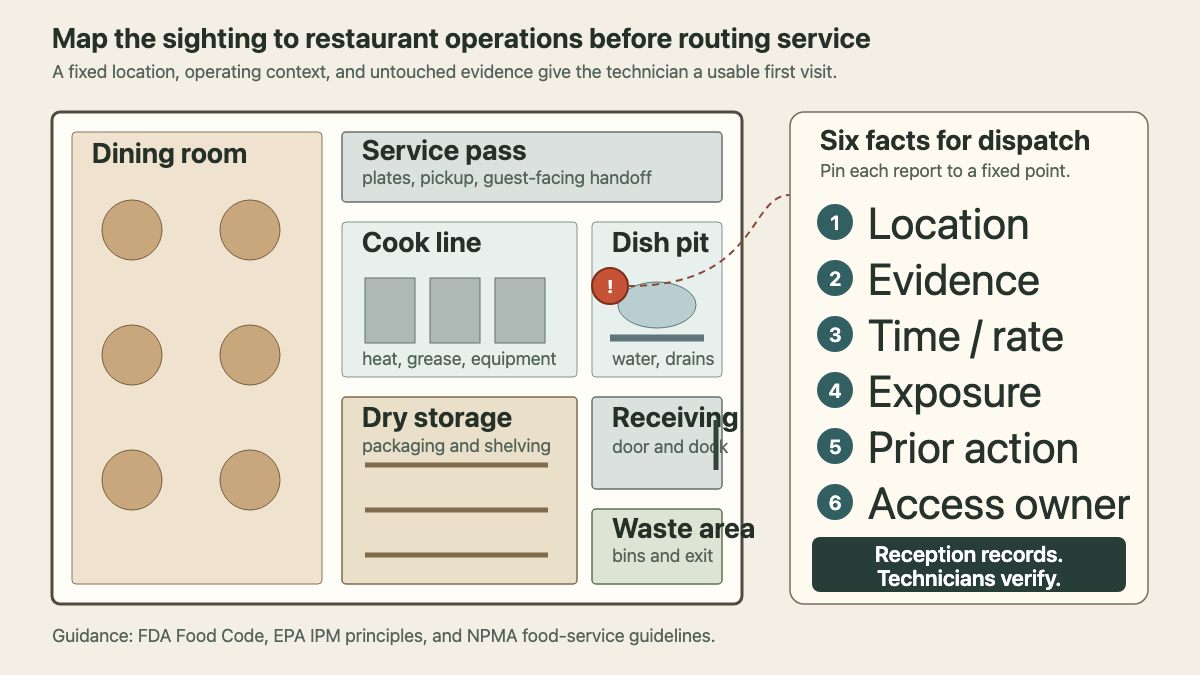
The FDA’s 2026 Food Code gives the office a useful factual frame. Section 6-501.111 addresses incoming food and supply shipments, routine inspection of the premises for pest evidence, pest-control methods, and elimination of harborage conditions. The Food Code is a model offered for adoption by government jurisdictions, so local requirements still need to be checked. Reception can gather the facts without making a legal ruling for the restaurant.
Ask what food, equipment, and people were nearby
A sighting beside a dumpster enclosure and a sighting on a service pass create different records. The office does not decide the restaurant’s regulatory response. It does need to tell the responsible manager and technician what was exposed or interrupted.
Ask whether the report involved unpackaged food, packaged inventory, clean utensils, a food-contact surface, linens, single-service items, a customer area, or an employee-only area. Capture the exact item and location. “Near food” is too broad. “On the wall six inches above the open garnish rail” gives the next person something to assess.
Find out whether service is still underway. If the activity is in a dining room, note whether a guest saw it and whether the area remains occupied. If it is in storage, ask whether damaged packages, webbing, holes, or loose product were observed. If it is near a drain or sink, record standing water, a leak, slow drainage, odor, or recent plumbing work as observations. Do not turn any one of those details into a diagnosis.
The person in charge owns the restaurant’s immediate food-safety and operating decisions under the rules and company policy that apply there. The pest-control office should identify that person by name and callback number. “A line cook called” is incomplete when the general manager, food-safety lead, franchise contact, or facilities team controls approval and follow-up.
Preserve the changes made after the sighting
Staff act fast during service. Someone sprays a store-bought product, throws away a package, moves a trap, pressure-washes the floor, closes a gap with tape, or pulls equipment away from the wall. Each action can alter the evidence and the service conditions.
Ask what happened after the observation. Record any pesticide, fogger, cleaner, drain product, trap, bait, or home remedy used. Get the product name from the container or a safe photograph of the label when available. Note the application time and person who used it. Reception should not recommend another product, interpret exposure symptoms, or tell staff to combine treatments.
Also ask what was cleaned, discarded, relocated, or repaired. If the employee swept up droppings or discarded damaged flour bags, record that plainly. If the area has been left untouched and can remain secure under the restaurant’s policy, note that too. Never coach a caller to preserve evidence at the expense of food safety, employee safety, or required sanitation.
Recent deliveries and building changes belong in the same note. Ask whether the report followed a produce delivery, dry-goods shipment, beverage delivery, equipment installation, drain service, construction work, dumpster overflow, door failure, or water leak. These are inspection leads. They are not proof of origin.
Check the account before promising a new treatment
A restaurant may be an existing recurring-service customer, a former account, a one-time prospect, or a tenant inside a larger managed property. Search by address, business name, and account number before creating a duplicate job.
For an active account, find the last service date, technician notes, open recommendations, monitoring locations, approved callback terms, and scheduled next visit. The separate guide to pest-control warranty and callback calls explains how to preserve prior findings and contract boundaries without promising that every return visit is included.
If the caller asks to move a routine visit, use the office’s recurring pest-control scheduling process. A fresh sighting still deserves its own evidence record. Do not hide it inside “reschedule monthly service,” because the technician needs the new location, time, operating context, and prior actions.
For a new restaurant, ask whether the request is for an inspection, a response to a specific report, a recurring program proposal, or a review of an existing provider’s findings. Name the next step accurately. A site inspection is not a promise of a particular treatment, frequency, inspection result, or reopening decision.
Build an access window around the operation
“Come anytime” rarely means anytime. The dining room may open at 11 a.m., but prep begins at 6. A bakery may mix overnight. A bar may close at 2 a.m. and keep a cleaning crew until 4. A technician who arrives during active food preparation may lose access to the exact equipment void or floor edge that needs inspection.
Capture the operating clock:
- opening, closing, prep, delivery, and deep-cleaning times
- the quietest usable window for the reported zone
- the on-site manager or keyholder and direct callback number
- parking, loading dock, alley, gate, elevator, and alarm details
- locked storage, roof, basement, utility, or shared-property access
- equipment that must be cool, empty, moved, or opened by authorized restaurant staff
- required vendor check-in, identification, insurance, or franchise documentation
Do not promise that staff must move heavy, hot, gas-connected, plumbed, or energized equipment. Record the obstacle. The restaurant and pest professional can assign safe access preparation under their procedures.
The National Pest Management Association’s restaurant guidance treats record keeping and communication as major parts of a food-service IPM program. That starts on the phone. The caller, manager, office, and technician should be talking about the same pin on the same floor plan.
Read back a technician-ready restaurant record
End with a short factual readback. This catches the wrong store number, vague location, missing manager, and impossible appointment window while the witness is still available.
A useful handoff sounds like this: “At 8:05 p.m., the closing manager saw one dark insect moving along the wall-floor joint on the left side of the dish machine. Dinner service was active. Clean racks were nearby, and no unpackaged food was reported at that point. Staff removed trash but did not apply a pesticide. A photo is attached. The general manager, Maya Chen, can authorize service and meet a technician after the kitchen closes at 11:30 p.m. The rear loading door requires a key.”
An AI receptionist can collect the same approved fields after hours and route the report under the company’s restaurant-service policy. The useful output is still ordinary and exact: one sighting, one fixed location, one operating context, one responsible manager, and a door the technician can actually open.
Sources
- U.S. Food and Drug Administration: 2026 Food Code
- U.S. Environmental Protection Agency: Integrated Pest Management in Buildings
- National Pest Management Association: Pest Management Guidelines for Retail Food Handling Facilities and Restaurants