A caller reports “little moths” around the kitchen window. Yesterday, a caterpillar appeared where the wall meets the ceiling. The flour looks clean, but an open bag of birdseed sits in the garage and a large pet-food bin is tucked beside the pantry. If the office books this as a generic moth treatment, the technician arrives with almost none of the information needed to find the source.
A useful pantry-pest call does five things early. It records what the caller saw, pins each sighting to a room and surface, maps every place susceptible goods are stored, captures package evidence and prior cleanup, and sets the expectation that inspection comes before any treatment decision. Reception should not identify the insect from a description or promise that spraying a cabinet will solve it.
Start with the insect, the room, and the time
Ask the caller to describe the insect in plain terms. Was it a small moth flying in a crooked pattern, a tiny beetle crawling on a counter, or a pale caterpillar moving up a wall? Where was it seen? Record the room, the nearest cabinet or shelf, the surface, and whether the sighting happened during the day or after lights came on.
Request a clear photo when company policy supports photo intake. One image of the insect and one wider image of the location are more useful than a long guess about species. If the company accepts samples, send its approved collection instructions. Never tell someone to handle an unknown insect, open a heavily infested package indoors, or mail a specimen without a safe company procedure.
The distinction between a moth, a wandering larva, and a beetle matters because the search order changes. The University of Minnesota Extension pantry-pest guide notes that Indianmeal moth adults may fly around the home, while mature larvae can leave food and travel before forming a cocoon. Beetles may appear in food, cupboards, on counters, or near windows. None of those observations confirms a species by phone. Each one gives the technician a better starting point.
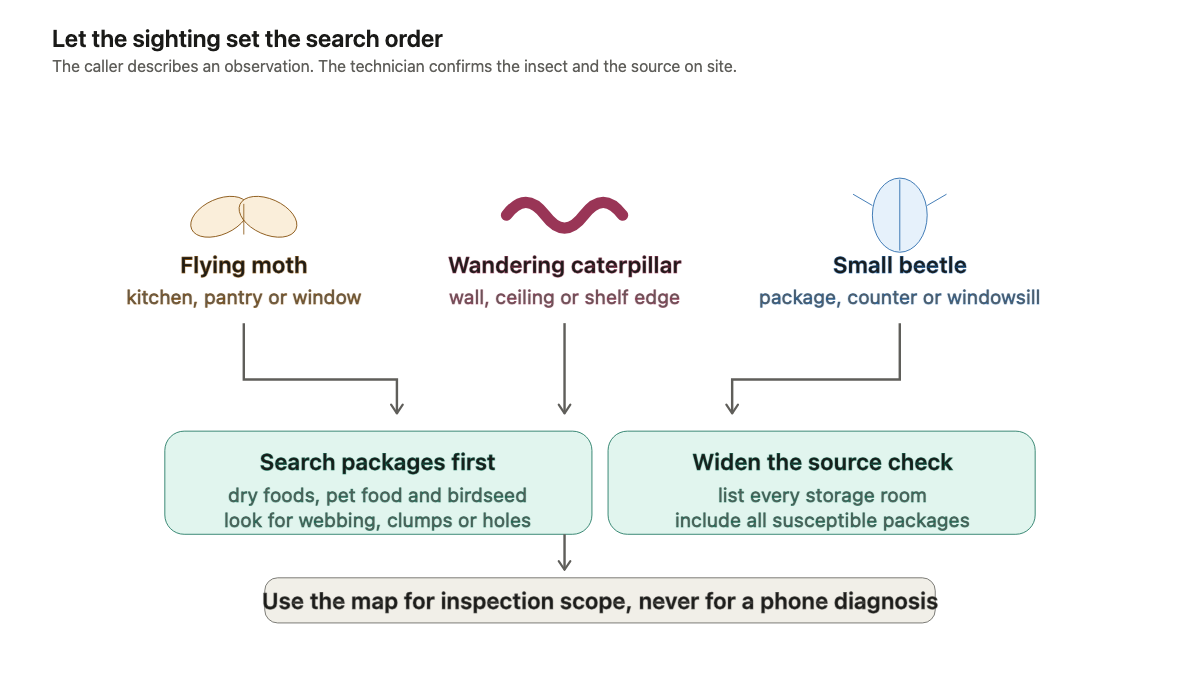
Ask when the caller first noticed activity and how often it appears. A single moth does not carry the same service history as moths seen every evening for two weeks, webbing in two cereal boxes, and larvae on the ceiling. Note whether the customer recently bought bulk grain, brought home birdseed, moved stored goods, opened a long-unused cabinet, or returned to a seasonal property.
Map every dry-goods storage zone
“Check the pantry” is too narrow. Stored-product pests can develop in ordinary dried foods such as cereal, rice, flour, pasta, nuts, dried fruit, spices, tea, chocolate, and baking mixes. The source can also be pet food, birdseed, rodent bait, garden seed, dried flowers, potpourri, or a decorative item made with grain.
Ask where those items are kept. A house may have food in a kitchen pantry, garage freezer area, basement shelves, pet-feeding station, mudroom cabinet, craft room, or utility closet. An apartment may have a shared storage cage or food in moving boxes. A caller who sees moths in the kitchen may still have the source in a nearby room.
Include opened and unopened packages. The National Pesticide Information Center explains that pantry-moth larvae can get through plastic bags and thin cardboard. The University of Minnesota also notes that pests may enter package folds and seams. “The bag is still sealed” should stay in the record, but it should not remove that bag from the inspection scope.
Ask for the package type and approximate age. Record a folded flour bag, a cardboard cereal box with an inner liner, a large pet-food sack, a glass jar, or a heavy plastic container. Also note whether old and new goods were poured together. Product names and lot information may help a customer track what was bought at the same time, though the office should avoid blaming a retailer or manufacturer before the source is confirmed.
Record package signs and nearby evidence
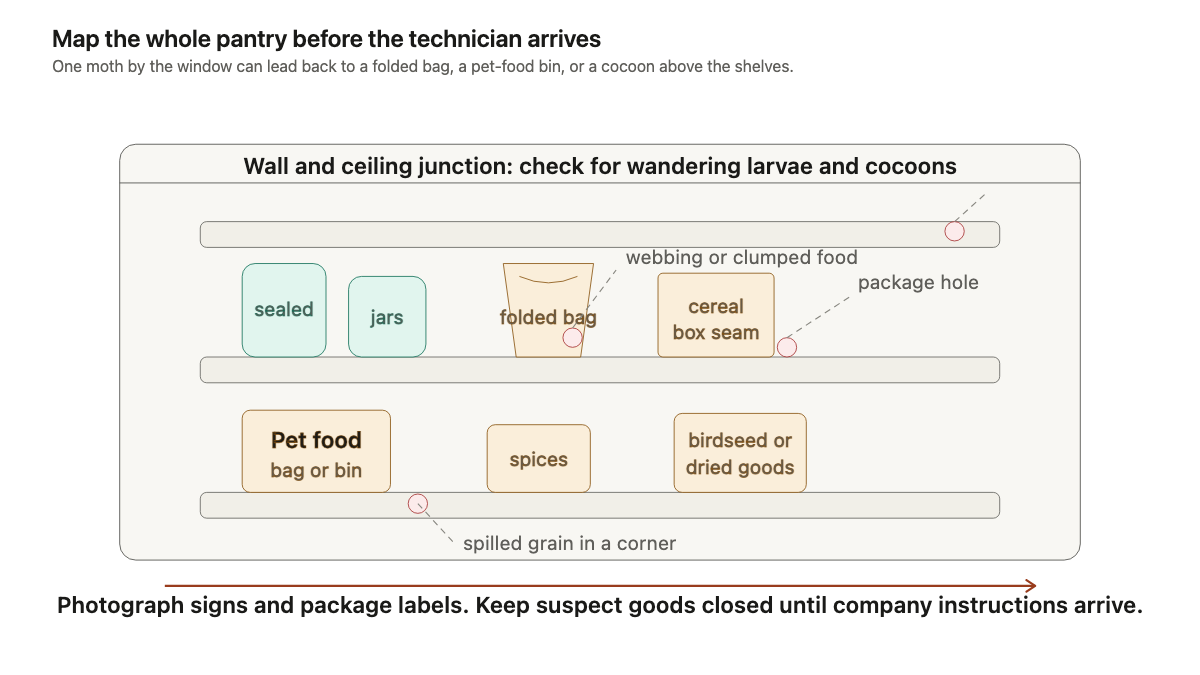
Ask what the caller actually found in or around a package. Useful observations include fine webbing, clumped flour or grain, small holes in a bag, shed material, live larvae, beetles, or an insect inside a container. Record the product, package, shelf, date, and whether other goods touched it.
UC IPM identifies webbing in tight package areas and small container holes as pantry-pest signs. It also explains that Indian meal moth larvae can travel away from the original food before pupating. That makes the wall-ceiling junction, shelf-pin holes, drawer edges, paper folds, and nearby cracks relevant when a caller reports caterpillars or cocoons outside the pantry.
Keep the questions observational. Do not tell the caller that webbing proves Indian meal moth, that every small beetle is a pantry pest, or that a moth near a kitchen window came from food. Clothes moths and other indoor insects can be confused with stored-product pests. An on-site inspection or qualified identification closes that gap.
A strong call record captures:
- insect form, photo status, first sighting date, frequency, room, and exact surface
- food packages with webbing, clumping, holes, insects, or damaged seams
- dry goods, spices, pet food, birdseed, rodent bait, seeds, and dried plant material in every storage area
- opened and unopened packages, container types, approximate age, and any mixed old and new product
- larvae or cocoons on walls, ceilings, shelf edges, drawers, paper liners, or nearby cracks
- goods already discarded, cupboards emptied, vacuuming or washing completed, and where waste was placed
- traps, aerosols, foggers, mothballs, or other products used, including names and dates
- property type, unit, access, authorization, children, pets, food-business use, and any pesticide exposure concern
Read the key facts back. “I have small moths around the kitchen window most evenings, two larvae at the pantry ceiling line, webbing in an open bag of walnuts, dry dog food in a lidded bin, and birdseed in the attached garage. You discarded the walnuts and placed one pheromone trap yesterday.” That gives dispatch something concrete.
Ask what the caller already removed or applied
Find out which goods were discarded and whether suspect packages remain on the property. Ask whether they were sealed before moving and where trash is stored now. The office should follow its company protocol for pre-visit handling. Telling a customer to spread every package across the counter can move insects or destroy useful evidence.
Record cleaning in similar detail. Did the caller empty one shelf or the whole pantry? Did they vacuum shelf corners and cracks? Were pet-food crumbs or spilled grain found behind a bin? Was the vacuum bag discarded? These questions tell the technician what remains to inspect. They should not turn into improvised treatment instructions.
Ask about every pesticide, fogger, mothball, household spray, and trap. Capture the product name, where it was placed or applied, and the date. Mothballs do not belong loose in food-storage areas. NPIC says they are registered for use in airtight containers, and improper use can expose people or pets to the vapors.
Pheromone traps need careful framing too. Cornell IPM describes them as useful for monitoring and slowing activity by catching adults, but traps alone do not eliminate an infestation. Reception can record trap location and catches. It should not promise that adding more traps will remove the source.
Book source-finding, not a guaranteed cabinet spray
Pantry-pest control depends on finding and removing infested material. UC IPM says insecticides are not recommended for controlling pantry pests in food-storage areas and warns that spraying on or near food can create a greater hazard. Cornell IPM also advises against pesticide sprays in pantries, cabinets, or around food items.
That changes the booking language. A good explanation is: “The technician will inspect the insects, packages, storage areas, and nearby cracks to identify the likely source. Any treatment or monitoring plan comes after that inspection and follows the product label and company policy.” This sets a useful expectation without diagnosing or prescribing.
Confirm access before ending the call. The technician may need the kitchen pantry plus pet-food storage, garage shelves, basement cabinets, utility closets, or other rooms named during intake. For a rental, record the tenant, property manager, unit number, authorization, and any reports from neighboring units. For a restaurant, bakery, pet store, or other food business, route the call under the company’s commercial procedure because inventory, sanitation records, and regulatory requirements differ from a residential pantry.
The final appointment note should state what the caller will leave available, what photos or labels were collected, and who can authorize work. If the company sends preparation instructions, use the approved page for that service. Generic internet advice can conflict with the technician’s inspection plan.
Offices that already use a structured process for recurring pest-control service calls can add pantry-specific fields without rebuilding the whole workflow. An AI receptionist can collect those approved fields after hours and flag pesticide exposure or commercial-food settings for review. The useful handoff is specific: moths at the kitchen window, larvae at the ceiling line, walnuts with webbing, dog food in a bin, birdseed in the garage, one trap in place, and full access confirmed.