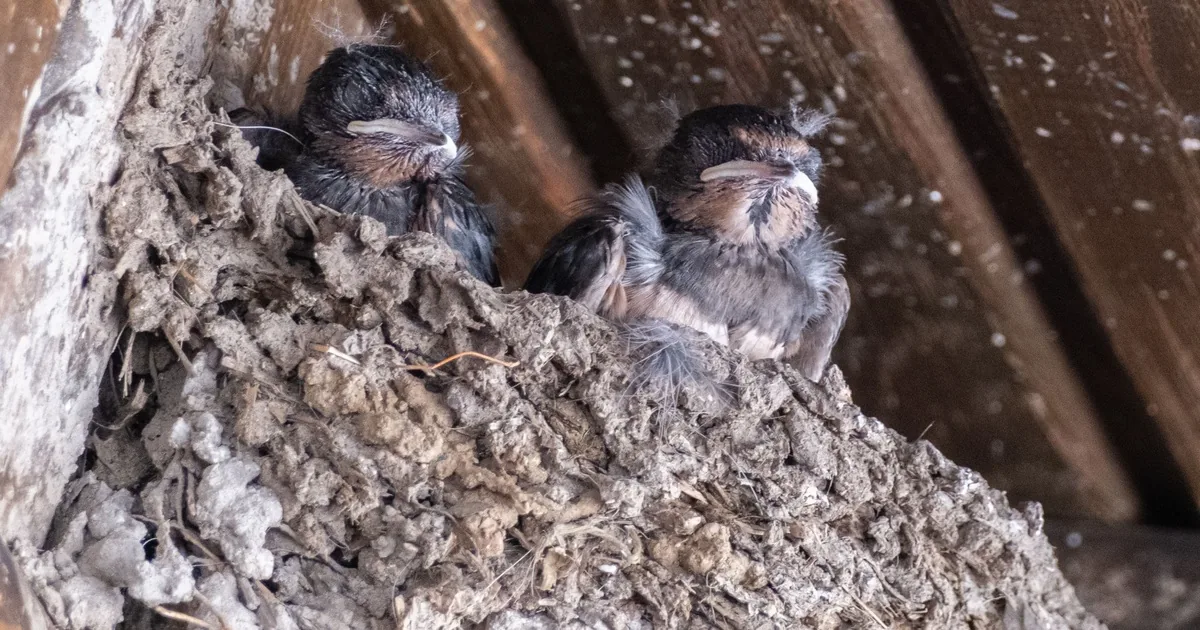
A caller hears chirping behind the laundry-room wall and asks for a bird nest removal appointment. Another points to a mud nest under the porch roof. A third has a bird flying through the kitchen. All three may say, “There’s a nest in my house.” They are different calls.
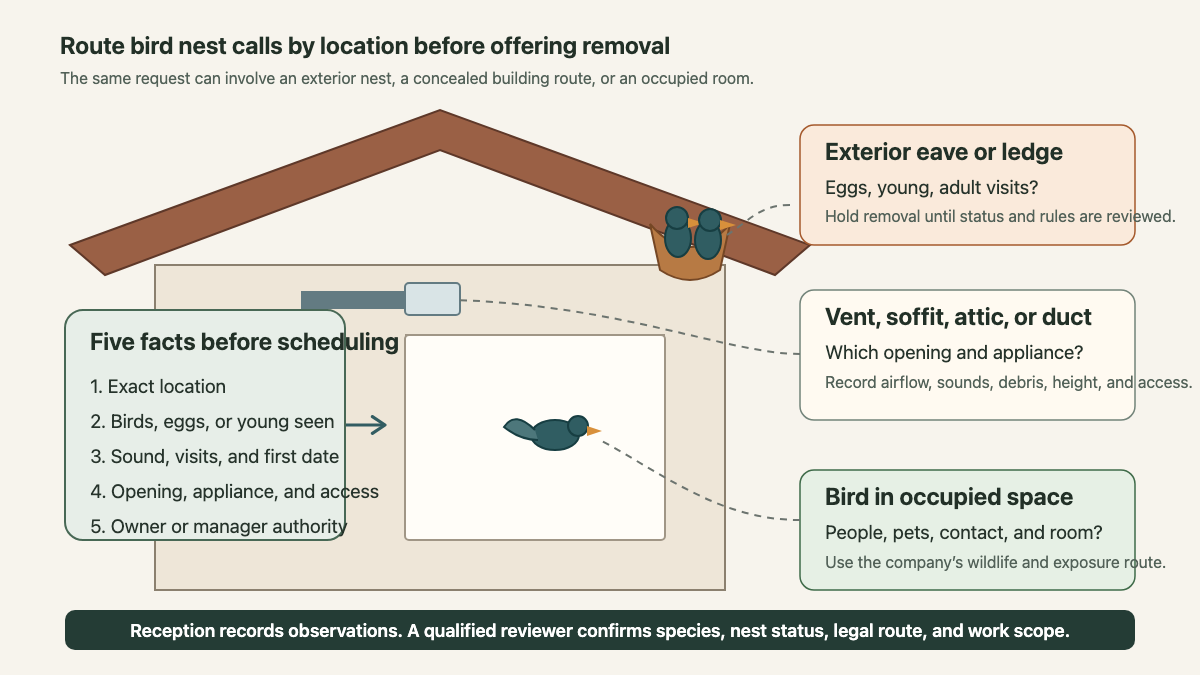
Start with location. Ask where the bird, sound, or nest is in relation to the building, whether the caller has seen birds, eggs, or young, and whether an appliance or occupied room is involved. Then record access and property authority. Reception should not identify a species, declare a nest active or inactive, quote a removal method, or promise that an opening can be closed on the first visit.
Locate the bird before discussing the job
“On the roof” is too vague for dispatch. The nest might sit on an exterior ledge, beneath an eave, inside a soffit, behind a gable vent, in an attic, down a chimney, or inside an exhaust duct. Ask the caller to name the room or outdoor wall below it. Then ask what they can see from a safe place.
Useful language is concrete:
- “The nest is attached under the porch beam, above the front steps.”
- “Chirping comes from the wall behind the dryer, and birds enter a flap outside.”
- “A bird is loose in the upstairs bedroom. We do not know where it entered.”
- “Twigs protrude from a bathroom exhaust opening on the second floor.”
Do not ask anyone to climb a ladder, step onto a roof, remove a vent cover, reach into a duct, or handle nesting material. Ground-level observations and existing photographs are enough to qualify an inspection.
Location matters under current federal guidance. The U.S. Fish and Wildlife Service’s regulatory authorization summary describes an authorization for qualifying migratory birds, nests, eggs, and nestlings inside buildings when they disrupt normal use, create safety concerns, damage interior property, or risk becoming trapped. The agency says that authorization does not cover birds or nests on building exteriors, including exterior eaves. State, Tribal, and local requirements can also apply, so the office needs the location before it routes the call.
Ask what the caller actually observed
The customer may use “active” to mean noisy, recent, or annoying. That word has a narrower regulatory meaning, and office staff should avoid adopting it without review. Capture evidence instead.
Ask when the caller first noticed activity and when they last saw an adult bird enter or leave. Record chirping, movement, fresh grass or mud, feathers, droppings, eggs, visible young, and repeated adult visits. If the caller already has a clear photograph from a safe position, label it by location and date. A quiet afternoon does not prove that a nest is empty.
The Fish and Wildlife Service’s bird-nest guidance says a nest with eggs, chicks, or young birds that still depend on it cannot simply be destroyed. The agency also notes that cavity nests can be hard to see and may require expert help to determine whether birds, eggs, or chicks are present. Bald and golden eagle nests have added protection whether occupied or not.
That is enough for a careful phone boundary. The office can say, “We’ll record what you observed and have the qualified reviewer confirm the nest status and available next step.” It should not tell a caller that a photograph proves the species or that a nest can legally be removed on a particular date.
Separate a loose bird from a concealed nest
A bird inside an occupied bedroom, store, office, or kitchen needs a different intake route than faint sounds above a ceiling. Ask whether the bird is visible now, which room contains it, whether interior doors are closed, and whether people or pets may have had contact. Record any injury, sick behavior, or possible contact in the caller’s words.
Use the company’s wildlife and exposure protocol for that situation. Do not improvise capture instructions or tell the caller to release a bird when testing or public-health guidance may be relevant. The responsible person can decide whether to involve animal control, a wildlife rehabilitator, a health department, or another qualified contact.
For concealed activity, ask whether the sound comes from an attic, wall, soffit, vent, chimney, or unknown void. Find out whether the caller can see an exterior entry point from the ground. Note staining, displaced trim, torn screening, nesting material, odor, insects, or debris below the opening. Those details support inspection without pretending that sound timing identifies the bird.
If the report centers on a chimney, use the dedicated guide for animal or nest chimney calls. For heavier movement, gnawing, or uncertain wildlife above a ceiling, the wildlife-in-attic intake guide gives the office a broader exposure, entry, young-animal, and access record.
Treat vent calls as wildlife and building calls
A nest reported in a dryer, bathroom, kitchen, or HVAC opening carries two scopes. Wildlife status controls what can happen to birds and nesting material. The appliance, duct, termination, and access conditions control who can inspect and repair the assembly.
Ask which appliance or fan connects to the opening. Record reduced airflow, unusual heat, odor, debris, a stuck exterior flap, or a change in appliance performance without diagnosing the cause. If the company’s policy says to stop using a suspected blocked appliance until it is assessed, use that approved instruction. Reception should not run a test cycle or coach the caller through opening the duct.
The Pacific Northwest National Laboratory’s Building America guidance identifies soffits, attic vents, chimneys, roof-wall joints, and duct openings as common pest-entry locations. It also warns against placing screens over dryer exhaust terminals and recommends consulting a nuisance wildlife control operator when animals are already present. That detail is easy to miss. “We’ll put mesh over it” is not a safe universal promise.
The work order should name the assembly: “second-floor bathroom exhaust on east wall” beats “bird in vent.” Add the termination height, roof or ladder access, attic access, known duct route, appliance location, and whether a vent-cleaning, roofing, chimney, HVAC, or wildlife contractor has already inspected it.
Record authority and access before offering a date
Bird work can involve a tenant, homeowner, landlord, property manager, condominium association, restaurant manager, or commercial facilities team. Ask who controls the affected exterior and who can authorize inspection, removal, cleanup, or repair. A tenant may report the problem while the association controls the soffit.
Access deserves equal care. Note locked gates, pets, alarms, occupied units, business hours, loading restrictions, steep grades, fragile roofing, and whether the attic hatch is blocked by storage. Do not ask the caller to clear insulation, move a heavy appliance, or enter a contaminated space for the appointment.
Before ending the call, read back the observed facts: “You see two adult birds visiting a mud nest under the rear porch eave. You cannot see inside the nest from the ground. The activity began last week. The nest is outside the building, above a tenant walkway, and the property manager must approve work.” That record gives the reviewer something solid.
Book an inspection, review, or referral the company can support
The next step may be a wildlife inspection, a manager review, a public-agency referral, an appliance or vent assessment, or a future exclusion visit after occupancy is resolved. Name the appointment honestly. Do not sell “nest removal and seal-up” when the company has not confirmed the species, location, nest status, legal route, access, or repair scope.
A useful handoff contains the exact location, observed birds or young, first and last activity, photographs, appliance or vent details, property authority, access, and the caller’s requested outcome. It also identifies what remains unknown.
An AI receptionist can collect those approved fields after hours and route an occupied-room report or time-sensitive building concern to the right person. The script still needs firm boundaries. By morning, the office should know whether the report concerns two chicks under a porch eave, chirping behind a dryer, or a bird loose in a bedroom. That distinction decides the next call.
Sources
- U.S. Fish and Wildlife Service: Bird nests
- U.S. Fish and Wildlife Service: Authorized Activities, No Permit Required
- Pacific Northwest National Laboratory Building America Solution Center: Screens and Other Deterrents for Birds, Rodents, and Other Pests