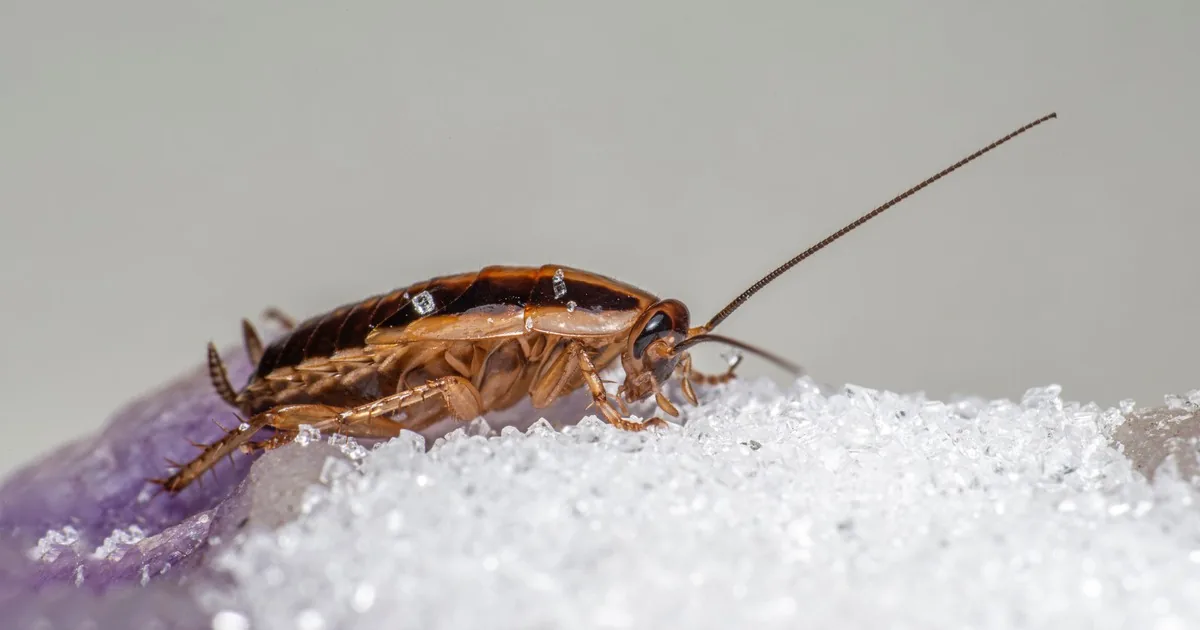
A caller says they saw a roach in the kitchen at 1 a.m. and wants someone there tomorrow. The office should resist jumping straight to a price. A focused intake can tell the technician whether the evidence centers on a warm appliance, leaking plumbing, a cabinet crack, food storage, an exterior doorway, or several units in the same building.
Start with the exact room and surface. Ask when the insect appeared, whether the caller has seen more than one, and what changed recently. Then record moisture, food, clutter, prior products, occupants, property type, and access. Reception gathers observations. The technician confirms the pest and chooses the treatment.
Pin every sighting to a room and surface
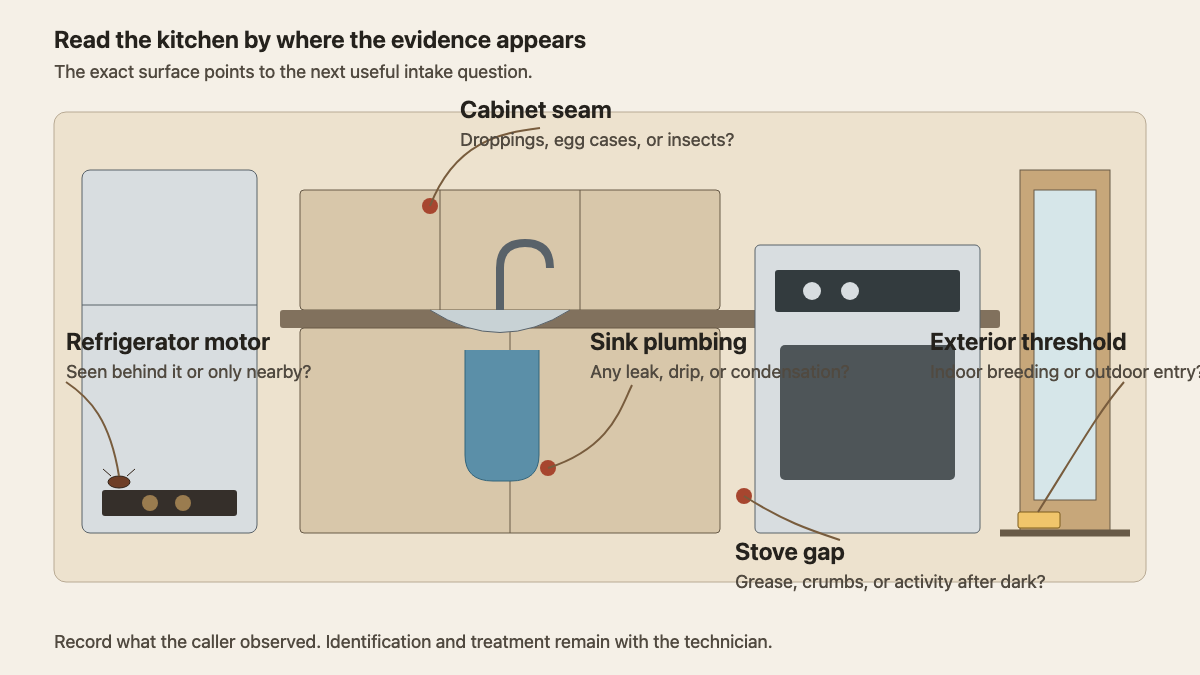
“Roaches in the kitchen” is too broad for dispatch. Ask the caller to name the first place they saw activity: inside a sink cabinet, behind the refrigerator, beside the stove, on a countertop, along a baseboard, near a floor drain, or at an exterior door. Record the surface too. An insect on a wall beside the refrigerator gives the technician different starting evidence than one coming through a bathroom drain or caught near a patio threshold.
Time matters. Cockroaches are commonly active after dark, but the office should write down the caller’s actual observation rather than assuming a pattern. Ask when they first noticed activity, when it appears most often, and whether daytime sightings are occurring. Note how many were seen and whether the report describes adults, much smaller insects, egg cases, droppings, shed skins, or an odor.
Request photos when the caller can take them without moving an appliance, opening an electrical panel, or reaching into a contaminated area. A close image and a wider image of the surface provide context. If the company uses samples or sticky traps for identification, follow its written instructions. Color alone is a weak basis for a phone identification.
The University of California Statewide IPM Program explains why identification affects the plan. German and brownbanded cockroaches can live and breed indoors, while American, Oriental, and Turkestan cockroaches often live outdoors and may enter a structure. Geography changes which species are likely. The office should describe the evidence and leave the conclusion open.
Follow the food, water, shelter, and movement path
The next questions should follow the physical space. Under the sink, ask about active drips, an old leak, condensation, damp cabinet material, and gaps around pipe penetrations. Behind a refrigerator, ask whether sightings cluster near the compressor area, drip pan, wall edge, or food stored beside the appliance. Near a stove, record grease, crumbs, pet food, recycling, or activity in the narrow gap between the range and cabinet.
Do this without blaming the caller. Clean homes can still have pest problems, and a shaming question gets a guarded answer. “Has there been any leak or moisture under that sink?” works better than “Is the kitchen clean?”
Ask about cardboard boxes, paper grocery bags, stored pantry goods, open pet food, trash storage, and recent deliveries. Note whether the caller moved, received used appliances or furniture, returned from travel, or had plumbing and cabinet work. These details are observations for inspection, not proof of the source.
The EPA’s IPM principles put monitoring and accurate identification before control decisions. Prevention and targeted control follow once the pest and conditions are understood. For a front office, that sequence translates into a simple rule: capture the evidence before promising a treatment.
Sticky traps can make that evidence more useful. If traps are already present, ask where each one sits, when it was placed, and what was caught. A trap under the refrigerator should not be recorded as “kitchen trap.” Name the wall, appliance, cabinet, or doorway. UC IPM recommends trap locations along wall edges, inside cupboards, under appliances, and near exterior doors because placement helps show where activity is concentrated.
Do not invent placement advice during the call. Use the company’s approved monitoring plan, especially in homes with children or pets.
Separate one home from a building problem
Property type changes the appointment. Ask whether the address is a detached house, duplex, apartment, condominium, restaurant, food facility, office, school, or another commercial site. In a multi-unit building, record the unit number, floor, shared walls, neighboring reports, trash room, laundry area, utility chase, and who controls access to adjacent or common spaces.
Find the service decision-maker. A tenant may be able to describe the sighting but lack authority to approve treatment or provide entry to the unit next door. Record the occupant, owner or manager, onsite contact, notice requirements, keys, gate codes, parking restrictions, and the hours when kitchens or food areas can be inspected.
Commercial calls need another layer. Ask when food preparation stops, when cleaning occurs, where deliveries enter, who manages sanitation records, and whether a technician must meet a facilities or food-safety contact. The office should avoid promising treatment during operating hours before the service team reviews site rules.
For managed housing, the same authorization principles in the recurring pest-control scheduling guide apply. Cockroach intake adds unit adjacency, shared utility routes, and kitchen or bathroom access.
Record every product and preparation step already used
Ask what the caller has sprayed, placed, dusted, fogged, cleaned, or sealed. Record the product name, EPA registration number when visible, application area, date, and reported result. Include store-bought bait stations, gel, powder, aerosol, total-release foggers, bleach, essential oils, and a prior pest company’s service.
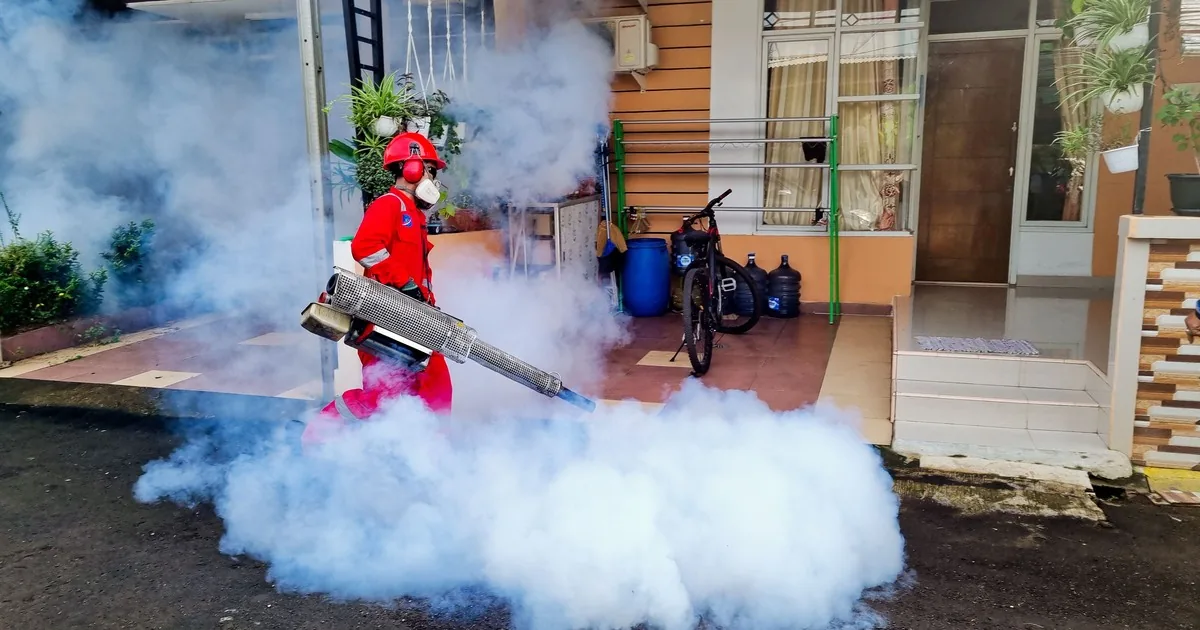
The EPA’s smart pest-control guidance says pesticide labels must be read and followed. It also advises consumers to choose state-licensed pest-control companies and asks them to look for IPM experience. UC IPM warns that foggers, bombs, and aerosol sprays can be hazardous and may disperse cockroaches without solving the infestation. Reception should document prior use and avoid recommending another application.
Preparation instructions need the same discipline. Do not tell every caller to empty all cabinets, move a refrigerator, cover every dish, or leave the home for a set period. Preparation depends on the inspection, planned product, label, company protocol, and site. Send the approved preparation sheet for the booked service type. If the treatment plan is not known, say the technician or service manager will confirm preparation.
Screen for occupants and respiratory concerns
Ask whether infants, older adults, pregnant occupants, pets, aquarium animals, or people with asthma or other respiratory sensitivities use the treatment area. This is a service-planning question, not a request for medical history. Record only what the company needs under its privacy policy.
The CDC’s asthma guidance identifies cockroaches as a possible asthma trigger. It also advises people with asthma to avoid sprays and foggers because those products can trigger attacks. The office should never diagnose symptoms or advise a caller to alter medication. Active breathing trouble belongs with emergency medical services, not an ordinary pest appointment.
Ask whether people can follow the company’s approved access and re-entry instructions if treatment is scheduled. Note pet containment, locked rooms, appliance access, mobility limits, language needs, and whether someone must coordinate with a caregiver or property manager.
Book an honest next step
A useful close sounds specific: “I have repeated nighttime sightings beside the refrigerator and under the sink, smaller insects as well as adults, a slow cabinet leak, two aerosol applications this week, an asthmatic child in the home, and a neighboring unit that reported activity.” Read that summary back. The caller can correct an address, location, or product before it reaches the route.
Book the service your company can actually support. That may be an inspection, a consultation, an initial treatment visit, or a manager callback for a multi-unit or commercial property. State what the appointment includes. Avoid guarantees about species, product, number of visits, preparation, total elimination, warranty coverage, or price when the evidence is incomplete.
The ant consultation guide follows trails, moisture, and possible nesting areas. Cockroach calls need more attention to appliance heat, narrow harborage, nighttime activity, egg cases, neighboring units, and prior aerosol or fogger use. Those differences justify a separate intake script.
An AI receptionist can collect the approved questions after hours and route sensitive or multi-unit cases for human review. The script needs company rules for service areas, licensing, health escalation, preparation, fees, building access, and callbacks. The final record should leave the technician with an exact place to begin looking when the kitchen lights come on.