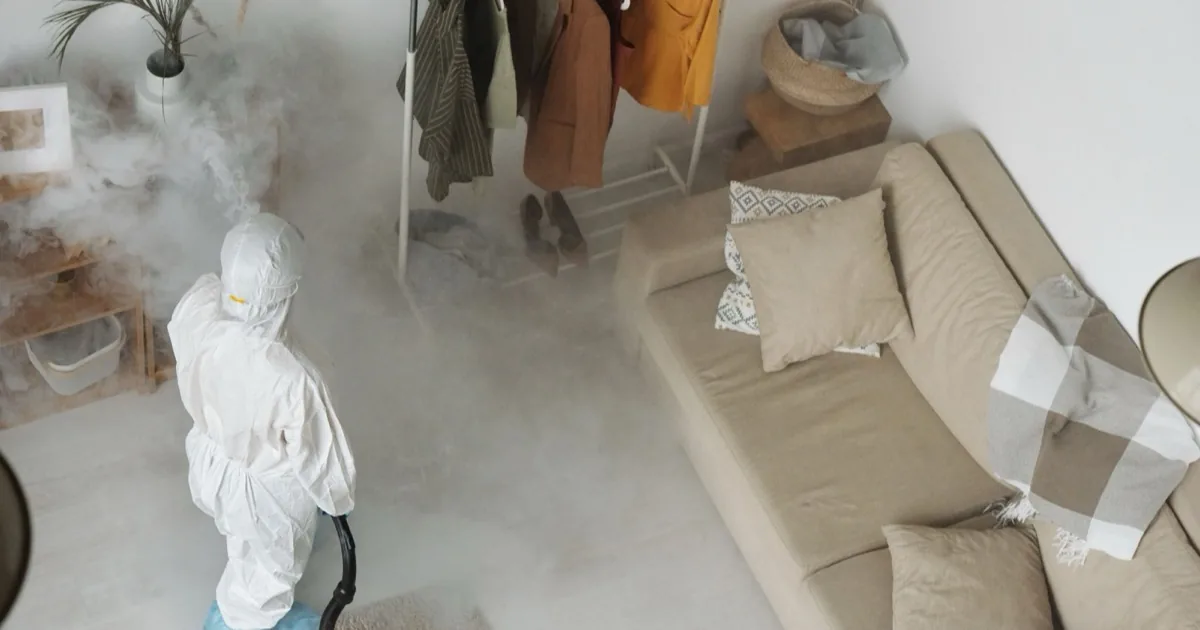
A customer calls the afternoon before service. She has moved every pan out of the kitchen cabinets, covered the sofa, put the cat in a bedroom, and wants to know whether the family needs to leave for the night. The appointment note says only “pest treatment.” Reception has no safe basis for answering her last question yet.
Preparation calls should begin with the exact appointment, not a memorized household checklist. Confirm the pest or concern, whether the visit is an inspection or treatment, the areas included, and the company protocol attached to that service. Then send the approved preparation instructions, ask about people, pets, food, access, and prior products, and escalate any conflict before arrival.
That order protects the caller from unnecessary work. It also keeps office staff from inventing pesticide directions or re-entry times over the phone.
Start with the appointment the technician is actually running
Open the job record before giving instructions. Read back the service type in plain language: “I have you scheduled for a cockroach inspection and possible treatment in the kitchen and laundry room.” If the record says only “general pest,” stop and get the missing detail.
Ask what the caller believes is scheduled. This catches a common mismatch. The customer may expect a whole-home treatment while the work order covers an exterior inspection. A tenant may have received a building notice without the unit-specific preparation sheet. Someone booking for a parent may have copied instructions from a different company’s website.
The office needs a few facts before choosing a prep sheet:
- What pest or evidence prompted the appointment?
- Is this the first inspection, a planned treatment, or a follow-up?
- Which rooms, units, exterior areas, or outbuildings are included?
- Did the company already send service-specific instructions, and did the caller receive them?
- Has anything changed since booking, such as a new room with activity or a product applied by the occupant?
- Who will provide access, and who needs the instructions in writing?
Do not turn those questions into a diagnosis. A caller who reports small insects beside the pantry has supplied a location and observation. The technician still identifies the pest and decides what the service requires.
This distinction matters for specialized work. The preparation for a routine inspection will not match a bed bug service that may involve laundering, furniture access, or a staged treatment plan. Route those calls through the company’s bed bug treatment consultation process and use its approved materials.
Use the approved preparation sheet as the script
Once the appointment is clear, open the current prep sheet for that service. Read the critical steps with the caller and send the same version by the channel your company uses. A texted link may be convenient, but it should point to the controlled instructions, not a search result or an old attachment saved on someone’s desktop.
Product-specific directions belong to the pesticide label and the company’s licensed service protocol. The University of Minnesota Extension’s pesticide safety guide explains that a label includes directions for use, precautionary statements, first-aid information, environmental hazards, and storage and disposal instructions. Reception should not compress those sections into a universal answer.
The company sheet may tell a customer to clear a named cabinet, move items away from a baseboard, secure food, make a crawlspace accessible, or arrange for people and animals to be elsewhere during part of the service. Give only the instructions tied to the booked work. “Empty every cabinet in the house” is poor guidance when the technician needs access under one sink.
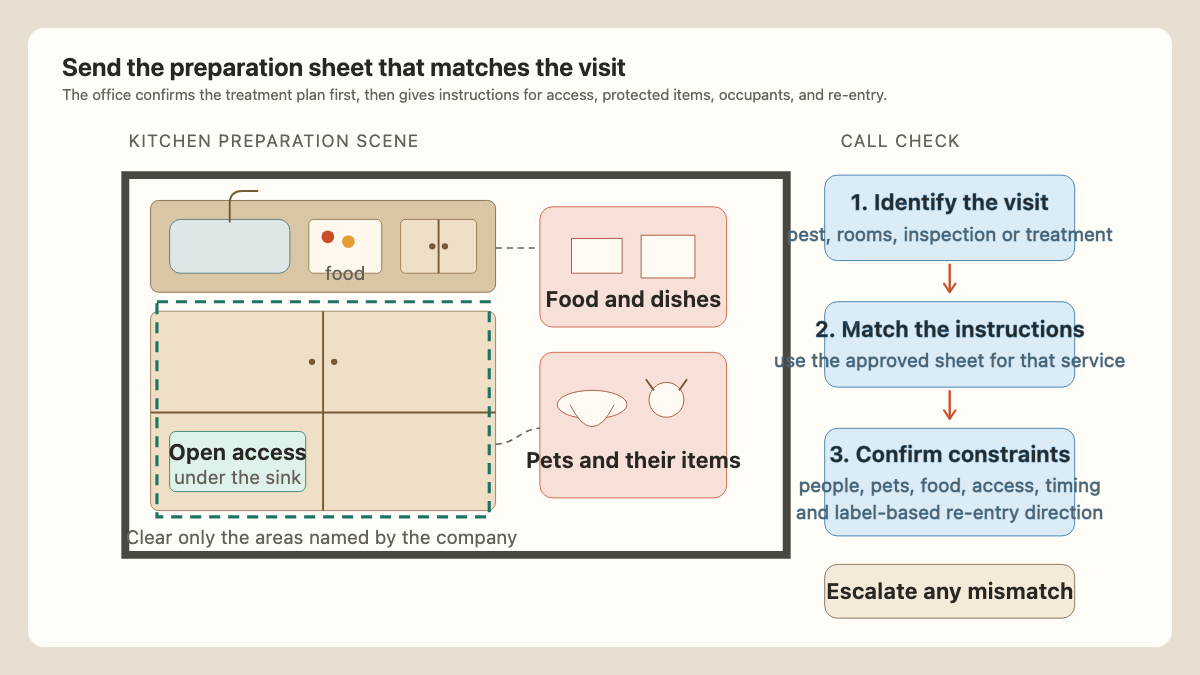
The map shows the office boundary. Staff can confirm that the caller received the right sheet and understands which areas need access. They should refer treatment-method questions, product sensitivities, and any disagreement with the instructions to the technician or designated supervisor.
Ask about people, pets, food, and prior products
A good preparation call finds constraints while there is still time to solve them. Ask who occupies the property and whether children, pets, aquariums, birds, or other animals could affect the service plan. Do not assume that “pets” means one dog that can ride in the car. The caller may have a fish tank that cannot be moved, a cat that hides under furniture, backyard chickens near an exterior service area, or a tenant whose mobility makes extensive furniture movement impractical.
The EPA’s pest-control safety guidance says to keep children and pets away from areas where pesticides have been applied and to follow label directions and safety warnings. The office should relay the company’s exact instruction for the scheduled service. If the caller asks, “Can my toddler come back after an hour?” and the approved instruction does not answer that question, record it and escalate. Never estimate.
Ask whether food, dishes, pet bowls, toys, bedding, or personal items are present in the named service areas. The approved sheet determines what must be removed, stored, covered, or left in place. Keep the wording concrete: “The kitchen sheet asks you to put exposed food and dishes into closed storage and clear the cabinet under the sink. Can you complete those steps before the arrival window?”
Also ask what the occupant has already applied. Capture the product name or a photo of the container if available, where it was used, and when. Do not tell the caller to mix products, repeat an application, or clean a treated surface unless the company protocol specifically directs that step.
Separate household prep from conditions the technician needs to see
Callers often want to clean aggressively before the visit. Some cleanup may help, but the office should avoid giving instructions that erase evidence or disturb a monitoring setup.
EPA recommends reducing pest access to food, water, and shelter. Its guidance names sealed food storage, covered garbage, plumbing leaks, standing water, clutter, cracks, and openings around pipes as practical conditions to address. These are useful intake topics. They are not permission to tell every customer to scrub, seal, discard, or dismantle everything before inspection.
Ask the caller to describe relevant conditions and add them to the job record. A slow leak under the sink, cardboard stacked beside a water heater, pet food left overnight, or a gap around a pipe gives the technician useful context. If the company wants photographs before anything is moved, say so. If maintenance work should wait until after inspection, make that instruction explicit.
This is especially important in recurring accounts, where a new preparation issue may sit beside an existing monitoring plan. Link the note to the customer’s recurring pest-control scheduling record so the technician can see prior findings, access notes, and follow-up dates.
Find the exceptions before the arrival window
The preparation sheet cannot anticipate every household. Train reception to recognize statements that need review:
- “I cannot move the refrigerator or lift the mattress.”
- “The aquarium cannot leave the room.”
- “My child has a health condition, and I need product information.”
- “The landlord sent the notice, but I never approved entry.”
- “We used a store-bought fogger this morning.”
- “The treatment area includes a pantry for my home food business.”
- “I have nowhere to take the pets during the appointment.”
Record the caller’s words without interpreting them. Then route the issue to the person authorized to change the plan, answer product questions, or reschedule. For a health concern, staff can provide available product and safety documentation and direct the caller to the appropriate professional contact. They should not declare an exposure safe.
Access problems deserve the same discipline. Confirm the arrival window, parking or gate instructions, alarm details, locked rooms, and who will meet the technician. If the customer will be absent, verify the company’s entry authorization process. A preparation call is unfinished when the cabinets are clear but the technician cannot enter the building.
Close the call with teach-back
Reading a list does not prove that the caller understood it. End with a short repeat-back: “Before we finish, please tell me which areas you are clearing and what the plan is for the cat during the visit.” This is a confirmation step, not a quiz.
Correct any mismatch using the written sheet. If the caller says something outside it, such as planning to leave food uncovered or return at a self-selected time, pause and clarify with the designated supervisor. The EPA Citizen’s Guide encourages consumers to ask questions and learn how to reduce exposure when others use pesticides. Make room for those questions.
Document the version of the instructions sent, delivery time and channel, who received them, the caller’s constraints, any photos or product details, questions escalated, and who owns the answer. If the instructions change, send the updated version and record that handoff too.
An AI receptionist can collect these approved fields after hours and flag conflicts for a human reviewer. It should use the same controlled prep sheets and escalation rules as office staff. The useful result is simple: the technician arrives to the right service, the household knows what to do, and nobody has improvised the safety instructions five minutes before the truck pulls up.